October 3, 1851

OLYMPUS DIGITAL CAMERA

Mint and sage from the garden

Oct 3d Friday  Quilted most of the forenoon with Ellen

this afternoon have sewed some on my dresses

and paired some peaches that I had of Mr

Clarke and laid them down in sugar.  Cut

my sage and mint  Ellen has finished the

quilt and has it bound and the sitting

room in order  She will leave in the 

morning has been here nearly eight weeks

Putting the garden to bed continued to be one of Evelina’s chief occupations; today she cut her “sage and mint” and hung them somewhere to dry. The aroma of the newly cut herbs would have sweetened the air in the house. She also sewed, of course, and was pleased that the new quilt was finished. Ellen the servant bound the piece today, tidied up the sitting room and put away the quilt frame. Whose bed was that quilt to go on? Evelina never indicated for whom she was making it.

After midday dinner, Evelina moved to the kitchen for an afternoon of preserving fruit. She “paired” some peaches and then “laid them down in sugar.” She wasn’t kidding about the sugar if she used the proportions suggested in the various cooking books of the day. According to Lydia Maria Child, author of The American Frugal Housewife, “A pound of sugar to a pound of fruit is the rule for all preserves. The sugar should be melted over a fire moderate enough not to scorch it. When melted, it should be skimmed clean, and the fruit dropped in to simmer till it is soft.” The peaches would have been stored in stoneware or glass jars.

Ellen, a servant whose last name we never learned, was planning to leave in the morning.  She had joined the Ames household back the middle of August “to assist some about the house and help me sew.”  Given the absence of any complaints from Evelina, Ellen apparently had done her job well. Why she was leaving we don’t know, but servants often came and went as their personal circumstances – and the circumstances of their employers – changed. Evelina would hire someone new.


October 1, 1851

Impatiens_Bush

 ***

Oct 1st Wednesday.  Put a quilt into the frame in the

sitting room got it in about ten marked it

and quilted awhile and went into the garden

to save some flower seeds.  have got some nice

Balsam seed and a few china pink seed among

others. Passed the afternoon at Olivers with

Mrs Drake & Torrey

Quilting, gardening, and socializing made up Evelina’s day.  She set up a quilt frame in the sitting room and worked on a quilt she had begun about ten days earlier. She couldn’t stay inside, though, as the day was “fair” and “pritty warm for the time of year.”* The sunshine drew her to the garden where she moved through her annuals, saving seeds for next year.

She got “some nice Balsam,” a flower that today we call impatiens. At the time, it was reckoned to be “one of the most prominent ornaments of the garden,”** according to Joseph Breck, a Boston horticulturalist.  Breck’s important guide, his eponymous Book of Flowers, had proved helpful to Evelina earlier in the year and must have been doing so again as she put her garden to bed. Breck particularly admired some of the variegated varieties of Balsam as “decidedly the most elegant.” He had specific advice about saving Balsam seed: “Old seed is considered by some to be the best, as more likely to produce double flowers. The seeds should be saved from double flowering plants only; all single flowering ones should be destroyed as soon as they appear.” Did Evelina follow his advice?

After gardening, Evelina probably changed her dress and went next door to see Sarah Lothrop Ames and her guests, Caroline Drake (Mrs. Lincoln Drake) and another woman, Mrs. Torrey. The two guests may have been related to one another (Caroline’s maiden name was Torrey.) They had no immediate connection to Col. John Torrey, however, who appeared often in Evelina’s journal. The women would have sat, had tea and chatted – a pleasant occupation on a pleasant day.


* Oliver Ames, Journal, Courtesy of Stonehill College Archives

** Joseph Breck, Book of Flowers, Boston, 1851, pp. 185 – 186

*** Heirloom impatiens balsamina, Courtesy of edenbrothers.com


September 26, 1851

PICT0150

*

Friday 26th  Mrs S Ames & Mrs Mitchell went into Boston & Cambridge

Wednesday & returned last night  Julia is to work

for Helen to day  they talk of sending her to Boston

to school  I have been to work on my dresses some

to day and have varnished my desk & beaureau

& some other things, taken up some plants 

from the garden  It is very cold and we had 

some frost last night

It had been a week ago today that Evelina, Oakes, and other Ameses had stood in Boston for hours watching a grand parade celebrating the railroad.  Since that time, Evelina had returned home, rearranged furniture and nursed her daughter through an uncomfortable spell of sickness.  She must have finally felt that her life was getting back to normal.

Evelina sewed a bit today, of course, and continued to redecorate, varnishing two pieces of furniture. Even more pressing, however, was her garden. She brought some plants into the house in hopes that they would winter over and, most likely, pulled out other annuals that she had planted months earlier.  She was feeling the cold and noted the frost, although her father-in-law, Old Oliver, contradicted her in his assessment of today’s weather as “cloudy most of the day but not cold.”

Old Oliver also noted that “Horatio was here to day, ” something that Evelina neglected to mention. Horatio and Oakes Ames didn’t get along, so the men would have avoided one another if possible. Perhaps Evelina didn’t see Horatio, although, given his great size and odd voice, he would have been hard to miss. As described by Winthrop Ames, Horatio “was an enormous man, so large that when he walked beside his father he made the latter appear of almost ordinary stature; but with a piping voice which seemed especially incongruous with his great frame.”**

Evelina did quickly see sisters-in-law Sarah Lothrop Ames and Harriett Ames Mitchell who returned from an overnight in the city. Sarah may have been scouting boarding schools for her daughter, Helen.


* Courtesy of cherrycroft.blogspot.com

** Winthrop Ames, The Ames Family of Easton, Massachusetts, 1937, p.107

August 29, 1851

WhiteAster

Friday Aug 29th  Alson & Mr Hall came early this

morning and were here to dinner & tea, brought Pauline

with them  Have been mending for Oliver getting his

clothes ready for school  Went with Pauline to Edwins

garden he has not many pretty flowers in blossom has

some fine Dahlias  got 5 lbs of butter at Mr Marshalls

after we came back went into Olivers to hear Pauline

play.  George & wife & Sarah gone to her fathers

The day after Clinton Lothrop’s funeral, Sarah Lothrop Ames, her brother George Van Ness Lothrop and his wife Almira spent the day, at least, at the Lothrop farm with their parents, Howard and Sally Lothrop. They would have had to make long-term plans for the property, now that Clinton wouldn’t be there to tend the family farm.

Alson Gilmore, Evelina’s brother, took his meals at the Ames’s today.  He was working nearby, perhaps with Mr. Hall, helping his son, Edwin Williams Gilmore, build a house. They were putting in the cellar.  Pauline Dean, who must have been staying with or near the Gilmores, returned for a visit. She probably got roped into helping Evelina with the mending.

Evelina had a lot of mending to do, as Oliver (3) was preparing to go off to school.  Like his cousin Fred Ames, he was going to attend an Ivy League college, but in Providence, not Cambridge.  Oliver (3) would be going to Brown, and his mother had to get his clothes ready. Shirt fronts, collars and hose weren’t her only business today, however.  She and Pauline took a break from domesticity and went to Edwin Manley’s to see his garden. There they saw “some fine dahlias.”

Dahlias, which had been introduced in the United States early in the 1800s, had quickly became popular, although not yet listed in Joseph Breck’s Book of Flowers. So successful were they that over the course of the century more than 10,000 varieties were developed or identified and sold. Today, dahlias are still much admired by flower gardeners, yet less than a dozen of those 19th century heirloom examples still exist in cultivation.* The earliest known, White Aster (above) dates from 1879.

*oldhousegardens.com

July 24, 1851

Duck

Thurs July 24th  Have been sewing on some of Susans

clothes, altering some skirts &c  Have been thinking

over my visit yesterday  Mrs Mitchell will have

a fine place in a few years if she keeps on as

she has begun  They have a fine lot of Turkeys

Ducks & Chickens and their garden looks finely

but not many flowers.


The visit that Evelina and her sisters-in-law made to East Bridgewater yesterday was enjoyable enough to preoccupy Evelina’s mind today.  As she sat sewing she thought over the home she had visited and considered its domestic arrangements. She liked the yard she had seen.  Casting her knowledgeable, farmer’s-daughter’s eye over the property in her mind, she assessed the “fine lot” of poultry and admired the garden.  Not enough flowers for her, though.

The house in question belonged to James Mitchell, son of Nahum and Nabby Mitchell, and his wife, whose name was Harriet Lavinia Angier Mitchell.  As fate would have it, Harriet Angier Mitchell was a friend of Harriett Ames Mitchell.  The two visited one another when Harriett Ames was in town and, presumably, worked out any confusion the similarity of their names occasioned.  As they were usually referred to as Mrs. James Mitchell and Mrs. Asa Mitchell, they may have encountered less confusion than there would be today, when first name usage is so prevalent.  Terms of address were definitely more formal in 1851.


July 23, 1851

7505761_119709544472

*

Wednesday July 23  Have been sewing before noon to day working on

different articles among the rest have made

Susan a pair of short cuffs of cambric

trimed with a wide insertion and edging

Aaron Hobart & Charles Mitchell came to the other part

of the house & dined When they returned Mrs Witherell

Mitchell, Mrs S Ames & self went to Mr James Mitchells to tea

Met Mr & Mrs Judge Mitchell Mrs & Miss Hyde & Aunt Orr there

Sewing was in the forefront of Evelina’s activities lately while gardening seemed to disappear.  Perhaps the heat and the weeding were too much, perhaps her favorite blooms had gone by and she had lost interest. Then, too, she simply may have neglected to record the time she did spend in the flower beds. Whatever the cause, Evelina was back indoors in the mornings, needle in hand.

Her social life, always a little more active in the summer, continued to thrive. She noted that Charles Mitchell, younger brother-in-law of Harriett Mitchell, and Aaron Hobart dined with Old Oliver and Sarah Witherell. This entry is the first mention of the Hobarts, a family that would become intimately involved with the Ameses in the future.  Aaron was the eldest son and namesake of Judge Hobart, a former congressman, and his wife Maria, who lived in East Bridgewater. Recently returned from working in New Orleans, Aaron became “actively identified” with the local Carver Cotton Gin Company**. His youngest sister, Catherine, was at school with Helen Angier Ames in Dorchester.

It was to East Bridgewater that the ladies went today for tea. Evelina and her sisters-in-law met with Judge Nahum Mitchell, also a former congressman and a contemporary of Old Oliver, his wife Nabby, and others.  The Mitchells were related to the Orr family, and one of their daughters (Mary Orr Mitchell Ames) was married to an Ames cousin in Springfield. Needless to say, many of the long-established families in southeastern Massachusetts had intermarried over time and thus were related in long-distance ways.

*Judge Nahum Mitchell
** Plymouth County Massachusetts Archives


July 8, 1851

Buttonhole


1851

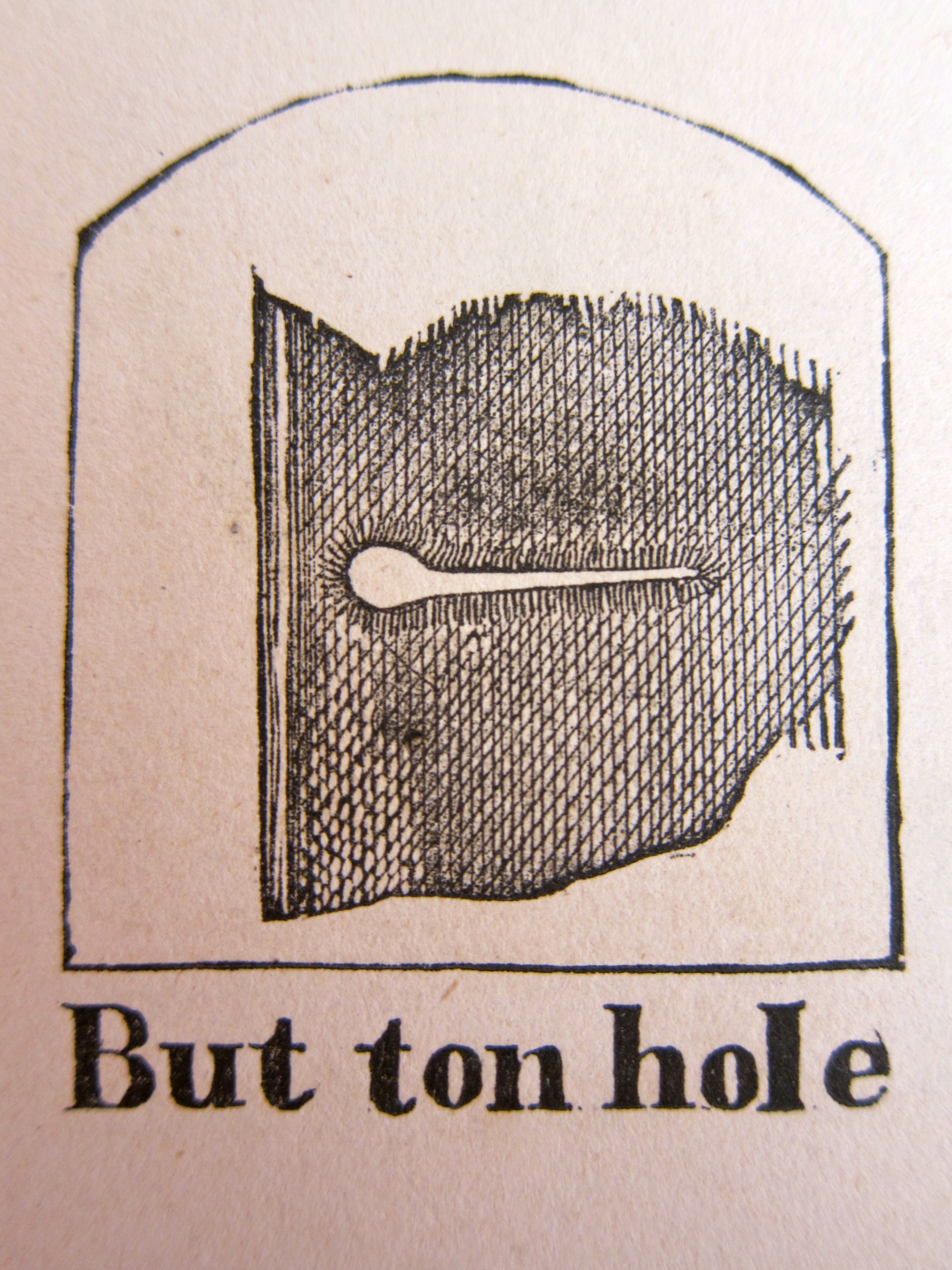
July 8th Tuesday  Julia has been here to day and we

have been to work on my borage Delaine  Have worked

very slowly  Julia has been to work on the waist

all day and it is not near done yet.  The waist

is made plain & I have made the button holes myself

This dressmaking is discouraging business with such

slow dressmakers.

Evelina was none too pleased with Julia Mahoney, the dressmaker whose fingers never flew as fast as her own when it came to stitching.  She wanted the new dress finished, and Julia was working too slowly for Evelina’s taste – and wallet, perhaps.

It’s worth noting that Evelina didn’t garden today or, if she did, she didn’t mention it. Her focus was not on her pinks and petunias, it was indoors on her barege delaine. Perhaps the weather was too warm to spend much time outside in her yard.

What was going on outdoors, beyond the flower beds?  On the larger canvas of the town, the vegetable crops, the corn and the hayfields should have been growing well, the latter two important food for the oxen and other domestic animals over the next winter. Haying was due to begin soon.  No doubt Old Oliver and other farmers were paying close attention to the weather and the readiness of all their crops.

July 4, 1851

800px-US_flag_31_stars.svg

*

July 4th  Have been transplanting some pinks &c to day We have had several heavy showers  Oakes A & Frank rode to Dr Swans to make a call and carry his chaise home  Oliver & wife Harriet & Helen went to Mr Lothrops this afternoon  Mr Ames & self to mothers.  Orinthia has gone to Cohasset with Mr Brett.  Helen came home last night   On the Fourth of July in 1851, the new 31-star flag was raised over America for the first time.  It recognized the addition of California to the union.  Previously known as the California Military District, and before that as the short-lived California Republic, the new state had been officially added back on September 9, 1850, less than three years after gold was discovered there. California’s statehood had been a political struggle in that age of slavery. Only after significant wrangling by Congress and Presidents Zachary Taylor and Millard Fillmore, did compromise legislation, spear-headed by Senator Henry Clay, finally carry the day. There was to be no slavery in California. The 31-star flag would remain the standard until 1858, when Minnesota joined the union. The nation’s 75th birthday was recognized in Washington, D.C. with a ceremony for the laying of a cornerstone of the new addition to the Capitol. Massachusetts’ own Daniel Webster gave a speech. A long speech it was, in the style of the day, in which, among other things, Webster exhorted his audience to acknowledge that the formation of the United States had wrought “astonishing changes […] in the condition and prospects of the American people” and to advise “ye men of the South” that the progress of the country was worth staying in the union for. Ten years before the Civil War, Webster opined that “the secession of Virginia, whether alone or in company, is the most improbable, the greatest of all improbabilities.”  Webster didn’t live long enough to see how wrong he had been. Back in Easton, the shovel shop was closed. Many employees may have tried to picnic despite the rain. In the Ames family, most everyone had someplace to go. Evelina and Oakes rode to the Gilmore farm to visit Evelina’s mother. Oakes Angier and Frank Morton, no doubt tired from their long day yesterday, took the borrowed chaise back to Caleb Swan. Oliver Ames Jr., his wife Sarah and daughter Helen rode over to Sarah’s parents’s house, taking Harriett Ames Mitchell with them. Where was her husband, Asa? Where were her young children? With the Mitchell in-laws in Bridgewater, perhaps. Why weren’t they all together? Even Orinthia Foss was out and about, gone to Cohasset with a Mr. Brett.   * If you want to see other designs for the 31-star flag, check out the Zaricor Flag collection at flagcollection.com

July 3, 1851

Bouquet


July 3d Thursday  About 5 Oclock this morning Oakes A

& Frank started for their ride to Middleboro

& I fixed their boquets with Oilcloth & Ribbon

They might have had the politeness to give

their ladies some boquet holders.

I worked in the garden sometime this forenoon

my finger being to sore to work  About four

went to carry Oliver to North B to take the

cars for Boston  Mrs Peckham & Mrs Swain called.

As the crow flies, Middleboro, Massachusetts is about 14.5 miles from Easton.  By the navigable roads that crossed the countryside, however, the traveling distance was actually about 18 miles, maybe more.  Oakes Angier Ames and Frank Morton Ames borrowed a chaise to make the trip; how long might it have taken the boys to get where they were going?  A horse at a walk goes about three to four miles per hour; the same horse at a trot can manage eight to ten; and a canter or gallop – unlikely in someone else’s chaise – can cover ten to seventeen miles per hour.  We might imagine that a sensible trot was the gait they urged their horse to, but then, they were eager young men.

What was the occasion?  Was it related to a Fourth of July celebration? Who were the “ladies” whose company promised such pleasure that the brothers were on the road at dawn?  How did those bouquets hold up during the trip?  No doubt the oilcloth and ribbon was carefully and skillfully applied to the flowers, but the lack of bouquet holders was, evidently, a serious faux pas. Evelina bemoaned her sons’ lapse of manners.

Evelina took a carriage ride of her own today, escorting Oliver (her other son, most likely, as opposed to her brother-in-law) to North Bridgewater to catch the train to Boston.  Where was he going?  Why wasn’t he traveling with Oakes Angier and Frank? For the three boys, the social scene was beginning to spread further afield than familiar old Easton.


July 2, 1851

Thread


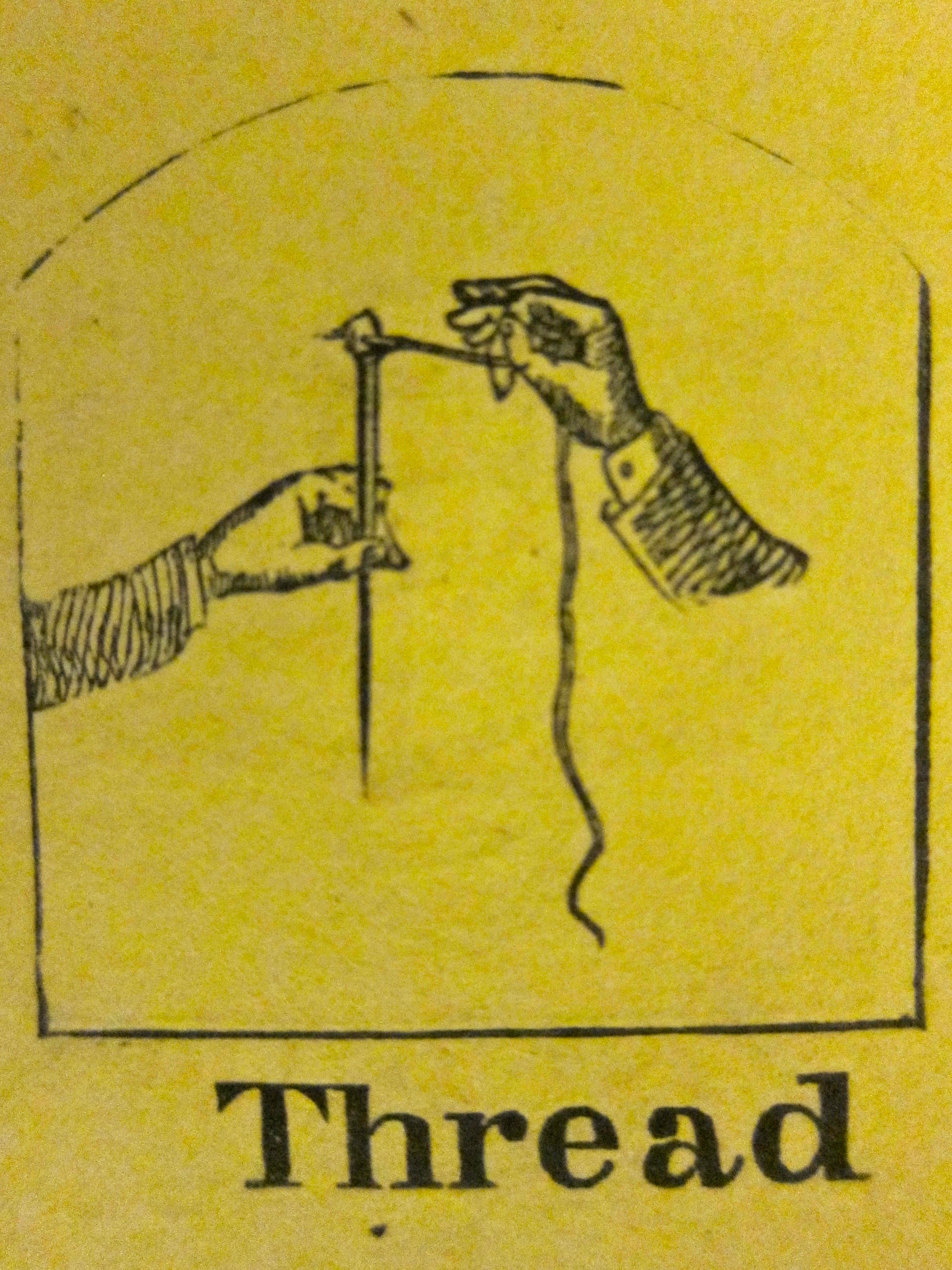
Wednesday July 2d  Have had quite a busy day.  This forenoon

cut out three shirts for the sewing circle and worked

a long while in the garden transplanting

Oliver went to Bridgewater and carried Mrs Whitwell

Mrs Witherell and me to the sewing circle at Alsons.

After I got home went to work on boquets

for Oakes & Frank.  Harriet assisted

Mrs S Ames went [to] Exeter this morning

Today is one of those instances when we can’t be certain which Oliver is being referred to.  Did Evelina’s brother-in-law, Oliver Jr., or son, Oliver (3) carry Evelina, Sarah Witherell and Eliza Whitwell to the Sewing Circle at Henrietta Gilmore’s?

Besides attending the monthly gathering of the Unitarian women to sew, Evelina also spent time in her flower garden.  She transplanted a number of flowers and picked several to fashion into two bouquets. Her sons, Oakes Angier Ames and Frank Morton Ames, planned to attend a party in Middleboro the next day and needed what we might call corsages to take to their dates (a modern word they wouldn’t have used.) She and her sister-in-law, Harriett, arranged the flowers appropriately.

Sarah Lothrop Ames had business of her own to attend to.  She went up to Exeter, New Hampshire, where her son Fred Ames was in school. Was she picking him up to bring him home or just visiting?