December 3, 1852

Hog

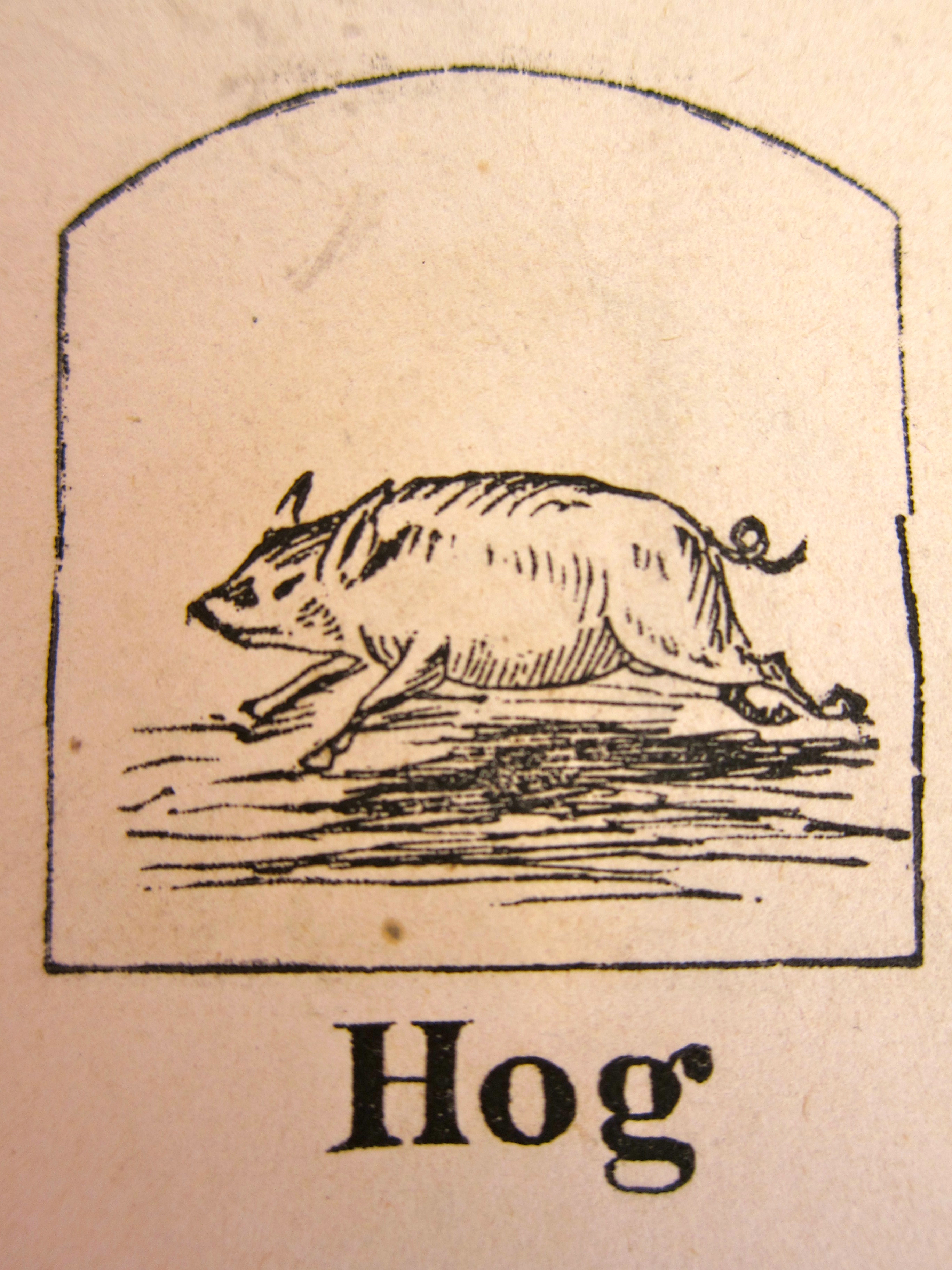
Friday Dec 3d  Finished taking care of the pork this

forenoon had 60 lbs sausage meat  Weighed

16 lb pork tried it out and it (the lard) weighed 14 lbs

Went to mothers this afternoon with Oakes

Angier as he was going to West Bridgewater

My bonnet came from Boston to night

that I left to be made  Susan practiced

an hour this evening to me & I went into the other 

part of the house

Yesterday Old Oliver “kild six hogs [… and] the everage weight of the whole 12 was 413 pounds the heavyest weighd 489.” Oliver had given each offspring – Oakes, Oliver Jr., and Sarah Witherell – a pig to cut up and preserve. Upset as she was over the news about her eldest son, Oakes Angier, Evelina and her two servants worked to break down their pig into a manageable, edible assortment of pork. Sausage, of course, was a standard way to process and keep pork over time. So yesterday and today, the women cut and grounded meat, ending up with 60 pounds of sausage and 14 pounds of lard.

No doubt Evelina was preoccupied with thoughts of her son, but she may have found some comfort in keeping her hands busy with the necessary chores of the kitchen.  She took the opportunity of riding with Oakes Angier to the family farm, perhaps to share the news with her mother and brother Alson. Oakes Angier rode on to West Bridgewater. Might he have traveled to call on the Hobart family as well? He must have had to tell Catharine Hobart that he was leaving for Cuba and an uncertain future.

Susan Ames, once so rebellious at the piano, “practiced an hour this evening to” her mother. Do we imagine too much to think that she was trying to make her mother happy?


December 2, 1852

Fire

Thursday Dec 2d  Have been very nervous to day

thinking about Oakes A   cannot reconcile myself

to his leaving home.  Have done as well as I

could about taking care of the hog but made

poor headway  Augustus & wife  Edwin & wife

Mrs Witherell & Mrs S Ames all came unexpectedly

to spend the evening and I have not even changed

my dress. But who cares?  Miss Alger has

given her 14th lesson


Back in North Easton, Evelina was still rattled by the bad news her son had received. She tried to deal with a butchered hog that her father-in-law sent her but could barely cope.

Oakes Angier had been told he had consumption. He was advised to go to Cuba, whose warm, humid climate was believed to be good for pulmonary tuberculosis. No other effective treatment was available. The Ames men – Oakes Ames, certainly – would have been active today investigating possible arrangements. Oakes and Oliver Jr. had a business associate, a shipping merchant named Elisha Atkins, who traded in sugar in Cuba, at a port called Cienfuegos on the southern side of the island. Perhaps they contacted him for advice.

All the Ameses, and the Gilmore clan, too, were upset by the diagnosis. Family members on both sides “all came unexpectedly” at night to show affection and alarm for Oakes Angier, the eldest cousin of his generation. The family pulled together, although Evelina was too shocked to appreciate the support, too sad to rise to the occasion. “I have not even changed my dress,” she noted pitifully.

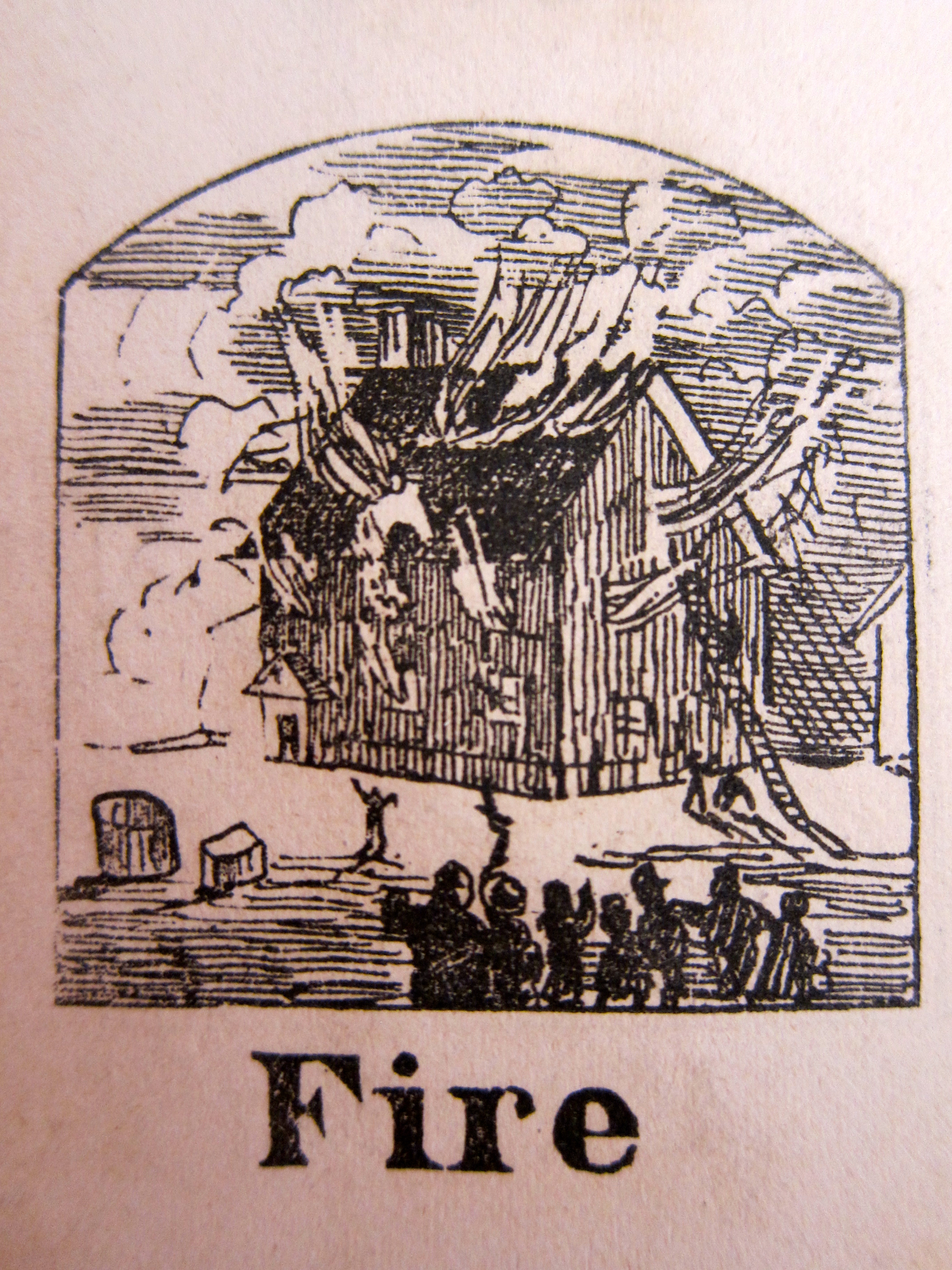
Completely preoccupied by Oakes Angier’s illness, the folks at the Ames compound may not have paid much attention to the news that the Chickering Piano Company building in Boston had caught fire and burned to the ground.

“3 o’clock A.M. — Thursday Morning — The whole of the manufactory—an immense block structure, five stores high—is one mass of ruins. Mr. Jonas Chickering owned the building, and occupied all of it except the stores, which were improved by Messrs Thomas &Merriam, grocers, Edward Butman, crockery ware dealer, Amos Cummings, grocer. Very little property, in the building was saved. The devouring element spread through the building with terrific rapidity and soon the heated walls began to fall so as to endanger the lives of those who approached.

The building occupied the space on Washington street, between Norfolk place and Sweetser court. A portion of the side wall on Sweetser court first fell doing no injury, and the gable end of the side wall, on Norfolk place, fell over and crushed in the roof of the brick building on the opposite corner, which was on fire, and forced out the gable end. Both buildings were now one mass of fire, presenting an awfully grand sight. A part of the wall on Washington street, next fell and the flames swept across Washington street, threatening the destruction of the Adams House and other buildings on the opposite side, but they were saved. The attic windows of the Adams House were badly scorched.

The greater portion of the wall on Norfolk street next fell over on the opposite building, crushing it completely to pieces, and the walls of the next adjoining northerly, a three story, old fashioned block, and buried underneath the ruins, two watchmen, named Alfred Turner and Benjamin F. Foster, of the Boylston division. A large force immediately set to work to remove the rubbish, and after some time, were able to converse with Turner, and in an hour’s time reached one of his arms, but before the ruins could be cleared away, he fell into the cellar, and not just before putting our [news]paper to press been dug out. Foster, it is supposed lived but a short time.

The building on the corner of Norfolk place, opposite Chickering’s was five stories high, belonged to Deming Jarvis, and was occupied, the store by P.R. Morley, plumber, and the upper stories by Mr. Ladd, pianoforte key maker. They saved but a small amount of their stock. The building was insured. The old brick building next adjoining, which was leveled to the ground by the falling wall was occupied by Mrs. Wyman, as a boy’s clothing store and a dwelling house.”*

Was the Chickering Piano Company the place where Evelina and Sarah Witherell had purchased their pianos?

*
December 1, 1852


1852_Duvotenay_Map_of_the_West_Indies_-_Geographicus_-_WestIndies-duvotenay-1852

Map of West Indies, including Cuba, 1852

Wedns Dec 1st  Oakes & Oliver got left last night

Oakes A went to consult Dr Bigelow and he

advised him to spend the winter in Cuba

He has been raising more blood for two

or three weeks but has said nothing about it.

Mrs S Ames came into Boston this morning

I have selected some silver forks & a pr of spoons

and left them to be marked


Bad news today. Oakes Angier was coughing up blood again, and had been, for much of November. Evelina hadn’t known it, although how she missed the evidence of bloody handkerchiefs in the weekly laundry is a question. The servant girls might have guessed it. Oliver (3) must have had an inkling, especially after the two brothers spent so much time together attending a Thanksgiving dance in East Bridgewater. Oakes Angier would have been challenged to dance lively reels and converse in a crowded room without coughing.

How Evelina could have missed the signs became an irrelevant question in the face of the proposed remedy. Oakes Angier had been advised to go to Cuba. For consumptive patients, travel to a different climate was common therapy (for those who could afford it), and Cuba was known as a “site of recuperative possibilities.”* Other ailing Bostonians of means, like Sophia and Mary Peabody some years earlier, had taken the cure there. And William Rice, the vice-president elect, was there even as the Ameses were discussing the situation.  The Peabody sisters recovered; the vice-president would not.

Despite the reassurances that Cuba was the best place for Oakes Angier, to Evelina it must have seemed as far away as the moon. Oakes Angier would have to sail there. Where would he stay? He would be gone for months, if not years. He might never come back. Even as Evelina busied herself with dropping off some silver flatware to be monogrammed, she had to be preoccupied with this unfortunate turn of events.


*John George F. Wurdemann, Slaves, Sugar and Colonial Society, p. 107


November 2, 1852

490px-William_Rufus_DeVane_King_1839_portrait

William R. King

(1786 – 1853)

Tuesday Nov 2d  Sewed on cambric sleeves for

Susan this forenoon very quietly with

Miss Alger  It has rained since Saturday

morn but this afternoon has cleared 

off Mrs Ames & self have been to Mr

Swains & called at Doct Wales & Augustus

Miss Alger & O Angier took tea in Olivers


Back from her quick day trip into Boston, Evelina spent the morning “very quietly” in her sitting room, sewing. The piano teacher, Miss Alger, was still visiting.  Outside, “it rain[ed] by spells […] wind north east it stormd all the forenoon and was cloudy about all day – there has bin one inch + a quarter of water fell since Sunday”*

After midday dinner, when the storm had stopped, Evelina and her sister-in-law, Sarah Lothrop Ames, went out to check on Ann and John Swain, whose infant son had died on Saturday. Evelina would have taken with her the mourning accoutrements she had purchased for Ann in the city. No doubt the Ames women continued to comfort the forlorn parents. From the Swains they paid other calls in North Easton, to the home of Ephraim and Maria Wales and to see Evelina’s nephew, Alson “Augustus” Gilmore and his wife Hannah. Hannah had lost her infant son Willie back in the summer. The women would have had much to talk about.

On the national scene, the day was momentous. As we have read previously in this blog, General Franklin Pierce, a Democrat, was elected President of the United States, defeating Whig candidate General Winfield Scott (incumbent Whig Millard Fillmore hadn’t been renominated) and Free Soil candidate John P. Hale. Easton historian William Chaffin writes: “In 1852 the vote for President was one hundred and seventy-one for Winfield Scott, one hundred and forty-three for John P. Hale, forty-nine for Franklin Pierce, and four for Daniel Webster, who was dead. This vote shows the political complexion of the town, and confirms the statement of the adoption of the Free Soil position by many Democrats.”**

The vice-president-elect was William R. King, a senator from Alabama who believed strongly in the Union. He had helped draft the Compromise of 1850. Unfortunately, King was suffering from tuberculosis and would soon die in office, one of the shortest-termed vice-presidents and the only Alabaman. He was also the only vice-president to take the oath of office on foreign soil; he was in Cuba taking the cure when he was inaugurated.


*Oliver Ames, Journal, Stonehill College Archives, Arnold Tofias Collection

**William L. Chaffin, History of Easton Massachusetts, 1886, p. 630