June 8, 1852

capture31200573857_pm


Patent drawing for Nancy Johnson’s Hand-cranked Ice Cream Machine, 1843


June 8th Tuesday  Baked in the brick oven pies

cake & brown bread and have been to work

about the house all day untill the stage

came and brought Mr & Mrs Orr  It rains

quite hard and I did not expect them

Mrs S Ames & Mrs Witherell called this

evening  Had some ice cream frozen in 

the new freezer

Evelina baked and did indoor chores all day, but as active as she was she must have been attentive to the arrival of much-needed rain.  Old Oliver certainly was, recording that “towards night there was considerable rain, wind south west.”* It was so rainy, in fact, that Evelina imagined that her expected houseguests wouldn’t come.  But Robert and Melinda Orr braved the elements and arrived from Boston via stagecoach.

The Orrs were the couple with whom Evelina often stayed when she went into the city.  She and Melinda were good friends, but the connection between the two families ran even deeper, all the way back to Bridgewater and the days of ironwork there when Robert Orr’s ancestor, also named Robert, was a maker of scythes and other tools. The Ameses and the Orrs had often crossed paths.

Evelina was ready to welcome Robert and Melinda to her home and had prepared ice cream for the occasion. The ice cream would have been made in a hand-cranked freezer and probably kept cold in the new ice closet. Although it was a specialty that took time and elbow-grease to prepare, it was not quite the novelty that we might imagine.

Ice cream had been around since Colonial days, brought in by the Quakers and quickly adopted by the likes of Ben Franklin and George Washington.  By 1813, it was served at the inauguration of James Madison. In 1836, an African-American and former White House chef named Augustus Jackson – also known as the Father of Ice Cream – created a variety of ingredients and improved the over-all techniques. Less than ten years later, in 1843, a Philadelphian named Nancy Johnson received the first patent for a hand-cranked ice cream freezer. Americans took to it in droves, and the frozen dessert only got better as time went by.

When did someone think to serve ice cream with pie? Did Evelina?


June 5, 1852

tbl00064-2

1852

Sat June 5th  Mr Scott has been tinkering around in 

one place and another to day  has worked part

of the day here and this afternoon Holbrook

and another man came and put a coat of

paint on the plastering in the entry chamber

and whitewashed Franks chamber & painted

the closet I cut out two of the shelves and 

the shelves in my chamber closet.

Mrs Patterson here

Consul & slab came

and Olivers furniture


The dependable Mrs Patterson was on hand again today, as workmen tinkered, plastered and whitewashed different areas of the house. Evelina herself tinkered with the shelves of her closet in the master bedroom, cutting away two of them, perhaps to make room to hang clothes rather than fold them.

The arrival of new furniture from Boston was exciting for both Evelina and Sarah Lothrop Ames. Evelina and Oakes were to have a new console table – probably for the parlor – with a slab of stone – probably marble – on top. The Oliver Ameses next door got a delivery of new furniture, too.  The families were upgrading. It must have taken an industrial-strength wagon pulled by oxen to bring the pieces out from the city.

The delivery wagon had a “fair day”* for its route, and Old Oliver Ames had a good day to watch the new sills “for the cariage hous”* being laid down. He did enjoy building things, and his daughters-in-law enjoyed furnishing them.


*Oliver Ames, Journal, Stonehill College Archives, Arnold Tofias Collection

June 2, 1852

Thread

1852

Wednesday June 2d  Lazy this day as usual after being

in Boston   Have been with Mrs S Ames

to the sewing circle at Mr Wm Reeds.  Had

a very pleasant time as we always do there

not very many present. Mrs Patterson here

again to day.  yesterday she staid home to

do her washing  She & Jane have done very

little ironing this afternoon

The intense labor of spring cleaning was over, at least for Evelina.  She was “[l]azy this day” after yesterday’s trip into Boston with her sisters-in-law. Shopping wore her out more than washing windows or scrubbing floors, it would seem. She summoned enough energy to attend the Sewing Circle at Abigail Reed’s, though.

Sarah Witherell didn’t attend the Sewing Circle; she probably wasn’t socializing outside the family yet. So Sarah Ames and Evelina went without her and enjoyed themselves “as we always do.” Back at the house, however, Evelina’s servants didn’t attend to the ironing as Evelina had hoped they would. Evelina wasn’t pleased. When she worked, she worked very hard, and expected others to do the same. She felt that Mrs Patterson and Mrs McHanna should have been able to do more in her absence.

In the other part of the house, to which Sarah Witherell had retreated after yesterday’s outing, Old Oliver was watching the weather.  He noted the welcome arrival of “a little rain […] that wett the ground about an inch deep.”*  The spring had been dry.


*Oliver Ames, Journal, Stonehill College Archives, Arnold Tofias Collection


June 1, 1852

Mathew_Brady_-_Franklin_Pierce_-_alternate_crop

Franklin Pierce (1804-1869)

Photograph by Matthew Brady

1852

Tuesday June 1st  Have been to Boston with

Mrs Witherell Mrs S Ames Helen & Emily

Called at Mr Orrs the first place met

the other ladies at half past nine at Mr

Daniells & Co.  Was trying to get a bonnet

most all day at last got materials for a lace 

one  Went to Doe & Hasletons about my consol

Mrs Norris met us at half past two

Most of the Ames females decamped North Easton today and went into the city.  Even Sarah Witherell, dressed in black, rode into Boston to go shopping. Were her sisters-in-law hoping to cheer her up with an outing?

While Evelina and “the other ladies” went about Boston “most all day” in earnest pursuit of bonnets, furniture and more, a group of politicians was gathered in Baltimore some 400 miles south. The Democrats were holding their national convention for the nomination of their next presidential candidate.  Among the ten to twelve gentlemen in the running were Senators Lewis Cass of Michigan, Daniel S. Dickinson of New York, Henry Dodge of Wisconsin, Stephen A. Douglas of Illinois and Sam Houston of Texas, Governor Philip Allen of Rhode Island, former Secretary of State James Buchanan, and former Senator Franklin Pierce of New Hampshire. The latter, a dark horse candidate, was chosen.

Franklin Pierce would win the next election and serve as President from 1853 through 1857. Known as “Handsome Frank,” a sociable fellow with a difficult personal life and a probable addiction to alcohol, Pierce was an accomplished politician and fierce opponent of abolition. Once in office, he signed the inflammatory Kansas-Nebraska Act, then failed to be renominated for a second term. His purported response was “There’s nothing left to do but get drunk.”

After the Democrats’ gathering, another presidential convention would shortly be held in the same Baltimore hall, the Maryland Institute for the Mechanical Arts.  This time, the Whig Party would meet and nominate Gen.Winfield Scott, hero of the Mexican-American War.  Scott was the candidate that the Ames men would support.  The Ames women couldn’t vote, of course.

May 28, 1852

images-1

1852  May 28th

Friday  This forenoon cleaned the shed chamber  Mrs

Patterson assisted me and helped about house

down stairs  I baked cake & brown bread

in Mrs Witherells oven and Mrs McHanna

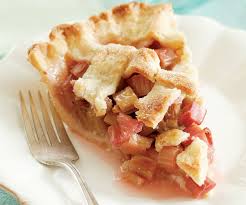
made a custard & some rhubarb pies.

Augusta brought her dress in and I partly

made the button holes  Oakes A went to Boston

yesterday returned to night

Time for rhubarb. The edible plant, with its long red stalks, was coming up in the garden and needed to be harvested and cooked. Household advisor Lydia Maria Child had this to say about it:

“Rhubarb stalks, or the Persian apple, is the earliest in gradient for pies, which the spring offers. The skin should be carefully stripped, and the stalks cut into small bits, and stewed very tender.  These are dear pies, for they take an enormous quantity of sugar.  Seasoned like apple pies Gooseberries, currants, &c., are stewed sweetened and seasoned […] in proportions suited to the sweetness of the fruit; there is no way to judge but by your own taste.  Always remember it is more easy to add seasoning than to diminish it.”*

Jane McHanna made today’s pies and a custard, too. Evelina baked her usual cake and brown bread. Spring cleaning was not forgotten, however, as Evelina and Mrs. Patterson cleaned out the shed. One wonders what they found in there after the long winter.

The younger generation, meanwhile, was stirring. Augusta Pool Gilmore came over from across the street to get Evelina’s help on a dress she was making.  Oakes Angier Ames struck farther afield, going into Boston for the night.  The 23-year-old was there on shovel business, presumably, and, being conscientious, he would have accomplished whatever task he was sent in to do. But he was young, too, and may have enjoyed the freedom of being on his own in the big city.

*Lydia Maria Child, The American Frugal Housewife, 1829, p. 51


May 17, 1852

180px-Beekman_greenhouse

Mid-19th century American Greenhouse*

1852

Monday May 17  Finished planting my flower seeds

Mr Blodget here to dine from Boston

This afternoon have been to Mr Kinsley with

Mr Ames.  Miss Nevill there from Salisbury.

Brought home twelve pots of flowers from

their green house.  The grapes & flowers look

finely  Had a very pleasant visit got home

about dark

Evelina enjoyed herself today. It was lovely outside, for “the sun shined about half the day + was pritty warm wind west + south west.”** She gardened for much of the morning and in the afternoon, rode with her husband, Oakes, to Canton to call on the Kinsley family.

Lyman and Louisa Kinsley, whom we’ve heard of before in Evelina’s diary, were about the same age as Oakes and Evelina. They had two children, Lucy Adelaide and Edgar Lyman, who were twelve years apart, suggesting that there may have been other children born between the two. Lucy was close in age to Oakes Angier, and Edgar was a year or so younger than Susie.

The Kinsleys were prosperous; Mr. Kinsley ran an iron business that had been started by his father and had long supplied material for Ames shovels. The Kinsley Iron and Machine Company would eventually be bought by the Ameses and managed by Frank Morton Ames. That being some years in the future, the Ameses could sit and admire the Kinsley place with little thought of acquisition – perhaps. Certainly, Evelina was much taken with the Kinsley greenhouse and the “twelve pots of flowers” she got to take home.

Greenhouses such as Mr. Kinsley’s were becoming more popular in the mid-19th century, particularly in England after the government there did away with the heavy tax on window glass. Hothouses had been known previously on this size of the Atlantic, also, appearing in the colonies as early as 1737, when wealthy Bostonian Andrew Faneuil built one. George Washington, too, had one built at Mt. Vernon to grow pineapple. Greenhouses would increase in size, status, and grandeur as the century progressed. Easton would see its share when the next generation of wealthy men reached maturity. Frederick Lothrop Ames, Edwin Williams Gilmore and probably others would raise orchids and more in the glass-walled wonders.

*Greenhouse from Beekman Estate in Manhattan, circa 1850

**Oliver Ames, Journal, Stonehill College Archives, Arnold Tofias Collection

May 13, 1852

DSCF1683small

Thursday May 13th  Worked in the garden about an hour

this morning  Assisted about putting George into the 

coffin, put in some geraniums leaves feverfew

blossoms and wild flowers  Has rained very hard

all day.  funeral at three Oclock  Mrs Lovell &

son brought Mrs Witherell and Mr & Mrs Brown came

beside a few neighbors.  Mr. Whitwell spoke well

On this cold, stormy spring day, George Oliver Witherell was laid to rest. Although he is now buried in the Village Cemetery in North Easton, he was initially buried elsewhere near his father, Nathaniel Witherell; his little brother, Channing; and his grandmother, Susannah Angier Ames and a few other Ames relatives. Only after the Unitarian Church was built in 1875 were the remains of all moved to the cemetery behind the new church.

Evelina helped place her nephew George in his coffin and added what could almost be described as a potpourri of geranium leaves, feverfew and wild flowers that would have provided a sweet, masking scent. Feverfew, an aromatic member of the daisy family, was also commonly used as an herbal medicine. Gardener and housewife that she was, Evelina would have had these dried leaves and petals on hand.

The service for George would have begun at the house and moved to the graveside, rain or no rain. A memorial sermon would follow the next Sunday, but this day Reverend Whitwell spoke over the coffin in a heartfelt service for family and close friends. Besides the Ames clan, who would have been there in full force, George’s paternal grandmother, Mrs. Witherell, was brought down from Boston to attend. To no one’s surprise, “Mr. Whitwell spoke well.”

May 5, 1852

Thread

Wednesday May 5th  Worked about house & got my sleeves for Delaine ready

for Mrs Witherell to work  The sewing circle met

at Mrs Nahum Pools.  Mrs S Ames gone to Boston

George quite sick with the rheumatics Augusta gone

to N Bridgewater and so poor I should have had to

go alone.  Preferred to stay at home  Mr Peckham +

family all at Mr Swains.  called to see them & after they

left Mr & Mrs Swain went with me to Edwins garden got

two Gladiolus bulbs.  A beautiful pleasant day

The Sewing Circle met today at the home of Nahum and Lidia Pool, but Evelina didn’t attend. Her usual companions from the village were otherwise occupied, and “poor” she didn’t want to go by herself. She stayed home, or at least she stayed in North Easton. She parcelled out some sewing to her sister-in-law, Sarah Witherell, to work on, and headed out. Perhaps Sarah sat and sewed near her son George, who was “quite sick.”

The day was beautiful, and Evelina seemed to be in fine spirits despite missing the sewing circle, or perhaps because of missing it. She went to see John and Ann Swain and there encountered the Peckham family, who had moved away from North Easton the previous year. They must have been back for a visit.  When they left, Evelina and the Swains went up to the garden of Edwin Manley and bought two Gladiolus bulbs.

May 4, 1852


IMG_0159

Trellis on the door of the home of Oakes and Evelina Ames and extended family, ca. 1860


Tuesday May 4th  Mr Healy & Morse commenced the trellis

for our front door  We had quite a consultation how it should

be made  I[t] was very cold & windy this morning & I fear I

have taken cold in being out so long  Have mended Olivers

sack and cut the pattern and have done some other mending

Augusta made a long call. It is really very pleasant to have

her so near.  Mrs S Ames went to Boston

The trellis that Evelina refers to today could very well be the modest trellis that graces one of the doors in the above photograph. The doorway facing the street in the approximate middle of the photograph was the door that Evelina, Oakes, and their family used for their own. The doorway on the far left, facing the yard, was likely the entry that Old Oliver and his daughter, Sarah Witherell, used. The house on the far right was a separate dwelling that belonged to Oliver Ames Jr. and his wife, Sarah Lothrop Ames.

None of these buildings is still standing. The one on the far right was torn down in 1863 and replaced by a larger, more formal house that is still extant today, with lovely gardens and a well-kept air.  The house in the center, halved on the interior to accommodate the two households of Evelina and Sarah Witherell, was torn down in the 1950s, at the behest of Oakes Angier Ames’s eldest son, Hobart Ames. The site has since been reclaimed by trees and undergrowth.

The trellis was meant to add a fashionable air to Oakes’s and Evelina’s side of the house. Evelina was trying to bring the simple, old Federal dwelling into the Victorian age, inside and out. She had a particular vision for her home, and she worked hard to realize it. Small wonder that the construction required “quite a consultation.”


April 30, 1852

135555850

1852

Friday April 30th  Worked in the garden awhile this

morning  Mr Scott has grained the cook

room  Rachel dined here & was intending to 

spend the day but Mrs Packard came to Edwins

and she went back there  Mrs Lincoln

passed the afternoon & Augustus to tea  Abby

spent the day, was away awhile with Mrs

Clapp after some flowers.  Hannah gone to Boston


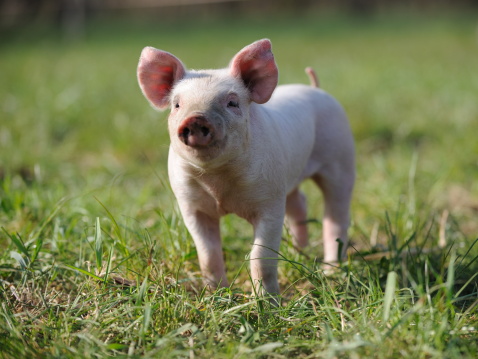
The last day of the month was “a fair day + the warmest we have had this spring …,”* according to Old Oliver Ames, who also noted that he “killed 4 shoats to day.”

A shoat is a newly weaned pig that typically  weighs in at about thirty pounds. It wasn’t unusual to find a farmer thinning a litter of pigs (also known as a drift of pigs) at this time of year, for different reasons. Many farmers bought shoats at this time of year to fatten up over the summer and slaughter in the fall. For reasons known only to himself, Old Oliver chose to slaughter four of his young pigs rather than sell them. Perhaps the shoats in question were unpromising specimens, or perhaps the Ames family was ready for a little fresh pork.

In the first part of the 19th century, the word “shoat” was also used as a pejorative slang term, intended to describe someone as fairly useless. To call someone a shoat was to say that he or she was dispensable and unimportant.

*Oliver Ames, Journal, Stonehill College Archives, Arnold Tofias Collection