February 19, 1852

images-1


1852

Thursday Feb 19th  Have been to work on Olivers clothes getting

them ready to go back to school  Have spent the

whole afternoon mending a coat for him which he

has spoiled wearing it in the shop  Augusta was

here this afternoon did not stop to tea.  Lavinia called

came up to bring Mrs Lothrop & son to Willards

Susan & self have spent the evening at Willards

Oliver came after us about nine Oclock

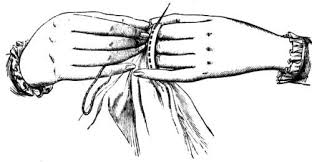
Finally, Oliver Ames (3) was going back to Brown. He had been home in North Easton, on a break, since January 21st. Evelina had her hands full mending a coat “which he has spoiled” so he could take it back to Providence. He wore it while working at the shovel factory and damaged it somehow. There was no time – and probably little inclination – to get a new one made for him. His mother had to fix it.

As Caroline Healey Dall, a contemporaneous female in Boston during this era, commented at one point in her mid-19th century diary, it was “a lonely, dull day – stitch, stitch, stitch.”* For most of the 19th century, all women sewed, and sewed often. Sometimes sewing was fun or companionable or rewarding; sometimes it wasn’t.  It was more often a necessity, a chore, and for Evelina today, the uninteresting and obligatory side of sewing prevailed.

Fortunately, Evelina had a few visits today from her younger female friends and relatives to help the time pass. Augusta Pool Gilmore visited in the afternoon – possibly with her own needle in hand – and niece Lavinia Gilmore called, having come into town from the family farm. In the evening, Evelina and her daughter Susan spent the evening with one of Easton’s more eccentric characters,Willard Lothrop, a medium. Oliver Ames (3) “came after” them after dark, probably anxious that all was ready for his return to college in the morning.

*Caroline Healey Dall, Daughter of Boston: The Extraordinary Diary of a Nineteenth Century Woman , ed. Helen R. Deese, Boston, 2005, p. 314

February 18, 1852

Hoof


1852

Wednesday 18 Feb  Augusta Emily Susan & self have

spent the day at Rachels.  Mother Henrietta & Lavinia

were there  Had a pleasant visit.  Went to

carry mother home with Charley had some trouble

with him about starting it was so cold.  Mrs Solomon

Lothrop & son Willard came to Alsons this afternoon 

Made two dickeys for Mr Ames and cut out two more


Just like the day before,”this was a fair day wind north west + cold”* as Old Oliver, family patriarch, noted in his daily journal. It was so cold that one of the family horses, Charley, didn’t want to leave the premises. But Evelina needed to take her elderly mother, Hannah Lothrop Gilmore, back to the family farm, so Charley was harnessed up and made to trot out. Evelina and her mother probably didn’t enjoy the frigid temperatures, either, but at least they could cover themselves with blankets or robes.

Evelina spent most of the day in the company of female relatives at the home of her niece, Rachel Gilmore Pool, who lived near the Gilmore farm.  Her daughter, Susan, and niece, Emily Witherell, were with her, as was new bride Augusta Pool Gilmore.**  Rachel’s unmarried sister, Lavinia, was there, along with their mother, Henrietta.  It was a multi-generational gathering of women from ages 9 to 79.

The women must have spent some time sewing as they all sat together, for Evelina managed to complete two dickeys, or shirt fronts, for her husband. The companionship would have made the handiwork fun to do.

*Oliver Ames, Journal, Stonehill College Archives, Arnold Tofias Collection

**Rachel Gilmore Pool was married to Augusta’s brother, John Pool, while Augusta Pool Gilmore was married to Rachel’s brother, Edwin Gilmore. One family’s sister and brother married a neighboring family’s brother and sister.

February 15, 1852

 lilliam_wald2

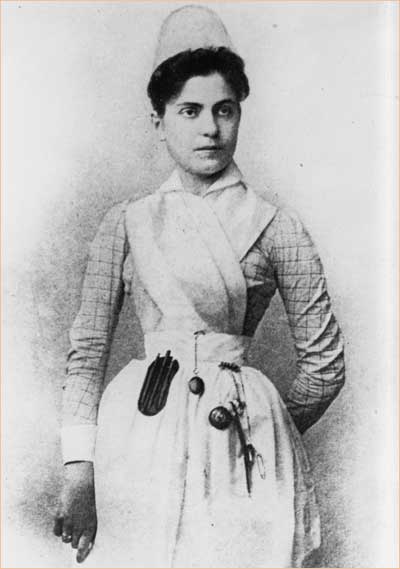
Nursing uniform from the late 19th c.*

1852

Sunday Feb 15th  Have been to church and at

noon went to Mr Baileys to see sister Amelia

who is nursing there  Mother went with me

Have been reading since meeting  Edwin & wife came

in to spend the evening but Mr Ames & self were

just going to Mr Swains and they would not let 

us stop for them so they went to Augustus  Had a 

pleasant call or rather visit at Mr Swains  came away

about nine Oclock  Very pleasant

The sun came out today, so despite it being “pritty cold,”** the Ames family went to church. During the intermission between morning and afternoon services, Evelina and her elderly mother, Hannah Lothrop Gilmore, rode out to visit Amelia Gilmore.  Amelia was the widow of Evelina’s brother, Joshua Gilmore, Jr. Joshua had died three years earlier, at age 35, leaving Amelia with two sons to raise.

In order to support herself and her boys, Amelia hired out as a nurse.  In this instance, she was looking after a Mr. Bailey, who must have lived near the Unitarian church. He may have lived alone, been ill and needed paid help; otherwise the convention of the day would have meant his female relatives looked after him. When Amelia wasn’t working, she and her youngest son, Samuel, lived with the Alger family near the Gilmore farm. The older son, Charles, had hired out somewhere but would soon come to reside with his uncle Alson Gilmore.

In 1852, nursing was not a formal profession.  Women (nursing was considered the exclusive province of women at the time) undertook nursing because they needed to work and this was one of very few avenues open to them. They based their protocol on personal experience in caring for ill members of their own families. There were no training programs or certification venues available, in no small part because there were so few hospitals. People were cared for at home. It would take the Crimean War in Europe and the Civil War in the U.S. to change attitudes and formalize medical care.

*Courtesy of http://www.nursinglink.monster.com

**Oliver Ames, Journal, Stonehill College Archives, Arnold Tofias Collection


February 14, 1852

 history

Detail of Cover of Gleason’s Pictorial, February, 1852

Sat Feb 14th  Finished Olivers shirt before dinner and did

some mending  About three went into Edwins and trimmed

a black silk cravat for Oliver  Mrs S Ames & Frederic

returned from New Bedford to night where they have been

since Tuesday  I spent most of the evening there

Evelina’s favorite periodicals, such as Gleason’s Pictorial, Godey’s Lady’s Magazine, and Graham’s, were full of allusions to Valentine’s Day this week. Gleason’s featured a valentine on its cover, in fact.  And while commercial Valentine cards hadn’t yet developed in the United States – that would happen in the 1870s – special letters and personal poems were popular on February 14. Yet Evelina makes no mention of receiving or sending a valentine, nor does she suggest that any of her children did, either.

Perhaps when Evelina went over to see Augusta Pool Gilmore, young bride of Evelina’s nephew Edwin Williams Gilmore, she found evidence of a valentine exchange between the newlyweds. Besides being in love and – presumably – open to sentimental expression, Augusta and Edwin were young enough to adopt new approaches to holidays that older Yankees like Evelina and Oakes ignored.

Meanwhile, winter was still very much present. As Old Oliver noted: “there was about half an inch of snow last night and it is cloud[y] + cold to day wind north west”

February 7, 1852

dickens12_2084187b


Charles Dickens, ca. 1852

(1812 – 1870)


1852  Sat  Feb 7th  Orinthia Miss Burill Susan & self called this

morning on Mrs J Howard, Whitwell & E Howards

left Susan at Mr Howards, came home with Frank

from a sing this evening.  Abby Augusta & Helen were

here awhile this afternoon  Helen went out to Bridgewater

last night and came up with Mr & Mrs James Mitchell this

forenoon  Orinthia went home about five and this

evening we have been into Olivers.  Mr Mitchell returned at nine.


This was a non-stop sociable Saturday for Evelina; she, her daughter Susan, dear companion Orinthia Foss, and another young schoolteacher, Miss Burrell, made calls all morning long. In the afternoon, she entertained three of her nieces and in the evening, visited next door at Oliver Jr and Sarah Lothrop Ames’s house. Chat, chat, chat.

In the larger world of letters, Charles Dickens turned 40 years old today. Even at mid-career, he was known as “The Inimitable,” so great was his talent, so voracious his readers. Evelina loved his work and benefited from his prolificacy.

By this point in Dickens’ life, among the books he had already published were The Pickwick Papers, Nicholas Nickleby, various Christmas novellas including A Christmas Carol, Dombey and Son, and David Copperfield, which Evelina had read the previous year. At this time he was composing Bleak House which, like most of his novels, was published in serial form over many months. Its first episode would come out in March, 1852, and run through September, 1853.

Still waiting to be born were future classics such as Hard Times (which targeted Unitarianism, among other entities), Great Expectations, A Tale of Two Cities, Our Mutual Friend – and more. Dickens wrote articles, made speeches, toured, and even acted. He was a high-profile tour de force with a fertile imagination and a thirst for success. Ralph Waldo Emerson, who heard Dickens speak in Boston, compared the author’s ability to “a fearful locomotive to which he is bound and can never be free from it nor set to rest.”*

*Ralph Waldo Emerson, quoted in Annie Field’s diary, 1868.


February 6, 1852

Write

Feb 1852

Friday Feb 6  Jane has baked some mince to day of

meat that was left last week and has done

very well.  Cut out a shirt for Oliver to day

and intended to finish it tomorrow but this

afternoon Miss Foss came and Miss Burrell

from W Bridgewater  We called at Edwins

this evening  commenced raining about five

Domestic tranquility reigned today as Jane McHanna made some fine mincemeat and Evelina cut cloth for a shirt, until interrupted by the arrival of Orinthia Foss and her friend Miss Burrell. For Evelina, chores gave way to social intercourse.

Besides keeping a record of various domestic details such as her sewing, Evelina often lists in her daily diary entries the names of the friends and relatives who come to call – in this case, Orinthia Foss and Miss Burrell. She writes of the women with whom she spends time, in fact, more often than she is apt to describe interactions with her immediate family (unless, of course, her husband forgets to pick her up to go out on a social call.) She includes the names of female friends, including her sisters-in-law, as much if not more often than she mentions the names of her children. Her social life, as in “We called at Edwins this evening,” is terribly important to her. She narrates it to her diary in order to remember it and savor it. It doesn’t mean that she doesn’t care about her family; she does. But looking after her almost-grown children is not noteworthy.

Evelina’s diary is simple, even for the nineteenth century, when the “practice” of keeping a diary was “to record personal feelings and explore intellectual growth.”* Eveline doesn’t concern herself with external events the way Mary Chesnut of South Carolina did in her diary of the Civil War, nor does she describe or question the secondary status of women as other Bostonians such as Caroline Healey Dall did in her diary. The intellectual pursuits and considerations of the brilliant Margaret Fuller never interested her – it was beyond her ken.  Evelina was literate and engaged in her life, but in a diffident and unsophisticated way. She wrote in a manner that more closely resembled her father-in-law, Old Oliver; her brother-in-law, Oliver Ames, Jr.; and, eventually, her son, Oliver (3). She simply wrote down whom she saw and what she did.


Steven Stone, Making Sense of Letters and Diaries, http://www.historymatters.gmu.edu

Other resources for information about diaries in the nineteenth century:

Schlesinger Library, Harvard University, http://ocp.hul.harvard.edu/ww/diaries.html

http://www.victorianpassage.com/2007/02/19th_century_diaries_and_scrap.php

January 31, 1852

500

Jan 31st  1852

Saturday  have been choring about house & mending most

all day.  Made a robe for Mitchell Willis child with

Mrs S Ames assistance  Edwin & wife here to tea  Mrs S

Ames has been here about three hours with her work

Mrs Witherell here awhile this afternoon.  Mr Frank

Russell was buried this afternoon.  My three sons went

to the funeral.  Quite a hard snow storm  Mr Ames to Boston

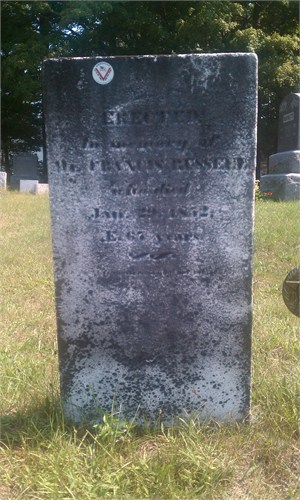
Inclement weather didn’t keep the Ames men from moving around today. Oakes Ames traveled into Boston on business, as he usually did on Saturdays. His sons, Oakes Angier, Oliver (3) and Frank Morton, rode to Easton Center for the funeral of Frank Russell, a 67-year-old blacksmith and veteran of the War of 1812. Russell had died two days earlier from pleurisy, and, despite the “hard snow storm,” he was buried at the Seth Pratt Cemetery with friends and family in attendance.  What had been his connection to the Ames’s sons? Had he worked for the shovel company?

Evelina, too, was tending to a death outside the family.  She and her sister-in-law, Sarah Lothrop Ames, sewed a burial robe for Luella Willis, the two-year old daughter of Mitchell and Amanda Willis.  Like Frank Russell, little Luella would have to be buried in cold ground during snowy weather. Once the services were over, the living would carry on with their chores, their commitments and their lives.  Evelina would turn to “mending most all day.”

January 26, 1852


IMG_0371

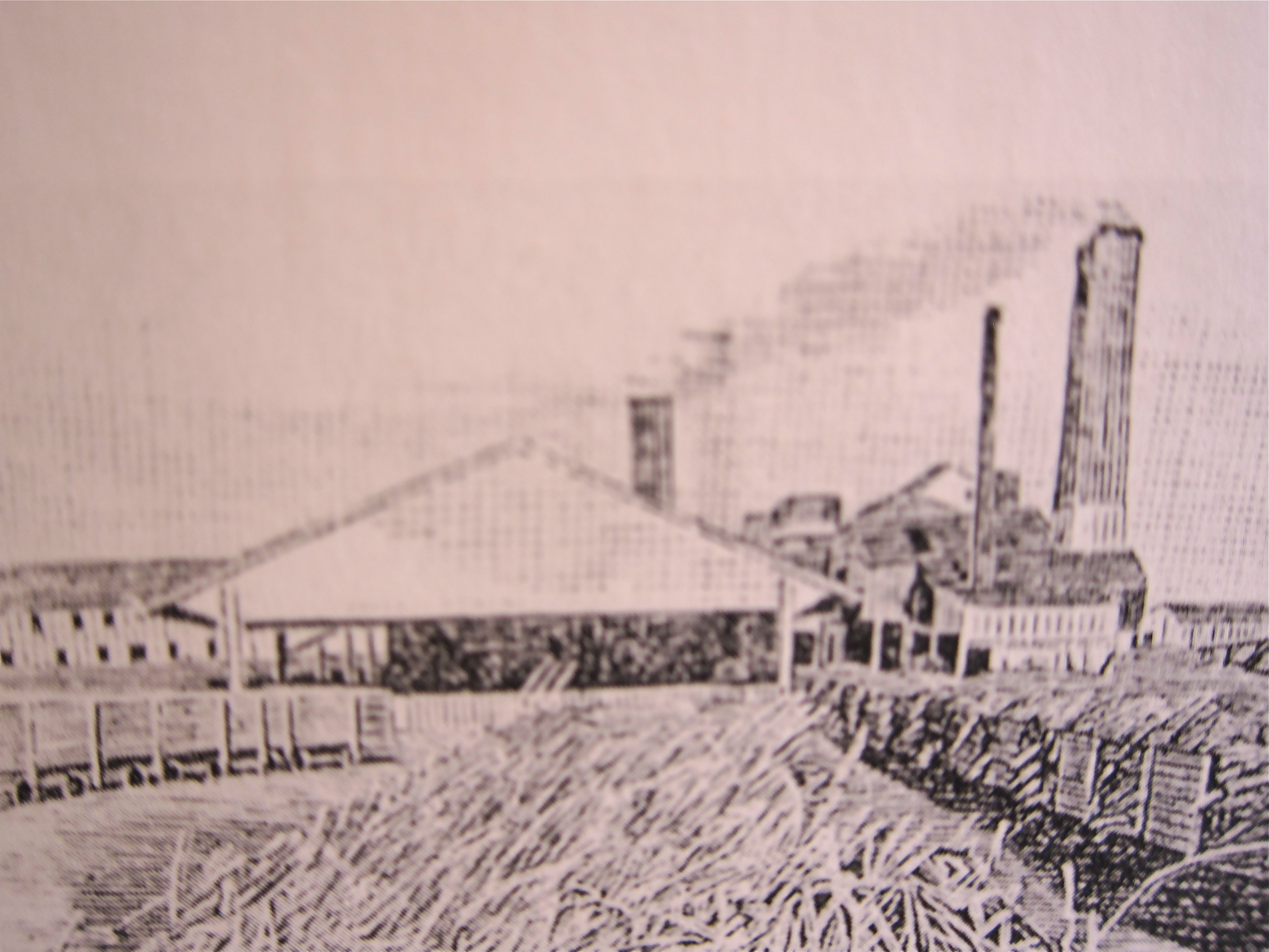
Ames Plantation, Jefferson Parish, Louisiana, ca. 1880’s

Jan 26/51 (sic)

Monday   commenced making Susan a flannel skirt

Mother & self went into Edwins with our work and staid

about 3 hours came home to tea.  Evening Augustus

Hannah and Mrs Witherell were here Oliver Jr

and Oakes A went to Mr Whitwells expecting to meet

Willard L there.  It has been a beautiful day.  Mrs Buck

and Sarah called at Edwins while we were there and

were very polite

It was Monday, which meant that Evelina probably did a little housework this morning before picking up her sewing. As usual, Jane McHanna managed the Monday washing and Evelina didn’t need to paint or fix or oversee anything but the flannel skirt she was making for her daughter. After midday dinner, she and her elderly mother, Hannah Lothrop Gilmore, walked to the home of Edwin Gilmore and sat with his bride, Augusta Pool Gilmore, each of them tending to their sewing. It seemed quiet on the home front.

In another decade, it would be anything but quiet – at least across most of the country.  The United States would be in the first upheavals of an impending civil war. “The Great Rebellion,” they would call it. On this particular day in January, 1861, Louisiana would secede from the Union, the sixth of eleven states to do so. When the war ended in 1865, the Confederacy defeated, Louisiana and her sister states would ultimately be accepted back into the Union through the arduous and hotly political process known as Reconstruction.

In another two decades, the economies of the southern states would still be struggling, enabling many northerners to acquire cheap land and cast-off businesses. In 1873, the three Ames brothers – Oakes Angier, Oliver (3) and Frank Morton – would purchase two old plantations, Estelle and South Side in Jefferson Parish, Louisiana, right across the Mississippi from New Orleans. On 13,000 acres, they would grow and refine sugar. The business ran until the start of the 20th century, overseen eventually by one of Frank’s sons. The property, which”stretched for more than one mile on the river and ran about eight miles deep”* was eventually sold.  Today that land comprises much of the city of Marrero, Louisiana. Little is left of the Ames influence except an eponymous boulevard running through the city’s center.


* Betsy Swanson, Historic Jefferson Parish: From Shore to Shore, p. 97.


January 24, 1852


IMG_2669


1852

Jan 24th  Saturday   Worked all the forenoon mending

Olivers overcoat & pants. Have finished my worsted

hood in Olivers this afternoon.  Julia Pool

Augusta & Edwin were there to tea. Mr Ames

has been to Boston & has brought home Oliver a

gold watch  Fred & Oliver have fine time and 

are wide awake  They sleep together.  Fred came 

in here tonight.

Evelina must have written this entry at night, perhaps in her bedroom where she could hear her son Oliver (3) and nephew Fred Ames conversing and laughing elsewhere in the house.  The first cousins, college men both, enjoyed one another’s company and were spending the night together. Up to now, they were the only family members in recent memory to go to university and must have had some stories to compare.

The fond regard that Oliver (3) and Fred held for one another would last throughout their lives, although it would be sorely tested on occasion. As grown men caught up in the high stakes of the railroad business, they found themselves holding opposing views more than once.  And after the sudden death of Oakes Ames and the attendant financial woes that followed, Oliver (3) defended his father’s legacy, while Fred supported his own father’s efforts to recoup funds that Oliver, Jr. believed were his.  In other words, Oliver (3) and Fred faced off over money. Yet they moved in similar circles, invested in similar capitalist ventures and, in 1893, when Fred himself died quite suddenly, Oliver (3) grieved, “completely broken down by [the] sad news.”*

Those difficult times lay ahead, but on this day, Oliver (3) had something to celebrate.  His father, Oakes, had given him a gold watch, perhaps in honor of his 21st birthday, which was right around the corner. Perhaps, too, Oakes was honoring his middle son for his successful studies at Brown University, studies that Oakes had initially resisted. The watch was certainly a sign that Oakes was proud.

*Oliver Ames Third, Diary, September 13, 1893, Collection of Stonehill College Archives


January 22, 1852

Tripe

Tripe

1852

Jan 22  Thursday  Have been cutting some apples & chopping

meat for mince pies, have it ready for baking

was about it all the forenoon, boiled tripe

This afternoon have been quilting the lining

for my hood. Julia Pool & Augusta spent the

afternoon. Augusta went home to get tea for Edwin &

in the evening they both came in and staid until

nearly ten Oclock. Mrs S Ames was here about an hour

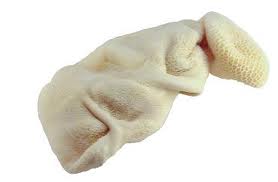
Evelina was the recipient of the tripe from the two oxen that Old Oliver had butchered a few days earlier. Tripe is the stomach.

Lydia Maria Child offered advice on its preparation: “Tripe should be kept in cold water, or it will become too dry for cooking. The water in which it is kept should be changed more or less frequently, according to the warmth of the weather. Broiled like a steak, buttered, peppered, &c., some people like it prepared like souse.”*

Souse, also known as head-cheese, is a terrine made with meat from the head of a cow, calf or pig, often pickled, and set in a meat jelly or aspic. Mrs. Child was suggesting that the tripe be served in aspic, which Evelina might have done once she boiled it.  It’s not a dish one sees anymore on the American dinner table.

Out of the kitchen, Evelina welcomed visitors from the Pool family. The bride, Augusta Pool Gilmore, and her sister, Julia Pool, spent the afternoon at the Ames house and in the evening, the newlyweds themselves visited until ten o’clock.


Lydia Maria Child, The American Frugal Housewife, p. 38