March 16, 1852

130705-A-DS407-001

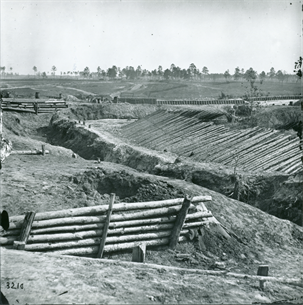
Defensive breastworks dug by Army Corps of Engineers outside of Petersburg, Virginia during the Civil War – probably using Ames shovels

March 16th

1852 Tuesday  Sewed on my waist very quietly

with Amelia this forenoon and this afternoon

have been into Edwins  Julia Pool came

there & tomorrow is going into Boston  Mrs S

Ames was there and this evening Mrs Witherell

Amelia is in fine spirits and am having

a very pleasant visit from her.

A quiet day was this, and “not verry cold.”*  Evelina and her sister-in-law, Amelia Gilmore, sat and sewed for hours and visited with Augusta Pool Gilmore, Sarah Lothrop Ames and Sarah Ames Witherell.  The reconstruction of the shovel shops continued.

Although Evelina was unlikely to have known it, today happened to be the 50th anniversary of the founding of the Army Corps of Engineers. Officially organized  by President Thomas Jefferson on this date in 1802, the Corps was headquartered at West Point, where it established and led the military academy until after the Civil War. For many years, West Point was the major engineering school in the country.

In addition to its oversight of West Point, the Corps was tasked for much of the 19th century with exploration of America’s vast lands and waterways. As the country moved westward, the Corps surveyed road and canal routes.  During the Civil War, it built bridges, railways, forts, batteries and roads – often using Ames shovels.

In 1852, in particular, the Corps was focused on waterways.  In Detroit, one group of engineers conducted and published a survey of the Great Lakes. In Utah, an engineer named Lieutenant James W. Gunnison, for whom the Gunnison River is named, explored the Salt Lake area and spent time with the Mormons. He published a report entitled, “The Mormons or Latter-Day Saints, in the Valley of The Great Salt Lake. A History of their Rise and Progress, Peculiar Doctrines, Present Condition, and Prospects, Derived from Personal Observation During a Residence Among Them.”

A year later, Gunnison and several members of his team would be massacred by Indians from the Pahvant Ute tribe.  Gunnison’s widow, Martha, always believed that the Mormons were the actual perpetrators. The Army Corps of Engineers kept right on going, continuing its work and eventually expanding its original mission to include flood control, dam construction, and environmental cleanup.


Oliver Ames, Journal, Stonehill College Archives, Arnold Tofias Collection

March 15, 1852


PENTAX Image


1852

March 15th Monday  Gave the sitting room & entry

a thourough sweeping & dusting and then

went to sewing.  Susan washed the dishes

Amelia & self carried our work into Edwins but did 

not stop to tea, are invited there tomorrow.  We called

at Mrs Bucks  She has 41 schollars and 5 or 6 boarders


After “considerable rain” over night, Monday broke “cloudy in the morning but fair + warm in the afternoon and in the evening there was some rain + it grew colder [.] Mr Arnold came to day to sleight the hammer shop”* Thus wrote Old Oliver.

After Sunday’s respite, work on the rebuilding of the shovel shops picked right back up.  A slate roof was going up on the hammer shop, thanks to the expertise of John Arnold, a local man who had done roofing for the Ameses before.  Old Oliver seemed pleased.

At the Ames home, Amelia Gilmore continued her visit with Evelina. Once the morning chores were complete, with Susie washing dishes and trusted Jane McHanna doing the laundry, and midday dinner consumed, Evelina and Amelia walked across the way to visit Augusta Pool Gilmore, carrying their sewing with them. They must have spent several hours there, but didn’t stay for tea. Instead they headed home, stopping off to see another neighbor, Polly Buck.  Evidently, Mrs. Buck was running a private school with day students and boarders. One imagines that the ruckus there might have been equivalent to the bustle of workers at the building site.


*Oliver Ames, Journal, Stonehill College Archives, Arnold Tofias Collection
March 10, 1852

Handkerchief

1852

March 10th  Wednesday  Early part of the day

was sewing on a waist or rather cutting

it out and getting it to fit.  Augusta

came in this afternoon but as Amelia

& self were invited into Olivers she went

with us and Edwin.  Mr Ames came to tea

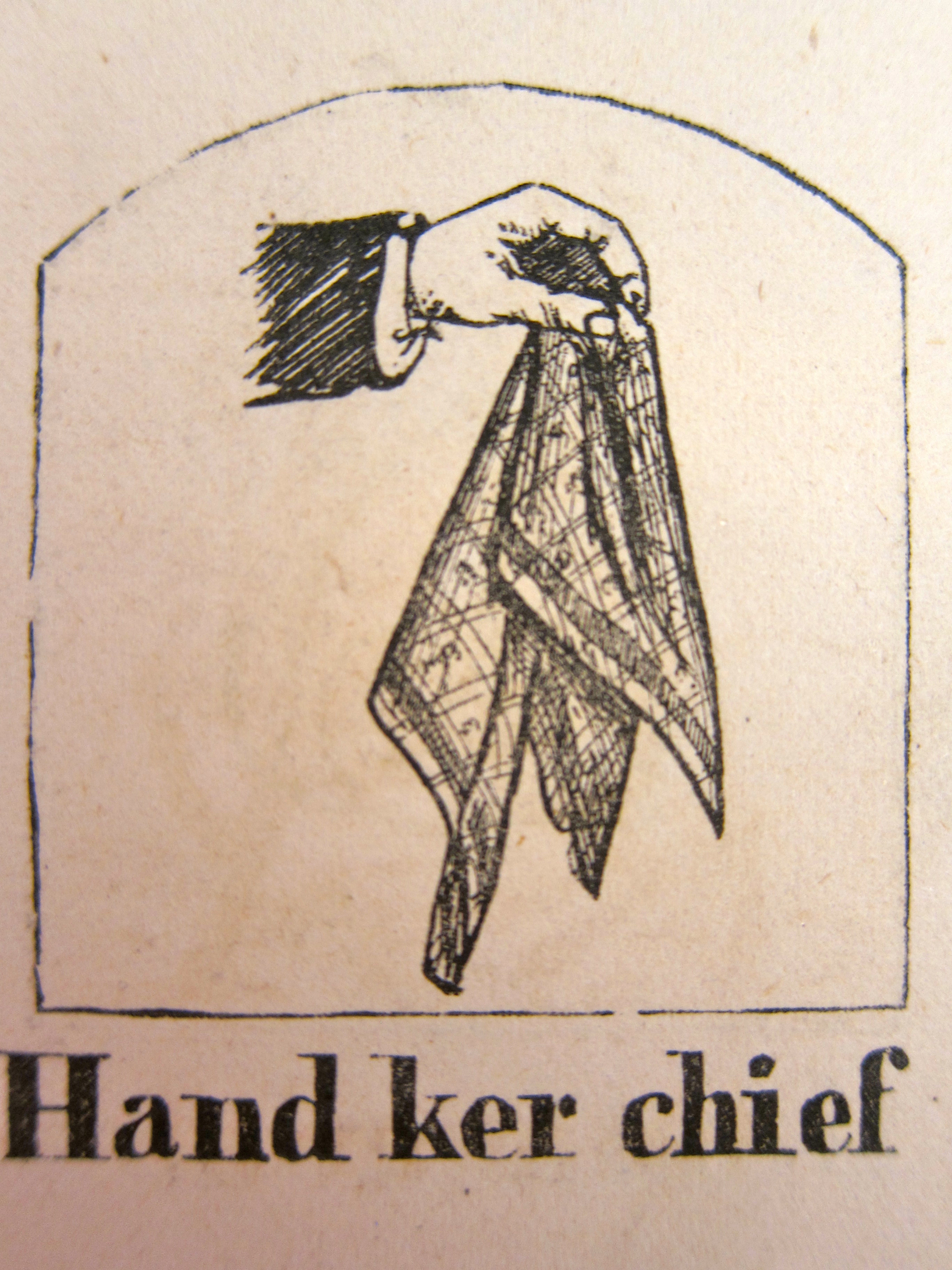
Amelia trimmed some pocket handkerchiefs

for me that Mrs Ames got in New York

The rebuilding of the shovels shops was moving along well. They “put the roof on the stone shop to day,”* according to Old Oliver, who watched each day’s progress carefully. It had been a full week since fire had destroyed most of the factory buildings. The response and reconstruction had been immediate!

Amelia Gilmore, the widow of Evelina’s younger brother, Joshua Gilmore, Jr., was visiting for several days.  She undertook the hemming of some handkerchiefs – essential components of a lady’s outfit – that Almira Ames had brought Evelina from New York City. The purpose of a handkerchief, a personal item dating back to antiquity, was primarily hygenic, used to wipe one’s nose or brow and cover one’s cough. In a time of contagious diseases such as tuberculosis, cloth handkerchiefs were essential.  Their ubiquity necessitated their incorporation into the fashion profile.

Late in the day, the two went next door to Oliver Jr.’s and Sarah Lothrop Ames’ home for tea.  Oakes Ames went, too, and the newlyweds, Augusta and Edwin Gilmore, tagged along.


*Oliver Ames, Journal, Stonehill College Archives, Arnold Tofias Collection


March 9, 1852

OLYMPUS DIGITAL CAMERA

19th century oil lantern

1852

March 9th  Tuesday  This morning finished putting

the sitting room chamber in order

Mrs Witherell came in with her work

for an hour or two. I sent for Hannah

Augusta & Abby this afternoon.  Abby

came in this evening  Augustus called  his

wife has the canker and was not able to come


Today “was a fair good day + pritty warm,” * accommodating weather for the carpenters working on the shovel shops. According to modern town historian, Ed Hands, the repair would be rapid enough to allow a resumption of manufacturing “in less than three weeks.” But what happened to the shovel makers during the hiatus? Were they kept on payroll? Or were they given unpaid furlough?

What happened to Patric Quinn? An Irish immigrant with a young wife and two small children, he was the watchman who had dropped his lantern into the varnish on the night of March 2d. He started the fire. Was he injured? Was he held accountable?  Did he stay on payroll? He and his wife Elisa, who sometimes did sewing for Evelina, remained in North Easton. They lived on Elm Street in one of the workers’s houses.

At the Ames compound, Evelina put the sitting room and parlor back in order. She and her sister-in-law, Amelia Gilmore sat and sewed.  They were joined for a time by Sarah Ames Witherell who was followed by young Abbey Torry and Augusta Pool Gilmore. Hannah Lincoln Gilmore was too sick to attend.


*Oliver Ames, Journal, Stonehill College Archives, Arnold Tofias Collection

**Edmund C. Hands, Easton’s Neighborhoods, 1995, p. 163

March 6, 1852

Whitewash

1852

March 6th Saturday  Mr Scott whitewashed the parlour

& sitting room chamber this morning and I

varnished the front entry oil cloth.  Lavinia

came at eleven and Augusta this afternoon

Alson came after Lavinia and stopt to tea

Charles Pool came up and carried Edwin

and Augusta home to stay till Monday

I have been to work on a stiched pink apron

for Susan

A full moon shone down on North Easton this night, highlighting the charred ruins of the shovel factory.  Before it rose, however, Old Oliver took the opportunity of “a fair day”* to travel to Bridgewater, quite probably on shovel business.  He and his sons were developing plans to rebuild the factory, and some help for that would be found in Bridgewater.

Evelina’s way of coping after the devastating fire appears to have been to keep the domestic front moving smoothly. Redecorating continued, social calls were made and enjoyed, and sewing continued without a blink of an eye. Daughter Susan would soon have a new pink apron.

Years later, Evelina and Oakes’s grandson, Winthrop Ames, would credit his grandmother and other Ames wives with exerting a positive influence on his male ancestors. “They made the homes, reared the many children, saved their husbands’ money, encouraged their undertakings, and steadied them in failure and misfortune,”** he said. Evelina’s evident steadiness during this challenging period is one such instance of positive influence. Oakes Ames had come home from the fire “more cheerful” than Evelina had expected; she seems to have behaved with equal optimism. Though naturally sanguine, Oakes’ bright outlook and ability to cope in the aftermath must also have been bolstered by his wife’s unflappable focus on home and (redecorated) hearth. Together, they maintained continuity.

Charles Pool, Augusta’s eldest brother, drove up from southeastern Easton today and fetched his sister and her husband, Edwin Williams Gilmore, “home to stay” for a few days. Perhaps this visit had been prearranged, or perhaps it was an effort by the young couple to get out of the way of remnant smoke and disruption from the fire.

*Oliver Ames, Journal, Stonehill College Archives, Arnold Tofias Collection

**Winthrop Ames, The Ames Family of North Easton, Massachusetts, 1937, p. vi.


March 5, 1852

charred-wood-texture_61-1902

Charred Wood

1852

March 5th Friday  Have been mending pants most all

day that were worn at the fire  Lavinia

went to Augustus’ this forenoon and Augusta

went this afternoon.  Mr Scott & Holbrook have 

finished painting the entry and chamber

got through about four Oclock.  I was in

Olivers about an hour this afternoon.  This 

evening received another letter from Harriet Ames


The women of Easton had work to do, too, in recovering from the factory fire.  Surely Evelina wasn’t the only housewife in North Easton who had to repair or clean clothes worn by their husbands, brothers or sons the night of March 2. Needles were out and laps were full as women all over town tended to the rips, tears and soot. Conversation probably centered on the fire as they worked.

The day itself was cloudy and cold, the smell of the charred buildings dampened by a light snow that fell overnight. Yet the cleanup continued. As the men worked at the site, hauling timbers and shoveling up debris, their blackened soles left ashy footprints in the snow, footprints that quickly turned into grime. Many a man was made to wipe or remove his shoes before entering his house for midday dinner.

Evelina stayed focused on her domestic responsibilities. Mr. Scott and Mr. Holbrook were back on task in her parlor, painting and papering, and finished up at the end of the afternoon. Evelina spent some time next door with Sarah Lothrop Ames, and got a letter from cousin Harriet Ames, with whom she had been corresponding lately. And perhaps under her direction, her niece Lavinia and niece-in-law Augusta were looking after their sister-in-law, Hannah Lincoln Gilmore, who was laid low with a mouth infection and a weaning baby. Fire or no fire, life was moving forward.


March 3, 1852

Fire


1852

March 3  Wednesday  Last night the finishing shops

were burned to the ground by Quinns letting 

his lantern fall into the varnish  Oakes came

home from the fire about 4 Oclock much

more cheerful than I expected to see him and 

went to bed  OA and Frank came home to put

on dry clothes & went back and staid untill morning

Lavinia & Augusta were here awhile this afternoon


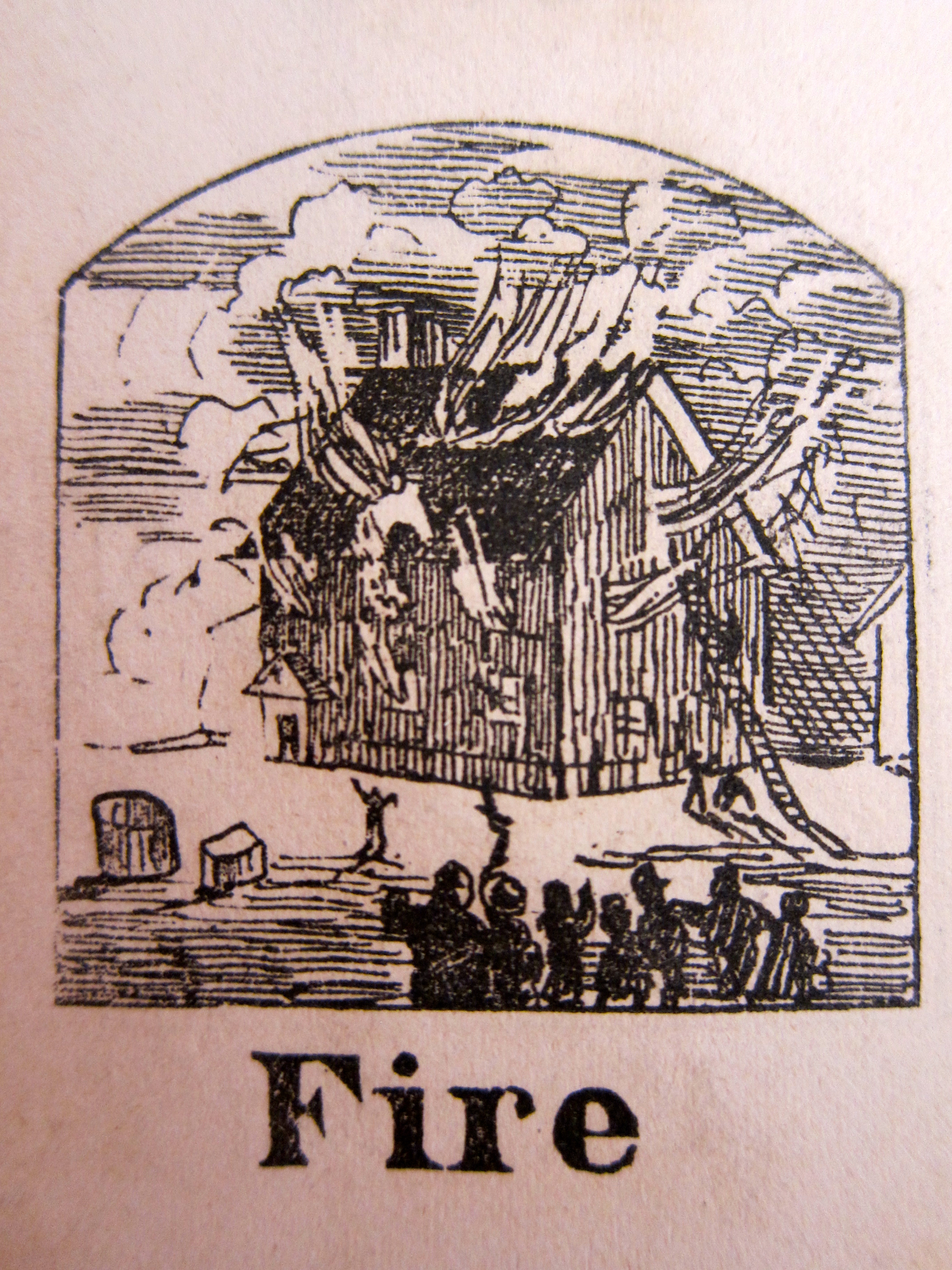
Fire! Most of the shovel company’s buildings, situated in”the most centralized areas of Ames production, ‘the island’ at the outfall of Shovel Shop Pond,”* caught fire and burned to the ground. On his nightly round, Patric Quinn, the watchman, dropped his lantern into the varnish. The subsequent explosion must have been quick and, given the nature of the combustibles, uncontainable from the outset.

Naturally, Old Oliver recorded the event as well: “last night about eleven O clock the finishing shop took fire and the shops adjoining it were burned down – Bisbes shop and the small one made out of the cole hous that was mooved from the hoe shop was saved – the fire took from the varnish …”**

O. Ames & Sons had caught fire before, once in 1844 and again in 1849.  After the 1844 fire, the family “had bought a used fire engine,”** which was brought to bear on the 1849 fire. In that case, Old Oliver credited the engine with saving the day, noting that “if we had have had no engoin I think it would have burnt up.” **

This latest conflagration was different. As modern historian Gregory Galer points out, “luck was not on their side…[the used fire] engine was no match for the blaze, fueled in part by 12,000 well-dried, ash shovel handles; oil and varnish used to protect completed shovels; and the wooden building itself.”*  The shovel shop was in ruins.

Evelina didn’t attend the fire, but she would have been able to see the flames from their front windows. The fire went on all night, her husband, sons and other townspeople present for most of it. There is no record of any injuries.


Gregory Galer, Forging Ahead, MIT, pp. 248-249

** Oliver Ames, Journal, Stonehill College Archives, Arnold Tofias Collection
 

February 29, 1852

Ink

Feb 29

1852 Sunday  It was quite windy and mother

was unable to attend meeting all day so

I staid at home with her this morning.

This afternoon have been with mother & Augusta

& mother returned home. Since meeting

have written a letter to cousin Harriet Ames

but feel rather doubtful about sending it

1852 happened to be a leap year, which, as most of us know, is so named because the addition of the extra day of February 29 causes days of the week, which normally advance by a single weekday from one year to the next, to “leap” ahead by two.

Leap year is known in more scientific circles as a bissextile or intercalary year. Charles Dickens knew that.  He also knew about a tradition that allowed ladies to propose marriage during Leap Year, a custom otherwise accorded to the male of the species. In 1840, when Queen Victoria announced her “intention” to marry Prince Albert , he commented – tongue-in-very-British-cheek – accordingly:

“That the present is Bissextile, or Leap Year, in which it is held and considered lawful for any lady to offer and submit proposals of marriage to any gentleman, and to enforce and insist upon acceptance of the same, under pain of a certain fine or penalty; to wit, one silk or satin dress of the first quality, to be chosen by the lady and paid (or owed) for, by the gentleman.

“That these and other horrors and dangers with which the said Bissextile, or Leap Year, threatens the gentlemen of England on every occasion of its periodical return, have been greatly aggravated and augmented by the terms of Her Majesty’s said Most Gracious communication, which have filled the heads of divers young ladies in this Realm with certain new ideas destructive to the peace of mankind, that never entered their imagination before.

“That a case has occurred in Camberwell, in which a young lady informed her Papa that ’she intended to ally herself in marriage’ with Mr. Smith of Stepney; and that another, and a very distressing case, has occurred at Tottenham, in which a young lady not only stated her intention of allying herself in marriage with her cousin John, but, taking violent possession of her said cousin, actually married him.

That similar outrages are of constant occurrence, not only in the capital and its neighbourhood, but throughout the kingdom, and that unless the excited female populace be speedily checked and restrained in their lawless proceedings, most deplorable results must ensue therefrom; among which may be anticipated a most alarming increase in the population of the country, with which no efforts of the agricultural or manufacturing interest can possibly keep pace…”

Evelina may have read Dickens’ playful screed on the dangers of Leap Year, probably without taking offense.  She had her own letter to write today to a cousin, one that seemed to trouble her.


* Charles Dickens, Sketches of Young Couples, courtesy of http://www.authorama.com


February 27, 1852

Tea kettle


Feb 27

1852  Friday  this morning I invited Mrs Lothrop here

but she went to Mrs Jason Howards to spend the day

came here this evening  Mrs S Ames & Fred dined

here  Mrs & Mr Horace Pool  Mrs W Williams  Abby

Edwin & wife Oliver & wife & Fred & Mrs Witherell

were here to tea  All came unexpectedly.  Had 

a very pleasant visit from them.

Many folks came to call today.  Sarah Ames Lothrop and her son, Frederick Lothrop Ames, joined the Ameses for midday dinner. (Although Oliver (3) had returned to Brown, Fred hadn’t yet gone back to Harvard.) A real crowd arrived “unexpectedly” for tea.  Sarah and Fred returned, bringing Oliver Ames Jr. with them. Sarah Ames Witherell came in from the other part of the house, resulting in all three sisters-in-law being together. Newlyweds Edwin and Augusta Gilmore walked over from their nearby home, and old Mrs. Gilmore – Evelina’s mother – was already on the premises. The family gathered.

From farther away came Horace and Abby Avery Pool, uncle and aunt to the bride, Augusta.  A Mrs. W. Williams arrived, as did Abby Torrey, Evelina’s niece. Abby’s head must have been full of the previous evening’s entertainment, that of Willard Lothrop’s visit and trance. It’s likely that some of this evening’s conversation turned on spiritualism.  One wonders what Oakes and Oliver Jr. thought of the topic.

Perhaps Evelina served some ginger snaps or currant cake from Tuesday’s baking. The tea itself could have been one of any number of types. Lydia Maria Child published her opinion on the subject: “Young Hyson is supposed to be a more profitable tea than Hysons; but though the quantity to a pound is greater, it has not so much strength. In point of economy, therefore, there is not much difference between them. Hyson tea and Souchong mixed together, half and half, is a pleasant beverage, and is more healthy than green tea alone.  Be sure that water boils before it is poured upon tea  A tea-spoonful to each person, and one extra thrown in, is a good rule.  Steep ten or fifteen minutes.”*

*Lydia Maria Child, The American Frugal Housewife, 1846


February 22, 1852

georgewashington

1852

Feb 22nd Sunday Quite a snow storm this morning but

most all went to church.  I came home at noon on

account of a violent tooth ache and did not return.  Mrs

S Lothrop & son spent this afternoon, Frank carried

Orinthia home after meeting. Read in Grahams

Magazine  Mr Ames & self passed the evening at Edwins

It has cleared off very pleasant this evening

“It was a snowing this morning + all the forenoon and fell 2 or 3 inches deep wind southerly + thawd some  was clear at night,” according to Ames patriarch, Old Oliver. Yet the family rode through the snow to get to church. Poor Evelina got “a violent tooth ache” and had to go home after the first service. She must have felt better as the day progressed, for in the evening she and her husband, Oakes, went across the way to visit newlyweds Edwin and Augusta Gilmore.

Today was George Washington’s birthday. Born in 1732, he died in 1799, when Old Oliver was twenty years old. After Washington’s death, the young Congress of the day, whose partisanship between Federalists and the Jeffersonian Democrat-Republicans rivaled the divide we see in our modern Congress, came together to pass a resolution honoring the first president’s birthday. February 22, 1800 was dedicated to him and by 1832, the centennial of Washington’s birth, some type of observance of the holiday was customary.  The holiday did not become federal law until the 1879, and at the time was qualified as a “bank holiday.”

Old Oliver would have remembered the hero of the American Revolution and probably revered him, as most Americans did. Old Oliver was a child when the Constitution was written and ratified, and lived to see 16 presidents take office. For his generation, no American leader would be more heroic than General Washington.