August 29, 1852

300px-1852_Atlantic_hurricane_season_summary_map

Map of 1852 Hurricane Season, 21st century imagery*

Sunday Aug 29

1852  Has rained powerfully all day  Not one

of the family been to meeting  Mr Ames &

self laid down about twelve and when

we went downstairs found Edwin & wife

among the missing  Made them come back

to tea and spend the night  I have

felt tired & lazy and have read but

very little

The unofficial hurricane season of 1852 opened about ten days before today’s diary entry with a storm now classified as the Great Mobile Hurricane of 1852. According to modern meteorologist Christopher Landsea (great name for a weatherman!)*, the unnamed storm hit the Florida Keys, made landfall near Pascagoula, Mississippi and broke back out into the Atlantic in South Carolina, destroying lighthouses, homes, trees, bridges and crops in its way. It surged northward toward Cape Cod, where it still had enough energy to be felt in New England. Thus could Old Oliver report today that “the wind changed to northeast last night and there was an inch + a half of rain fell and it is a raining this morning and it raind all day + the wind blew hard”**

While this weather event of hemispheric proportions pounded its way across the eastern United States, a quite different vignette unfolded inside the Ames’s home. Eveline writes that the family skipped going to church, naturally, given the weather. She and her husband, from whom she had been absent for ten days or so, went upstairs to their bedroom and lay down – and closed the door, presumably. We can’t know the details, nor should we. But we can be grateful for this rare and tiny glimpse of intimacy between Evelina and Oakes, and smile at the Victorian discretion exercised by Evelina as she recorded the event.

*Information courtesy of Wikipedia, “1852 Atlantic hurricane season,” accessed 8.26.2015

** Oliver Ames, Journal, Stonehill College, Arnold Tofias Collection
August 17, 1852

Flatiron

Aug 17th Tuesday  Starched my clothes and about

eleven Oclock was setting the table to iron

when Mother & Alsons wife came and

I put them by.  Have ironed them this after

noon in the dining room with Mrs Stevens

Henrietta Augusta & Abby sitting around

Mrs Ames & Witherell called

The Ameses had made a decision to send Oakes Angier to Vermont for a rest, and Evelina was to accompany him on the trip. Also accompanying them would be Sarah Lothrop Ames and her two teenaged children, Fred and Helen, as well as the visiting Almira Ames.

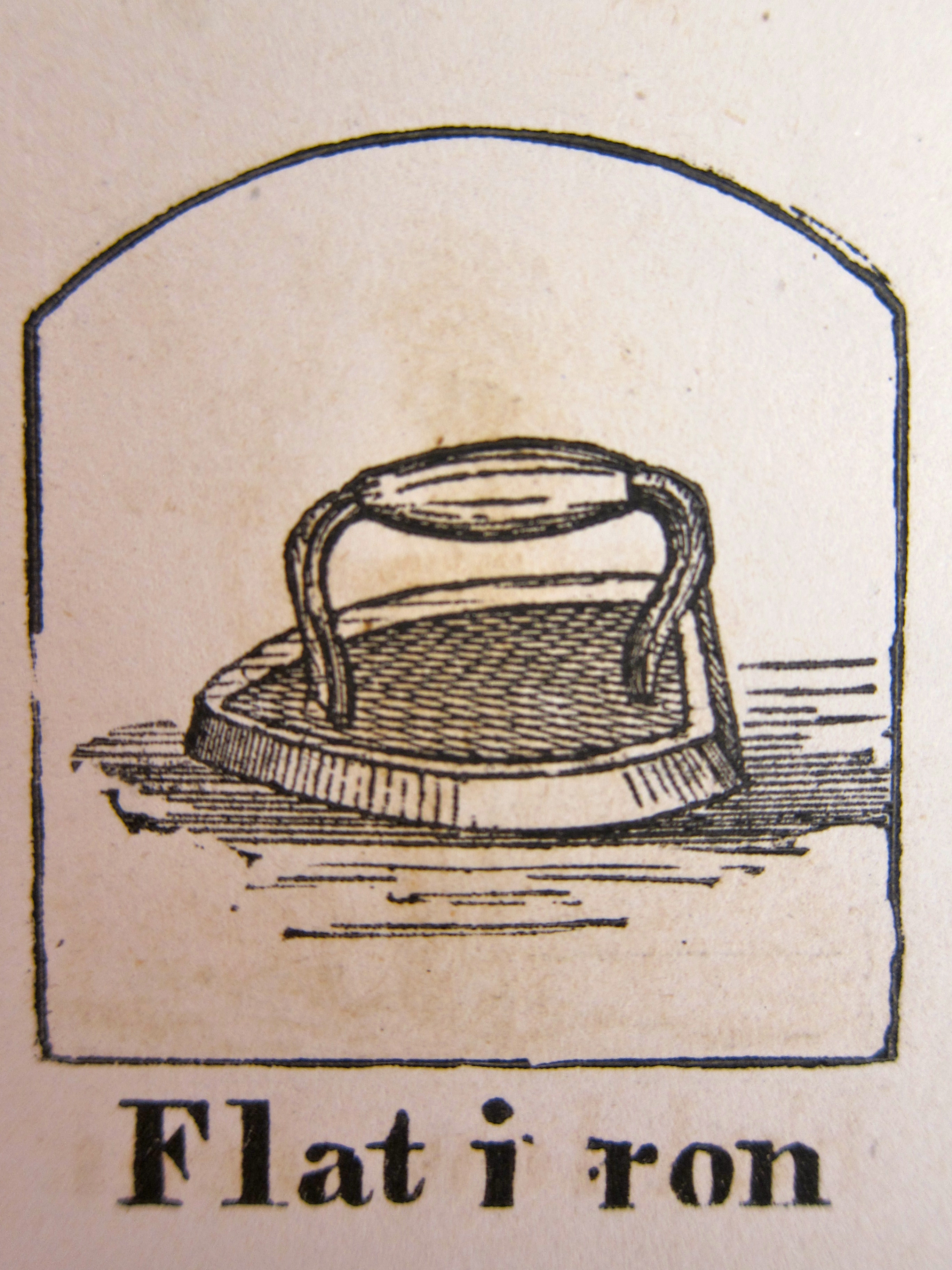
Gathered around Evelina in the afternoon were many of her usual companions: her sister-in-law Henrietta Williams Gilmore, her nephew’s wife, Augusta Pool Gilmore, her niece Abigail Williams Torrey, her guest Mrs. Stevens, and her nearest sisters-in-law, Sarah Witherell and Sarah Ames. The looming expedition must have been the topic of conversation among the women as they sat and watched Evelina iron her clothes on the dining room table. (No ironing boards yet!) The conversation might have roamed from concern for Oakes Angier to curiosity about the travel arrangements.

That the travel ahead of Evelina was serious is indisputable; it involved the well-being of her eldest son. Yet there had to be an element of adventure in the plans.  They’d be traveling across Vermont, visiting places that Evelina may never have seen. They’d be seeing relatives and friends, too, which may be the element that enticed Sarah Lothrop Ames and her two children to join the expedition.

August 7, 1852

Wagon

Sat Aug 7th  Was sewing part of the forenoon made

some pies & cake  Went into Olivers about four,

Started to go to Augustus in a waggon and

got caught in a shower turned back at the

school house got completely wet  My sons & Mr Ames

were at tea at Olivers  Edwin & wife Lavinia & Abby

there Catharine & I have done some sewing this week

two nightgowns for self one for Susan & one cotton & 

moire skirt & c &c  Susans waists are finished


“[T]he 5, 6 + 7th were pritty warm day[s] + there was some rain,”* wrote Old Oliver in his journal. Evelina was out in that rain and “got completely wet.” Late afternoon showers are part and parcel of August weather in New England. The showers can come up quickly, too, so it’s small wonder that folks moving around the countryside in horse-drawn wagons could get caught in the rain.

While Evelina was getting soaked, her husband Oakes and sons Oakes Angier, Oliver (3) and Frank Morton Ames had tea next door with the Oliver Ames Jr family. How was Oakes Angier feeling, now that he was coughing so much? Perhaps he and his brothers got to hear their cousin Helen play piano again, or perhaps they just ate and conversed. Various Gilmore relatives, including Edwin and Augusta Gilmore, Lavinia Gilmore and Abby Torrey were there as well.  As previously noted, Lavinia and Helen were particularly friendly.

And speaking of friends, fans of Sherlock Holmes might enjoy knowing that August 7, 1852 is the purported birthdate of the fictional Holmes’ steady, tolerant and equally fictional sidekick, Dr. John Watson.

*Oliver Ames, Journal, Stonehill College Archives, Arnold Tofias Collection


August 5, 1852

Rein

1852

Thursday Aug 5th  Have had a rainy day which was

very much needed.  Was intending to go to

Boston with Oakes A in a carriage  Am most

affraid to have him drive Caty as he has been

raising blood of late and has a hacking cough

Lavinia is at Edwins has had Julia

cut her a dress to day  I went there and 

carried my work awhile this afternoon 

Put a new breadth into Susans Borage Delaine

where she tore it

Caty (or Katy), one of the Ames’s horses, was famous in Easton for her willful – and fast-paced – ways. Evelina has complained about her in previous diary entries. Today, however, Evelina had another reason entirely to be “most affraid” to let her son, Oakes Angier, drive the horse. Oakes Angier Ames was coughing up blood.

In an age when consumption, which we know as tuberculosis, was rampant and usually fatal, any person “raising” bloody sputum was immediately suspected of having the disease. TB wasn’t restricted to the lungs, actually; it could attack other parts of the body, such as the spine, but its most common manifestation was pulmonary. Blood coughed into a handkerchief was bad news.

How frightening this development must have been for Oakes Angier, and indeed for the entire Ames family.  Oakes Angier was the eldest grandson, the heir, the star cousin and nephew in whom many expectations were placed. He was beloved, and suddenly he was evincing signs of a potentially fatal illness. Old Oliver makes no mention of this in his journal, however, and Evelina herself had taken a few days to record the news. She may not have wanted to see such words in writing. We may suspect that Oakes Ames knew about his son’s condition earlier, but we can’t know for certain, of course. We can only follow the family as it copes with this huge development.

On this day, Evelina seemed to cope as she always did, by sewing. She took her work across the way to visit Augusta Pool Gilmore, the young bride who was now in the family way. Dressmaker Julia Mahoney was there, as was Lavinia Gilmore, so the women were able to sit and sew and talk in their usual fashion. The touch of normalcy must have been somewhat soothing for Evelina.


August 3, 1852

Hpr HaravrdTraining-s

Harvard Crew Training on the Charles River, ca. 1869*

August 3d 1852

Tuesday  Cut out a linen & moire skirt for Catharine

to make and Susan a night gown  I have

at last got my travelling dress done  I believe

cape and all.  How provoking it is to have

to alter so much  Julia Mahoney has been

to work for Mrs Witherell making a Borage Delaine

Augusta & Mrs McHanna were here this afternoon

For Evelina, this was a fairly ordinary day of sewing and socializing. Her big news was that she “at last” completed her new traveling outfit.

In the annals of American sports, however, this was no ordinary day.  In a two-mile regatta on Lake Winnipesaukee, New Hampshire, under a bright blue sky, Harvard beat Yale in the very first intercollegiate athletic competition ever held in the U.S.A. Harvard’s  Oneida beat both of Yale’s boats, Shawmut and Undine. The first prize, a pair of black walnut oars, was presented to the Crimson team by one of the six judges, soon-to-be-president Franklin Pierce. Today, those oars are the oldest intercollegiate athletic prize in North America**. The contest itself has since moved to New London, Connecticut. It recently celebrated its 150th anniversary (not having been held in consecutive years in its earliest iteration.)

The contest was initiated by Yale, who “issued a challenge to Harvard ‘to test the superiority of the oarsmen of the two colleges.'”* According to the written recollection of James Morris Whiton, Yale Class of 1853 and bow oar of Undine, “[t]he race was supposed to be a frolic, and no idea was entertained of establishing a precedent.”*** The enthusiasm of the participants and the entertainment of the spectators, however, insured that a tradition had been born. Anticipation for the event had been high, so much so that the Boston, Concord and Montreal Railroad footed the bill for the event, believing it would attract visitors to the area. The excursion trains it set up arrived loaded with visitors.

The oarsmen themselves were so enthused about the occasion that they tried to arrange a dance at the inn where they were staying. According to Whiton, “Many of the College boys stayed at the Pemigewasset House, Plymouth, and it occurred to them it would be pleasant to give a ‘hop’, and invite the rural beauties of the town to the festivities. With this end in view, they applied to the landlord of the hostelry and received this reply: ‘Ye can hav the hall, young men, if ye want a gander dance, but ye won’t get no gal timber there, I tell ye.'”

No doubt the failure to dance with some of the “rural beauties” was a disappointment, but otherwise the race and its aftermath were entirely successful. By 1875, thirteen eastern colleges offered crew.


Image from Harper’s Weekly, 1869

**Harvard Athletic Association, Courtesy of http://www.gocrimson.com

*** Wikipedia, accessed July 30, 2015

****James Morris Whiton, “The Story of the First Harvard-Yale Regatta by a Bow Oar,” published in The Outlook, June 1, 1901 and privately printed with photographs of Lake Winnipesaukee and of the course of the race.


July 30, 1852

381-1233891708GdW7

July 30th  Friday  Came home from Dr Wales at half

past four and slept untill half past

eight left her quite comfortable

Have cut out another sack night dress

and Susan a waist  Alson & Lavinia Edwin

and wife were here to tea  Mr & Mrs Kinsley

called just at night for a few moments.  We

all went into the other part of the house for

ice cream this evening   Horatio here to dine

When Evelina came home at 4:30 in the morning, was the moon still up? Did she realize that this night would offer the second full moon of the month, familiarly known as a blue moon? She would be able to see it, too, as the skies were clear.

We use the term blue moon to identify a second full moon within a calendar month.  An earlier definition – one that may have been in effect when Evelina could gaze at the night sky – was that of being the third full moon within a season that has four full moons. So say various almanacs. Tracking the lunar cycle to define the passage of time has gone on as far back as human history can record. The Christian ecclesiastical calendar, for one, is built around moon phases. According to one modern source,

Some years have an extra full moon—13 instead of 12. Since the identity of the moons was important in the ecclesiastical calendar (the Paschal Moon, for example, used to be crucial for determining the date of Easter), a year with a 13th moon skewed the calendar, since there were names for only 12 moons. By identifying the extra, 13th moon as a blue moon, the ecclesiastical calendar was able to stay on track.”*

The terrestrial events of Evelina’s day included sewing (of course), her nephew Horatio Jr as a guest at lunch, company for tea and, as a special treat at the end of the day, ice cream. Despite her lack of sleep, a pleasant day overall.

*Courtesy of http://www.infoplease.com/spot/bluemoon (accessed July 26, 2015)


July 27, 1852


Asleep

Tuesday July 27th  Mrs Savage had quite a

comfortable night & I came home a

little before 5 Oclock & went to bed

did not rise untill nearly nine

Elizabeth Pool & Augusta came

in this forenoon with their work

Mrs Whitwell Reed Howard & Miss

Jarvis called on us all & Alsons wife

was here to tea & Mother at Augustus’

Evelina’s all-nighter at the bedside of Mrs. Savage didn’t seem to impinge on her day.  After a catch-up sleep in the early morning, she was back on her feet.  Augusta Gilmore and her young sister Elizabeth came over “with their work,” meaning that they brought some sewing with them, and the women sat, sewed, and visited. Later in the day, several ladies from her Unitarian circle of friends “called on us”.  Her brother Alson’s wife, Henrietta Williams Gilmore, came by for tea. A most sociable day, it was.

In the other part of the house, “Horatio Ames Jun r came here to day.”* Horatio was, obviously, the eldest son of Horatio Ames, who was the brother of Oakes, Oliver Jr., Sarah Witherell, Harriet Mitchell and William Leonard Ames. Repeating previous posts, Horatio ran a forge in Connecticut, far from the shovel shop in Easton, but still connected to it financially and emotionally. He and his son were not on friendly terms, and it’s hard to determine just what had brought Horatio Jr to Easton.  He arrived in the evening and for some reason Evelina didn’t mention it in her diary.


*Oliver Ames, Journal, Stonehill College Archives, Arnold Tofias Collection


July 24, 1852


woman-holding-dead-baby-1850-us

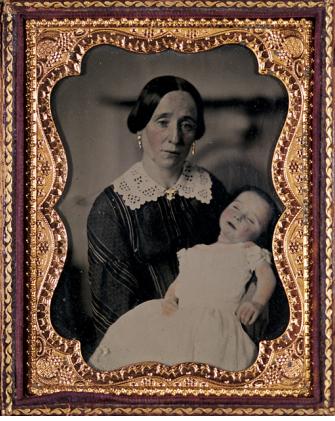
Unknown woman holding dead child*

July 24 Sat  have been to work to day on

a number of things setting a stich here 

& there  Julia has been here to fix my

skirt and I believe my dress is done at

last  I have made a robe for Mrs

Shepherds child who died this morning

Abby Savage came after me to watch but

I am not well and did not go.  Rachel came 

to Edwins after Julia & called here and I went

in there an hour or two


Dressmaker Julia Mahoney was at Evelina’s finishing up the barege dress that had taken so long to make. The traveling dress was put to one side, as Evelina was called upon to sew a shroud for a two-year old boy who had died just a few hours earlier. John T. Shepherd was the only child of a young shoemaker named John and his even younger wife, Elvira. The toddler was the first youngster that we hear of to die during the hot summer. Unfortunately, there would be others.

Hannah Savage, right in the neighborhood, was ill with consumption and would never get better. Her daughter Abby Savage “came after” Evelina to help keep vigil in the night, but Evelina didn’t feel up to the task. She felt well enough, however, to receive a call from her niece Rachel Gilmore Pool and to visit Edwin and Augusta Pool Gilmore across the street.

Old Oliver sounded another concern about the lack of rain: “it is extreemly dry now.”**


*Daguerrotype, 1850

** Oliver Ames, Journal, Stonehill College Archives, Arnold Tofias Collection

July 21, 1852

Thermometer

July 21st Wednesday  Have been at work on my

borage dress  what time I have sewed

The weather is very hot and I can

work but little  Julia & Elizabeth Pool

are at Edwins having some dresses

made by Julia Mahoney  I called 

to see them carried my work and

stoped awhile  Have been to see

Augustus this evening he is quite feverish


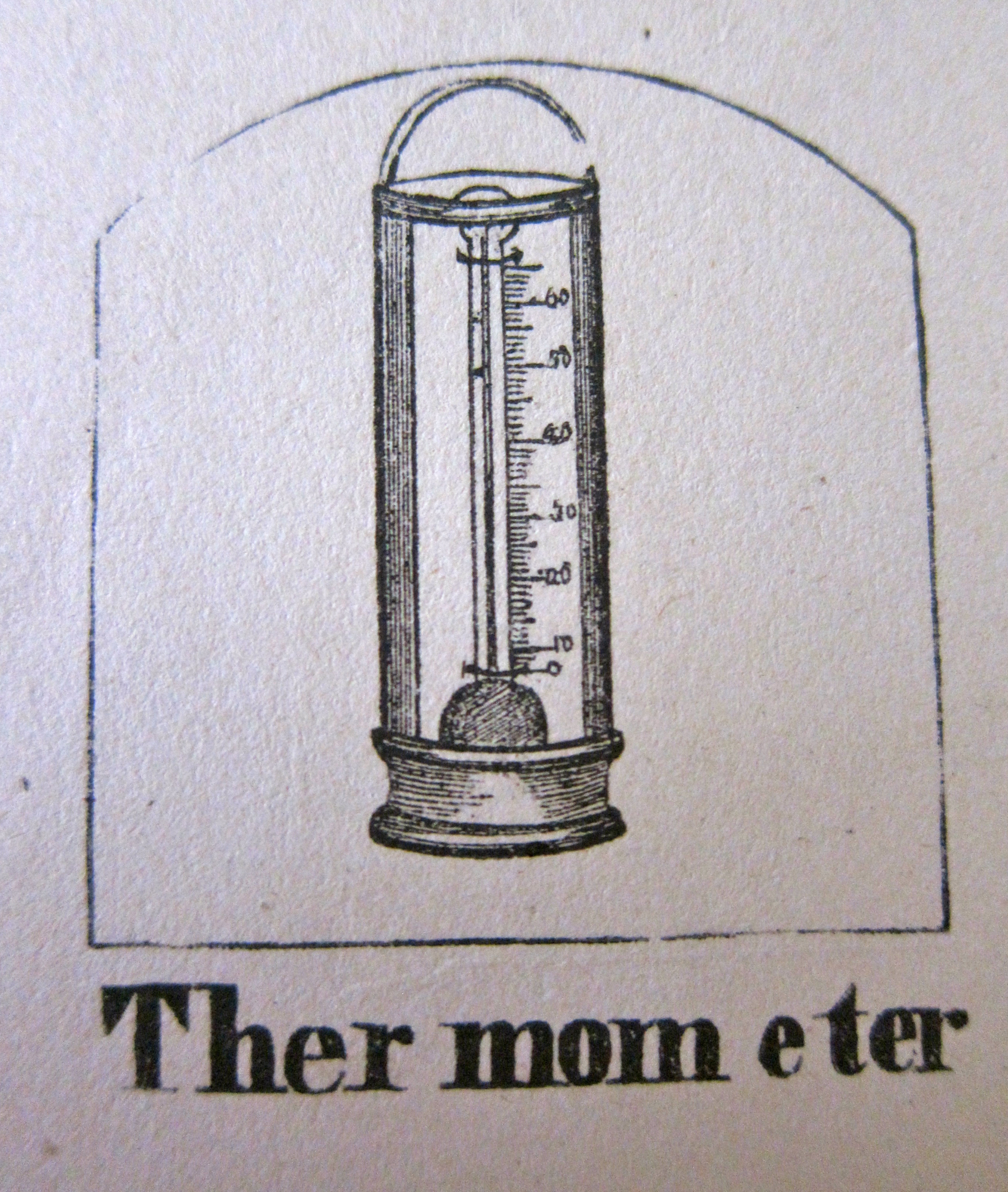
“This was a verry warm day and the most scorching sun I ever felt […] it was warm all day and the night following verry,” reported Evelina’s father-in-law, Old Oliver Ames. She, herself, was enervated by the heat; she could “work but little.”  She was alone, too, as Julia Mahoney, her usual dressmaker, was across the street at Edwin and Augusta Pool’s. Augusta had two sisters visiting who were having dresses made. Evelina walked over to join them for a time.

Alson Augustus Gilmore,Evelina’s nephew, was having no fun. He had a fever and in the heat must have felt as if he had landed in Hades. He was indoors, presumably, out of the direct sun at least. Old Oliver and his field hands, on the other hand, may have been outdoors haying in the blasting sunlight, the heat rising in waves around them. We can imagine that they stayed hydrated by drinking water ladled from buckets or a nearby well.  No thermoses or bottled Dasani or Fuji or Poland Spring water for them.

July 12, 1852

Furnace

July 12th Monday  Mary & Hannah both washed and I

was about house most of the forenoon 

Have cut the sleeves & skirt to my borage

dress and cut a waist for Susan

Carried my work into Olivers and stopt

some time  Edwin & Augusta rode to the

furnace & carried my pot to Mr Harveys to

get some butter but it was not ready for me

When Edwin and Augusta Gilmore “rode to the furnace,” they probably went south to an area of Easton known as Furnace Village or Easton Furnace. This was one of the oldest areas in town, its early homes today recognized as a National Historic District. First settled around 1715, it was a site for industry in a landscape that was otherwise quite agrarian. Using Mulberry Brook to turn its wheel, a sawmill was established there well before the American Revolution. Later industries included a tannery and a blast furnace for ironmaking, the latter giving the area its name. Historian Edmund Hands notes, “Once Easton Furnace possessed the highest degree of industrialization in town, but that industry never grew large enough to transform Furnace Village the way the Shovel Shop created the urbanized landscape of North Easton.”*

Back in the urbanized landscape to the north of Furnace Village, Evelina’s servants, Hannah Murphy and a woman named Mary, were doing the weekly laundry. Evelina was choring, sewing and waiting for Edwin and Augusta to return with some butter, which they were unable to do.  In the fields around North Easton, Old Oliver and his men were cutting hay. The agrarian life still held sway despite mills, foundries and factories.

*Edmund C. Hands, Easton’s Neighborhoods, 1995, p. 105