April 1, 1852

140

*

1852 April 1st  Thursday.  Another April fool day and I don’t 

know of a bigger one than myself except Orinthia

She made some beet & pepper pies for the boys but instead of

making a fool of them she made one of herself for they would not taste them

Oakes A carried Orinthia & self to Mr Elijah Howards on his way

to N Bridgewater & spent the evening there  Orinthia will spend the

night We went into Augustas this forenoon to fool her  

Her sister Emeline is there


Evelina enjoyed April Fool’s Day, or All Fools Day, as people often called it at the time. The previous year she had played a prank on her sisters-in-law; this year, she tried to trick her young neighbor, Augusta Gilmore. And this time, it would seem that someone played a trick on her, as “she didn’t know a bigger fool..” than herself. But she stifled her embarrassment, deflecting it off onto her friend, Orinthia Foss, whose trick on the Ames boys failed. They wouldn’t eat her trick pies, making Orinthia the greater fool of the day.

There were a few guidelines that most people understood about jokes played on April 1st. They had to be harmless pranks, for one.  The jokes were meant to embarrass, not to injure or insult. They lacked the menace that pranks later played on Halloween typically carried, for instance. They were meant as fun, the only cost of which was someone else’s dignity.

Another, more particular rule was that tricks could only be played in the morning. After the clocks had struck noon, the pranks were no longer fair play. Anyone playing a prank in the afternoon was considered foolish, and one playground retort to anyone who tried it was: “April’s gone and May’s come; You’re a fool and I’m none!”**Orinthia’s trick on the Ames boys would have happened right at midday and, with the clock striking twelve, she missed the morning window.

Part of the rationale behind the half-day rule may be as simple as people being more susceptible to the pranks at the start of the day, when they weren’t focused on the April date. They were easier to surprise then. Yet the genesis of the half-day rule may also have been based in the long history of the holiday. One modern historian has suggested that: “[t]here’s probably an element of ancient folk belief lurking behind the rule. April Fool’s Day honors the spirit of Folly, which is a powerful force. And as such, it needs to be contained within strict temporal limits, lest it overspill its boundaries and cause chaos throughout the rest of the year.”**

*Image courtesy of http://www.gutenberg.org **British journal Notes and Queries (Aug 11, 1855), from http://www.hoax.org, accessed March 23, 2015
April 1, 1851

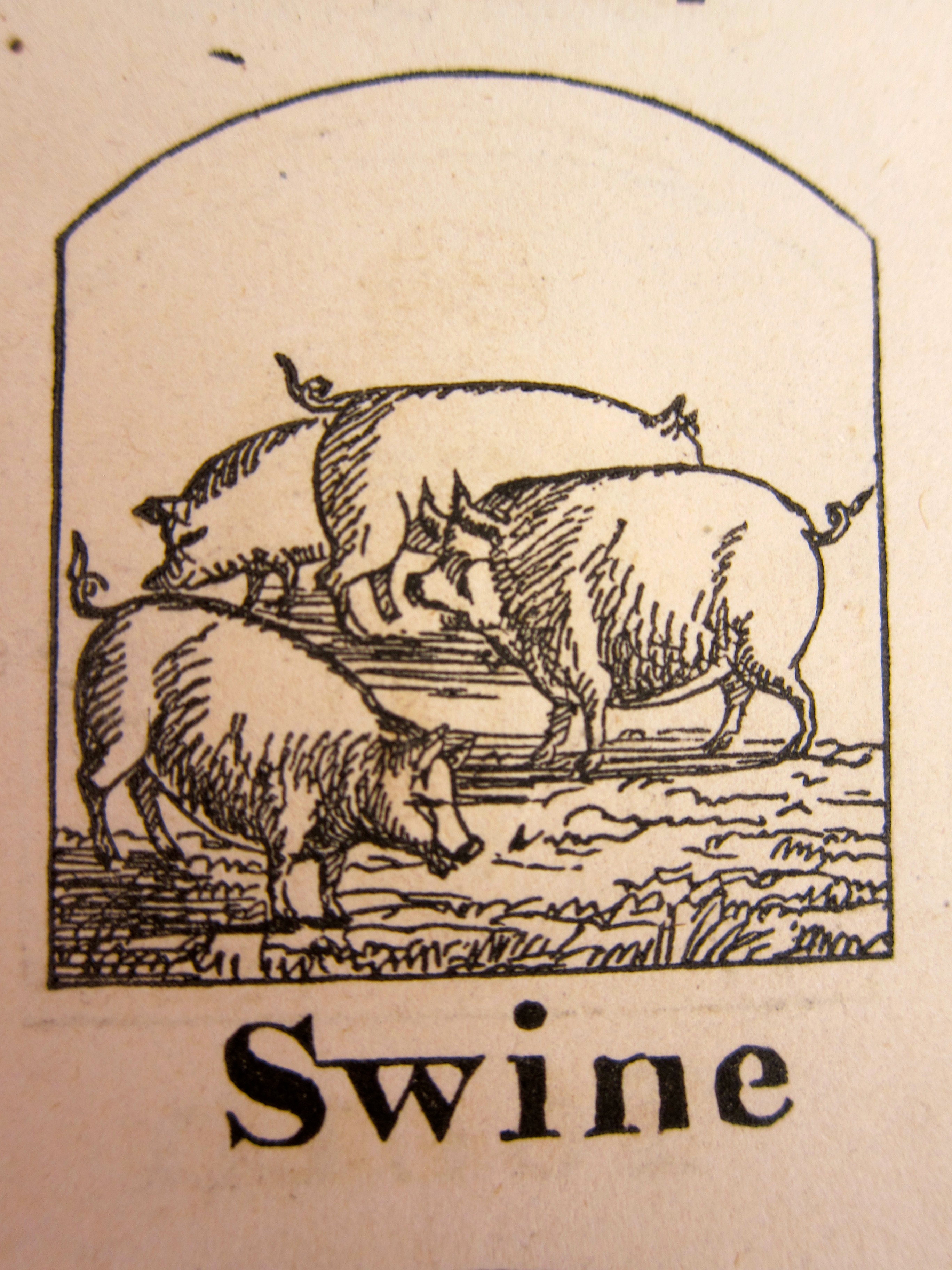
Swine

1851

April fool day  Have had some sport this morning

with Mrs Witherell, Mrs Ames & Orinthia, making

April fool of them,  Jane heard something at

Mr Bartletts yesterday, which has made her cry

& about sick so that she had to go to bed.  Susan has

begun to work on card board that Mrs S Ames got at

N Bridgewater yesterday  Orinthia, Susan & self passed the 

afternoon at Mr Torreys  Weather Pleasant

April Fool’s Day is a holiday of uncertain parentage, in part because the very nature of the day has generated multiple false versions of its origin. The most credible genesis dates back to Roman times and the festival, Hilaria, which, in simplest terms, honored the vernal equinox. The departure of winter and the arrival of spring was cause for celebration and spirited fun.

Although Evelina may have had little interest in the history of April Fool’s Day, she loved the practice of it.  After a winter of icy weather, muddy roads, illness and sewing, sewing, sewing, the innocent levity of a practical joke or two delighted her. She did have a sense of humor. Whether the relatives and friends she played tricks on enjoyed the day with equal humor remains unknown. Her sisters-in-law, Sarah Witherell and Sarah Ames, may have known her well enough to expect a joke from her on this day.

No April Fool’s nonsense for Old Oliver, however. Ever the farmer, he practiced his own rite of spring with the slaughter of pigs:

“4 shoats kild to day and the 4 weighd 1205 pound  I sold them for 7 1/2 cents a pound.”

No laughing today for Jane McHanna, either. She was distressed and “about sick” over something she heard the previous evening. She took to her bed, most likely leaving Evelina to prepare evening tea.

What was the card board project that little Susie Ames began today?  Any idea, readers?