August 28, 1851

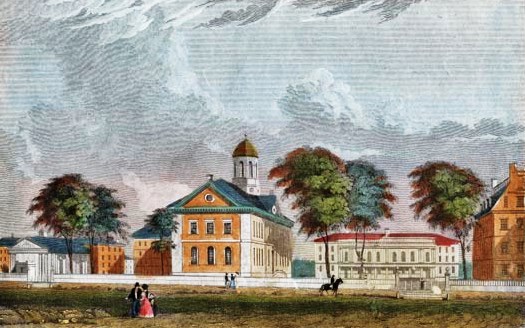
17 Alexander Jackson Davis (American architect, 1803-1892),  Harvard University, Cambridge, Mass. 1850

*

Thursday Aug 28th  Have done but very little sewing to day.

Mrs Fullerton Abby & Malvina here to tea.  Mr & Mrs

Whitwell called.  Mr Whitwell walked up and sent

Mr Tilden with a carriage for his wife.  Mrs Hyde

Mrs James Mitchell & Mrs Watson came from E Bridgewater

& Mrs Watson & Peckham to the other part of the house

to tea. Alson here to dinner & tea

Frederick left for Cambridge this morning

There was much socializing in North Easton today, but it paled in importance when compared to the departure of Frederick Lothrop Ames for college. Though only 16 years old, Fred  was entering Harvard College as a sophomore, making him a member of the class of 1854.

A notable nineteenth-century commentator would arrive at Harvard just after Fred had graduated.  Henry Adams, Class of 1858, would have this to say about the college in Cambridge before the Civil War:

“Harvard College, as far as it educated at all, was a mild and liberal school, which sent young men into the world with all they needed to make respectable citizens, and something of what they wanted to make useful ones. Leaders of men it never tried to make. Its ideals were altogether different. The Unitarian clergy had given to the College a character of moderation, balance, judgment, restraint, what the French call mesure, excellent traits, which the College attained with singular success, so that its graduates could commonly be recognised by the stamp, but such a type of character rarely lent itself to autobiography. In effect, the school created a type, but not a will. Four years of Harvard College, if successful, resulted in an autobiographical blank, a mind on which only a water-mark had been stamped.”**

Was Fred Ames stamped by his time at Harvard? He certainly appreciated his years there, and became “warmly interested in everything that pertained to the welfare of Harvard, as evinced by his well-known liberal gifts to several of its departments.”***


* Alexander Jackson Davis, “Harvard University,” Cambridge, Massachusetts, 1850

** Henry Adams, Education of Henry Adams

*** Harvard “Report for Class of 1854,” 1894

August 25, 1851

il_570xN.69597337

*

Monday Aug 25  Did not wash this morning on account 

of having so much company  Warren left in the stage

cousin Jerry went to Mr Thesis with Oakes Angier

and Frank on their way fishing.  Alson dined here.

We Ladies all called at Mr Torreys & on Elisha

at the Boot shop.  Mr & Mrs & Miss Kinsley & Miss

Billings from Canton were here to tea – came

about 6 Oclock went to the shop with them

Another Monday and for the second time that summer, washing day got deferred.  Tidying up from “having so much company” took precedence over routine. The young relatives, Jerry and Warren Lothrop, left in the morning.  Another visitor, Pauline Dean, remained.

Oakes Angier and Frank Morton Ames left to go fishing, a trip they had deferred from last week. They had waited then for the imminent death of Dewitt “Clinton” Lothrop, which hadn’t happened.  Clinton, though deathly ill with typhus, was hanging on. The boys decided to wait no further, and departed.

Evelina and “We Ladies” – which could only mean Pauline and probably niece Lavinia – went to see Col. John Torrey in the village and called on Elisha Andrews at the boot factory. Elisha, who was 27 years old and single, had started up the factory with Augustus Gilmore and Oakes Angier Ames. In recounting the visit to the boot shop in her diary, Evelina underlined Elisha’s name. Why? The visit was significant in some way; perhaps one of the women – Lavinia? – was romantically interested in Elisha.

More socializing continued late in the day when the Kinsley family visited.  Lyman Kinsley, his wife Louisa, daughter Lucy Adelaide and a Miss Billings (a niece of Louisa, most likely) came for tea. Mr. Kinsley ran an iron and machine shop in Canton, an enterprise that the Ameses would eventually own. After tea, they all walked over to the factory.

* Currier and Ives, “Starting Out,” print, ca. 1852

August 24, 1851

Road

Sunday 24th Aug  We turned out to church pretty well for us

to day 9 from here 7 from the other part of the 

house 5 from Olivers.  Mr Whitwell preached

Cousin Jerry, Warren, Orinthia Lavinia & Rachel

came at noon  Alson & wife Edwin & Lavinia came

after meeting.  Lavinia will spend the night.

This evening Cousin J & W went with me to call at Willards

Twenty-one people attended church today from the Ames family compound.  Immediate and extended family members and their guests rode down Centre Street to the Unitarian meeting house to listen to Reverend William Whitwell preach. How many carriages rolled down the road?  Did any of them walk, or did they all ride? Did they all fit into the family pews?  Some returned home after the first service.

Adding to the crowd after church, Evelina’s brother Alson, sister-in-law Henrietta, and two of their offspring, Edwin Williams Gilmore and his sister Lavinia, came to the house as well. The gathering spoke to the warmth and closeness of the extended family.  It also spoke to the relative ease of travel at this time of year. Traveling between the homes of friends and family had been marked this month, with everyone taking advantage of the good weather – and good roads – before winter.

The visiting continued in the evening when Evelina took Jerry and Warren Lothrop to visit Willard Lothrop, a local spiritualist, shovel shop worker, and likely relative.


August 9, 1851

Early-Tornado-Drawing_GrazulisBook


*

Aug 9th Sat  Was mending most of the forenoon after doing

my chamber work  This afternoon Helen & I have

been to Mothers found her quite sick with a cold

so that she could not speak aloud.  Called for

Orinthia to carry her with us but she did not go

Brought her home with us at night  Just as we 

got to Mr Howards there came up a tempest &

we stoped untill it was over

Helen Angier Ames, aged 14, accompanied her Aunt Evelina this afternoon to the Gilmore farm, perhaps to see Evelina’s niece, Lavinia Gilmore, aged 19. The two young women were friends. The schoolteacher, Orinthia Foss, was invited to go along as well but declined. Instead, she joined Evelina and Helen on their return trip.

As she often did, Evelina went to visit her mother and family at the farm where she grew up. Hannah Lothrop Gilmore, aged 79, lived most of the time with her son Alson. She was usually in good health, but today she was “quite sick” with a summer cold and laryngitis.  Illness seemed to be all around Evelina in these dog days of summer.

On their ride home, the women encountered a storm violent enough to make them stop off at the Howards’ house. The outburst was, in fact, part of a squall line that produced a tornado in Hartford, Connecticut.  A “tempest,” Evelina called it, using a word that nowadays isn’t often heard in American English.  Modern usage might describe the storm less poetically as a “weather event.”

*U.S. Tornado Early History, http://www.ustornadoes.com  

July 27, 1851


220px-CaptureOfKingPhillipsFort

*

Saturday July 27th  Mr Ballou of Stoughton preached to day

Two young men natives of Nova Scotia were drowned

last night in the Hockemock Meadow  They were […]

working for brother Alson and at night went to the

river to bathe and it is supposed got into deep water

and could not swim  Oliver went to Stoughton for Mr Whitwell

to be in season for the funeral at 5 Oclock  We all went

to the funeral and carried Mr Whitwell

The Hockomock Swamp is a vital wetland of some 17,000 acres in southeastern Massachusetts, a minor portion of which occupies a southernmost section of land in Easton – land not far from the Gilmore farm.  It’s an ill-omened, storied spot, known today as part of the”Bridgewater Triangle,” so-named in the 20th century as a location for UFO sightings, ghost lights, foxfire, animal mutilations and the like. A “place where spirits dwell,” the Wampanoag Indians called it, and they would know. Much of King Philip’s War, in the late 17th century, was fought in the environs of the Hockomock. Metacomet hid there.

In the late 18th and 19th century, when it was known by many as The Great Cedar Swamp, some people were less superstitious about the area, eyeing it for its potential as arable land. The towns of Raynham and Easton butted heads over the construction of a road through it. According to historian William Chaffin, Evelina’s own father, Joshua Gilmore, “was going on a footpath through the swamp one day with his wife, carrying a little child in his arms[.] Mrs Gilmore was speaking of the difficulty of the passage, and her husband replied that some day the child would ride through the swamp in a carriage; and the idea struck her as so essentially preposterous that she had a hearty laugh over it.”** (It would be wonderful if the child in the story were Evelina, but the likelihood is that the child was an older sibling.)

It’s ironic that in 1851, two young farm hands who were working for Evelina’s own brother, Alson Gilmore, went for a swim in the “Hockemok Meadow” after work and drowned, adding their tragic story to the swamp’s paranormal reputation.


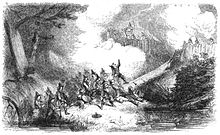
* Engraving of the Great Swamp Fight in 1675, the colonists versus the Narragansett Indians

** William Chaffin, History of Easton, 1866, pp. 454-455.


July 10, 1851

IMG_1031

July 10th  Baked in the brick oven this morning

Cassander Gilmore engaged to come here to

day but did not  Mrs Horatio Ames Mrs Witherell

Mitchell and their children father Gustavus &c &c

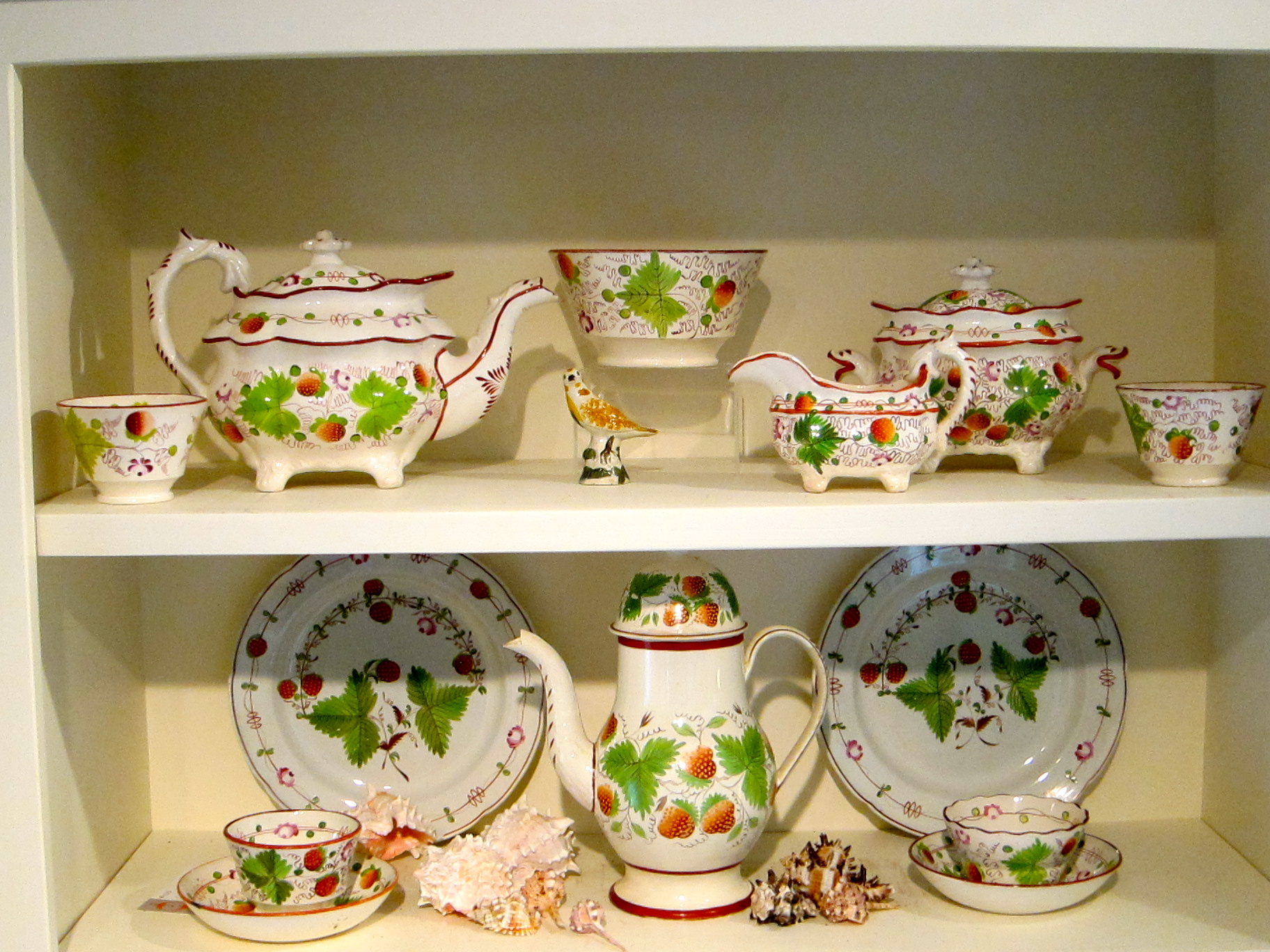
were here to tea.  Had strawberries from 

Mr King, his last picking.  This afternoon

finished my dress  Alson called

Evelina was quite busy today.  She baked, probably making the usual bread, ginger snaps and a pantry’s worth of pies. Although she doesn’t specify what kind, this was the time of year for rhubarb and her pies may have been made of the very fruit she grew in her back yard. She culled through the last of the available local strawberries, too; there would be no more this season.

Much of this kitchen work was preparation for afternoon tea, which was served to a raft of Ames relatives.  Sally Hewes Ames, Horatio’s wife, was there with her son, Gustavus, along with the Witherells and Father Ames from the other part of the house.  Sister-in-law Harriett Ames Mitchell and her three children were there.  Where was Harriett’s husband, Asa Mitchell? Presumably Oakes, Susie and her three older brothers were at table, too.

When she did get out of the cook room, Evelina finally finished sewing her new dress, and had a visit from her brother, Alson Gilmore.

June 28, 1851

Grapes

June 28th Sat  Have been to Boston to day met Alson

& wife at the depot  Went into the horticultural

exhibition  Saw many fine roses and […]

quite a variety of other flowers a very fine

dish of peaches and beautiful bunches of grapes

Henrietta & I dined at Mr Orrs.  We walked

a great deal   went into Hanover St  Whites bonnet

rooms & Mellons Merchants Row

Evelina traveled into Boston today and met her brother Alson and his wife Henrietta. She may have ridden in with Oakes, who usually went to Boston on business on Saturdays. If he was present, however, he didn’t spend the day with her; he would have had his customers to meet.  She, on the other hand, along with Alson and Henrietta, attended a horticultural exhibition. They saw plantings and all sorts of flowers, including “fine roses,” and displays of fruit that were also “very fine.”

It’s possible that this particular exhibition was that year’s annual presentation by the Massachusetts Horticultural Society. Established in 1829, and going strong today, the society, then as now, offered lectures and presented an annual exhibition in order to further their mission to educate the public about “the science and practice of horticulture.”

After midday dinner at the home of friends, Robert and Melinda Orr, Evelina and Henrietta walked around the city.  They looked into the shops along Hanover Street and Merchants Row, the latter a street that bisected Faneuil Hall and Quincy Market. The two women window-shopped for bonnets at White’s store and, given the horticultural theme of the day, they may have poked their heads in Joseph Breck’s floral emporium, too. They had much to think about on their ride back to Easton that evening.

June 26, 1851

Window


1851

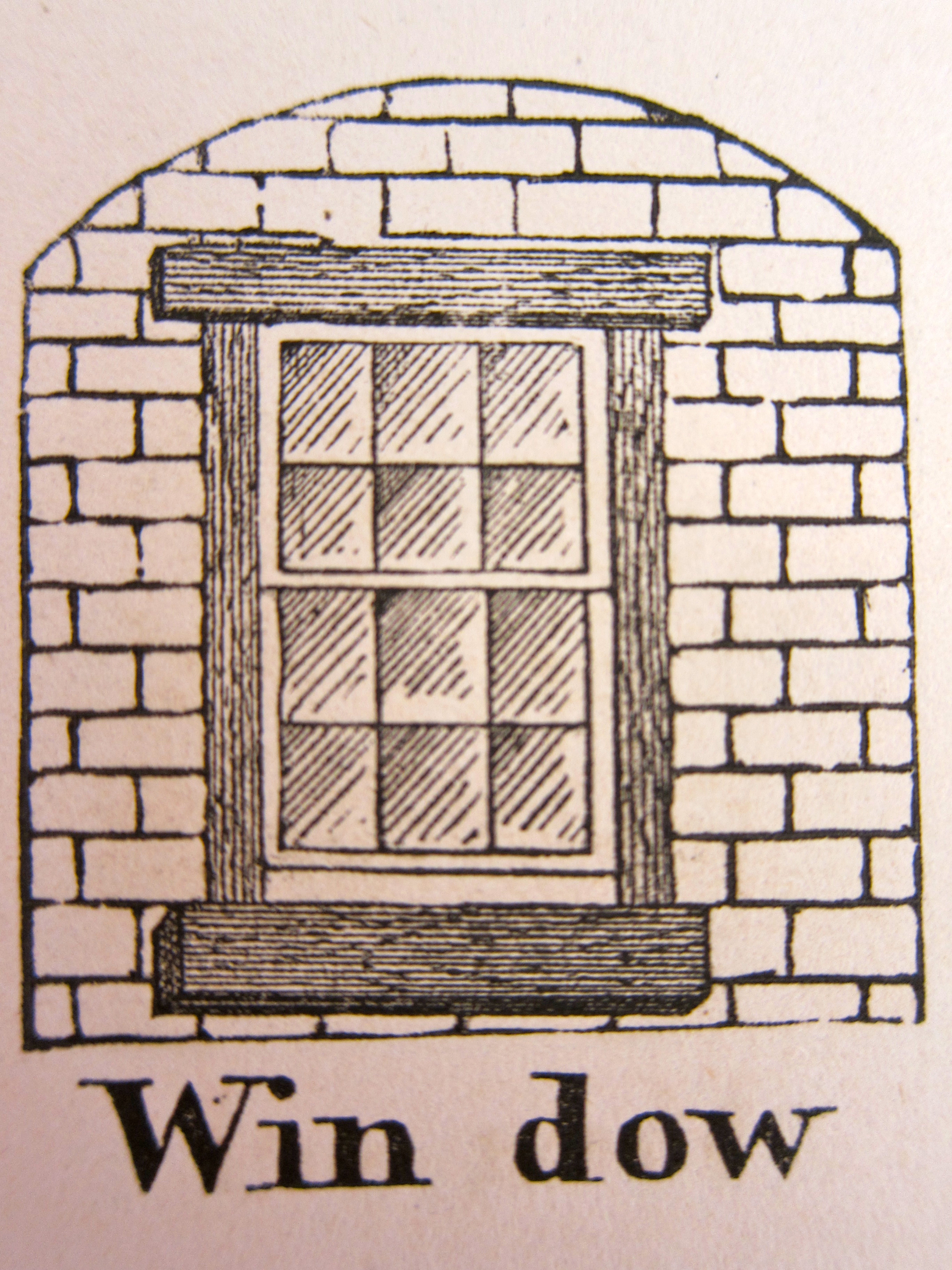
June 26th Thursday  This morning went to washing the windows

on the outside the first thing after breakfast and

got the chambers in order  Heat the brick oven and 

baked cake bread &c for tea and a custard pudding

for dinner  John & wife Miss Wait Alson & wife

and mother here to spend the day.  John is making

a short visit will leave in the morning for

home.  Have been to West Point

Evelina put her chambers in apple pie order this morning and baked up an array of food. She must have been outdoors as early as seven washing her windows. No gardening today. She had important company coming. Her mother, brothers John and Alson, their wives Huldah and Henrietta, respectively, and another woman, Miss Waite, came to spend the day with her. The family reunion continued.

The occasion was so special that Evelina baked a custard pudding to serve at dinner.  This was not usual fare for her, perhaps because it used so many eggs, and the Ameses didn’t keep chickens.

Evelina again mentioned West Point in her diary entry, which suggests that it was much in the conversation, probably in the manner of a place John, Huldah and Miss Waite had just visited. Why did they go there? Did they know someone who was just graduating? The United States Military Academy graduated 42 men in June, 1851, most of whom would go on to fight in the Civil War, 26 for the Union and 9 for the Confederacy. Many would also serve in the Third Seminole War in Florida or hold posts on the western frontier.


June 15, 1851

Burning_Bush_Dictamnus_Fraxinella_Seeds

June 15 Sunday  Have been to meeting all day.

At noon went with Alsons wife & Rachel to

Mr William Reeds had a very pleasant call

Since meeting walked with Mr Ames & Susan 

up to the fly away pond and home by

Edwin Manlys to see his flowers  he has 

fine plants in blossom, among others the

Fraxinella  It sprinkled some and we called

at Mr Peckhams & saw Mrs Washburn

The weather over the past week was so mild that, despite the occasional sprinkle, folks were outdoors as much as possible. Evelina made all kinds of social calls today.

At the intermission between services, she went calling with a sister-in-law from the Gilmore side of the family: Henrietta Hall Gilmore, wife of Alson.  Henrietta was Alson’s second wife, his first having died young, and mother of six of his seven children, including Lavinia, of whom we have seen much this past spring. With Henrietta was someone named Rachel, who was possibly Henrietta’s daughter or another niece with the same name. The ladies called at the home of William and Abigail Reed.  Mr. Reed, older than Evelina by a generation, was a former teacher at Milton Academy and a graduate of Harvard’s Divinity School, although he never settled in a particular parish.  An acting Justice of the Peace, Mr. Reed was well known and well liked.

This afternoon after church, Evelina, Oakes and their daughter walked the road to Fly Away Pond and on to Edwin Manley’s garden.  There the Fraxinella, also known as Burning Bush, caught Evelina’s eye.  More for her garden?


* Fraxinella, seedempire.com

June 14, 1851

Evelina Gilmore Ames

Evelina Gilmore Ames

June 14 Saturday

This is my birth day and it is very pleasant

weather.  Worked in the garden awhile in the

morning then baked in the brick oven.  Made

brown bread sponge & cup cake pies &c.

This afternoon have been to North Bridgewater

and paid Howard & Clark 16 dollars for bed

stead & lounge 50 cts for Castors.  Emily gave

me a box & Harriett a pr of Elastics


The diarist herself celebrated a birthday today, number 42.  She was born in 1809 on a farm in the southeastern quadrant of Easton, not far from the Raynham town line.  She was the seventh of eight children. Her parents, Joshua and Hannah Lothrop Gilmore, named her Evelina Orville after the heroine of Fanny Burney’s popular novel, Evelina, or the History of a Young Lady’s Entrance Into the World. In the book, pretty, fictional Evelina, after various comic travails, wins the heart of handsome, rich Lord Orville; did the real Evelina’s parents hope for similar material success for their youngest daughter?

In birth order, Evelina’s brothers and sisters were John, Arza, Daniel, Alson, Hannah, Rhoda, and Joshua Jr.  By the time Evelina reached 40, only John and Alson, and their mother, were still living. Evelina’s siblings carried mostly family names, meaning that Evelina’s name was a departure. Her grandson, Winthrop Ames, noted in 1937 that “Evelina, in its later form of Evelyn, has been a favorite female first name since Evelina Orville Ames first introduced it into the family when she married Oakes Ames in 1827.”*

As a eighteen-year old bride, Evelina moved to North Easton, right into the Ames homestead, a portion of which had been made over to accommodate the newlyweds. Still living at home at that point were most of her siblings-in-law: Oliver Jr., William Leonard, Sarah Angier Ames (aged 13 and, obviously, not yet married to Nathaniel Witherell), John Ames and Harriett Ames (who was only eight years old.) What a full dinner table they must have had!

The next quarter century flew by, as the years do, full of arrivals and departures.  Her children came into the world, even as family members on both sides departed it.  Only now, it seems, did Evelina lift her head from the home-making tasks that were always at her elbow to consider ways to fill the rare discretionary time that began to open up to her.  Flower gardening became one pleasant elective; writing in a diary was possibly another.


*Winthrop Ames, The Ames Family, 1937