April 11, 1851

Old Oliver Ames


1851

April 11th Friday.  This morning sat down with Lavinia

quite early but did not feel very well.  Washed & ironed

the skirt of my foullard silk dress ready to make 

over  This afternoon went with Lavinia into school 

and then to Mr Torreys and stoped a hour or two

Abby & Malvina came home with us and were here to

tea also Augustus  Quite windy this forenoon 

Oliver Ames, known to Evelina as “Father Ames” and to us as “Old Oliver,” turned 72 today. He didn’t mention his birthday in his journal and the likelihood is that no one else mentioned it either.  He was not a person who encouraged frivolity. As the man who built O. Ames & Sons and made the best American shovels of the 19th century, Old Oliver was well known in his time, as this excerpt from a 19th century biographical sketch shows:

“Hon. Oliver Ames, the founder of the great manufacturing firm of O. Ames & Sons, was born at Plymouth, Mass., April 11, 1779, being the youngest son of Capt. John and Susannah Ames, and was a lineal descendant of William Ames, who came to this country in 1638 and settled in Braintree, Mass. His early education was gained by ordinary common-school instruction, and by the practical experiences of hard work in his father’s blacksmith-shop. These furnished him the groundwork of sober judgment, industrious habits, and a stable and energetic character. At the age of eighteen he went to Springfield, where he learned the trade of gunsmith. In April, 1803, he married Susannah Angier […] and commenced the manufacture of shovels. After a stay of over two years at Easton, he removed to Plymouth to manufacture shovels for Messrs. Russell, Davis & Co. […] until about 1813, when he returned to Easton […where he] had purchased land and a good water-privilege, and had begun the erection of a dwelling-house.

He was one of a company to build a cotton-factory for the manufacture of cotton fabrics. He had manufactured hoes and shovels during his first stay in Easton, but on his second arrival he began again the business that has now become world-famed. Difficulties and embarrassments that would have defeated any one but a man of great ability and persistent energy beset him in these early days. The cotton-factory burned; the war of 1812 had had a disastrous effect upon business; he was endeavoring to restore the business of his father to a prosperous condition; and he had made great outlays in getting established at Easton. But his credit was good and his courage strong; his character and ability alike inspired unlimited confidence; and he worked steadily on to a sure and lasting success.

With only a humble beginning, shovels being made by hand and carried to market upon a one-horse wagon, the business steadily increased, shop being added to shop, workmen increasing by scores, until it has become by far the largest and most prosperous shovel business in the world. He would never allow any work to be sent to the market that was imperfect, and he thus laid the foundation for the great reputation which the Ames shovel has borne, and which it continues to bear.

In 1828-29 he represented his town in the Massachusetts Legislature, serving with marked ability upon the Committee on Manufactures. In 1845 he was elected, contrary to his desires, and by a large vote, to the Massachusetts Senate. He was, however, no lover of office, and desired only that he might have the charge of the highways of his town intrusted to him, a charge he took pride in, and faithfully fulfilled. He was a man of strong and resolute will, of great force of character, indomitable energy, and persevering industry. He was the possessor of a splendid physique, and easily bore off the palm in all feats of strength and skill, especially in wrestling, of which he was very fond. His manly and dignified bearing gave everyone who saw him the impression that they looked upon a man of mark. He was such a man as a stranger, meeting upon the street, would turn to look at a second time. Born of the people, he was always very simple in his tastes and democratic in his feelings and principles. In his likes and dislikes he was equally decided, but his judgments were based upon what he believed to be the real worth of any one, without reference to his station or condition.   He was consequently greatly respected and beloved by his neighbors and fellow-townsmen. He was enthusiastically fond of farming, and, like Daniel Webster, was especially fond of the oxen, always obtaining the best, and taking great pleasure in their management. He took an early stand, both as a matter of principle and practice, in favor of temperance, and brought up his family according to total abstinence principles. He was a decided Unitarian in his religious convictions, having a cordial dislike to the rigid tenets of the Calvinism of his day. He was liberal in his aid of religious institutions, to which he also gave the sanction of his personal attendance. His charities were large, and they were not bounded by the limits of his sect or neighborhood. His defects were such as pertained merely to his limited culture and to the stern conflict and discipline of his early life. Mr. Ames lived to the ripe old age of eighty-four years, dying at North Easton, Sept.11, 1863.”*

*Duane Hamilton Hall, ed., History of Bristol County, Massachusetts,Vol.2, Philadelphia, 1883


March 25, 1851

438px-HardTimesComeAgainNoMore1854

/51

March 25  Worked on Olivers shirt this forenoon

In the morning read to Mother awhile

Mrs J Porter spent the day with Mrs Witherell

I called to see her.  Her youngest boy was with

her between three & four years.  Her oldest daughter

15 & her other son 13 years.  Has lost four children

Abby & Malvina were here to tea.  Pleasant

Augustus went to Boston.  I received a letter from Louisa

J. Mower  Oliver went this morning to New Jersey.  Helen to school

A quiet weekday in Easton, punctuated by departures.  Augustus Gilmore went into Boston, perhaps on errands for the new boot factory. Helen Ames returned to school and her father left for New Jersey on shovel business. Pleasant weather facilitated everyone’s travels.

Sarah Witherell had a visitor today, a Mrs. J. Porter, who brought three children with her. Evelina, who “called to see her,” noted that Mrs. Porter had borne four other children who had died, a sorrow Evelina would have been especially sympathetic to, having lost a child of her own. So had Sarah Witherell. Surely there was a tinge of loss hovering on the edges of this modest gathering, “frail forms fainting round the door,” as Stephen Foster’s classic ballad* from 1854 would soon suggest.

In the United States in 1851, average life expectancy was less than 50 years old. No small variable in that number was the high rate of infant mortality. The expectation that an infant might not survive was so prevalent that some parents didn’t name their children until after the child had lived through its first twelve months.  It wasn’t unusual for census records to show entries for two- or six- or nine-month old babies described as “Infant Not Named.”  Children and young adults died, too, from diseases that we have since held at bay, but babies were especially vulnerable.

*Hard Times Come Again No More

March 21, 1851

OLYMPUS DIGITAL CAMERA

SPRING, from Godey’s Lady’s Magazine, April, 1851

1851

March 21 Friday  Have heat the oven twice to day

baked 15 mince pies, 2 loaves bread & 

two sheets cup cake & ginger snaps  got the 

last oven full in about twelve.

This afternoon have been looking over my

accounts and mending stockings A[u]gustus dined

here.  Helen came to night in the stage

Pleasant weather but sloppy.

Vernal Equinox, at last.  The first day of spring was mild, with the earth tilting in the right direction. If the ground hadn’t been “sloppy” and she hadn’t been tied to the oven, Evelina might have gone outside to inspect her flower beds to see if any bulbs were peeking up through the disappearing snow.

Evelina, and probably Sarah Witherell, too, baked today.  Evelina made her patented host of mince meat pies to be served over the next week or two. Brown bread, cake and ginger snaps also had a turn in the capacious brick oven, no doubt filling the house with some wonderful aromas.  Pleasant day outside, pleasant day inside.

Nephew Augustus Gilmore, still bookkeeping next door, continued to dine with the family at midday, perhaps walking back from the office or counting house at noon with Oakes.  Niece Helen Ames arrived home via stagecoach from her boarding school in New Bedford for a weekend visit, although “weekend” was not a term most people in town would have used.  The shovel shop ran six days a week, after all, so Saturday had no special connotation for most citizens of North Easton.

March 18, 1851

imgres

1851

March 18th Tuesday  A very bad north East snow

and Orinthia did not keep school and we both

sit down to sewing quite early.  She to work

on a coarse shirt for Oakes Angier and I have

made a collar and finished the shirt that

I commenced yesterday  Wm Called for the 

first time since he came here.  A[u]gustus dined 

& spent the night

More snow, enough to call off school and prevent nephew Augustus Gilmore from departing to his lodgings at Mr. Wrightman’s.  Did it fall on any little crocuses in Evelina’s flower beds? Wasn’t it getting to be springtime?

Augustus, a man with a robust figure and evident appetite, continued to spend time with the Ames family, often joining them at dinner. Did he pay for his board, or did Evelina and Oakes give him free meals?  Evelina began to track his meals by underlining those occasions in her diary.  Why? Did she begrudge her nephew’s presence in the dining room, or did her tracking of his meals have some other purpose?

William Leonard Ames, youngest living son of Old Oliver, had been visiting in North Easton for ten days, yet today was the first time he called on Evelina and Oakes.  His avoidance of their parlor spoke loudly of the animosity between William and Oakes.  His pronounced delay in paying a call on his oldest brother might well have been his only way to retaliate for the financial distress that Oakes had caused him in the closing of the family ironworks in New Jersey, an operation that had been in William’s care.  For a deeply researched account of the particulars of the rift between the two brothers, in which the blame seems to lie more with Oakes, see Greg Galer’s thesis, Forging Ahead.  

March 12, 1851

Abbott H. Thayer, Angel, 1887, oil Smithsonian American Art Museum Gift of John Gellatly

*

March 12th  Wednesday.  This morning commenced the new pattern shirt

but got but very little time to work on it.  Miss Eaton

died about eight Oclock  Mrs Witherell & Mrs S Ames laid

her out & this evening I went with Mrs Witherell to 

help her put on the robe which she made this afternoon

Mrs S Ames & myself went to the sewing circle at

Daniel Reeds  There were about twenty of us.

worked on striped shirts.  Very pleasant

A[u]gustus here to dine

This must have been an emotional day for Evelina.  Miss Eaton, a neighbor, died after a lingering illness. Sarah Ames and Sarah Witherell prepared Miss Eaton’s body, and Evelina helped put a shroud, or robe, on the corpse.  For months now, the three sisters-in-law and others had been looking after Miss Eaton. Everyone had anticipated her demise, but still, it must have been hard when she finally passed away.

After the Ames women had prepared Miss Eaton’s corpse for burial, two of them, Sarah Ames and Evelina, rode out to a meeting of the Sewing Circle.  This was the first meeting since Evelina’s own ill-attended meeting back in February.  The gathering was held at the home of Daniel and Mary Reed and about twenty women attended.  If Evelina felt awkward, she didn’t say so in her diary.  Perhaps there were women there she had been hurt by, perhaps not. Perhaps people apologized for not having shown up at Evelina’s, perhaps not. Whatever exchanges or pleasantries took place as the ladies worked on striped shirts, the mood of the afternoon must have been tinged with the sorrow of the morning and the loss of Miss Eaton. Death in the neighborhood put things in perspective.

Abbot H. Thayer, Angel, 1887, oil, Smithsonian Museum of American Art, Gift of John Gellatly

February 27, 1851

Coal scuttle

1851

Feb 27 Thursday  Cannot say much for my work to day

Orinthia cleaned the sitting room for me while I

was making the fire in the furnace.  had a good 

deal of trouble with it  Augustus made quite a

long call this morning talking over matters & things

Have finished putting in the bosom & wris[t]bands to 

the old shirt that I commenced Tuesday & mended one

for Mr Ames

It sounds as if Evelina’s normal routine was challenged today.  First, she had to struggle with the coal furnace, or stove, probably stoking it and trying to make it catch and hold.   She was certainly familiar with “making” fires, but coal was not her strong suit.  She had spent most of her life burning wood, and she didn’t manage the new furnace well.

Second, her nephew Augustus came to call in the morning at a time of day when she was likely to still be working about the house.  He was full of conversation about “matters & things,” probably filling her in on his move to Easton,  his decision to leave teaching, and his hopes for the new boot and shoe factory he was setting up in the Lothrop Building. Evelina, fond aunt that she was, was no doubt interested in what Augustus had to relate, but the housewife in her was perhaps worried about not getting through her choring or not finishing the last of the ironing or not getting to the necessary mending while Augustus made his long visit.  Happily, Orinthia Foss was around to help with some of the basic sweeping and dusting.

In the afternoon, her housewifely pace seemed to settle down and she was able to pick up her sewing.  She reworked an old shirt belonging to her husband, replacing the most worn areas with new pieces.  A shirt that today we might throw out or put into the rag bag, she saved.  No wonder Reverend Chaffin accused her of being “very economical.”  She was, with no apologies.  No apologies from her husband, either.

February 25, 1851

Helen Angier Ames

Helen Angier Ames

1851

Feb 25  Tuesday  This morning Helen left home for school

at Dorchester.  She felt so bad when she left

that I did not go in to see her.  Her Father & Mother

went with her and returned to night, they went into

Boston and stoped an hour or two.  Mr Jennings

& Crommet called this evening to see Orinthia

I have been to work on a bosom of shirt putting

a new one into an old shirt of Oakes Angiers.  Very windy.

A[u]gustus here

Under some duress, the teenaged Helen Ames was taken to boarding school today, clearly not wishing to go.  Her parents insisted and accompanied her to see her settled.  Their stop in the city on the way home might have been a lift of spirits for a mother and father who had just driven away from a disconsolate child.

The children of both Oakes and Oliver Jr. each went away to school for a portion of their education.  Oakes and Evelina’s boys had already gone and returned home; Susan still had her boarding school ahead of her.  Oliver Jr. and Sarah’s two children, Fred and Helen, were at this stage both away at school.  Oliver Jr. and Sarah were empty-nesters, to use a term they wouldn’t have recognized.  They might have recognized the emotion, however.  Strange to think of them in their separate house, just the two of them now, quiet, (although Sarah’s younger brother, Cyrus Lothrop, sometimes lived with them) while right next door in the old homestead lived a whole commotion of relatives.

Schooling seemed to be the theme of the day.  A Mr. Jennings and a Mr. Crommet called to see Orinthia Foss, presumably on matters of her employment as a schoolteacher. Does any reader out there know either of these names?

His wife and son still living elsewhere – Bridgewater, perhaps – while he set up their rented lodgings in North Easton, Augustus Gilmore was staying temporarily with his aunt Evelina and her family.  He would soon bring Hannah, who was expecting, and little Eddie to town.

February 22, 1851

Rubbers

Feb 22nd  Saturday  This morning sat down to sewing

quite early to work on Susans apron.  Mr Torrey called 

to see about Augustus having his tenement.  Augustus

has engaged Mr Wrightmans house for the present.

Lavinia & myself passed this afternoon at Mr Torreys.

Called at the store, met Mrs. Peckham & Miss

Georgianna Wheaton there  Miss Foss came to night.  Mr

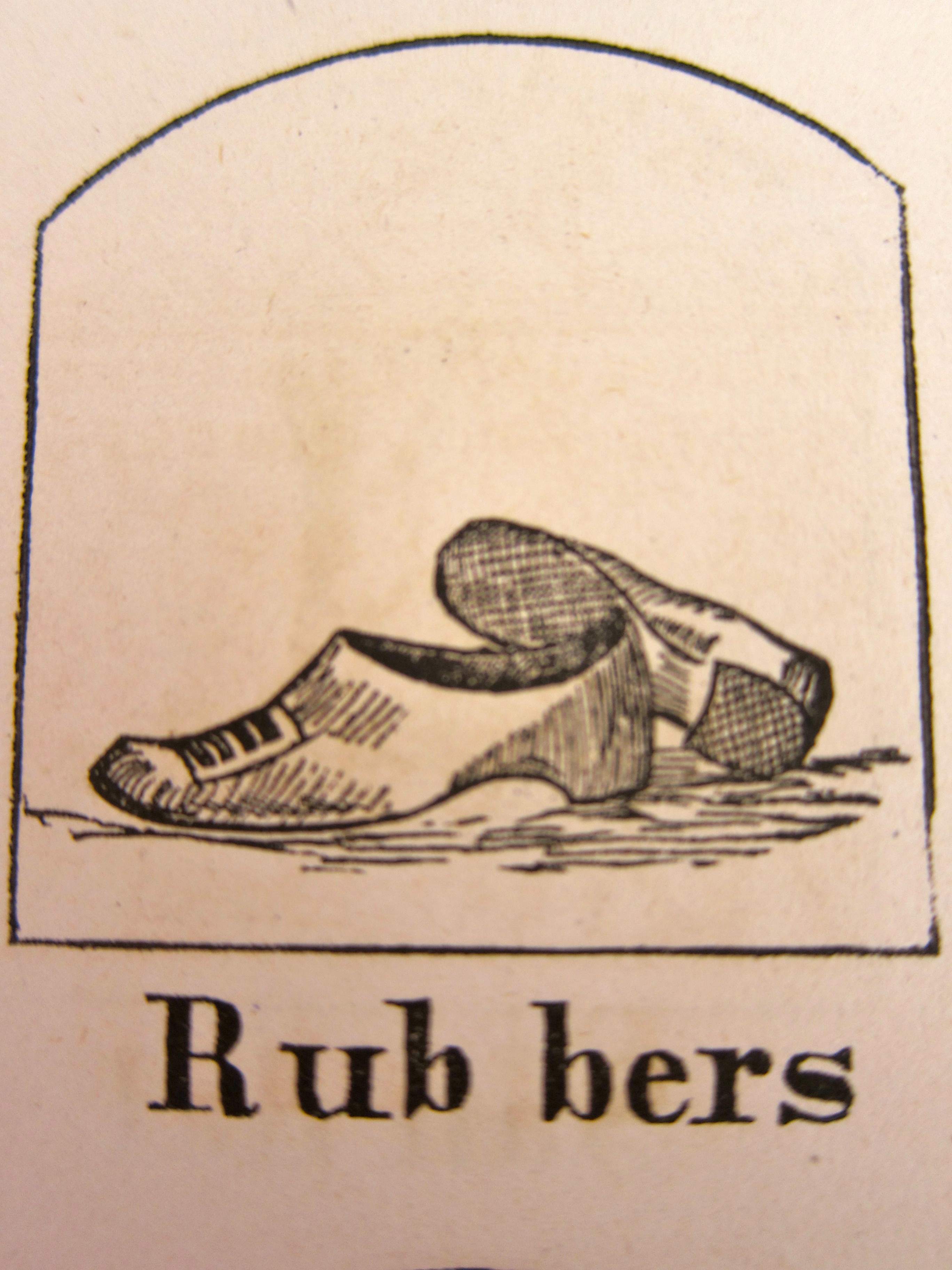
Ames has been to Boston brought Susan Rubbers.

Cleared off pleasant to night

In his journal today, Old Oliver noted that “It’s pretty muddy now,” which explains why Oakes Ames returned from Boston with overshoes, known as rubbers, for his daughter.  Probably everyone in the household donned rubbers during this late winter wetness.

Evelina negotiated the streets just fine, it seems, as she and her niece traveled the short distance to the center of town to call at the company store and at her brother-in-law’s house.  Their mutual nephew, Augustus Gilmore, had decided not to rent from Col. Torrey and would be settling his family instead at a Mr. Wrightman’s house.  And at the end of the day, a new person entered the domestic scene.  Miss Orinthia Foss, the new schoolteacher, arrived from Maine.

February 22 is a date that people acknowledged in 1851 in a manner similar to the way people do in 2014, because it’s George Washington’s birthday.  In this year of Evelina’s diary, President Washington had only been dead for a little over fifty years.  People were alive who could still remember him; Old Oliver was one of them.  Old Oliver was born in 1779, while the Revolutionary War was being fought.  He was two years old when the British surrendered at Yorktown, and eight years old when representatives of the new states assembled in Philadelphia to write a constitution.  George Washington was elected to head that convention and became the country’s first president in 1789, when Old Oliver turned ten.  When Washington died in 1799, beloved and mourned, Old Oliver was a twenty-year old bachelor just making his way in the world.  Much about that world would change over Old Oliver’s lifetime, but the reverence that citizens of the United States felt for their first leader would hold strong.

February 19, 1851

Farm

Feb 19  Wednesday  A[u]gustus & wife came this morning in

the stage  We had our breakfast about six Oclock

and I had my morning work most done

We went to Mr Torreys to make a call met Alson

and Lavinia coming.  Alson went back to the poor

farm & Lavinia went with us to Mr Ts  Alson came

here to tea.  Augustus has engaged Mr Torreys

tenement if he concludes to take it   Beautiful weather.

Breakfast at six a.m., at work by seven.  That was the way it was done in the small industrial town of North Easton. By the time Augustus and Hannah Lincoln Gilmore arrived, the men of the house were at the factory and Evelina had washed the dishes, dusted the parlor and instructed Jane McHanna on the menu for dinner and  tea, probably adding additional directions on finishing up the ironing or some other piece of housework.

Off she went, then, to the home of her old brother-in-law, Col. John Torrey, with their mutual nephew, Augustus, only to meet her brother (and Augustus’s father,) Alson Gilmore, en route.  Alson had brought one of his daughters, Lavinia Eveline Gilmore, into town for a visit with the Ameses.  Evelina was fond of her niece, so the visit promised to be pleasant.

Alson soon drove off.  Evelina said he was headed to the “poor farm,” which may have been a jest expressing her opinion of the old family place or perhaps an expression of concern over the economics of the Gilmore homestead.  Or Alson may actually have been on an errand to an Almshouse located in the center of Easton*, near the church that the family attended.  Perhaps Alson was in search of temporary laborers for his farm, although why he would need help in the middle of winter is questionable.  Maybe he had an official role in its oversight.

Many towns had poor houses where the indigent lived; Worcester, Massachusetts established one in the late 1830s in alarmed response to a rising influx of immigrants.  Some citizens were afraid of the diseases that immigrants might be bringing with them, so part of the impetus for setting up a poor farm or poor house or Almshouse, as they were also known, was to establish a discrete site for new arrivals, pending further inspection.

Incidentally, today was an anniversary that probably went unnoticed in the Ames family.  On this date in 1810, a baby named Angier Ames was born.  He was the fourth son of Old Oliver and Susanna Angier Ames, coming along after Oliver Jr. and before William Leonard.  He only lived to be fifteen months old, dying in the summer of 1811 of an unrecorded cause.  Old Oliver wrote no record of this child; did he think of him on this day, some forty years later?

*A shout-out to Frank Mennino, Curator of the Easton Historical Society, for his capable sleuthing about the “poor farm.”  As he pointed out to me, the Almshouse can be identified on an 1855 map of the town. Thank you, Frank!

February 11, 1851

Bookkeeper

Feb 11th Tuesday  This day has been a very busy one

with me, getting ready for the sewing Circle.  Have

washed the front stairs & have been sweeping &

dusting.  Have got things pretty much in order for

tomorrow  It was very unpleasant this morning but this

afternoon it has cleared off very pleasant.  Augustus

is helping Mr Peckham post his books.  went home

with him to dinner & tea

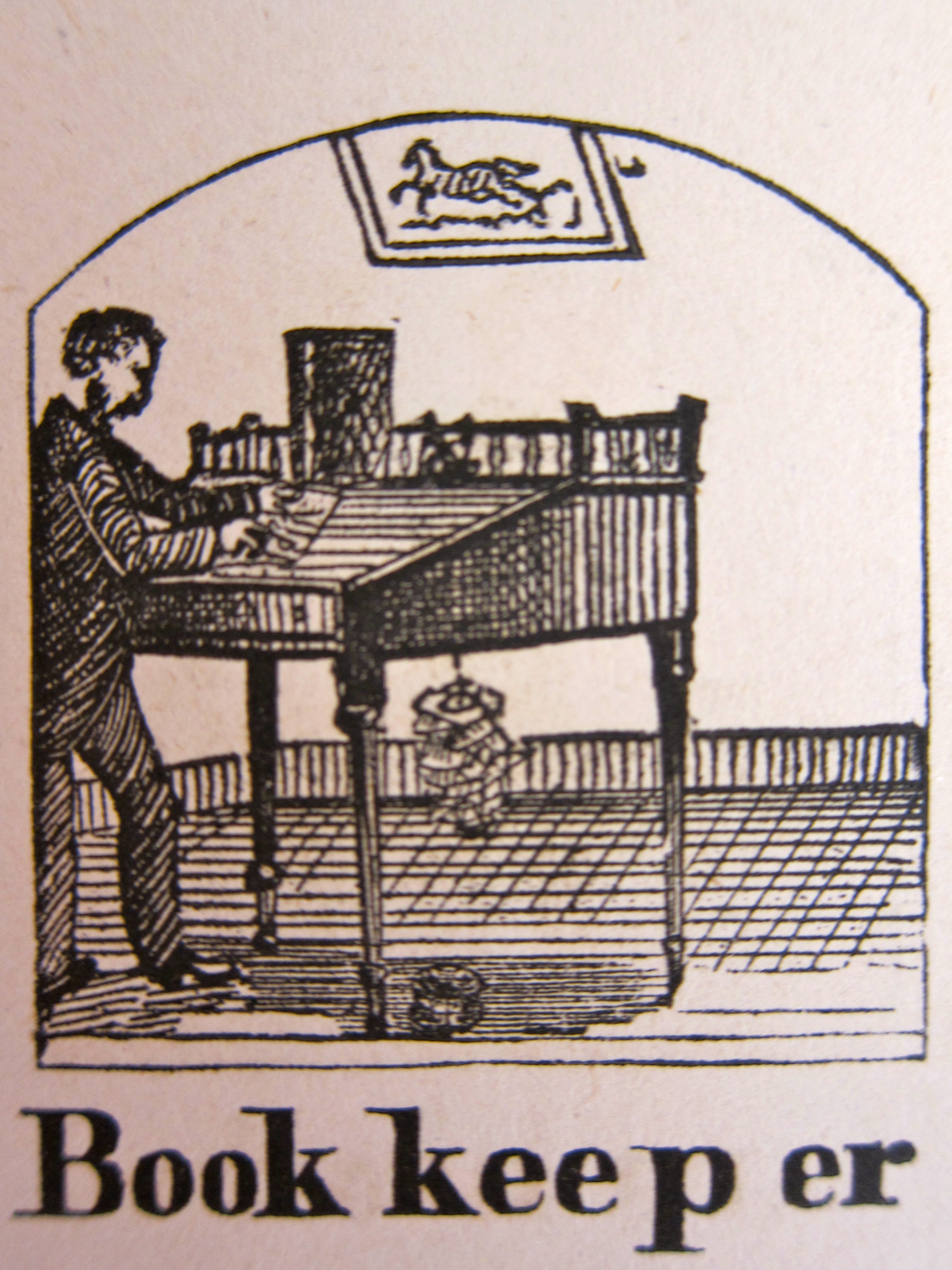
Evelina seemed to feel better today and so went right to work.  Stairs got washed, carpet was swept, table tops were dusted, knick knacks, books and periodicals put in order.  The house would look spanky clean for the Sewing Circle tomorrow. Evelina herself was doing this work, while the servant Jane McHanna handled the regular chores: cooking the meals, washing the dishes and tidying up from the indoor laundry activity of yesterday.  Jane and/or Evelina may have ironed today, too, although it’s doubtful that they could have completed the task.   With all those men’s shirts to care for, ironing at the Ames house often lasted for several days.

In the office, or Counting House, next door, the company’s bookkeeper, John Peckham, was tending to business. Evelina’s nephew, Alson “Augustus” Gilmore, had started work there temporarily as Peckham’s assistant. Augustus is the nephew who has been looking for a place to rent for his growing family, all while beginning to set up a boot manufacturing company in the area. But meanwhile, nepotism being an acceptable, even laudable fact of life in a family-run business, Augustus was being kept afloat financially by work here and there for O. Ames and Sons.   Augustus, a man of robust build, would prove to be a well-known figure around town, especially once he accepted the role of moderator at town meetings, a position he would hold twenty-four times in the next 32 years.