July 13, 1851

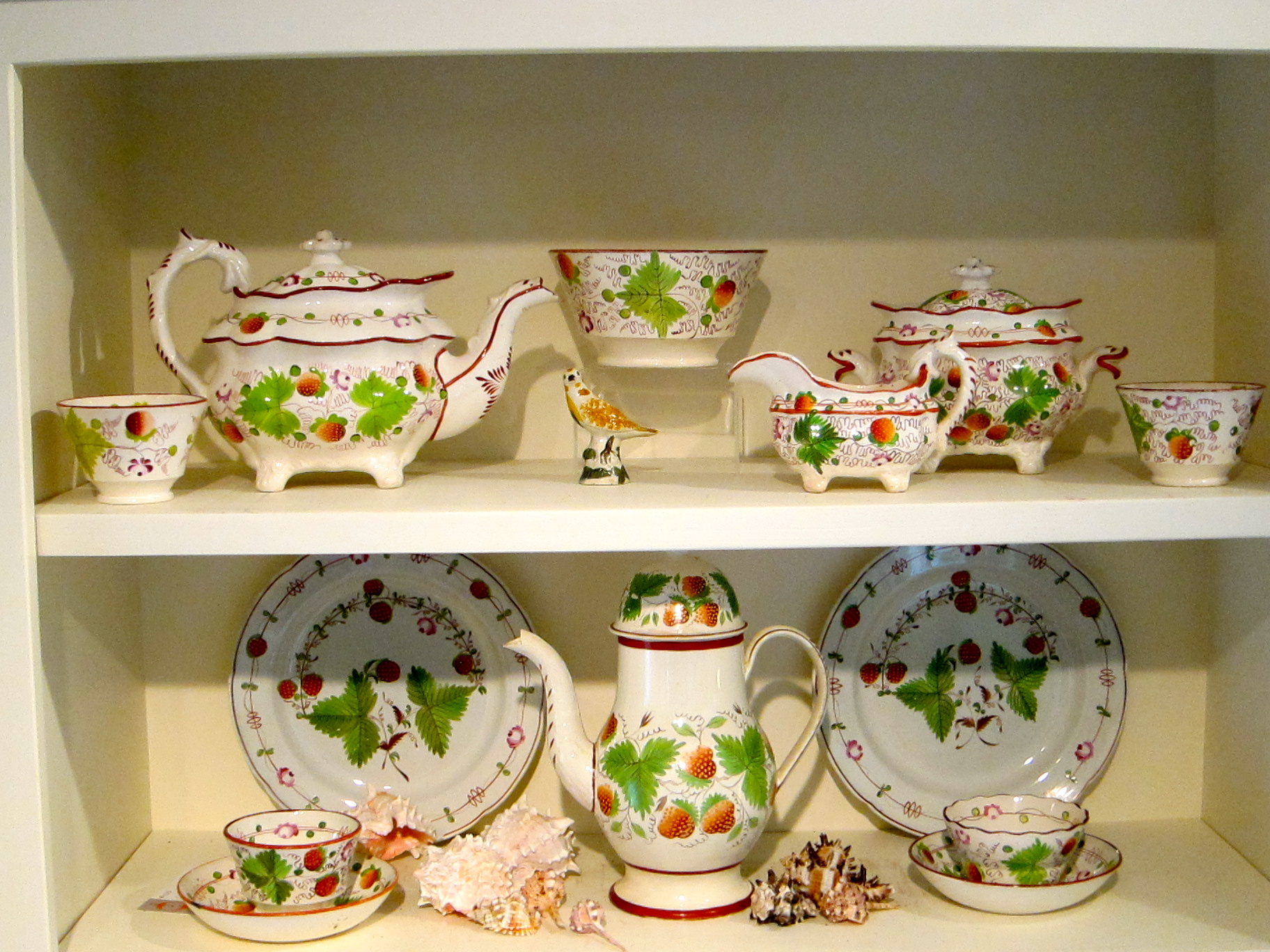
HailCorn1

July 13 Sunday  We all went to church this forenoon

but my company did not wish to go this

afternoon and I staid with them

About 4 Oclock had a very heavy shower of

rain & hail which prevented us from going to Mr

Manlys garden as we intended.  Oakes A carried

Orinthia home & stoped awhile at Dr Swans

Mrs S Ames & Mrs Mitchell & Witherell called


After noting yesterday’s accommodating weather, Old Oliver made a very different report today:

“it was fair to day but rather cool wind north west untill about 5, O,clock when there was a smart shower and a considerable quantity of hail but it was not large enough to do much damage. there was some thunder the hail cut the corn leves in strings – and at Daniel Wheatons and in Taunton it broke a good deal of glass”

Damage to the corn crop was no small matter, although Old Oliver seemed to make light of it.

Evelina, meanwhile, along with Oakes and their sons had to entertain the young houseguests, Melinda and Caleb Norris and Julianne and Benjamin Harris, once they all came home from church. The expedition to Edwin Manley’s garden, a regular and favorite destination for guests, was cancelled because of the bad weather. Instead, the company must have sat inside and listened to the pelting hail.

Eventually, the weather passed and some family members ventured forth.  Oakes Angier carried Orinthia Foss back to the Elijah Howard house, where she was boarding, and stopped to visit Dr. Swan and his two daughters, presumably, on his way home.  Evelina’s sisters-in-law came to call, and tea was likely served to a crowd.
July 12 1851

54-02

*

July 12 Saturday  Have been very much engaged to day

in putting my house in order & have been to work

on the cushion to the lounge, and put the cover

on to the arm.  called in Olivers awhile.  Mrs

H Ames and Mrs Mitchell spent the day there

Mr Norris came in the stage to night & Mr & Mrs

Harris Mrs Norris from Bridgewater, Miss Foss

came with Oakes A who had been that way on an errand

Company! From Boston by way of Bridgewater came the Orr daughters and their husbands. Melinda Orr Norris with her husband Caleb, who had visited Easton just the other day, and Julianne Orr Harris and her husband, Benjamin Winslow Harris, arrived for an overnight stay with the Ameses.  Evelina spent much of the day “very much engaged” in getting the house ready for the two young couples, although she did manage to slip next door to sit with her sisters-in-law. The whole Ames property was full to the rafters.

Everyone had tasks to do today, which wasn’t unusual in that hard-working family. Old Oliver and a crew were outdoors:

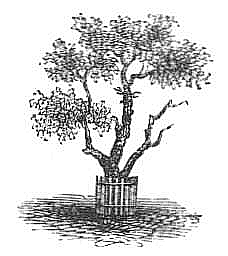
“it was cloudy half the fore noon but the afternoon was pritty fair wind north part of the time + south west a part we mowd the high land back of the Factory pond and that on this side of the old pair trees. to day”  Was this mowing a forerunner of haying season?

* Pear tree


July 11, 1851

OLYMPUS DIGITAL CAMERA

*

July 11th Friday  Have been to mothers to day with

Mrs Horatio Ames & Mrs Mitchell & Anna.

Called on Miss Foss with her to come home with

us but E Howard & Miss Williams are to visit

her school tomorrow.  It was late when we 

got to mothers, almost dinner time.

With sisters-in-law Sally Ames and Harriett Mitchell Ames in tow, as well as Harriett’s four-year old daughter, Anna, Evelina rode down see her mother on the family farm. The group probably joined the Gilmores for midday dinner.  Orinthia Foss was to have traveled with them, but she had to prepare for an inspection of her schoolroom.

Sally Ames (who some sources list as Sarah Hewes – another sister-in-law named Sarah!) was the wife of Horatio Ames.  She was up from Connecticut for a few days to visit her in-laws in North Easton, a town she had lived in as a bride and young mother.  Her father-in-law, Old Oliver, had built a house for her and Horatio back in the day, but the couple ended up moving to Falls Village, Connecticut, where Horatio, with marginally more success than his younger brother, William Leonard Ames, built an iron furnace operation underwritten by family funds. It was in Falls Village rather than North Easton that Sally and Horatio raised their three children, Susan, Horatio Jr., and Gustavus.  Their marriage was not a happy one; by the end of this year, Sally would be asking Horatio for a divorce.

*“Residence of H Ames Esq, Falls Village,” from Fagan’s map of Salisbury, 1853, “Connecticut’s Ames Iron Works,” Gregory Galer, Robert Gordon, and Frances Kemmish, New Haven, 1998, p. 133

July 10, 1851

IMG_1031

July 10th  Baked in the brick oven this morning

Cassander Gilmore engaged to come here to

day but did not  Mrs Horatio Ames Mrs Witherell

Mitchell and their children father Gustavus &c &c

were here to tea.  Had strawberries from 

Mr King, his last picking.  This afternoon

finished my dress  Alson called

Evelina was quite busy today.  She baked, probably making the usual bread, ginger snaps and a pantry’s worth of pies. Although she doesn’t specify what kind, this was the time of year for rhubarb and her pies may have been made of the very fruit she grew in her back yard. She culled through the last of the available local strawberries, too; there would be no more this season.

Much of this kitchen work was preparation for afternoon tea, which was served to a raft of Ames relatives.  Sally Hewes Ames, Horatio’s wife, was there with her son, Gustavus, along with the Witherells and Father Ames from the other part of the house.  Sister-in-law Harriett Ames Mitchell and her three children were there.  Where was Harriett’s husband, Asa Mitchell? Presumably Oakes, Susie and her three older brothers were at table, too.

When she did get out of the cook room, Evelina finally finished sewing her new dress, and had a visit from her brother, Alson Gilmore.

July 9, 1851

IMG_2490

1851 July 9th  Julia is here again to day and my dress

not finished yet  it will take me two hours

or more to get it done  I think it will suit 

me pretty well when it is finished  Mrs Horatio

Ames & Gustavus came to Father Ames this 

afternoon  Frank and Gustavus went to Mr Algers

to get some butter

William Leonard Ames, fifth child and youngest surviving son of Old Oliver and Susannah Angier Ames, was born on this day in 1812, less than a month after the United States declared war against Great Britain. He came along at an unsettled moment in Old Oliver’s life; the latter was attempting to establish a textile factory in Easton, an enterprise that would fail when “peace came along and spoilt the business.”*

William grew up having to compete with his older brothers, Oakes, Horatio and Oliver Jr.  In 1851, he was still vying for his place in the sun, so far without much success. Several years earlier, William had undertaken the management of two separate iron furnace operations in New Jersey, both of which were underwritten by Ames money from Easton. He was not successful, and blamed his lack of success on his brother Oakes. William believed that Oakes, referred to by one historian as “the emperor of New Jersey operations,”** was selfishly working against him.  “Oakes sole object […] is to make everything as unpleasant for me as it can be.”**

The enterprise may have been unlikely to succeed all along. William was focused quite specifically on operational issues while Oakes was looking at the profits to be made from various land deals on the properties in question.  The two brothers had different goals.

William began to close down his affairs in the east and, with his young family, prepared to move west to Minnesota. There, in the St. Paul area, he found success in cattle ranching and lumber. Credited with introducing the first Shorthorn cattle into the territory, “[h]is large and successful farm […] was a practical advertisement for Minnesota as an agricultural region”*** Despite the distance between him and the family in Easton, William made periodic trips back east to see his father, bringing some of his children along.  His only daughter, Amelia, eventually returned to the east to live.

Of all the offspring of Old Oliver and Susannah, William was the most married and had the most children.  His wives, the first two of whom died before he did, were Emily Louise Brown, Amelia Hall, and Anna Pratt Hines.  He and Amelia had six boys and one girl. He and Anna, too, had one son not long before William died, in 1873.

* Oliver Ames, journal

** Gregory J. Galer, Forging Ahead, Brown University

*** ames.spps.org


July 8, 1851

Buttonhole


1851

July 8th Tuesday  Julia has been here to day and we

have been to work on my borage Delaine  Have worked

very slowly  Julia has been to work on the waist

all day and it is not near done yet.  The waist

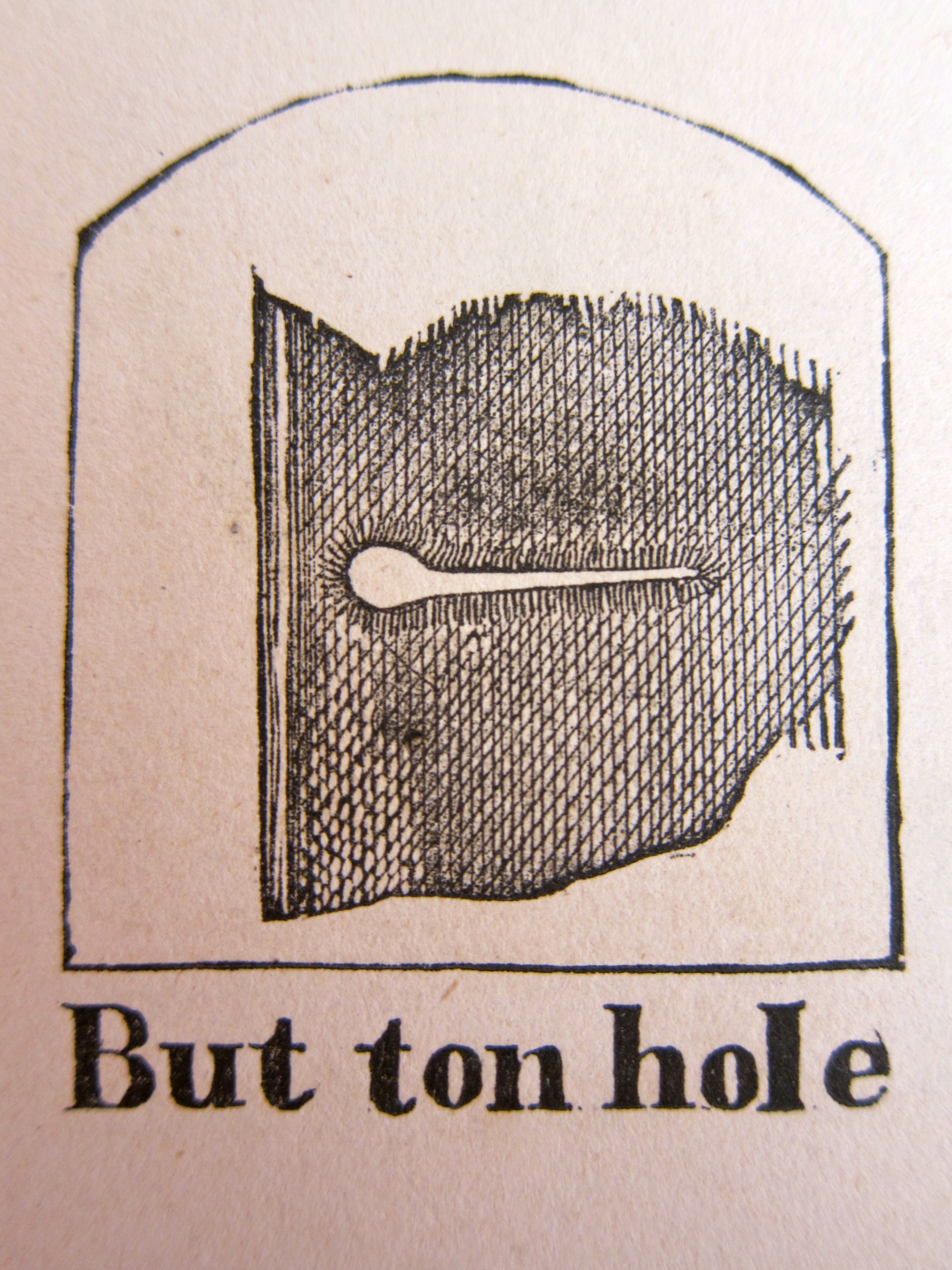
is made plain & I have made the button holes myself

This dressmaking is discouraging business with such

slow dressmakers.

Evelina was none too pleased with Julia Mahoney, the dressmaker whose fingers never flew as fast as her own when it came to stitching.  She wanted the new dress finished, and Julia was working too slowly for Evelina’s taste – and wallet, perhaps.

It’s worth noting that Evelina didn’t garden today or, if she did, she didn’t mention it. Her focus was not on her pinks and petunias, it was indoors on her barege delaine. Perhaps the weather was too warm to spend much time outside in her yard.

What was going on outdoors, beyond the flower beds?  On the larger canvas of the town, the vegetable crops, the corn and the hayfields should have been growing well, the latter two important food for the oxen and other domestic animals over the next winter. Haying was due to begin soon.  No doubt Old Oliver and other farmers were paying close attention to the weather and the readiness of all their crops.

July 7, 1851


large-003500

*

1851 July 7th  This morning being washing day had to do the

house work and see about the dinner  My finger

is still very tender and I find it difficult to sew

but I have cut of the skirt of my borage Delaine

for Harriet to make and this afternoon have been

working the sleeves to it  Expect Julia here tomorrow

It was Monday, so Jane McHanna washed and hung out the laundry while Evelina swept, dusted and cooked the midday dinner.  Her finger may still have been sore – what had she done to it? – but she did her chores.

She did some sewing, too, or at least she prepared to sew with Julia Mahoney, the dressmaker who was expected the next day.  She cut the cloth for the skirt of a new dress, no small task. The barege she used, as noted in a previous post, was an open weave wool, lightweight and popular at mid-century.

In 1851, dresses were styled with very full skirts, some with flounces, that required upwards of 25 yards of fabric. Knowing Evelina’s instinct for thrift, we may believe that she probably settled for fewer flounces and less material. Still, even the simpler dresses with all their parts – skirt, lining, bodice, sleeves, undersleeves, pocket, collar, and any decorative element such as piping, ribbon or fringe – consumed significant yardage.  Cutting out all the pieces took expertise and room to maneuver. Imagine the project spread out across the dining room table.

How did she convince her sister-in-law Harriett to help sew the skirt?

* Fashion plate from Godey’s Ladys Magazine, July 1851


July 6, 1851

photo

*

1851 July 6th  Oakes A and Mr Norris went to East Bridgewater

this morning and returned this evening  I went to

meeting this morning but had something of a head

ache and did not go but half a day.  Mr Ames

rode with me to Mr Kinsleys  Since meeting had a

very pleasant call  Met a Mr & Miss Kinsley

there from Springfield

In his Fourth of July speech two days earlier at the laying of a new cornerstone for an addition at the Capitol building, Daniel Webster praised the church-going character of the American people:

“I think it is safe to say that a greater portion of the people of the United States attend public worship, decently clad, well behaved, and well seated, than of any other country of the civilized world.”  He could have been describing Evelina as his ideal church goer.  She was undoubtedly well-behaved, nicely dressed and, whatever it means, well-seated.  On the other hand, her husband, Oakes Ames, who chose to wear shabby clothes  and was known for falling asleep in church, was not the image of American godliness that Webster intended to praise.

Evelina did attend meeting today, but only stayed for the morning service.  She had a headache, perhaps the result of hot weather or too much socializing and not enough gardening.  She recovered enough to go to Canton later with Oakes to visit the Kinsley family, a “very pleasant call.”

* W. E. Tucker, The Church Porch, an illustration designed and engraved especially for Godey’s Ladys Books, July 1851


July 5, 1851

Stage

July 5 Saturday  My finger is better and I have been

trying to do some mending  A robe for Miss Burr

was brought to me to make  but I cannot sew

on any thing nice and Mrs Witherell & Ames

made it.  Mr Norris came unexpectedly in the 

stage tonight with Mr Ames & Oliver.

The robe that Evelina was asked to sew was a shroud for Miss Burr for her coffin. Evelina and her sisters-in-law were often asked to sew such robes for the deceased, especially if the deceased had no family with the means or ability to make the robe themselves.  We don’t know who Miss Burr was, but we can infer that she might have been poor and possibly alone.

Sarah Witherell and Sarah Ames sewed the robe, as Evelina’s finger was still too sensitive to push a needle around.  Her finger was getting better, though, or she would have been unable to do any mending.

Oakes Ames and, probably, his middle son Oliver (as opposed to Oliver Jr.) returned from Boston tonight by way of stage coach. The train did not yet go to Easton and wouldn’t until 1855. Accompanying Oakes and Oliver (3) was Caleb Norris, an in-law of the Orr family in Boston.  Caleb had recently married Melinda, one of the Orr daughters. Caleb worked in retail in the city.  His purpose in traveling to Easton was unplanned and remains unclear. Possibly he was just making a visit; he was probably close in age to Oakes Angier and Oliver (3) and may have been friends with them.


July 4, 1851

800px-US_flag_31_stars.svg

*

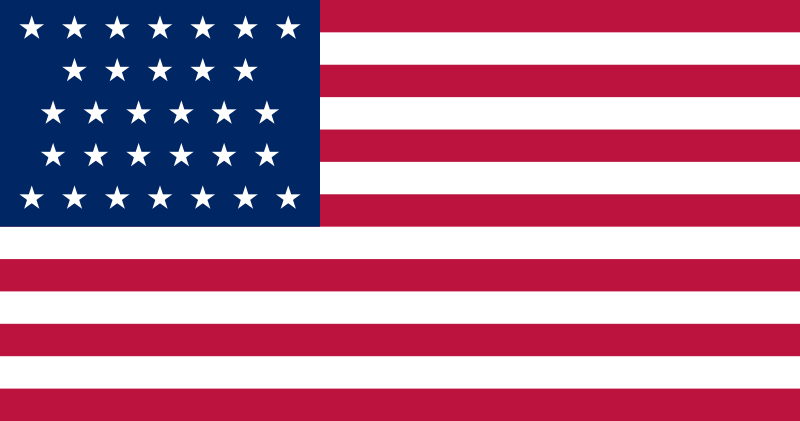
July 4th  Have been transplanting some pinks &c to day We have had several heavy showers  Oakes A & Frank rode to Dr Swans to make a call and carry his chaise home  Oliver & wife Harriet & Helen went to Mr Lothrops this afternoon  Mr Ames & self to mothers.  Orinthia has gone to Cohasset with Mr Brett.  Helen came home last night   On the Fourth of July in 1851, the new 31-star flag was raised over America for the first time.  It recognized the addition of California to the union.  Previously known as the California Military District, and before that as the short-lived California Republic, the new state had been officially added back on September 9, 1850, less than three years after gold was discovered there. California’s statehood had been a political struggle in that age of slavery. Only after significant wrangling by Congress and Presidents Zachary Taylor and Millard Fillmore, did compromise legislation, spear-headed by Senator Henry Clay, finally carry the day. There was to be no slavery in California. The 31-star flag would remain the standard until 1858, when Minnesota joined the union. The nation’s 75th birthday was recognized in Washington, D.C. with a ceremony for the laying of a cornerstone of the new addition to the Capitol. Massachusetts’ own Daniel Webster gave a speech. A long speech it was, in the style of the day, in which, among other things, Webster exhorted his audience to acknowledge that the formation of the United States had wrought “astonishing changes […] in the condition and prospects of the American people” and to advise “ye men of the South” that the progress of the country was worth staying in the union for. Ten years before the Civil War, Webster opined that “the secession of Virginia, whether alone or in company, is the most improbable, the greatest of all improbabilities.”  Webster didn’t live long enough to see how wrong he had been. Back in Easton, the shovel shop was closed. Many employees may have tried to picnic despite the rain. In the Ames family, most everyone had someplace to go. Evelina and Oakes rode to the Gilmore farm to visit Evelina’s mother. Oakes Angier and Frank Morton, no doubt tired from their long day yesterday, took the borrowed chaise back to Caleb Swan. Oliver Ames Jr., his wife Sarah and daughter Helen rode over to Sarah’s parents’s house, taking Harriett Ames Mitchell with them. Where was her husband, Asa? Where were her young children? With the Mitchell in-laws in Bridgewater, perhaps. Why weren’t they all together? Even Orinthia Foss was out and about, gone to Cohasset with a Mr. Brett.   * If you want to see other designs for the 31-star flag, check out the Zaricor Flag collection at flagcollection.com