March 16, 1852

130705-A-DS407-001

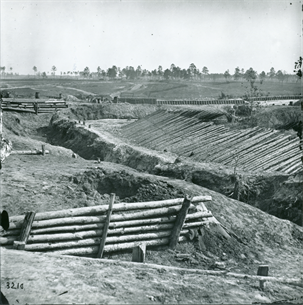
Defensive breastworks dug by Army Corps of Engineers outside of Petersburg, Virginia during the Civil War – probably using Ames shovels

March 16th

1852 Tuesday  Sewed on my waist very quietly

with Amelia this forenoon and this afternoon

have been into Edwins  Julia Pool came

there & tomorrow is going into Boston  Mrs S

Ames was there and this evening Mrs Witherell

Amelia is in fine spirits and am having

a very pleasant visit from her.

A quiet day was this, and “not verry cold.”*  Evelina and her sister-in-law, Amelia Gilmore, sat and sewed for hours and visited with Augusta Pool Gilmore, Sarah Lothrop Ames and Sarah Ames Witherell.  The reconstruction of the shovel shops continued.

Although Evelina was unlikely to have known it, today happened to be the 50th anniversary of the founding of the Army Corps of Engineers. Officially organized  by President Thomas Jefferson on this date in 1802, the Corps was headquartered at West Point, where it established and led the military academy until after the Civil War. For many years, West Point was the major engineering school in the country.

In addition to its oversight of West Point, the Corps was tasked for much of the 19th century with exploration of America’s vast lands and waterways. As the country moved westward, the Corps surveyed road and canal routes.  During the Civil War, it built bridges, railways, forts, batteries and roads – often using Ames shovels.

In 1852, in particular, the Corps was focused on waterways.  In Detroit, one group of engineers conducted and published a survey of the Great Lakes. In Utah, an engineer named Lieutenant James W. Gunnison, for whom the Gunnison River is named, explored the Salt Lake area and spent time with the Mormons. He published a report entitled, “The Mormons or Latter-Day Saints, in the Valley of The Great Salt Lake. A History of their Rise and Progress, Peculiar Doctrines, Present Condition, and Prospects, Derived from Personal Observation During a Residence Among Them.”

A year later, Gunnison and several members of his team would be massacred by Indians from the Pahvant Ute tribe.  Gunnison’s widow, Martha, always believed that the Mormons were the actual perpetrators. The Army Corps of Engineers kept right on going, continuing its work and eventually expanding its original mission to include flood control, dam construction, and environmental cleanup.


Oliver Ames, Journal, Stonehill College Archives, Arnold Tofias Collection

March 15, 1852


PENTAX Image


1852

March 15th Monday  Gave the sitting room & entry

a thourough sweeping & dusting and then

went to sewing.  Susan washed the dishes

Amelia & self carried our work into Edwins but did 

not stop to tea, are invited there tomorrow.  We called

at Mrs Bucks  She has 41 schollars and 5 or 6 boarders


After “considerable rain” over night, Monday broke “cloudy in the morning but fair + warm in the afternoon and in the evening there was some rain + it grew colder [.] Mr Arnold came to day to sleight the hammer shop”* Thus wrote Old Oliver.

After Sunday’s respite, work on the rebuilding of the shovel shops picked right back up.  A slate roof was going up on the hammer shop, thanks to the expertise of John Arnold, a local man who had done roofing for the Ameses before.  Old Oliver seemed pleased.

At the Ames home, Amelia Gilmore continued her visit with Evelina. Once the morning chores were complete, with Susie washing dishes and trusted Jane McHanna doing the laundry, and midday dinner consumed, Evelina and Amelia walked across the way to visit Augusta Pool Gilmore, carrying their sewing with them. They must have spent several hours there, but didn’t stay for tea. Instead they headed home, stopping off to see another neighbor, Polly Buck.  Evidently, Mrs. Buck was running a private school with day students and boarders. One imagines that the ruckus there might have been equivalent to the bustle of workers at the building site.


*Oliver Ames, Journal, Stonehill College Archives, Arnold Tofias Collection

March 14, 1852


Preach

1852

March 14th Sunday  Amelia & self went to hear

Willard Lothrop preach as he calls it

at this methodist meeting house but he

was not able to make out much  We called

at Mr Torreys & Augustus’ at noon

Edwin & wife were here to supper but

went home before dark.  Have read the

white Rover in Gleasons pictorial


With the factory shut or, in this case, with the carpenters away, Sunday was a quiet day in North Easton. This particular Sunday “was cloudy all day + in the evening + night there was considerable rain – wind north east.”* The Ames family usually went to church at a meeting house in Easton Center, but on this Sunday Evelina did something different.

Her family may have gone to the usual Unitarian service with Reverend Whitwell, but Evelina and her sister-in-law, Amelia Gilmore, stayed in the village and attended a service at the Methodist meeting house. This tiny church, since moved to another location, sat in an intersection of North Easton now known at The Rockery. So small was it that one visiting preacher declared he could “spit into the gallery from the pulpit.** Its intimate dimensions were just right for another session of Spiritualism with Willard Lothrop, who preached in his own personal way.

Evelina and Amelia may have been motivated to try to communicate with departed family members, but they came away disappointed. Lothrop failed “to make out much.”  Although Lothrop and others in Easton continued to advocate for their belief, Evelina pulled away from it. This is her final entry on the topic of Spiritualism.


*Oliver Ames, Journal, Stonehill College Archives, Arnold Tofias Collection

**William L. Chaffin, Oakes Ames, Easton, early 20th c., p.3

March 13, 1852

frank-bellew_thumb3b12885r

                    Frank Bellew                            “Raising the Wind; or, Both Sides of the Story”*    


1852 March 13th  Saturday  Have been mending &

sewing on my waists  Have passed the afternoon

in the other part of the house with

Amelia  Mr Ames came to tea  There has been fifty or 

more carpenters to work on the shops the past week

and it has been pleasant weather.

Good weather was a boon to the rapid rebuilding of the shovel shops after the devastating fire of March 2d. Although she remained in the house sewing for much of the day, Evelina and her visiting sister-in-law, Amelia Gilmore, would have been able to hear the hammering and shouting from scores of carpenters hustling to rebuild O. Ames & Sons.

In New York City today, a political cartoon appeared in a weekly newspaper, The New York Lantern. The subject of the cartoon had to do with a request before Congress to augment funding for overseas mail delivery.  Two shipping lines, one American, one British, were competing for the mail trade. The American Collins Line, which was losing money, was subsidized by the U.S. Post Office; the British Cunard Line was also assisted by its own government and was way ahead; its faster, larger fleet was eating into the American market.

In the cartoon, figures representing the two lines faced off over toy ships in a tub. Cunard is represented by John Bull helping a small boy work a bellows. The Collins Line is represented by a small boy, cheeks puffed, blowing at the water by himself. Behind him stands an aloof, apparently disinterested “Uncle Sam.”

Today was Uncle Sam’s first appearance as an illustration. He had existed in name since about 1810, but on this day, a young cartoonist named Frank Bellew turned Uncle Sam into a recognizable American icon. Bellew, whose parents were English, worked his trade as an illustrator and cartoonist in New York City for publications such as Frank Leslie’s Illustrated, but eventually resettled in New Orleans. Charles Dickens knew his work and admired it: “Frank Bellew’s pencil is extraordinary. He probably originated more, of a purely comic nature, than all the rest of the artistic brethren put together.”**

Uncle Sam lives today, thanks to Frank Bellew. The Cunard Line is alive and well, too, now owned by The Carnival Corporation.  The Collins Line, however, ever faltering, failed to survive the Financial Panic of 1857 and went bankrupt the following year.


The New York Lantern, March 13, 1852, Courtesy of the Library of Congress

** Wikipedia, accessed March 6, 2015

March 12, 1852

192_600_Red_Doll_Bed

1852  

March 12th Friday.  Spent most of the forenoon about

the house gave the sitting room a thorough

sweeping  This afternoon & evening have

spent at Mr Torreys  Amelia came home

with me.  Called to see Hannah in bed

almost sick with the canker & has weaned her babe.


Poor Hannah Lincoln Gilmore, wife of Alson Augustus Gilmore and mother of two little boys, 3-year old Eddie and 7-month old Willie, had been feeling poorly for more than a week.  Her complaint was canker sores, a common enough ailment but one that struck her unusually hard. As Evelina points out, Hannah was “in bed almost sick.”

As most of us know, a canker sore is a benign but painful sore located inside the mouth and lips or at the base of the gums. Known medically as aphthous stomatitis, a canker is not contagious and has no cure. It is often caused by stress; perhaps Hannah’s recent efforts to wean Willie had set them off. A canker sore can last from seven to ten days, and can be painful enough to make talking and eating difficult. Hannah must really have felt crummy.

Meanwhile, at the shovel shop, reconstruction was continuing.  Old Oliver noted that “the 12th + 13th were both good fair days for our work.”*

*Oliver Ames, Journal, Stonehill College Archives, Arnold Tofias Collction


March 11, 1852

Build

1852

March 11 Thursday.  Cut out another waist of stout

bleached cotton cloth  Have been to Mr

Horace Pools with Mrs Witherell & Mrs

S Ames.  Met Henrietta Rachel & Mrs Harrison

Pool there, got home about eight Oclock

finished writing a letter to Harriet Ames.

Amelia went to Mr Torreys.

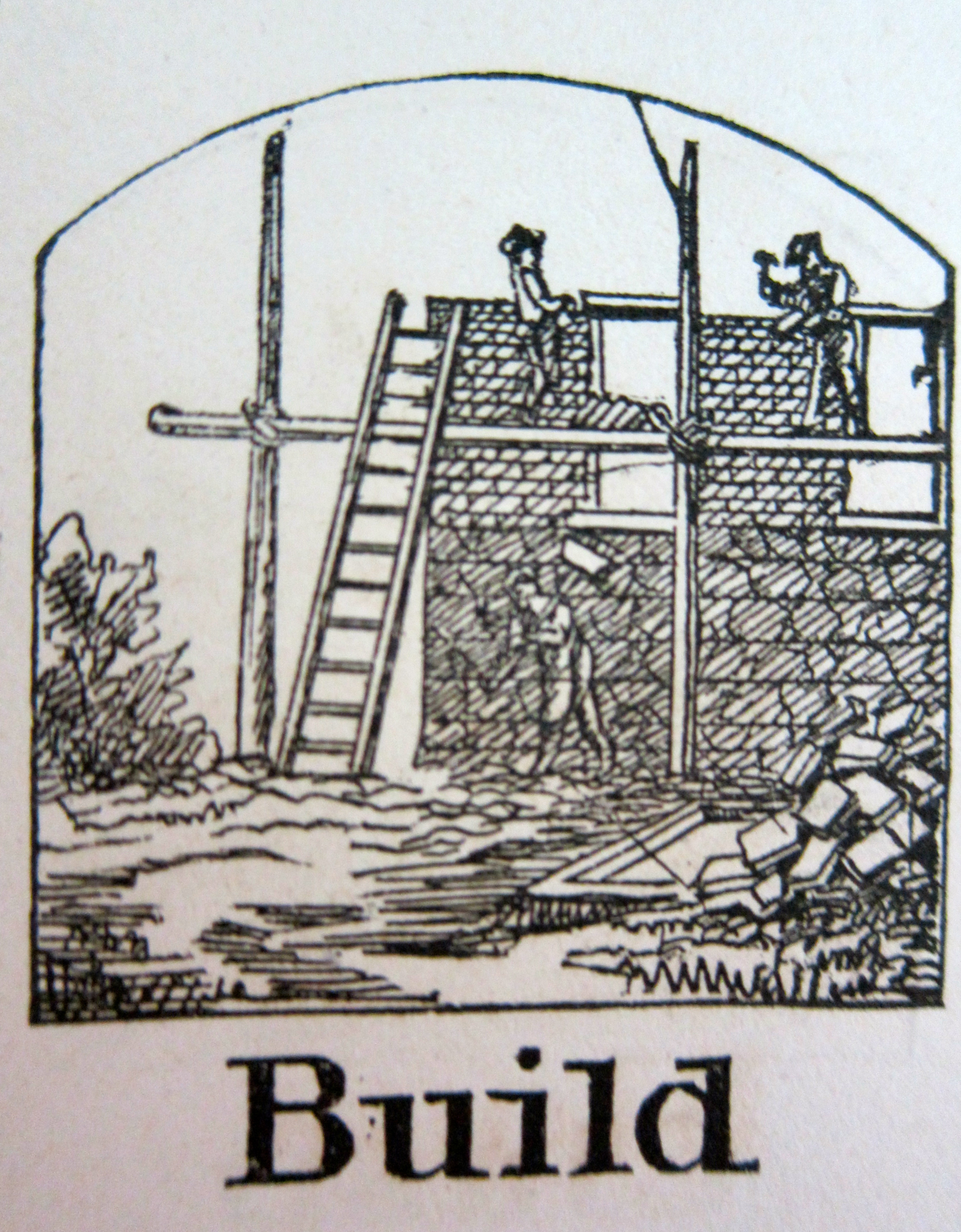
Old Oliver made his daily report:“the ground froze pritty hard last night – wind north in the morning butt southerly in the afternoon + pritty warm. it was a still day butt little wind – we began to rais the hammer shop to day.”  If ever there was an instance of Yankee industry, this cold, windy March in North Easton was it. Whatever the weather, all hands were on deck for the rebuilding of the shovel shops, which had burned to the ground less than ten days earlier.

While the men hammered, the women sewed – at least at the Ames compound. Evelina, anticipating warmer weather, worked on a new cotton dress. She had been fiddling with the waist lines on her dresses lately, suggesting that her waist might have altered. Larger or smaller?

With her sisters-in-law, Sarah Ames and Sarah Witherell, Evelina rode to the home of Horace and Abby Pool, where they met Henrietta Gilmore, Rachel Pool, and Mary Pool. This sounds like a gathering of the Sewing Circle, which we haven’t heard about since December when they temporarily disbanded. Now that spring had arrived, they might have started meeting again.

March 10, 1852

Handkerchief

1852

March 10th  Wednesday  Early part of the day

was sewing on a waist or rather cutting

it out and getting it to fit.  Augusta

came in this afternoon but as Amelia

& self were invited into Olivers she went

with us and Edwin.  Mr Ames came to tea

Amelia trimmed some pocket handkerchiefs

for me that Mrs Ames got in New York

The rebuilding of the shovels shops was moving along well. They “put the roof on the stone shop to day,”* according to Old Oliver, who watched each day’s progress carefully. It had been a full week since fire had destroyed most of the factory buildings. The response and reconstruction had been immediate!

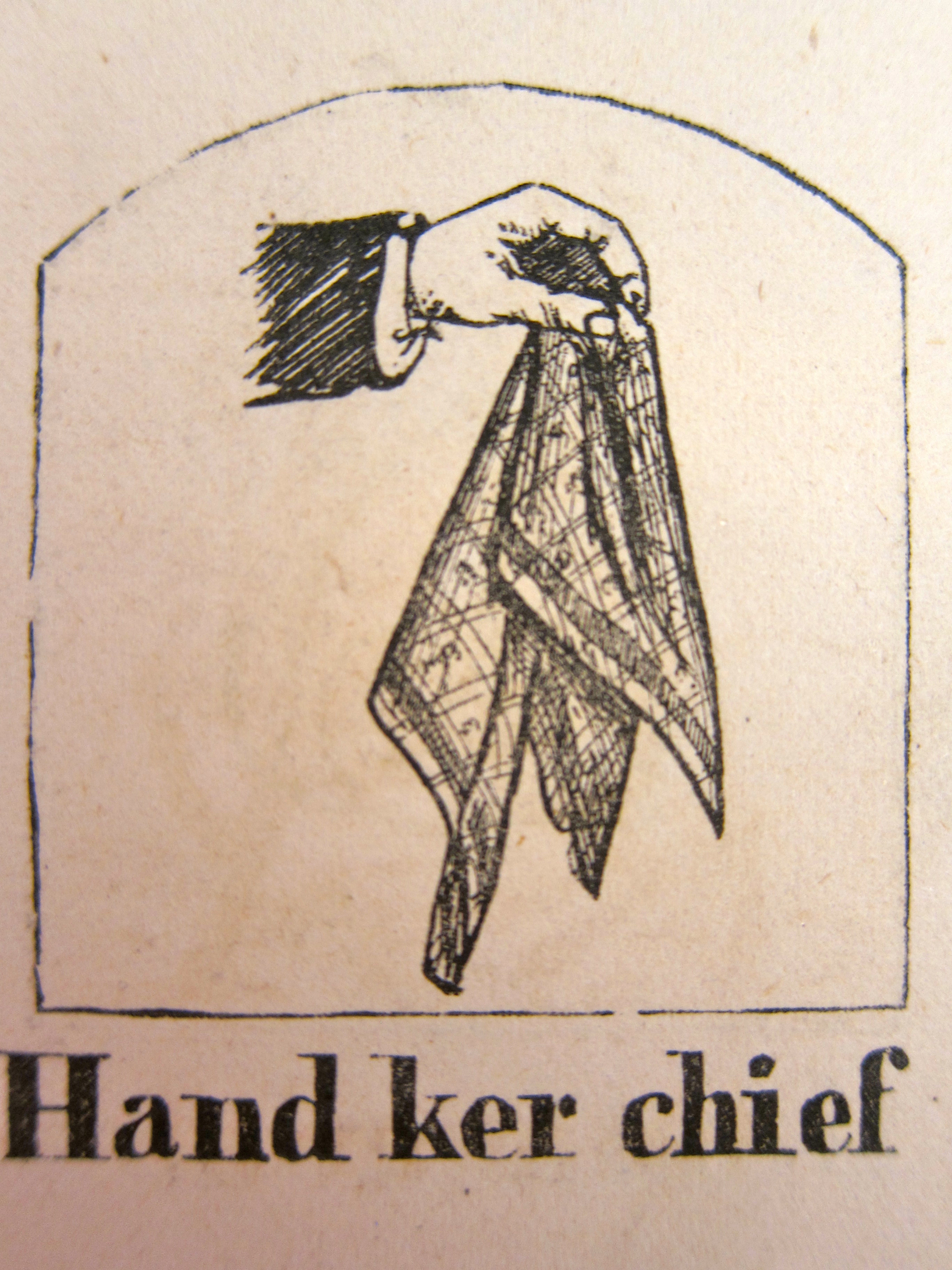
Amelia Gilmore, the widow of Evelina’s younger brother, Joshua Gilmore, Jr., was visiting for several days.  She undertook the hemming of some handkerchiefs – essential components of a lady’s outfit – that Almira Ames had brought Evelina from New York City. The purpose of a handkerchief, a personal item dating back to antiquity, was primarily hygenic, used to wipe one’s nose or brow and cover one’s cough. In a time of contagious diseases such as tuberculosis, cloth handkerchiefs were essential.  Their ubiquity necessitated their incorporation into the fashion profile.

Late in the day, the two went next door to Oliver Jr.’s and Sarah Lothrop Ames’ home for tea.  Oakes Ames went, too, and the newlyweds, Augusta and Edwin Gilmore, tagged along.


*Oliver Ames, Journal, Stonehill College Archives, Arnold Tofias Collection


March 9, 1852

OLYMPUS DIGITAL CAMERA

19th century oil lantern

1852

March 9th  Tuesday  This morning finished putting

the sitting room chamber in order

Mrs Witherell came in with her work

for an hour or two. I sent for Hannah

Augusta & Abby this afternoon.  Abby

came in this evening  Augustus called  his

wife has the canker and was not able to come


Today “was a fair good day + pritty warm,” * accommodating weather for the carpenters working on the shovel shops. According to modern town historian, Ed Hands, the repair would be rapid enough to allow a resumption of manufacturing “in less than three weeks.” But what happened to the shovel makers during the hiatus? Were they kept on payroll? Or were they given unpaid furlough?

What happened to Patric Quinn? An Irish immigrant with a young wife and two small children, he was the watchman who had dropped his lantern into the varnish on the night of March 2d. He started the fire. Was he injured? Was he held accountable?  Did he stay on payroll? He and his wife Elisa, who sometimes did sewing for Evelina, remained in North Easton. They lived on Elm Street in one of the workers’s houses.

At the Ames compound, Evelina put the sitting room and parlor back in order. She and her sister-in-law, Amelia Gilmore sat and sewed.  They were joined for a time by Sarah Ames Witherell who was followed by young Abbey Torry and Augusta Pool Gilmore. Hannah Lincoln Gilmore was too sick to attend.


*Oliver Ames, Journal, Stonehill College Archives, Arnold Tofias Collection

**Edmund C. Hands, Easton’s Neighborhoods, 1995, p. 163

March 8, 1852

Carpenter

March 8th

1852 Monday  To day is town meeting.  George brought

sister Amelia here this afternoon  Have got

the carpet down in the front entry and 

the chamber carpet partly down

S Ames sent for the entry lamp for fear

I suppose that I should keep it but

she […] might not been alarmed

Carpenters have come to rebuild the shops

A new week signaled a fresh start. It had only been six days since the fire at the shovel factory, but the clean-up had gone quickly. The ruins were “dismal,” as Evelina noted yesterday, but the debris was mostly gone, hacked down, shoveled up and carted away. Carpenters had arrived to begin rebuilding, as Old Oliver, too, noted in his diary:  “some of the carpenters came on to day to build up our shops + Mr Phillips + his son came.”*

Life in the village was returning to normal.  Housewives, some with servants, tended to washing day. Children went to school and men went to town meeting.  As at church, the fire must have been part of the conversation as the men gathered to decide on town affairs and expenditures for the coming year. People must have wondered how soon the shovel shop would be up and running.

At the meeting, a new moderator, Alson Augustus Gilmore, presided. Not yet thirty years old, it was his first time holding the gavel; he would repeat the performance twenty-four times over the coming decades.  According to William Chaffin, Gilmore and his predecessor, Elijah Howard, Jr., “served with signal ability.”**

Evelina and her sister-in-law, Sarah Lothrop Ames, had a minor set-to over “the entry lamp,” which appears to have been a luminary that was shared by both houses. Sarah was evidently skittish about not having it, and Evelina was annoyed to have it commanded away.  No cause for alarm, she might have said. She wouldn’t have been annoyed for long, however, as a favorite family member, Amelia Gilmore, arrived for a visit. Amelia was the young widow of Evelina’s younger brother, Joshua Gilmore, Jr. She had lately been working as a private nurse.

*Oliver Ames, Journal, Stonehill College Archives, Arnold Tofias Collection.

**William Chaffin, History of Easton, 1886, p. 637

March 7, 1852

Ruin


/52

March 7th Sunday  It has been a beautiful day and we 

have all been to meeting except Frank

When we came from meeting we rode down to

the ruins. They have cleared away a great deal 

but it looks dismal enough  Mr & Mrs William

Reed spent the evening  Mrs Witherell & Mrs

S Ames came in awhile & Father Ames

No work was done today at the site of the shovel factory fire, for it was Sunday, a day of rest – a day of rest that everyone in town must have welcomed after the shock of the fire and the subsequent hard work of clearing the debris.

The Ames family rode down Centre Street to church, the weather “beautiful.” At the intermission between sermons, they must have been approached by fellow parishioners expressing concern and curiosity about the fire. In a town of 2,500 citizens, such a huge event would have been on everyone’s mind. Is it too far-fetched to imagine that Reverend Whitwell might have alluded to it from the pulpit?

After the services, the family drove by the factory site on their way home. The wintry sunlight hid nothing; the “ruins” were “dismal.” Later in the day, several family members gathered at Evelina’s and Oakes’; even Old Oliver came over from the other part of the house, which he seldom did, perhaps to greet guests William and Abigail Reed or to discuss the plans for rebuilding, to begin the next day.