June 14, 1852

FullSizeRender

June 14th

1852 Monday  Am 43 this day quite an old woman

Julia Mahoney came to work on my dresses

Hannah Murphy commenced working for me

this day & Mrs Patterson is here and it

has been about as much as I can attend to

to wait upon the rest  If I had two or 

three more it would be all I could attend to


Hannah Murphy, replacing the departed Jane McHanna, donned an apron this morning and “commenced working.”  Mrs. Patterson was still on the premises and the three women proceeded with the Monday chores, laundry included. Evelina was very busy tending to it all.

Yet today was Evelina’s birthday and she felt old.  We in the U.S. might scoff at the notion that 43 feels old; our current life expectancy for females is 81.  In Massachusetts in 1850, however, it was no more than 45. Who knew how long Evelina would live?  While she had the hopeful example of her hardy, octogenarian mother to emulate, she also would have remembered her two older sisters, both dead in their thirties. She may have considered the possibility that, like her mother, she could live to an advanced age. In fact, she would live to be 73; on this birthday, she had thirty more years in front of her.

At the shovel factory, Oliver Ames took his mind off his concern for the crops and focused instead on the arrival of Clark S. Manchester, who “came here to day from Fall River to build our stone shop.”* Mr. Manchester, 37 years old, was a native of Little Compton, Rhode Island, who had only recently moved to Fall River with his wife and two children. His expertise with stone work had led him to the Ameses, or they to him.

So the new building began, on the west side of Shovel Shop Pond. This location was different from the original and recently rebuilt factory, which sat at a lower edge of the pond in order to maximize the drop in water level. Water still powered the factory machines, and the new location to the west would still rely on water power from “just above where the Queset entered Shovel Shop Pond.”** But different from the old factory, this new Long Shop would accommodate a modern steam engine, a huge advance in technology. A new era in production was waiting to begin, and the stone buildings would reflect the change.

Oliver Ames, Journal, Stonehill College Archives, Arnold Tofias Collection

** Gregory Galer, Forging Ahead, 2002, p. 250


June 13, 1852

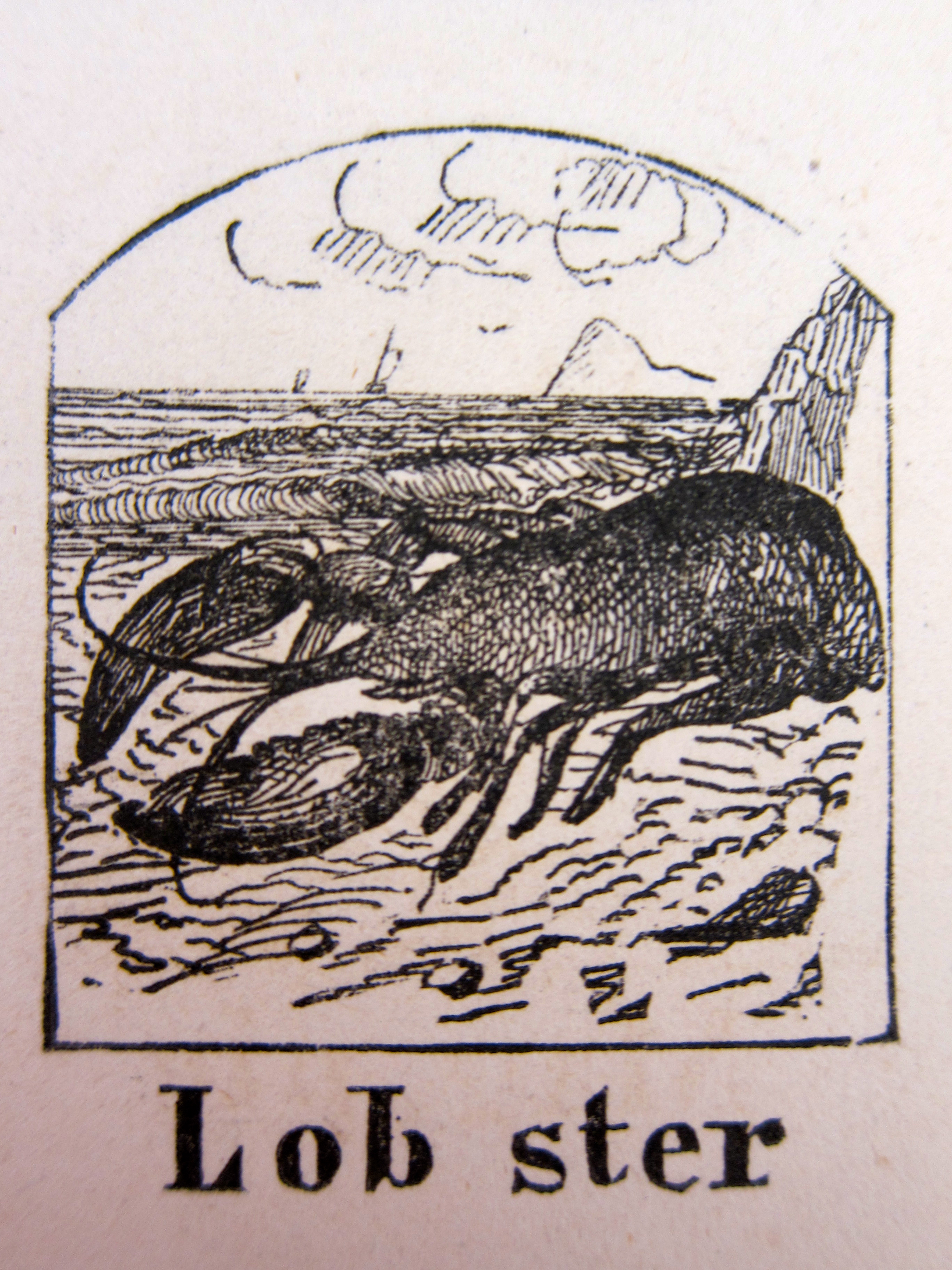
Lobster

June 13

1852 Sunday  Went to meeting this morning & returned

at noon and mother came with me to make

a visit  Did not go back this afternoon on

account of getting tea  Mr Patterson is here

came last night  Edwin & wife stoped to 

tea from meeting had lobster.  Read to

mother in  [entry incomplete]


The Sabbath was another “fair day + pritty warm + verry dry.”* Old Oliver had to be getting edgy about the prospects for this year’s hay crop, not to mention the potentially poor output from the cornfields and the crop gardens all around town.

The family all trooped to church for the morning service, but Evelina, bringing her eighty-year old mother home with her, skipped the afternoon sermon “on account of getting tea.” She had to prepare lobster for Edwin and Augusta Gilmore. We might assume that on the previous day, Oakes Ames picked up a lobster (probably quite fresh, although cooked and canned were available) in Boston on his usual Saturday visit. Lobsters were plentiful, inexpensive and, as a rule, larger than those we dine on today. He was probably familiar enough with the crustacean to buy one that was fresh.

The well-known household advisor Lydia Maria Church approved of lobsters, and offered advice on buying them:

‘A female lobster is not considered so good as a male.  In the female, the sides of the head, or what look like cheeks, are much larger, and jut out more than those of the male. The end of the lobster is surrounded with what children call ‘purses,’ edged with a little fringe.  If you put your hand under these to raise it, and find it springs back hard and firm, it is a sign the lobster is fresh; if they move flabbily, it is not a good omen.’

Moving flabbily could never be considered a good omen.


*Oliver Ames, Journal, Stonehill College Archives, Arnold Tofias Collection

** Lydia Maria Church, The American Frugal Housewife 


June 12, 1852

 3124164293_b3d771db50Lace bonnet

June 12th Sat  Jane has left and gone to Mr Savages

Mrs Patterson is here yet  Cousin Susan Orr

and Harriet Mitchell came to the other part

of the house this morning  I have spent the

afternoon there and Augusta stoped there awhile

Have finished my bonnet & lined & trimmed

Susans last summer bonnet

Jane McHanna, the Irish servant whom Evelina had fired the previous day, found immediate employment in the village at the home of William and Hannah Savage. Mr. Savage worked at the shovel factory; Mrs. Savage was a homemaker with a teenage daughter, Abby.  Mrs. Savage, unfortunately, was ailing, and needed help around the house.

That Jane found another position so quickly speaks not just to the circumstances of the Savage family, but also to her own capabilities.  She may have been more adept than Evelina had lately given her credit for, and others knew it. By 1855, Jane would be working for Oliver Ames Jr. and his wife Sarah Lothrop Ames, a couple with high standards. How would that play out for the two sisters-in-law?

But meanwhile, Evelina had Mrs. Patterson to depend on, and a whole afternoon in which to finish her – and Susan’s – latest bonnets.  She also got to sit and visit in the other part of the house with Sarah Witherell, where both were visited by Susan Orr, Harriett Mitchell and the young bride, Augusta Pool Gilmore.  Did Augusta share the information that she was now in her first trimester of pregnancy? Probably not, and impossible to know, but fun to imagine the conversation if she did.

June 11, 1852

Coffeepot


June 11th Friday  This morning had quite a fuss with

Jane about her coffee & beef &c and cannot put

up with such work and to night have engaged

a new girl  Helen & self carried Mr & Mrs

Orr to the Stoughton cars this afternoon […]

We went to the shops this morning & called

on Augustus Abby & Mrs Witherell


A red letter day for Evelina: She fired Jane McHanna. In Evelina’s mind, Jane’s work had fallen off – particularly when compared to the accomplishments of Mrs. Patterson – and today, after a “fuss” about breakfast, Jane had to go. Their relationship had ever had its ups and downs; today it ended.

The kerfuffle between Evelina and Jane must have been observed, or overheard, by houseguests Robert and Melinda Orr. Perhaps their presence influenced Evelina’s decision to dismiss Jane, Evelina wanting to exhibit higher standards of domestic efficiency than Jane was used to producing. However it came about, the result was that Jane would go. Evelina found a replacement by nightfall, but would Jane be equally lucky?  A lone woman without means, could she find a new position quickly?

The morning’s upset may have lingered in Evelina’s mind throughout the day, but she continued to entertain her Boston guests according to the means at her disposal. Besides calling on various family members, they walked around the shovel works, a tour which would have interested Robert Orr.  He lived in Boston, but his family in Bridgewater and elsewhere had worked with iron for many years.

In the afternoon, Evelina and her niece Helen Angier Ames “carried” the Orrs to the railroad stop in Stoughton and bid them goodbye. It was one month ago today that George Witherell died.

June 10, 1852

 FullSizeRenderOld view of Gilmore house near Foundry and Washington Streets*

June 10th Thursday  This morning worked a few moments

on my bonnet and about half past ten Mr &

Mrs Orr Mr Ames & self went to Alsons to

spend the day  Mr Ames Orr & Alson rode

to W Bridgewater after noon  Mother is most 

sick with a cold  Called at Mr Copelands

to get Susans hat & Lavinia mended it where

it was burned

The Orrs of Boston continued their visit with Evelina and Oakes. The rain showers – too brief to satisfy area farmers – receded and the sunshine returned, along with wind that was “strong and verry dusty.”** The Ameses and the Orrs took to the road, traveling a few miles south to spend the day with Evelina’s mother at the Gilmore farm.

After midday dinner with the Gilmores, Oakes Ames, Robert Orr and Alson Gilmore rode east to West Bridgewater. What was their business? Evelina and Melinda stayed behind with elderly Mrs. Gilmore who was poorly. Evelina managed to go over to the Copelands to pick up a hat she had left there for Susan, which Lavinia proceeded to mend for her little cousin.

Old Oliver, meanwhile, was looking ahead to bringing in the hay, assuming it hadn’t been ruined by the lack of rain.  He “bought a yoke of cattle from Howard Lothrop,”** the latter a well-known man in Easton who, according to a 19th c. history of Plymouth County, “styled himself a farmer, yet did much business of a partially legal character [..] for which work his superior business qualities and excellent judgment especially fitted him.” The Honorable Mr. Lothrop was also a former town clerk, state senator, member of the Governor’s Council, and father of Sarah Lothrop Ames. Between the two strong men, seller Howard and buyer Oliver, who got the best deal?

*Image from Howard Gilmore Papers, Courtesy of Easton Historical Society

**Oliver Ames, Journal, Stonehill College Archives, Arnold Tofias Collection

***usgwarchives.org

June 9, 1852


IMG_0582


Example of bonnet frame


June 9th  Wednesday  Mr & Mrs Orr  Mr Ames & self dined

in Olivers and Oakes & Frank came to tea

with us.  Mrs Davidson & two daughters there

Mr Ames & Mr Orr rode to Canton

Mrs Orr brought me a frame for a lace

bonnet and I have fitted it to my head ready

for the trimming

With their guests, Robert and Melinda Orr, Evelina and Oakes ate midday dinner next door. It was a rare occasion to be invited to dine at Oliver Jr.’s and Sarah’s, an indication of how important the houseguests were.  At tea time, they were joined by Betsy Davidson, wife of the postmaster, and her little girls Lizzie and Julia. Oakes Angier and Frank Morton Ames joined the group, too, after finishing work at the shovel shops.

Evelina was given a special bonnet frame by Melinda and got right to the pleasant task of creating a new bonnet, “ready for the trimming.” The two friends probably sat and chatted as Evelina worked on it. Perhaps Melinda had brought some lapwork with her, or perhaps Evelina gave her something to sew. Neither woman would have been apt to sit idly while the other worked.

After dinner, Oakes and Robert rode over to Canton, probably to visit the Kinsley iron works. Back at home, Old Oliver Ames was breathing a bit easier after the much-needed rainfall of the previous day and night, reporting that “the plowd land is wett down considerable.” Just what the farmer asked for.


June 8, 1852

capture31200573857_pm


Patent drawing for Nancy Johnson’s Hand-cranked Ice Cream Machine, 1843


June 8th Tuesday  Baked in the brick oven pies

cake & brown bread and have been to work

about the house all day untill the stage

came and brought Mr & Mrs Orr  It rains

quite hard and I did not expect them

Mrs S Ames & Mrs Witherell called this

evening  Had some ice cream frozen in 

the new freezer

Evelina baked and did indoor chores all day, but as active as she was she must have been attentive to the arrival of much-needed rain.  Old Oliver certainly was, recording that “towards night there was considerable rain, wind south west.”* It was so rainy, in fact, that Evelina imagined that her expected houseguests wouldn’t come.  But Robert and Melinda Orr braved the elements and arrived from Boston via stagecoach.

The Orrs were the couple with whom Evelina often stayed when she went into the city.  She and Melinda were good friends, but the connection between the two families ran even deeper, all the way back to Bridgewater and the days of ironwork there when Robert Orr’s ancestor, also named Robert, was a maker of scythes and other tools. The Ameses and the Orrs had often crossed paths.

Evelina was ready to welcome Robert and Melinda to her home and had prepared ice cream for the occasion. The ice cream would have been made in a hand-cranked freezer and probably kept cold in the new ice closet. Although it was a specialty that took time and elbow-grease to prepare, it was not quite the novelty that we might imagine.

Ice cream had been around since Colonial days, brought in by the Quakers and quickly adopted by the likes of Ben Franklin and George Washington.  By 1813, it was served at the inauguration of James Madison. In 1836, an African-American and former White House chef named Augustus Jackson – also known as the Father of Ice Cream – created a variety of ingredients and improved the over-all techniques. Less than ten years later, in 1843, a Philadelphian named Nancy Johnson received the first patent for a hand-cranked ice cream freezer. Americans took to it in droves, and the frozen dessert only got better as time went by.

When did someone think to serve ice cream with pie? Did Evelina?


June 7, 1852

Washing

June 7th

1852 Monday  Mrs Patterson went to Bridgewater

to see about her things that she left

there and returned this afternoon  Jane has

done the washing and I have been very busy

about house all day.  Mr Scott  Holbrook

and another painter have been here painting

the back entry chamber & Franks chamber

Scott has grained the stairway & painted the stairs


Dry weather continued, which was bad for the crops but good for the laundry. The white sheets and shirts must have dried quickly in the “midling warm”* sunshine and light southern breeze.  Today would prove to be Jane McHanna’s last turn at washing the Ames family’s clothes.

Old Oliver, meanwhile, spent part of his day, at least, observing someone’s construction project, as “Capt Monk began to move the hous[e] where Tilden lived to day.”* We don’t know who Capt. Monk was, but we do know that a team of oxen had to be assembled for that task. Were any of Oliver’s oxen used?  Did he lend a hand? It’s doubtful that he would have observed in silence, his instinctive leadership and irrefutable expertise too compelling not to use, or be asked for.

The Tilden whose house was being moved was probably Francis Tilden, a teamster who worked for the Ameses. He looked after the oxen. When an Old Colony Railroad line was extended to North Easton a few years later, in 1855, Mr. Tilden would become the expressman.  He would trade in his oxen for a rail car and spend the rest of his life conducting the train back and forth between Boston and North Easton. Oliver Ames Jr. often rode it, calling it “Tilden’s train.”

*Oliver Ames, Journal, Stonehill College Archives, Arnold Tofias Collection

June 6, 1852

FullSizeRender

Office of Ames Shovels, ca. mid-to-late 1850s

1852

Sunday June 6th  Have been to meeting as usual

Mr Whitwell preached  Came home alone

with Mr Ames at noon Have read

but very little partly written a letter

to Oliver.  Mr Ames said he would go 

with me to Augustus’ to make a call but

he did not come from the office in season

Sermons, reading and writing filled Evelina’s day. She began a letter to Oliver (3), off at college.

It may have been the Sabbath, but that didn’t preclude Oakes and Oliver Jr spending time in the office next door to the house. The two men often met there at the end of each workday “to catch up with their correspondence (all letters were written and copied by hand), discuss business together and go over accounts with the head bookkeeper.”* That they met on a Sunday evening seems unusual, but it may not have been. The shovel firm was about to build a new, stone factory, one that would be more fire-resistant than the old one that burned down in March. These plans were being developed even as the business was in swing, making shovels and filling orders. Oakes and Oliver Jr. were extra busy.

As had happened before, Oakes Ames forgot to take Evelina out as promised, or came home too late to go, so she missed a visit to her nephew Augustus Gilmore and his family. Was Oakes’s chronic oversight just absent-mindedness, or was he more consciously choosing to ignore social obligations when they proved inconvenient? And how did he make it up to his wife?

Winthrop Ames, The Ames Family of Easton, Massachusetts, 1938, p. 129


June 5, 1852

tbl00064-2

1852

Sat June 5th  Mr Scott has been tinkering around in 

one place and another to day  has worked part

of the day here and this afternoon Holbrook

and another man came and put a coat of

paint on the plastering in the entry chamber

and whitewashed Franks chamber & painted

the closet I cut out two of the shelves and 

the shelves in my chamber closet.

Mrs Patterson here

Consul & slab came

and Olivers furniture


The dependable Mrs Patterson was on hand again today, as workmen tinkered, plastered and whitewashed different areas of the house. Evelina herself tinkered with the shelves of her closet in the master bedroom, cutting away two of them, perhaps to make room to hang clothes rather than fold them.

The arrival of new furniture from Boston was exciting for both Evelina and Sarah Lothrop Ames. Evelina and Oakes were to have a new console table – probably for the parlor – with a slab of stone – probably marble – on top. The Oliver Ameses next door got a delivery of new furniture, too.  The families were upgrading. It must have taken an industrial-strength wagon pulled by oxen to bring the pieces out from the city.

The delivery wagon had a “fair day”* for its route, and Old Oliver Ames had a good day to watch the new sills “for the cariage hous”* being laid down. He did enjoy building things, and his daughters-in-law enjoyed furnishing them.


*Oliver Ames, Journal, Stonehill College Archives, Arnold Tofias Collection