October 21, 1851

scraping-wallpaper-renovation-14163480

Tues Oct 21st  Have been scraping off the paper again

to day and getting ready for the painters

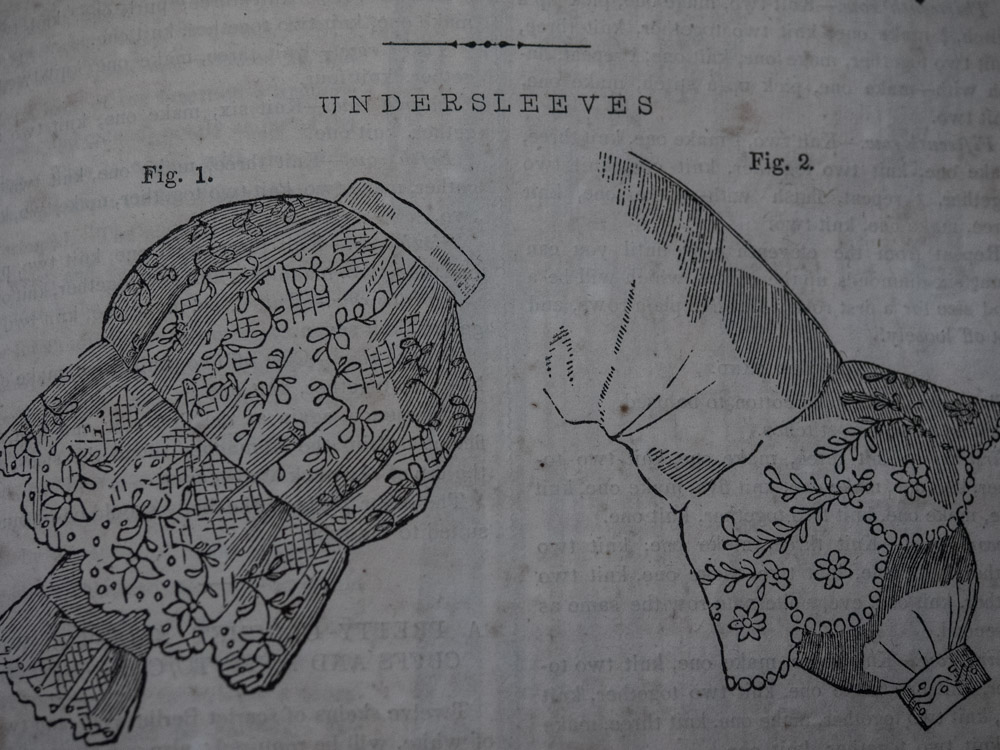
Have been to work some on the sleeves

of my cashmere have sewed part of the 

trimming on.  Hannah called to ask

me to take care of her babe for her to go

to Boston tomorrow  Was in the other part

of the house part of the afternoon 

The house continued to be in some upheaval this morning as Evelina scraped more wallpaper off of the parlor walls in order to get “ready for the painters.” Her arms and hands must have ached with the effort. Soon enough she broke away from that task and turned to her sewing, probably with relief. For some time she had been working on a new wool dress and today sewed some trim on.  Did she add fringe, or piping, or lace? Or did she add the ribbon she’d been looking for lately?

The bad weather from the weekend had disappeared. According to Old Oliver’s daily chronicle “there was a large fog this morning + after it went of[f] it was verry warm wind brisk from south west Mr Arnold came here to day to sleight the shop at great pond.”

Hannah Lincoln Gilmore, wife of Evelina’s nephew Alson “Augustus” Gilmore, came by to ask her aunt to babysit the next day. Evelina, always a friend to younger women, agreed to watch Hannah’s infant son. It’s worth noting that in order to ask that favor, Hannah had to walk over from the village to physically appear at Evelina’s house. That, or she could have written a note and asked someone to deliver it.  There was no phoning, no texting, no emailing, no instant messaging. Instead, there was a knock on the door and a face-to-face request. That’s how it was done in 1851.

Evelina wound up the day with a visit to Sarah Witherell and her houseguest, Susan Orr, in the other part of the house.
 

October 20, 1851

Cheese

Monday 20th  Susan washed the dishes again this

morning and I took up the parlour carpet and cleared

the room  Mr Healy has taken out the door

where the closet used to be and getting it ready for

the masons  I have been to work getting of[f] the 

paper and to night feel quite lame.  Mr Smiley

has varnished the chairs that he painted last week

Received 6 cheeses and a tub of butter from Mrs Mower

The calendar may have said it was October, but the domestic commotion at the Ames’s suggested spring cleaning.  In order to redecorate, Evelina pulled up the carpet (which had been laid down in pieces), emptied the parlor of furniture, and spent the better part of the day scraping off the old wallpaper. A local carpenter, Henry R. Healy, was also in the house, removing a closet door and preparing a wall for masonry. Were they putting in a new fireplace?  A coal stove would be more likely. Further, another worker, Mr. Smiley, finished varnishing some chairs.  All this went on over and around the usual Monday washing of clothes by servant Jane McHanna.

Scraping wallpaper off of horsehair plaster is hard work and by night time, Evelina was smarting from the day’s exertion. She couldn’t have been unhappy, though. Much had been accomplished and, moreover, her housewifely self must have been pleased to add “6 cheeses and a tub of butter” to the larder.  Louisa J. Mower, a friend from Maine, sent the dairy items to her.  As gifts? As a purchase?

It was a day of accomplishment for Evelina.


October 19, 1851

OLYMPUS DIGITAL CAMERA

Sunday Oct 19  Last night was very stormy, rained very fast

and heavy wind.  This evening is very pleasant

but it has rained all day so that none of the 

family went to meeting  Alson came after Lavinia

about three Oclock  I have been reading most

all day “Olive”  It is rather interesting but wish 

I had spent the day more profitably

Evelina’s father-in-law, Old Oliver Ames, also recorded the day’s bad weather in his daily journal: “it began to rain last night + this morning there is a north eas[t] storm + the wind blows verry hard. it stormed nearly all day but was clear at night – there was an inch + a half of water fell”

According to the weather record for 1851 – the first year that Atlantic hurricanes were officially tracked – the storm that Evelina and Old Oliver describe was Tropical Storm #6. It made landfall in Rhode Island, thus its impact on nearby North Easton would have been severe. Despite the rain and wind, the buildings in the Ames complex appear to have come through fine. Old Oliver would have mentioned it otherwise.

For the fourth week in a row, Evelina missed church. One Sunday, there had been no service; on two other Sundays, she had been ill and today, weather prevented attendance. She was probably missing her weekly dose of religious direction from Reverend Whitwell and social interaction with her fellow Unitarians.  She occupied herself by reading “Olive,” which was most likely a domestic novel in the genre that she often read.  It would have been the kind of book that Old Oliver called “love trash.”

October 18, 1851


Herman_Melville_1860Herman Melville

Sat Oct 18  Have been to Boston with Mr Ames to day &

have bought Paper for the sitting room &c &c

went into all the stores where there were ribbons

to match my dress could not find a good one

Did not get near all the things I wanted

Lavinia came here to night.  Mrs S Witherell

& Miss S Orr called a few moments

It was a full Saturday for Evelina. She accompanied her husband into Boston and while he probably visited customers and took orders for shovels, or collected payments from various vendors, Evelina went shopping. She purchased new wallpaper for the sitting room and more. She was on a tear to refurbish the old homestead – or at least her half of it – yet wasn’t able to “get near all the things” she wanted.  She searched for ribbon, too, maybe to go with the new cashmere dress that she and Julia Mahoney only recently finished.

Evelina and Oakes returned to Easton in time to welcome niece Lavinia Gilmore for the night. As they traveled back from the city, they may have noticed the sky beginning to cloud up, pushed along by winds from the south. After their return, Sarah Witherell and her houseguest, spinster Susan Orr, popped in from the other part of the house, perhaps to ask what wallpaper Evelina had selected.

Far away, in London, 500 copies of a new novel called “The Whale” were published today in three small volumes. In a month, the same book, written by young American author Herman Melville, who dedicated it to his friend Nathaniel Hawthorne, would be published in New York with an added title: “Moby-Dick.”  Evelina never mentioned it, but might she have read it?

October 17, 1851

OLYMPUS DIGITAL CAMERA

Friday Oct 17 Was working about house most of the

forenoon and have been sewing on Susans

and my dress.  Carried my work to Augustus

for a couple of hours this afternoon.  Lavinia

and Abby were there  Mr Ames has been quite 

unwell for a day or two and to night has taken

a warm bath  I have written a letter to Oliver

this evening  Mr Ames sent him a check for 25 Dls.


Oakes Ames had taken ill. Had he caught the nettlerash from his wife and daughter? Or was his illness something closer to a simple bad cold? He was “quite unwell.” Whatever he had, Oakes chose to palliate his ailment with a hot bath. Did he take a sitz bath, one that would alleviate itching from a rash?

That Evelina makes note of her husband taking a bath insinuates that his bathing was something out of the ordinary, which wouldn’t be unusual for the era. Regular bathing, which for many meant a weekly bath, was only just becoming the norm, and indoor plumbing was only just taking hold in urban areas.  Unlike the image in the illustration (which was published circa 1877), most bathtubs at mid-century were still free-standing.  The bath water was poured from buckets of hot water, which had been drawn from a well or cistern or kitchen pump and heated on the stove.  (Thus the expression, “to draw a bath.”)

The Ameses were fortunate in having their own indoor plumbing, a fact we know from Winthrop Ames’s mention in his family history of a “bathing room” in the house. Was this room shared by both families, as the brick oven was?

Oakes wasn’t too ill to write a check for his son, Oliver (3), who was away at college. Evelina wrote to Oliver and perhaps enclosed the check with her letter.  Had Oliver written home asking for money?  Such a scenario is certainly time-honored.


October 16, 1851


OLYMPUS DIGITAL CAMERA

*

Thurs Oct 16th Lavinia came back with O & F and spent the 

night  Sat with her awhile and sewed some on

the waist of my dress and sewed some buttons on

Franks vest  Went with Augustus with her

about Eleven and stopt an hour.  This afternoon

have been to Augustus Lothrop with Mrs S Ames

He has been sick about a week with the

Typhoid fever.  Bought 3 Bl apples of N Alger

Mrs Swain has a son born this morning

Evelina’s niece, Lavinia Gilmore, stayed the night with the Ameses, having ridden from the Gilmore farm with her cousins Oakes Angier and Frank Morton Ames.  Lavinia often visited with the Ameses in North Easton, evidently enjoying the bustle that the village of North Easton provided, relative to life on the farm. Today she sat and sewed with her aunt, who always enjoyed company while sewing. Somewhere along the way in today’s comings and goings, Evelina purchased three bushels (or barrels) of apples from Mr. N. Alger, a probable neighbor of Lavinia and her family.

In the afternoon, Evelina went with her sister-in-law, Sarah Lothrop Ames, to visit one of Sarah’s many brothers. This youngest brother, Horace “Augustus” Lothrop, lived in nearby Sharon where he ran a cutlery company.  He was quite ill with typhoid fever, a bacterial disease that was all too common in the 19th century. Spread by unsanitary conditions, typhoid fever killed more than 80,000 soldiers during the Civil War. Happily, Augustus Lothrop would survive his bout with the disease.

Another survivor today was Ann Swain, who came safely through the birth of her first child, a son. No doubt the relatives who had gathered to help were thankful and pleased.


Illustration of nursery furniture from Godey’s Lady’s Book, 1851

October 15, 1851

Thread

Wednesday Oct 15.  Julia has been here again to day and fitted

the waist to Susans dress and got my dress so

that I can finish it  Have been to the sewing

Circle to Mrs Elijah Howards.  Lavinia came

home with us and went back with Oakes A.

and Frank to spend the evening   Mrs J Willis

buried in the new cemetery funeral in the 

meeting house  I did not attend it


In Worcester today, some fifty miles north and west of Easton, the National Women’s Rights Convention opened in the same Brinley Hall that it had been held in the previous year. A roster of high profile figures, including Lucy Stone, Lucretia Mott and Pauline Kellogg Wright Davis, oversaw the two-day event which covered such topics as suffrage, equal pay and marriage reform. Guest speakers included abolitionists Wendell Phillips and Lloyd Garrison, and feminist Ernestine Rose, who spoke passionately against the secondary legal and emotional status of married women:

“At marriage she loses her entire identity, and her being is said to have become merged in her husband. Has nature thus merged it? Has she ceased to exist and feel pleasure and pain? When she violates the laws of her being, does her husband pay the penalty? When she breaks the moral law does he suffer the punishment? When he satisfies his wants, is it enough to satisfy her nature?…What an inconsistency that from the moment she enters the compact in which she assumes the high responsibility of wife and mother, she ceases legally to exist and becomes a purely submissive being. Blind submission in women is considered a virtue, while submission to wrong is itself wrong, and resistance to wrong is virtue alike in women as in man.”*

Was Evelina aware of this potent gathering in Worcester? Did she have any interest in the issues being debated? Did she ever resent her secondary legal status, or wish to vote? At no point in her diary did she write about women’s rights; she made no mention of the convention. She was not a feminist and yet, by participating in the monthly Sewing Circle, which she did today, she and others inadvertently proved the point that women could meet independent of men and, on their own accord, do work that addressed existing social concerns. In her generation, she was doing something her mother never would have done. In a modest way, she helped strike a path for women to move outside their strict, domestic realm. As modern historian Carolyn Lawes has stated, “Through the sewing circle women laid claim to the right to participate in the political and social development of the community, the nation, and the world.” **

Meanwhile, far from the foment in Worcester, Old Oliver “finisht the dam to day at the great pond.”


Brandeis University. Women’s Studies Research Center.Ernestine Rose’s speech at the Women’s Rights Convention in Worcester, Massachusetts in October 15, 1851. Retrieved on April 1, 2009. 

**Carolyn Lawes, Women and Reform in a New England Community 1815 – 1860, University Press of Kentucky, Lexington, KY, 1999

October 14, 1851


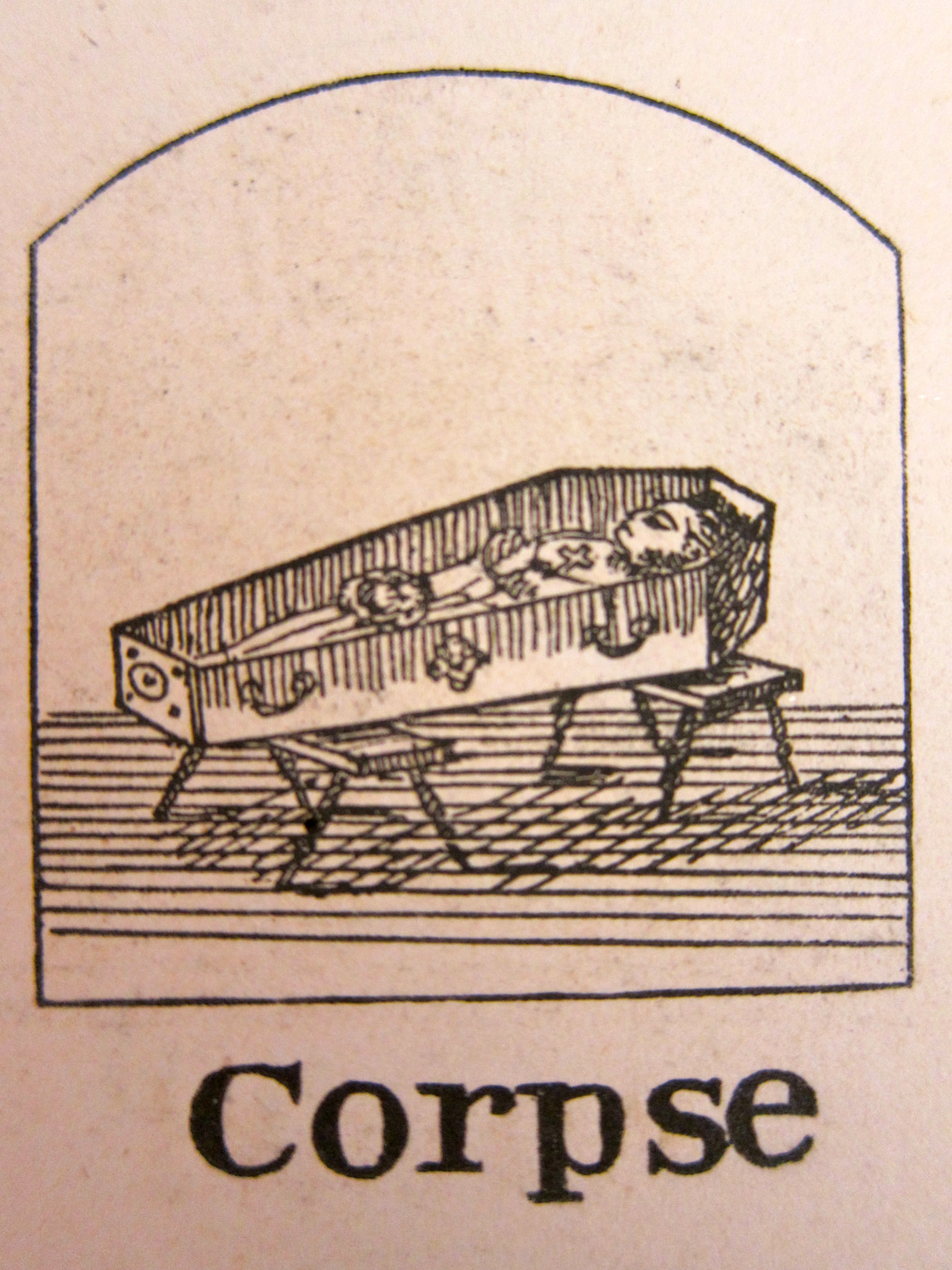
Corpse


Tues Oct 14th  Expected Julia here to work this 

morning but she sent word that she would not come

untill afternoon and it has put me back about my work.

Went to the store and got muslin for Mrs Willis robe,

and linings for dresses.  Helped Mrs Witherell & Mrs S

Ames make the robe  Julia came this afternoon & cut

the waist to my dress  Mr Ames has been to Boston &

Braintree

The sad business of sewing a robe, which is what the Ameses called a shroud, fell to Evelina and her sisters-in-law. The Ames women often were called on to make robes for the deceased, as they did today for a neighbor, Mrs. Willis. Mrs. Willis, who had died the day before, presumably had no family members who could otherwise sew the robe. Evelina herself picked up the muslin, the traditional material for a burial sheet, from the Ames store. The process of preparing the dead for burial tended to follow the existing customs:

“Before the Civil War, the care of the dead was largely the domain of the deceased’s family and neighbors. The corpse was customarily laid out on a board that was draped with a sheet and supported by chairs at either end. The body was washed, almost always by a female member of the household, and wrapped in a sheet for burial. A local carpenter or furniture maker […] supplied a coffin, a simple pine box with a lid. The undertaker, often the same carpenter or furniture maker […] took the coffin to the house and placed the body inside. With the family and friends gathered around, the minister performed the appropriate religious rituals, and then the undertaker conveyed the coffin to the graveyard.”*

Other sewing went on today as well. Evelina had spent the past several days piecing together a dress made of cashmere, and was waiting for the dressmaker of choice, Julia Mahoney, to work on the waist.  Julia was late, however, which threw a wrench into Evelina’s plans for the day. Evelina didn’t like tardiness, and was unhappy to have to rearrange her day. Eventually, however, Julia arrived and “cut the waist.”

Oakes Ames, meanwhile, went into Boston and Braintree, presumably on shovel business.  Saturday was his usual day to go into Boston; it being Tuesday, perhaps something beyond Oakes’s usual job of taking orders for shovels was called for.

*http://www.memorialhall.mass.edu/classroom/curriculum , “Death and Dying in the 18th and 19th Centuries”


October 13, 1851

OLYMPUS DIGITAL CAMERA

Oct 13th  Susan washed the […] dishes this morning and 

went to sewing quite early made the sleeves

to my cashmere dress and pocket made and

have got all ready for Julia to cut the waist in 

the morning.  Spent most of the afternoon in the

other part of the house  Mrs Willis died about

one or two Oclock this afternoon


“[V]erry warm and sultry like dog days” was Old Oliver’s assessment of today’s unseasonal weather. Evelina didn’t complain about it, nor did she mention any discomfort from the nettlerash that had plagued her for the last ten days.  Perhaps the burning and itching was finally subsiding.

Mrs J. Willis died today. There were a few women in North Easton who might have been this person; a possible candidate was a 44-year-old woman named Hannah Willis who lived in the Pauper’s House with her probable father-in-law, James Willis, and a child named James W. Willis. She had done some sewing for Jane McHanna back in March.

Evelina herself spent the morning with a needle and thread, making the sleeves and pocket for a cashmere dress.  She planned to use the services of Julia Mahoney to sew the waist. In the afternoon she went to the other part of the house, presumably to visit with her sister-in-law Sarah Witherell and a guest, Susan Orr. Given the heat and her slow recovery, Evelina moved around surprisingly well.

October 12, 1851

OLYMPUS DIGITAL CAMERA

Sunday Oct 12th  Had a Catholic meeting at 8 Oclock  Jane went

Have not been to meeting to day on account of the

humour was affraid that I could not sit still.  Susan

went & all the rest of the family  Read in Goodeys

Ladys Book .  Quite stormy & could not go to

Augustus’ as I intended  Have had a very quiet 

day

For the third Sunday in a row, Evelina missed church.  Her nettlerash, or “humour,” still bothered her to such an extent that she had trouble sitting still. She stayed home and by her own admission, “had a very quiet day” while the rest of her family went to meeting. Even the servant, Jane McHanna, left the house to go to a service in the new Catholic Church on Pond Street.

Her father-in-law, Old Oliver Ames, who kept a daily record of the weather, reported that “this was a cloudy warm day and there was 2 or 3 small showers in all about one 4th or 3/8 of an inch southerly.” Evelina evidently studied the raindrops from her perch in the house and decided to postpone her intended visit to the village to see her nephew and his family. Instead she read from Godey’s Lady’s Book, the popular monthly periodical to which she subscribed.

Published in Philadelphia by Louis Godey and edited by Sarah Josepha Hale (a high-profile writer who, among many other accomplishments, wrote Mary Had a Little Lamb), Godey’s Lady’s Book was, as its title suggests, targeted at women. It featured domestic fiction and household hints, sentimental poetry and architectural plans.  It showcased contemporary writing by authors such as Nathaniel Hawthorne and Washington Irving, yet also published three editions in which women, and only women, wrote the articles.  A testy Hawthorne actually complained to his publisher about the influx of female authors, calling them “a damned mob of scribbling women.”

By 1855, the magazine even carried a feature entitled Employment for Women. Each monthly volume of Godey’s contained various illustrations and at least one fashion plate, imperative for home-seamstresses everywhere who wanted to stay abreast of the styles in dress. It was a magazine perfectly aimed at Evelina, and she followed it loyally.