June 15, 1852

LongShop

Recent image of Long Shop 

June 15th  Tuesday  Julia here and I have been sewing

some but have not had much time […] I

t’s very hot weather mother spent the

day at Edwins I called there awhile and 

ripped my green gingham dress to have 

it made over.  had quite a heavy shower 

this morning which was needed very much

Everyone agreed that this day was “verry warm” and that rain was needed.* Evelina, looking up from her sewing, reported that they had “quite a heavy shower.” Her father-in-law, however, described the rain as “a small shower in the forenoon about an eighth of an inch.” Her glass was half-full, his was half-empty when it came to considering the benefit bestowed by this particular rainfall.

Such quick rain wouldn’t have been enough to interfere with the building of the new stone shops at the factory. Workers had begun to arrive on Saturday and, surely, some initial construction was already underway.  Old Oliver would have made sure of that. This first building on the new site, which was much closer to where the Ames family lived, was dubbed the Long Shop.

Industrial historian Greg Galer describes the Long Shop as “a simple, narrow, gable-roofed, two story building 525 feet long and 35 feet wide with a 60 by 50 foot ell and an additional 30 by 10 foot engine house. “**  This sturdy, less flammable facility would be up and running by the end of the year, and soon include a 60 hp steam engine.

Residents of North Easton today know the Long Shop as one of several shovel factory buildings repurposed for residential use. Along with others, Mr. Galer was instrumental in the successful effort to preserve the historic character of the Long Shop as the site was developed.

* Oliver Ames, Journal, Stonehill College Archives, Arnold Tofias Collection

** Gregory Galer, Forging Ahead, 2002, p. 150
May 29, 1852

Buttonhole

1852

Sat May 29th  Have had the woodhouse cleaned of the old

chips ready for the ice closet  Baked rhubarb and 

custard pies and this afternoon Mrs Patterson has

cleaned the tin.  Mr Scott painted the china closet

over the second time between the shelves and the 

walls of the porch  I have varnished the oil cloths and 

desks tables &c &c  finished Augustas button holes

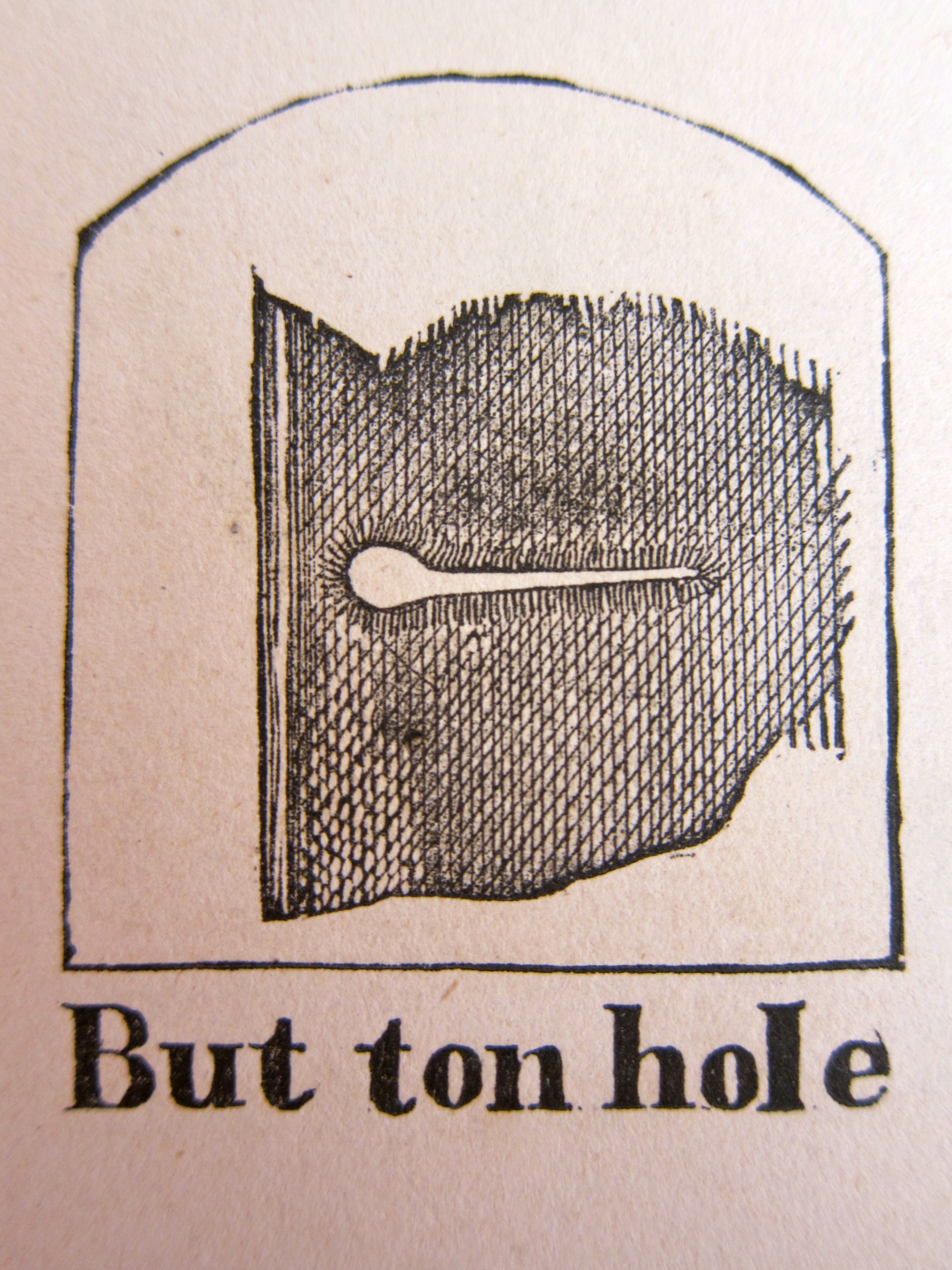
Baking, sweeping, scrubbing, painting, varnishing, and sewing were each on the domestic agenda today. Last year’s spring cleaning, which had been steady enough, seemed lackluster compared to the fierce pace of this year’s effort. Evelina didn’t necessarily complete each task personally – Jane McHanna, Mrs. Patterson, Mr. Scott and others helped – but she oversaw each piece of it. She was right in there. Today, it looks as if the only time she sat down was when she helped Augusta Pool Gilmore with her buttonholes.

Evelina excelled at making buttonholes and, at one time or another, helped other women, like Sarah Lothrop Ames next door, sew them. She must have taken pride in that particular skill, just as she must have had a real sense of accomplishment at all the tasks that were dealt with today. The to-do list got shorter.

As Evelina helped her young neighbor with needle and thread, the aroma from the baking would have competed with the fumes of the varnish.  Happily, it was fair and warm outside and hopefully, she opened the windows to let fresh air in.


May 14, 1852

Susan Eveline Ames French

Susan Eveline Ames (French)

1852

May 14th  Susan ten years old to day.  Her father & 

I have promised her 10 dollars each if she will

be a good girl and keep herself neat till her

next birth day.  Have been to work some on

Susans delaine dress altering it The gardener

laid out my verbena and I set out some slips

From the house  Malvina came to stop the night

Helen had her face lanced  Not pleasant


Last year for her birthday, Susie Ames had a little party.  Not so this year, her birthday coming too close on the heels of the death of her cousin George Witherell. Instead, her parents made her a generous promise of “10 dollars each,” if she behaved well and kept “herself neat” for the next year. Those were high expectations for a child, even a Victorian one.

Next door, Helen Angier Ames was still suffering from her own difficult ailment, that of a swollen face. Was it an abscess, or a boil, or something else? The doctor came again to see her and this time lanced her face. Not a pleasant procedure, one imagines. Otherwise, in the main house, family members seemed to be settling back into the normal domestic routine.  Eveline sewed and gardened; her verbena and more went into the ground, despite the continued stormy weather.


May 12, 1852

Corpse

Wednesday May 12th  Helped Mrs Witherell make Georges robe

Planted some seeds that Mrs Howard gave me

and African rose sent from Andover.  Have ripped

the skirt from Susans borage delaine to lengthen

it Swept & dusted my chamber &c &c Jane had

finished the ironing  Have not felt very well

have not got over being broken of my rest.  It has

rained since nine Oclock quite fast

A new gardener commenced work today

What sad sewing went on today. Sarah Ames Witherell, a thoughtful, dutiful woman who had sewn so many things for friends and family, now sat and made a shroud for her first-born child, George. Only fourteen years-old, he had died the day before after a painful bout of rheumatic fever. Of the three children Sarah had borne, only her middle child, Emily, was still alive.

The steady rain must have enhanced the gloom. Old Oliver wrote that “it began to rain before noon wind north east and it grew cold and raind all the afternoon.”* Evelina must have done her planting first thing in the morning, after which she helped Sarah with the robe for George. She also worked on a skirt for Susan, and swept and dusted while Jane McHanna ironed. She was probably not the only family member who was recovering from “being broken of my rest.” Everyone was trying to return to a normal routine after the disruption and sorrow of George’s illness, although next door, Helen Angier Ames was still suffering from a case of blisters and facial swelling.

*Oliver Ames, Journal, Stonehill College Archives, Arnold Tofias Collection


May 8, 1852

Ill

1852

Saturday May 8th  Mrs Witherell has finished working

my Delaine sleeves and I have put them in

and have finished the dress which I think

is about time.  I sit with George for Mrs Witherell

to lay down this afternoon  He is very sick and 

suffers very much.  Mr Manly brought me some

more plants & I paid him 1,58 cts.  Oliver &

Brown returned this morning

George Witherell, fourteen years old,  was ill with rheumatic fever. In the age before antibiotics, the “rheumatics,” as Evelina called it, was a serious illness. It was a complication of strep throat, which George must have had three or four weeks earlier. Its symptoms, many of which George manifested, were fever; a flat rash; involuntary twitching in the hands, feet and face; painful, tender and swollen joints; chest pain; palpitations and fatigue. As Evelina noted, George suffered a great deal, for rheumatic fever was extremely uncomfortable and unsettling. It was also often fatal.

Sarah Ames Witherell had been nursing her son for several days now.  She took a rest in the afternoon and let Evelina sit with George.  All the family was helping, although George wasn’t the only sick child. Helen Angier Ames next door was down, too, with a somewhat mysterious ailment in her face. Family members were worried about both young people.

Despite the concern everyone must have been feeling, normal routines in this season of planting had to be adhered to. Old Oliver reported that “we began to plow the hill back of the shovel shop pond to day.”


May 5, 1852

Thread

Wednesday May 5th  Worked about house & got my sleeves for Delaine ready

for Mrs Witherell to work  The sewing circle met

at Mrs Nahum Pools.  Mrs S Ames gone to Boston

George quite sick with the rheumatics Augusta gone

to N Bridgewater and so poor I should have had to

go alone.  Preferred to stay at home  Mr Peckham +

family all at Mr Swains.  called to see them & after they

left Mr & Mrs Swain went with me to Edwins garden got

two Gladiolus bulbs.  A beautiful pleasant day

The Sewing Circle met today at the home of Nahum and Lidia Pool, but Evelina didn’t attend. Her usual companions from the village were otherwise occupied, and “poor” she didn’t want to go by herself. She stayed home, or at least she stayed in North Easton. She parcelled out some sewing to her sister-in-law, Sarah Witherell, to work on, and headed out. Perhaps Sarah sat and sewed near her son George, who was “quite sick.”

The day was beautiful, and Evelina seemed to be in fine spirits despite missing the sewing circle, or perhaps because of missing it. She went to see John and Ann Swain and there encountered the Peckham family, who had moved away from North Easton the previous year. They must have been back for a visit.  When they left, Evelina and the Swains went up to the garden of Edwin Manley and bought two Gladiolus bulbs.

April 22, 1852

Cobbler

1852

Thursday April 22  Worked a very little in the garden

not very pleasant but looks more like fair weather

Sewed a little on my black silk dress

Called with Augusta on Hannah & her sister

Sarah, Abby and at Willard Lothrop, Sampsons

A Pratts Holmes and at the store.  afterwards at

Olivers & Edwins carried a pr shoes to mend

A little sewing, a little gardening, and a great deal of socializing filled the hours of Evelina’s day today. After being pretty well pent up by several days of stormy weather, Evelina was ready to go out.

With her niece-in-law, Augusta Pool Gilmore, she called on another niece-in-law, Hannah Williams Gilmore. There they met Hannah’s sister, Sarah Lincoln, who was visiting from Hingham. They went on to see yet another niece, Abby Torrey, then to the homes of Willard Lothrop (one of Easton’s most active spiritualists), Joel and Martha Sampson, and others.

The Sampsons were a younger couple from Maine with five little children aged eight and under, including three-year-old twins. Joel Sampson worked at the shovel shop and was evidently devoted to Oakes Ames. Twenty years later, on hearing of Oakes’ death, “Joel Sampson, teamster and farmer of the company came home when he heard the sad news, threw himself upon his sofa and announced to his wife that the head and soul of the business was dead, that every thing would go to smash now, and told her to make ready to go back to their old farm and home in Maine, as it was no use to live here any more.”**

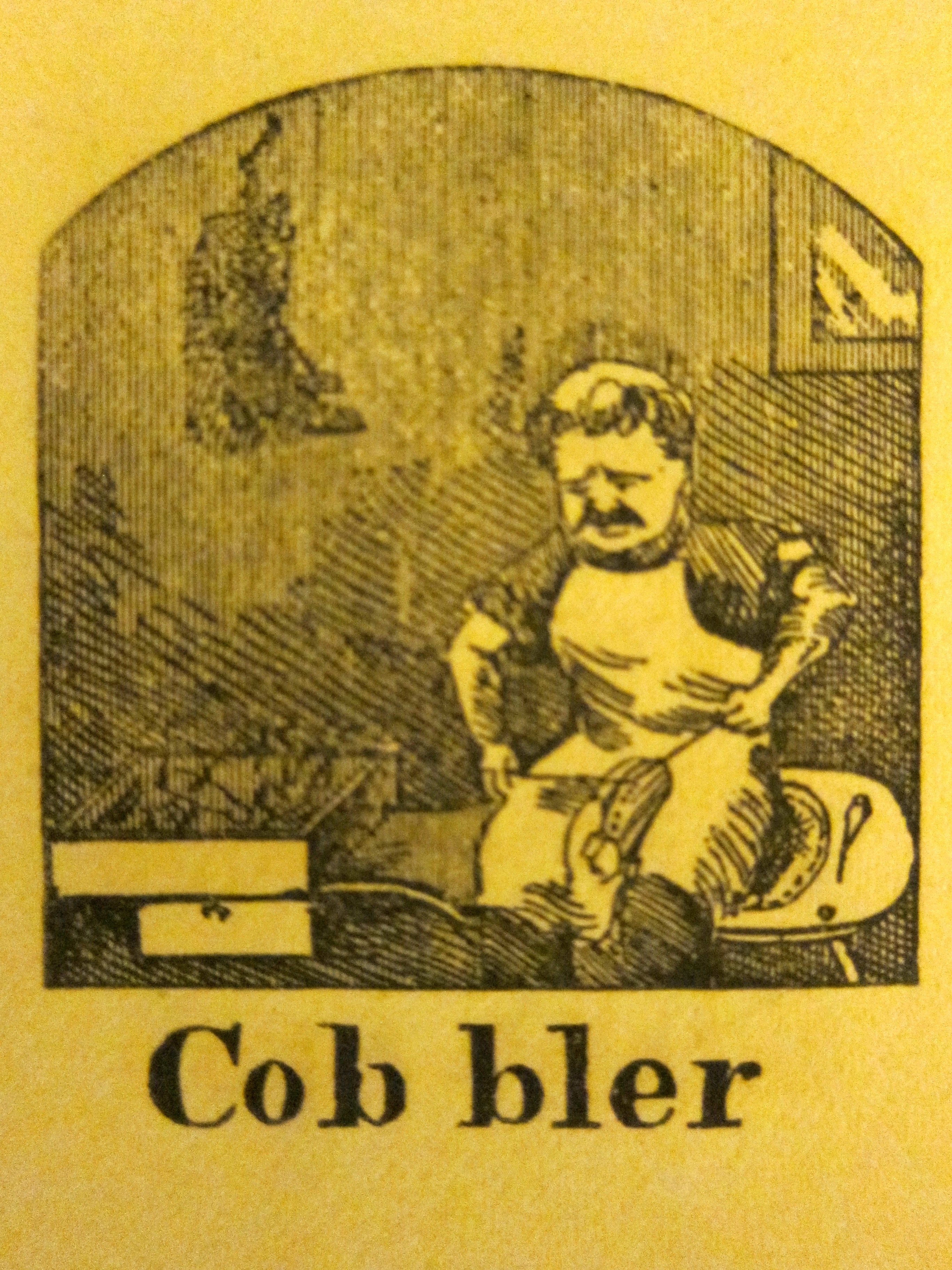
Throughout her travels today, Evelina carried a pair of shoes to be mended. In an area of the country well known for its shoe manufacturing, there must have been a good cobbler somewhere in town.


* Oliver Ames, Journal, Stonehill College Archives, Arnold Tofias Collection

**William Chaffin, “Oakes Ames,” p. 2

April 21, 1852

01-01_full

Examples of 19th c. lunch pails*

1852

Wednesday April 21st  It still continues to rain through not as

hard as yesterday  Have been to work on

Susans dresses altering them  Went with

Mrs S Ames to the store  Susan has carried

her dinner to school three days and thinks

it something nice  Swept my chamber and put

it in order

The heavy rain of the past two days wasn’t giving up easily. Old Oliver wrote that “it raind considerable last night + the wind blew hard and it is cloudy + rainy this morning + the water is verry high.”**

Despite the weather, the Ames women continued many of their usual routines: sewing, of course, and housework, but errands, too. Evelina and her sister-in-law Sarah Lothrop Ames went to the company store in the village. Little Susie Ames went to school, as she had even during the worst part of the storm. Instead of coming home for dinner in the middle of those rainy days, however, she carried her meal to school and ate there.  No school cafeteria or hot lunch program in those days! She thought it “something nice” to stay at school for the midday meal.

Courtesy of the National Museum of American History, Smithsonian

** Oliver Ames, Journal, Stonehill College Archives, Arnold Tofias Collection

April 17, 1852

Village

1852

April 17  Saturday  Julia was at work here a year ago to day

has improved very much in dress making since then

I have my black silk nearly finished.  The Delaine

all done except the sleeves & buttons, am waiting

to go to Boston to get the trimmings.  This afternoon 

have been altering some old dresses for Susan

Hannah called to get me to go up by the school

house and select a place for a house for them

Mrs Witherell went with me  A beautiful pleasant day

Sewing continued today, with Julia Mahoney again on hand to assist with Evelina’s new dresses, one of black silk, the other of a light wool they called delaine. The finished projects would have to wait for trimmings to be fetched from Boston. Evelina meanwhile refashioned some old dresses for her daughter, for “[e]very season there was a great remaking of old garments to bring them up to date.”*

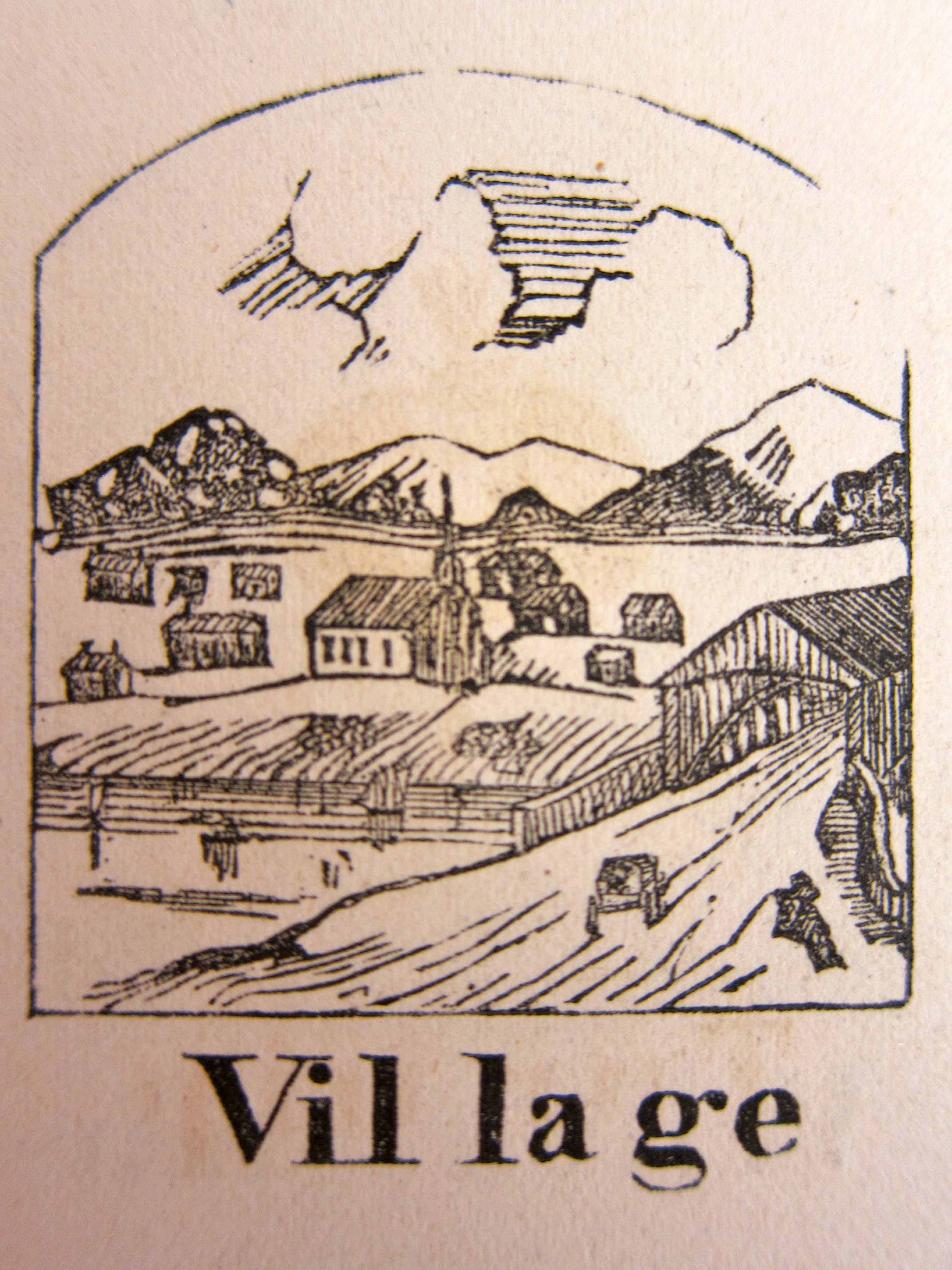
The bad weather of the past two days disappeared and was replaced by fair skies. Despite continued cold temperatures, Evelina was finally drawn outside on a fun errand. Invited by her niece, Hannah Lincoln Gilmore, and accompanied by her sister-in-law, Sarah Ames Witherell, she went to the local school house to look at some property that her nephew, Alson Augustus Gilmore, and Hannah, his wife, were considering.  They had been renting rooms from Col. John Torrey, but now were planning to build a house.

Everyone in North Easton lately seemed to be wielding a hammer. It was spring.


*Winthrop Ames, The Ames Family of Easton, Massachusetts, p. 127


April 15, 1852

images-1

April 15 Thursday.  Oakes Angier 23 years old to day.

This day 23 years ago not a cloud to be seen to day

a heavy rain storm  Julia Mahoney here making

my Delaine and altering my black silk having

a new waist and sleeves.  She has both waists fitted

but did not get much ready for me to work upon

till just at night  I have made the button holes

in the delaine

In both years of her diary Evelina takes note of Oakes Angier’s birthday. She also mentions him by name approximately 117 times as he comes and goes, works, reads, rides, eats or ails. By comparison, her other sons, Oliver [3] and Frank Morton, are each cited with similar purpose only 74 times, or one third less often, and neither of their birthdays draws any mention at all. This numerical disparity, coupled with the soft tone of Evelina’s rare reminiscence about her first child’s birth, when “not a cloud” could be seen, hints at maternal favoritism for the eldest son.

Not only was Oakes Angier the firstborn child of Oakes and Evelina, he was, on his father’s side, the eldest of 24 grandchildren of Old Oliver and Susannah. On his mother’s side of the family, he placed in the middle of a pack of a dozen grandchildren of Joshua and Hannah Gilmore, many of whom, like cousin Edwin W. Gilmore, lived in the vicinity.

Oakes Angier Ames would have known all four of his grandparents, although he was only seven years old when his grandfather Gilmore died. He was just turning 18 when his grandmother Ames passed away and in his thirties, with children of his own, when his grandfather Ames and his grandmother Gilmore (who lived to be nearly 92) died. Throughout his life, Oakes Angier was surrounded by multiple generations of relatives; he grew up amid a swirl of siblings and first cousins, among most of whom he held primogenitary status. He was the standard bearer. His siblings and cousins called him simply “Oakes,” leaving it to Evelina (and his descendants and historians) to append his middle name when spoken of.