November 26, 1851

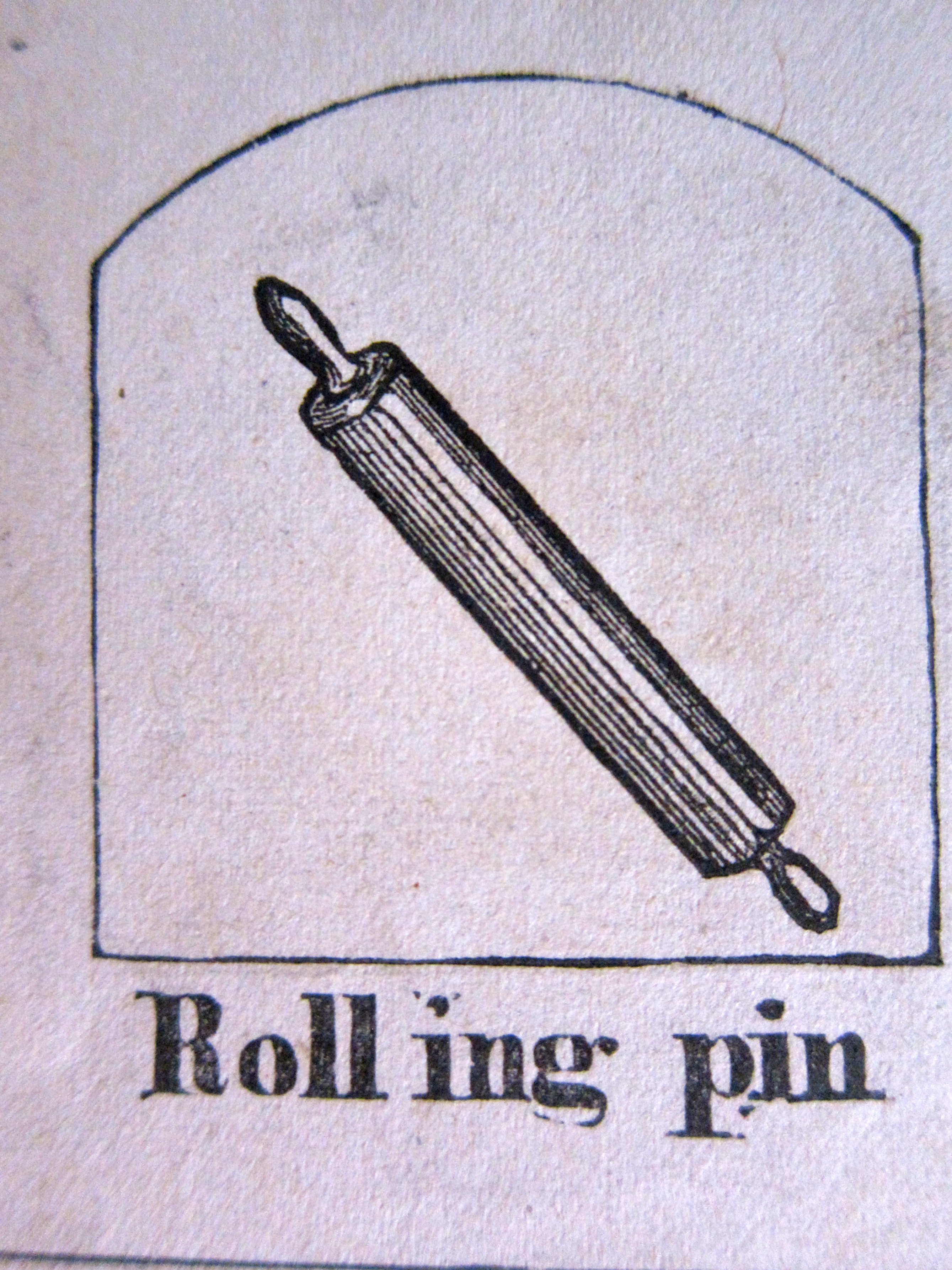
Rolling pin

Wedns Nov 26th  Have heat the brick oven three times

to day  Made Squash mince & apple pies

fruit & plain cake & seed cakes  did not

get the last oven in untill about four Oclock

Jane has assisted some about the work  Dr Swan

came to see her says she must exercise but

must not work hard  Oliver came home in the stage

The kitchen was humming today. Evelina baked pies and cakes to feed her family, now back at the full complement of six at table, as Oliver (3) arrived home from college for the holiday. She baked pies and maybe some side dishes to take to the other part of the house, where they would have Thanksgiving dinner the next day with Old Oliver, Sarah Witherell, and Sarah’s children, George and Emily. Jane McHanna “assisted some,” but was still sick enough to have a visit from the doctor – this time, the Ames’s personal physician, Caleb Swan.

In 1851, Thanksgiving was not yet a national holiday. That would happen in 1863, after lobbying by the indefatigable Sarah Josepha Hale convinced Abraham Lincoln to make an institution of a feast that was already celebrated in many – but not all – states. Although the country was suffering from the shock and carnage of a civil war, Lincoln saw good in the idea of a day of gratitude for “fruitful fields and healthful skies”** and, by Executive Order, proclaimed the last Thursday in November as a national Day of Thanksgiving, in perpetuity.

The tradition of Thanksgiving evolved from the Puritan practice of holding days of thanksgiving or fasting, according to immediate need. The Puritans were inclined to see God’s influence in every part of their daily lives. When they were good, God would reward them. When they were bad, He would punish them. Depending on how things were going, their ministers were either making sure to thank God or beg for help. In the 17th century, a local congregation could call for a day of thanksgiving or a day of fasting on its own. As time went on, the practice became more formal and by the 19th century, governors, at least in New England, would call for a day of fasting in the spring (before the planting) and a day of thanksgiving in the autumn (after the harvest). In 1851, this was still how it was done.

Toward the end of the 19th century, as immigration began to influence and de-homogenize American culture, some of the old guard became concerned. Like many an established group, its members wanted to preserve their culture and honor traditions such as Thanksgiving.  The fourth Thursday in November became more than just a feast of gratitude with family members. It became a post-Civil War symbol of America’s beginning, an annual celebration that would help new immigrants understand how the country was first settled by white Europeans. Teaching about the holiday in schools became a priority and thus, for more than a century, an account of a first Thanksgiving feast between the Pilgrims and the Indians has become an indelible, if occasionally controversial, feature of American history.

For Evelina and her family, Thanksgiving was the most important holiday of the year. They would celebrate it with Yankee gusto, which generally meant a gathering of family and a fine feast followed by a game of cards for the old folks and perhaps a dance for the young people.

* A wealth of information about Thanksgiving can be found in “Thanksgiving: A Biography” by James W. Baker, New Hampshire, 2009. 

** Abraham Lincoln, A Proclamation, October 3, 1863

October 12, 1851

OLYMPUS DIGITAL CAMERA

Sunday Oct 12th  Had a Catholic meeting at 8 Oclock  Jane went

Have not been to meeting to day on account of the

humour was affraid that I could not sit still.  Susan

went & all the rest of the family  Read in Goodeys

Ladys Book .  Quite stormy & could not go to

Augustus’ as I intended  Have had a very quiet 

day

For the third Sunday in a row, Evelina missed church.  Her nettlerash, or “humour,” still bothered her to such an extent that she had trouble sitting still. She stayed home and by her own admission, “had a very quiet day” while the rest of her family went to meeting. Even the servant, Jane McHanna, left the house to go to a service in the new Catholic Church on Pond Street.

Her father-in-law, Old Oliver Ames, who kept a daily record of the weather, reported that “this was a cloudy warm day and there was 2 or 3 small showers in all about one 4th or 3/8 of an inch southerly.” Evelina evidently studied the raindrops from her perch in the house and decided to postpone her intended visit to the village to see her nephew and his family. Instead she read from Godey’s Lady’s Book, the popular monthly periodical to which she subscribed.

Published in Philadelphia by Louis Godey and edited by Sarah Josepha Hale (a high-profile writer who, among many other accomplishments, wrote Mary Had a Little Lamb), Godey’s Lady’s Book was, as its title suggests, targeted at women. It featured domestic fiction and household hints, sentimental poetry and architectural plans.  It showcased contemporary writing by authors such as Nathaniel Hawthorne and Washington Irving, yet also published three editions in which women, and only women, wrote the articles.  A testy Hawthorne actually complained to his publisher about the influx of female authors, calling them “a damned mob of scribbling women.”

By 1855, the magazine even carried a feature entitled Employment for Women. Each monthly volume of Godey’s contained various illustrations and at least one fashion plate, imperative for home-seamstresses everywhere who wanted to stay abreast of the styles in dress. It was a magazine perfectly aimed at Evelina, and she followed it loyally.

May 5, 1851

Laundry


Monday May 5th  Made some sponge cake this morning

& swept & dusted rather more than usual Jane washed

the clothes and put them out without rinsing & let

the hard rain come on them. Has been a driving

storm all the […] day Mrs Stetson & Mrs

George [Ames] were here to tea Harriet was taken sick

and went to bed. Charles Mitchell came to see

her in the stage[…]

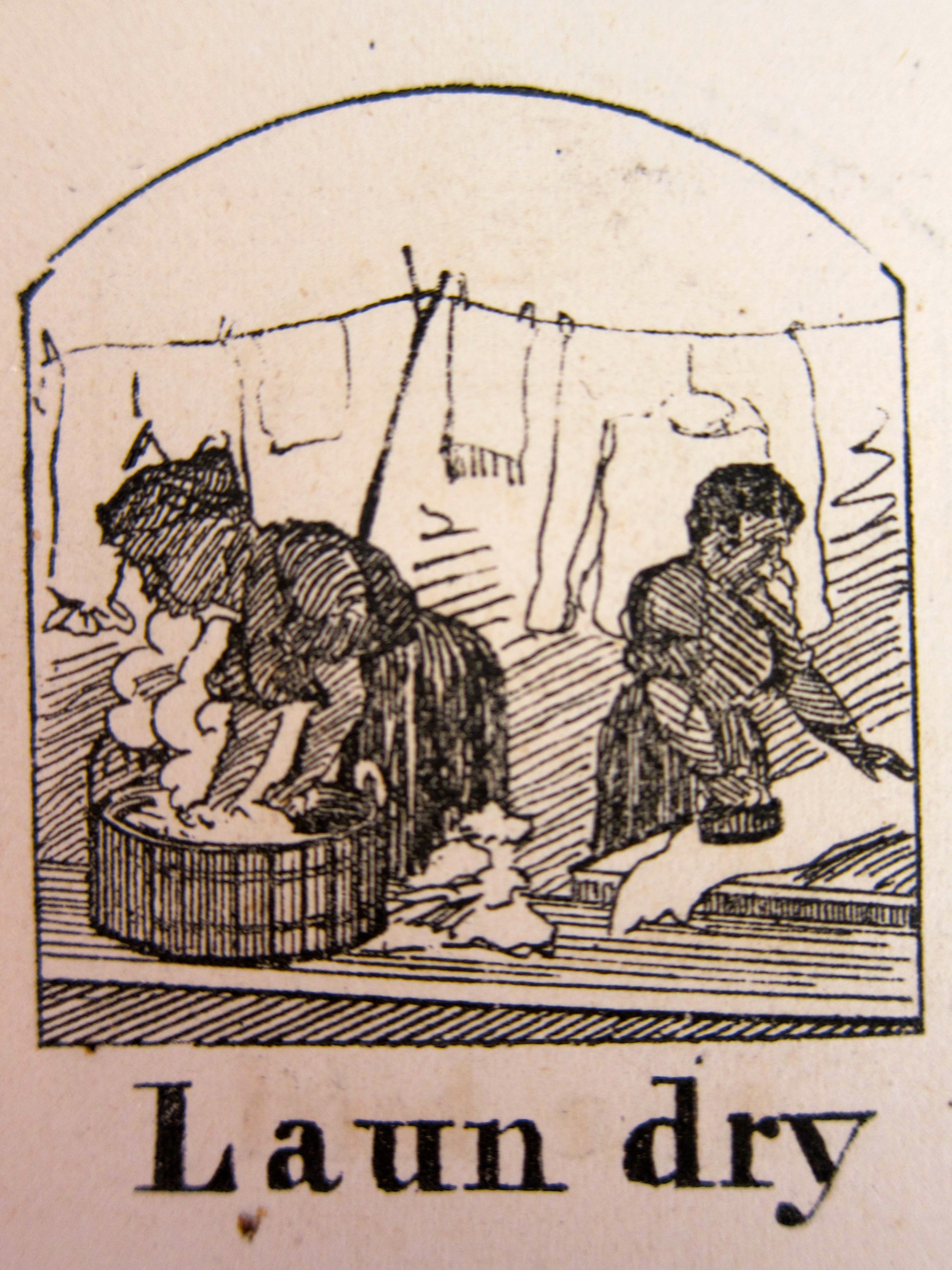
Jane McHanna had an idea this morning.  If nature was going to keep throwing stormy weather at her on Laundry Day, she’d make it work for her rather than against her. Instead of rinsing them herself, she hung those towels, shirts and all else outside and let the rain rinse the suds off. The “hard rain” saved her some tub time, although hanging those heavy clothes with the suds still on them couldn’t have been easy work.

Meanwhile, Evelina stayed indoors sweeping, dusting and doing some light baking.  Instead of firing up the brick oven, she probably baked her sponge cake right in a tin stove that she most likely had in her kitchen.

Sponge cake was a dessert whose recipe the Puritans brought over from England.  In western cooking, it was one of the earliest iterations of a yeastless batter. Mary Peabody Mann wrote in her 1858 cookbook, Christianity in the Kitchen, that sponge cake “if made right, is the least injurious of any form of cake, because it contains no butter.”  She cautioned, however, that “it is very difficult to make it good.  Eggs must be perfectly fresh, in the first place. They should be kept in cold water the night previous, and the whites should be beaten in a cool place, separately, and to a thick froth, with a cork stuck cross-wise upon a fork, and without stopping once.” Sarah Josepha Hale, meanwhile, in her 1841 The Good Housekeeper, offered her own admonishment that cakes, “those tempting but pernicious delicacies [,are]…to be partaken of as a luxury.”

The man who called on the ailing Harriett Ames Mitchell was her brother-in-law, Charles, who had once lived with Harriett and Asa in Cambridge, before they moved to western Pennsylvania. Charles, younger by several years, was a good friend of the family. Mrs. Stetson was also a friend of the family and Almira Ames was a cousin. Everyone sipped tea while rain fell on the roof, the road, the garden and the white, wet laundry.


May 4, 1851


Vintage Ad for 1887 Brecks Seed Catalog (Original)

*

May 4th Sunday  Went to church this morning and at

intermission called with Mother at Mr Whitwells

Mrs Daniel Clark went with us Heard two good

sermons from Mr Whitwell. Orinthia went

in the afternoon, staid at home this morning

Have been reading since church in the book of

flowers & called in the other part of the house

to see Mrs Stetson who came Friday night


The Flower Garden or Breck’s Book of Flowers is probably the book to which Evelina gravitated on her return home from church.  Its subtitle was “In which are described all the various hardy herbaceous perennials, annuals, shrubby plants, and evergreen trees, desirable for ornamental purposes, with directions for their cultivation” and it probably took her mind away from Reverend Whitwell’s sermons. Written by Joseph Breck, head of an eponymous gardening firm, the “book of flowers” was published by J. P. Jewett of Boston and was immediately popular. It met a need among a burgeoning population of female gardeners like Evelina who were happily creating “parlor gardens” for their homes.

Naturally, women had gardened before the nineteenth century, but earlier gardens, at least of the kitchen variety, were generally planted for culinary or medicinal purposes. Flower gardens existed, certainly, but tended to be presented within a larger landscape that was most often designed by men. Female participation in gardening was a more recent phenomenon, promoted assiduously by landscape designers like Andrew Jackson Downing, authors such as Englishwoman Jane Loudon, taste-setters such as Sarah Josepha Hale, and commercial gardeners like Breck. All were guided by “the nineteenth century urge for the beautification of the American home and its surroundings.”**

The Church, too, latched on to the fashion for flower gardening. As Godey’s Lady’s Book counseled, women needed to “[s]tudy the flowers and behold the wisdom, the goodness and mercy of the Almighty.” *** According to a diary kept by Oliver Ames, Jr., Easton’s own Reverend William Chaffin, a few years later, drew an appreciative “analogy between the cultivation of the Garden and of the Spiritual nature.” Religion was to be found among the pinks and pansies.


* Catalogue for Joseph Breck & Sons, 1887

** Ann Leighton, American Gardens of the Nineteenth Century, 1987

*** Godey’s Lady’s Book, May 1851


April 20, 1851

Lobster

1851

April 20  Sunday  Another severe storm it snows some

but most of the day it has rained in torrents

Not one of the family have been to church.

The children have been pretty wide awake for 

the sabbath and made not a little noise.  Harriet

& Anna were here to supper  had Lobster.

Rec d a letter from Pauline this morning.

The weather this April just wouldn’t quit.  The prospect of all the Ameses trapped indoors yet again by “another severe storm,” is dreary.  Surely Evelina missed being able to get to church. Oakes could escape to his office, at least, but Evelina was in the house with many family members. The little children coped, however. After their train trip, Frank, John and Anna Mitchell seemed delighted with the relative freedom and novelty of visiting their relatives. They romped and played, making “not a little noise.”

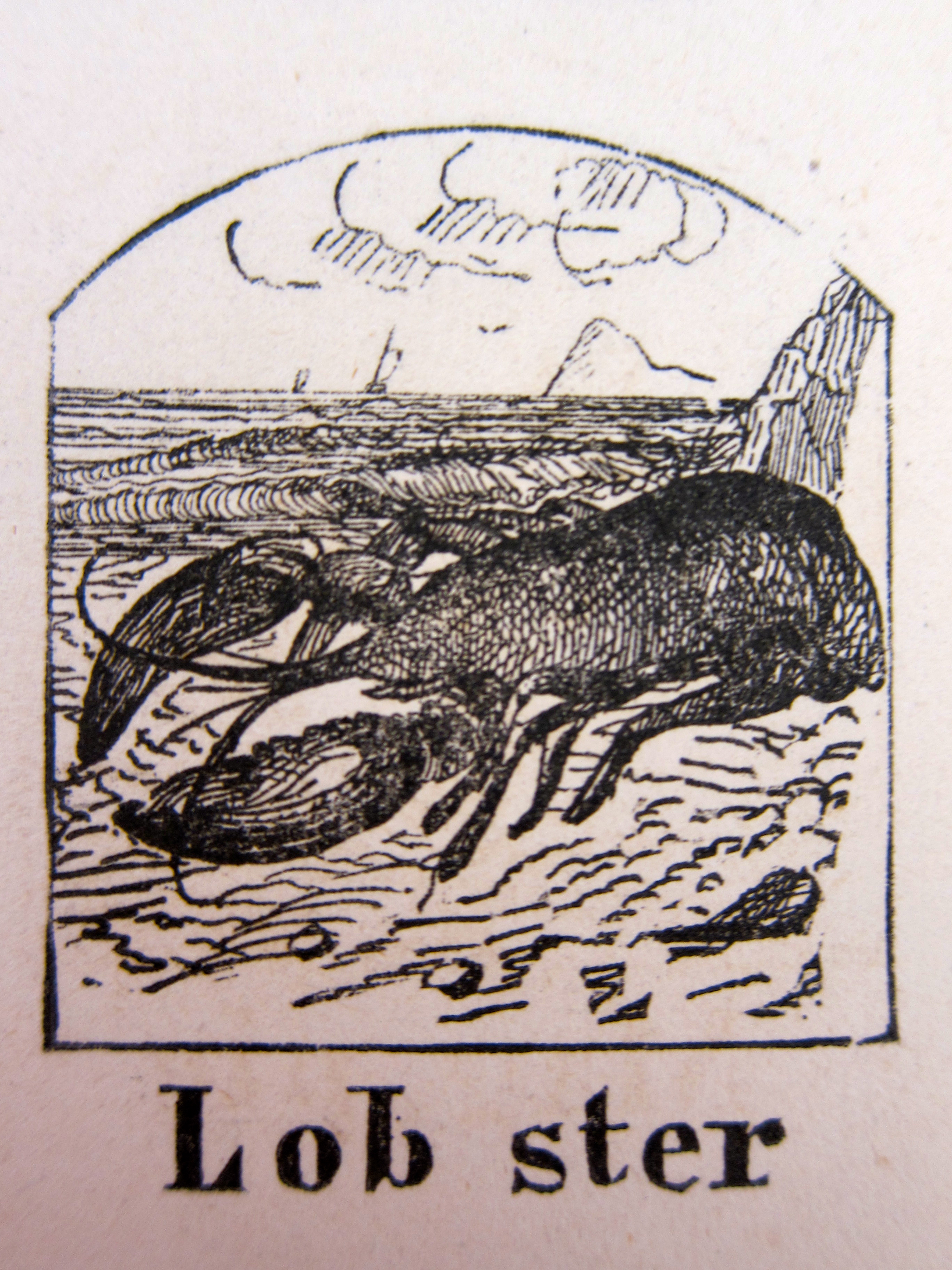
Lobster was served for supper, a change of pace from more usual fare of beef, bread and pie. Until very recently, lobster had been considered a dish fit only for the lower classes, a sure sign of poverty. It was so cheap that it was often served in prisons. In the novel Little Women, Amy March was embarrassed when a handsome young man bumped into her on the omnibus while she was carrying one in her basket.  Only at mid-century did the crustacean’s “vulgar size and brilliancy”* begin to appeal to the more affluent. Whether Evelina served it because it was beginning to be fashionable to do so or because it was still a very economical meal is hard to say.  Certainly, it was easy enough to obtain. Oakes probably picked it up the day before while in Boston.

The indefatigable Sarah Josepha Hale offered a recipe for stewing lobster that included the direction: “If you have no gravy, use more butter.” She also suggested that lobster could be eaten cold, “with a dressing of vinegar, mustard, sweet oil, and a little salt and cayenne. The meat of the lobster must be minced very fine; and care must be taken to eat but a little of this dish.”**


*Louisa May Alcott, Little Women, 1868-1869

** Sarah Josepha Hale, The Good Housekeeper, 1841


March 4, 1851

IMG_2913

March 4th  Tuesday  This forenoon finished a shirt for O Angier

Have got some old accounts books from the office

for scrap Books  Have been looking over some old

papers for receipts &c  Sarah came to pass the 

afternoon with Jane  Dr Deans & wife & Mr &

Mrs Whitwell spent the afternoon & evening in the

other part of the house  I was there at tea.

Augustus was here to dine  Pleasant but quite windy

Scrapbooks were a popular phenomenon in the 1800’s, as they had been for some time before. Sometimes called friendship albums, scrapbooks were assembled by individuals, usually ladies.  The books contained personal items as varied as pressed flowers, favorite illustrations cut out of periodicals, sketches or poetry, or special pieces of correspondence.  They were creative keepsakes, the “Pinterest” of the day.

Evelina’s approach to scrapbooking was more pedestrian than imaginative or sentimental. Her scrap books were pasted primarily with “receipts”, or recipes, cut out from newspapers, predecessors to the recipe boxes or similar notebooks that today’s cook might keep handy on a kitchen shelf.  These recipes supplemented, if not surpassed, the cookbooks available on the market by women such as Lydia Maria Child, Catherine Beecher, Sarah Josepha Hale, and Mary Peabody Mann.  With the articles clipped from periodicals, cookbooks and other household guides, a housewife or homesteader had a variety of options to refer to when it came to preserving and preparing food.  Even Old Oliver was known to pay attention to receipts; he hand-copied one for brining beef into his personal journal.

Always thrifty, Evelina used discarded account books or ledgers from the “Counting House” in which to paste her receipts.  She also used an empty ledger – the one illustrated in the photograph above, in fact – for her diary.  Its pages, meant for the posting of debits, credits or other accounting notations, were filled instead with her daily jottings.  Waste not, want not.

After a day of inevitable sewing and the more novel entertainment of working on her scrapbook, plus the company of her nephew Augustus at the dinner table, Evelina went to the other part of the house for tea.  There she joined her sister-in-law Sarah Witherell and their friends William and Eliza Whitwell and Samuel and Hannah Deans.

Dr. Deans and his family lived in Furnace Village, an area of Easton south and west of the Ames’s.  Dr. Deans, originally from Connecticut, had settled in Easton after studying medicine at the New Haven Medical School.  In addition to medicine, he also had “a warm and constant” interest in education, according to William Chaffin.  As a physician, Deans occasionally attended members of the Ames family when they took ill.

February 26, 1851

exps42325_TH1443683D45C

Feb 26  Wednesday.  Have been baking  Heat the oven twice

made 18 mince pies.  Cake brown bread & ginger snaps

Mr Whitwell called & brought home some books.

I called to see Miss Eaton this afternoon she has failed

very much since I saw her nearly two weeks since.  Mrs. 

Wright is sick with the pleurisy & lung fever, both have watches

Abby & Malvina spent this evening here   The boys have

all gone to the meeting house to a sing  Pleasant & mild

A[u]gustus here to dine

Eighteen mincemeat pies! Hard to fathom a domestic pantry, pie safe or cold shelf  that could hold 18 mince meat pies all at once, let alone an oven that would bake even half that number at one time.  Cake, cookies, and bread, too.

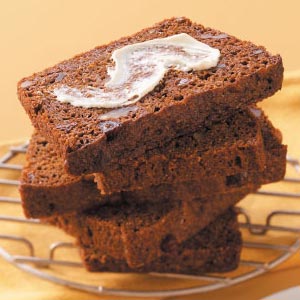
The brown bread that Evelina baked today was a staple of the New England kitchen, and was made from some combination of Indian (corn) meal and rye.  While other geographic areas of the United States, like the south, the mid-Atlantic and the expanding west, had turned to wheat as their preferred grain for baking bread, Yankee housewives, “who valued and esteemed brown bread as the food of their Puritan ancestors,*” held to the familiar cornmeal and rye.  So it was in Evelina’s kitchen.

According to Sarah Josepha Hale, who published The Good Housekeeper in 1841, brown bread was “an excellent article of diet for the dyspeptic and the costive.”   Mary Peabody Mann, in Christianity in the Kitchen pronounced brown bread to be “a nutritive bread, though inferior in this respect to wheat,” and agreed that it produced “a laxative effect upon the system.”  Lydia Maria Child, author of The American Frugal Housewife, liked brown bread for its economy and tradition.  She advised that it “be put into a very hot oven, and baked three or four hours.”

After she got away from the cook room, Evelina was visited by Reverend Whitwell who either borrowed some books from her or lent some to her – the passage is unclear. Both of their homes must have housed a collection of books, and borrowing and sharing was common.  A decade or so earlier, Easton had boasted of two or three lending libraries but these institutions had pretty well ceased to operate.  Other, better organized libraries would be formed later that century, but in 1851, if someone wanted a book to read, he or she borrowed it from a friend or bought the publication.

In the neighborhood, Miss Eaton was still failing and now, under the same roof,  Mrs. Wright, mother of Harriet Holmes, was believed to be dying, also.  Neighbors were helping Mrs. Holmes with the care and feeding of the two invalids.

*Judith Sumner, American Household Botany, 2004, p. 48

January 21, 1851

Potato

Jan 21  Tuesday.  This morning commenced working on

Susans sack but had some things to do about house so

that I could not accomplish much.  Mrs. Holmes called

to get some potatoes for Miss Eaton  says she (Miss E) is

failing and the Dr had told her that he could not help

her  Mr Robinson came this afternoon to varnish the

chimney pieces & spilled the varnish over my carpet

which prevented me from going to have Susans doll

dressed

Harriet Holmes, a neighbor, came to the Ames house to fetch potatoes for the ailing Miss Eaton, the same Miss Eaton on whom Evelina and Sarah Ames called during the cold spell earlier in the month. The spinster lived with Harriet and Bradford Holmes, their children, Harriet’s mother and a shovel worker named Oliver Eaton – a relative, possibly.  Mr. Holmes was a teamster who probably worked with Old Oliver’s oxen. Many folks who lived in North Easton were connected to the shovel works in some way.

The potatoes that Evelina gave away would have been grown either by Old Oliver or by Alson Gilmore, Evelina’s brother, who owned the Gilmore family farm.  Potatoes were common fare at the dinner table, and particularly a favorite for winter use.  The Irish called them “pratties.” The challenge for a housewife lay in how to serve potatoes: mashed, roasted, and boiled were familiar variations, then and today.  Sarah Josepha Hale underscored the dietary importance of potatoes in her book, The Good Housekeeper.  “To boil Potatoes in the best manner, is a very great perfection in cookery,” she said.

In the Ames sitting room, hapless Mr. Robinson had to contend with a displeased housewife after he spilled varnish on the carpet.  He was already in Evelina’s bad graces from having taken too long to paint around the fireplaces. How do you suppose Evelina got the varnish cleaned up?

January 18, 1851

Lid

/51 Jan 18 Saturday  I was very lazy this morning as usual after

being in Boston.  We tried out the suet & salted the 

quarter of beef & boiled the tripe  Jane has been

busy all day but I have not done much.  Have mended

the stockings painted Susans wooden dolls head & arms

Mr Robinson has at last finished painting our chimney

pieces.  it is 5 weeks since he commenced them & I could

not nail down the carpet  Mr Ames has been to Boston.  Pleasant.

It was back to domestic life today after an enjoyable trip to the city.  No more dining on oysters. The kitchen was humming with more familiar fare as Jane McHanna processed a huge gift of meat that Old Oliver had sent a few days back.  She may have kept it cold in the snow or in an ice house until today when they had time and table top to deal with it.

“Ox beef is considered the best,” noted Sarah Josepha Hale in her 1841 guide, The Good Housekeeper.  Lucky for Evelina’s family that Old Oliver raised his own oxen. Jane salted it, salting or “corning” being a time-honored way to preserve it. Typically, the beef was placed in a container – likely a barrel – and covered with a brine solution.  One recipe for brine in an 1858 cookbook* called for four gallons of water, two pounds of brown sugar and six pounds of salt.  Beef stored this way could keep for months.

The suet, which, strictly defined, is the fat from around the kidneys, was “tried,” meaning that it was boiled and rendered into lard.  The tripe, from the stomach, was boiled as well.  The odor from both these boilings was strong and would have been noticed throughout the house.

By her own confession, Evelina didn’t get too involved with anything going on in the kitchen today, leaving it to Jane’s good offices. Instead, she puttered here and there, unpacking, doing a little mending, painting her daughter’s wooden doll and standing over Mr. Robinson’s shoulder as he finally completed painting the mantels.   We might describe her day as “re-entry.”  Oakes, meanwhile, was in Boston on shovel business.

* Mary Peabody Mann, Christianity in the Kitchen

January 9, 1851

images

/51

Jan 9th Thursday

This morning after cleaning my room & doing

my usual mornings work, finished my collars & the

book Mr Whitwell brought.  Cut Susan a sack out of

her plaid cloak.  Prepared some mince pie meat ready

for baking & this evening have been writing in this book.

Had to take the foregoing from memory.  Mr Ames, ague in his face

and come home from the office very early.  Has been

troubled with it several days.  Unpleasant this afternoon

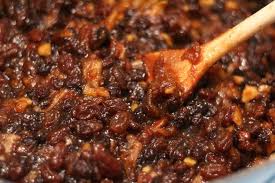
Oakes Ames still had his head cold and came home early from work, something almost unheard of.  He was always on the go. Evelina, meanwhile, worked in the cook room preparing mince meat, a lengthy process that calls for a lot of chopping of meat and suet, not to mention the “stoning” of raisins.

Sarah Josepha Hale, intrepid editor of Godey’s Lady’s Book, had nothing nice to say about mince meat pies. In her book, The Good Housekeeper (1841), she urged American housewives to serve mincemeat only on special occasions:

“The custom of eating mince pies at Christmas, like that of plumb puddings, was too firmly rooted for the ‘Pilgrim fathers’ to abolish; so it would be vain for me to attempt it.  At Thanksgiving, too, they are considered indispensable; but I may be allowed to hope that during the remainder of the year, this rich, expensive and exceedingly unhealthy diet will be used very sparingly by all who wish to enjoy sound sleep or pleasant dreams.”

Evelina was a regular reader of  Godey’s Lady’s Book, but she paid scant attention to Mrs. Hale’s admonishment against mince meat pies.  She served them often; they were a familiar presence at the Ames dinner table.  Considering  the large family to be fed, including three physically active sons between ages 17 and 21, and the ready availability of meat and suet from the oxen provided by her father-in-law, it’s small wonder that Evelina turned to a dish that was hearty and filling.   Mincemeat was a standard in many farming families.