June 8, 1852

capture31200573857_pm


Patent drawing for Nancy Johnson’s Hand-cranked Ice Cream Machine, 1843


June 8th Tuesday  Baked in the brick oven pies

cake & brown bread and have been to work

about the house all day untill the stage

came and brought Mr & Mrs Orr  It rains

quite hard and I did not expect them

Mrs S Ames & Mrs Witherell called this

evening  Had some ice cream frozen in 

the new freezer

Evelina baked and did indoor chores all day, but as active as she was she must have been attentive to the arrival of much-needed rain.  Old Oliver certainly was, recording that “towards night there was considerable rain, wind south west.”* It was so rainy, in fact, that Evelina imagined that her expected houseguests wouldn’t come.  But Robert and Melinda Orr braved the elements and arrived from Boston via stagecoach.

The Orrs were the couple with whom Evelina often stayed when she went into the city.  She and Melinda were good friends, but the connection between the two families ran even deeper, all the way back to Bridgewater and the days of ironwork there when Robert Orr’s ancestor, also named Robert, was a maker of scythes and other tools. The Ameses and the Orrs had often crossed paths.

Evelina was ready to welcome Robert and Melinda to her home and had prepared ice cream for the occasion. The ice cream would have been made in a hand-cranked freezer and probably kept cold in the new ice closet. Although it was a specialty that took time and elbow-grease to prepare, it was not quite the novelty that we might imagine.

Ice cream had been around since Colonial days, brought in by the Quakers and quickly adopted by the likes of Ben Franklin and George Washington.  By 1813, it was served at the inauguration of James Madison. In 1836, an African-American and former White House chef named Augustus Jackson – also known as the Father of Ice Cream – created a variety of ingredients and improved the over-all techniques. Less than ten years later, in 1843, a Philadelphian named Nancy Johnson received the first patent for a hand-cranked ice cream freezer. Americans took to it in droves, and the frozen dessert only got better as time went by.

When did someone think to serve ice cream with pie? Did Evelina?
 

June 2, 1852

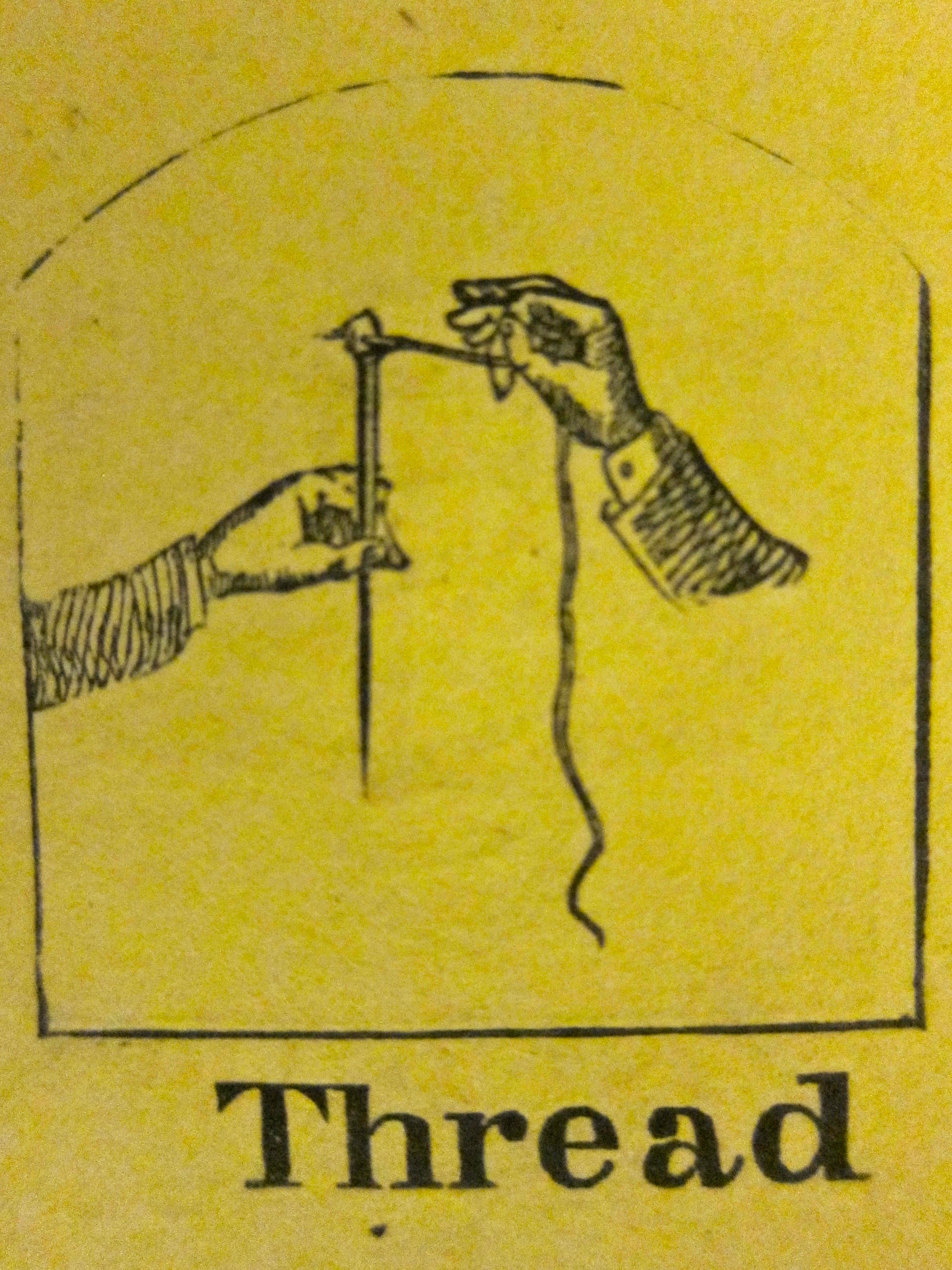
Thread

1852

Wednesday June 2d  Lazy this day as usual after being

in Boston   Have been with Mrs S Ames

to the sewing circle at Mr Wm Reeds.  Had

a very pleasant time as we always do there

not very many present. Mrs Patterson here

again to day.  yesterday she staid home to

do her washing  She & Jane have done very

little ironing this afternoon

The intense labor of spring cleaning was over, at least for Evelina.  She was “[l]azy this day” after yesterday’s trip into Boston with her sisters-in-law. Shopping wore her out more than washing windows or scrubbing floors, it would seem. She summoned enough energy to attend the Sewing Circle at Abigail Reed’s, though.

Sarah Witherell didn’t attend the Sewing Circle; she probably wasn’t socializing outside the family yet. So Sarah Ames and Evelina went without her and enjoyed themselves “as we always do.” Back at the house, however, Evelina’s servants didn’t attend to the ironing as Evelina had hoped they would. Evelina wasn’t pleased. When she worked, she worked very hard, and expected others to do the same. She felt that Mrs Patterson and Mrs McHanna should have been able to do more in her absence.

In the other part of the house, to which Sarah Witherell had retreated after yesterday’s outing, Old Oliver was watching the weather.  He noted the welcome arrival of “a little rain […] that wett the ground about an inch deep.”*  The spring had been dry.


*Oliver Ames, Journal, Stonehill College Archives, Arnold Tofias Collection


June 1, 1852

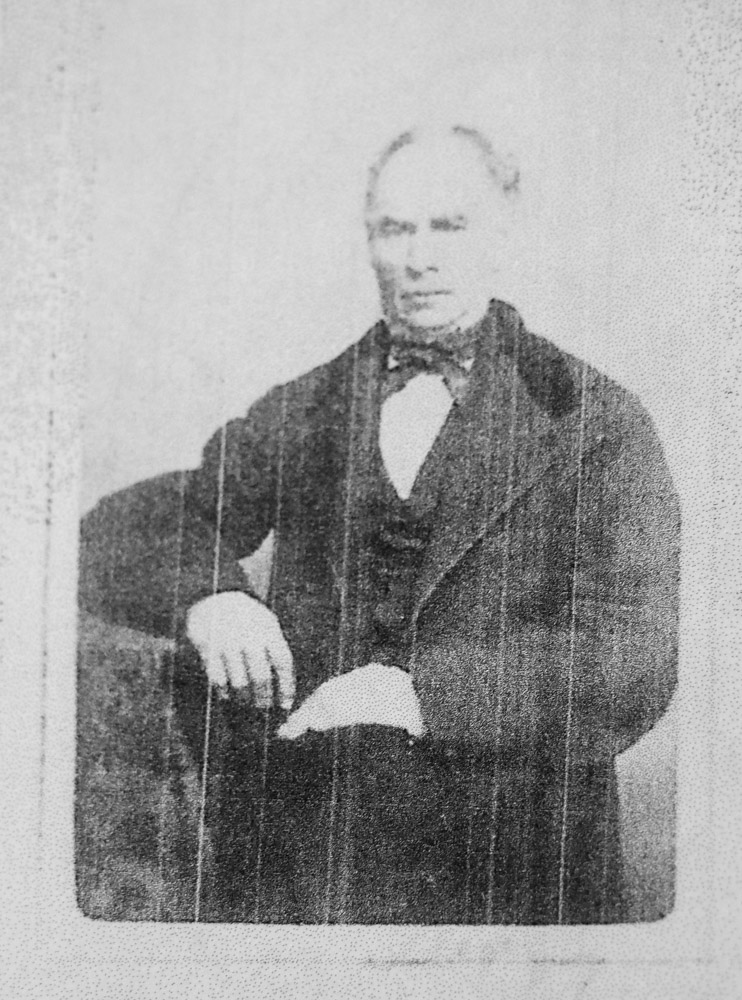
Mathew_Brady_-_Franklin_Pierce_-_alternate_crop

Franklin Pierce (1804-1869)

Photograph by Matthew Brady

1852

Tuesday June 1st  Have been to Boston with

Mrs Witherell Mrs S Ames Helen & Emily

Called at Mr Orrs the first place met

the other ladies at half past nine at Mr

Daniells & Co.  Was trying to get a bonnet

most all day at last got materials for a lace 

one  Went to Doe & Hasletons about my consol

Mrs Norris met us at half past two

Most of the Ames females decamped North Easton today and went into the city.  Even Sarah Witherell, dressed in black, rode into Boston to go shopping. Were her sisters-in-law hoping to cheer her up with an outing?

While Evelina and “the other ladies” went about Boston “most all day” in earnest pursuit of bonnets, furniture and more, a group of politicians was gathered in Baltimore some 400 miles south. The Democrats were holding their national convention for the nomination of their next presidential candidate.  Among the ten to twelve gentlemen in the running were Senators Lewis Cass of Michigan, Daniel S. Dickinson of New York, Henry Dodge of Wisconsin, Stephen A. Douglas of Illinois and Sam Houston of Texas, Governor Philip Allen of Rhode Island, former Secretary of State James Buchanan, and former Senator Franklin Pierce of New Hampshire. The latter, a dark horse candidate, was chosen.

Franklin Pierce would win the next election and serve as President from 1853 through 1857. Known as “Handsome Frank,” a sociable fellow with a difficult personal life and a probable addiction to alcohol, Pierce was an accomplished politician and fierce opponent of abolition. Once in office, he signed the inflammatory Kansas-Nebraska Act, then failed to be renominated for a second term. His purported response was “There’s nothing left to do but get drunk.”

After the Democrats’ gathering, another presidential convention would shortly be held in the same Baltimore hall, the Maryland Institute for the Mechanical Arts.  This time, the Whig Party would meet and nominate Gen.Winfield Scott, hero of the Mexican-American War.  Scott was the candidate that the Ames men would support.  The Ames women couldn’t vote, of course.

May 30, 1852

OLYMPUS DIGITAL CAMERA

Alson Gilmore  (1798 – 1888)*

 1852

May 30  Sunday  Have been to church as usual  Mr Briggs

of Boston gave us two very excellent sermons

Alson mother & Helen came home with us

at noon.  Augusta has gone home on a 

visit and is going to Foxboro before she returns

Have been reading since meeting and 

called in Olivers and on Mrs Witherell


Evelina’s older brother, Alson Gilmore, turned 54 years old today. He was a farmer – a good one – in the southeastern section of Easton.  He had inherited the property from his father Joshua, probably when the older man passed away in 1836. By that time, older brothers had moved away or passed on, so even as the fourth of five sons, Alson was the heir who took over from his father.

Other than being a productive farmer, Alson was not the most high-profile man in town,  His eldest son, Alson “Augustus” Gilmore, a perennial moderator for town meetings, was more active in civic matters, and his second son, Edwin Williams Gilmore, matured to become the outstanding entrepreneur of a hinge factory. His third son, Francis E. Gilmore, would, in time, take over the family farm as his father had. Alson’s daughters, Rachel, Lavinia, Helen and Hattie, would live theirs lives in Easton, too, two of them marrying.

Alson did play a civic role now and again. For fifteen years, he served as clerk for the Taunton- North Purchase Company, a complicated affiliation based on a seventeenth century acquisition of land that became the towns of Norton, Easton and Mansfield.** He was a selectman for one term in 1849-1850 and also was one of the last treasurers of a toll road that ran between Boston and Taunton, a road that was close to his property. That turnpike, unpopular at best, had only recently closed down.

On occasion, Alson Gilmore ran up against the Ames clan.  His sister may have been been married to one of its most popular and powerful members, but that didn’t prevent Alson from disagreeing with them in a divisive argument over church politics in the 1830s. Alson had been on the side of preserving the familiar Congregational service and Calvinist beliefs, while the Ameses had argued for Unitarianism. With one or two other parishioners, Alson had been threatened with having to bear the cost of paying the minister, Luther Sheldon, while the controversy wore on. In Chaffin’s words, “the situation was very peculiar,”* and ultimately, it was resolved to no one’s complete satisfaction.

With Evelina, Alson shared the responsibility for looking after their elderly mother. It was a duty they both took seriously. He seems to have been a decent man.

Image of Alson Gilmore courtesy of the Easton Historical Society

** William Chaffin, History of Easton, Massachusetts, 1886, pp. 19 – 38

**Ibid., p. 354.

May 28, 1852

images-1

1852  May 28th

Friday  This forenoon cleaned the shed chamber  Mrs

Patterson assisted me and helped about house

down stairs  I baked cake & brown bread

in Mrs Witherells oven and Mrs McHanna

made a custard & some rhubarb pies.

Augusta brought her dress in and I partly

made the button holes  Oakes A went to Boston

yesterday returned to night

Time for rhubarb. The edible plant, with its long red stalks, was coming up in the garden and needed to be harvested and cooked. Household advisor Lydia Maria Child had this to say about it:

“Rhubarb stalks, or the Persian apple, is the earliest in gradient for pies, which the spring offers. The skin should be carefully stripped, and the stalks cut into small bits, and stewed very tender.  These are dear pies, for they take an enormous quantity of sugar.  Seasoned like apple pies Gooseberries, currants, &c., are stewed sweetened and seasoned […] in proportions suited to the sweetness of the fruit; there is no way to judge but by your own taste.  Always remember it is more easy to add seasoning than to diminish it.”*

Jane McHanna made today’s pies and a custard, too. Evelina baked her usual cake and brown bread. Spring cleaning was not forgotten, however, as Evelina and Mrs. Patterson cleaned out the shed. One wonders what they found in there after the long winter.

The younger generation, meanwhile, was stirring. Augusta Pool Gilmore came over from across the street to get Evelina’s help on a dress she was making.  Oakes Angier Ames struck farther afield, going into Boston for the night.  The 23-year-old was there on shovel business, presumably, and, being conscientious, he would have accomplished whatever task he was sent in to do. But he was young, too, and may have enjoyed the freedom of being on his own in the big city.

*Lydia Maria Child, The American Frugal Housewife, 1829, p. 51


May 19, 1852

a57b960ef05c59d007f70efe1b8f5f79


Wednesday 19th May  Washed the windows in the 

parlour and cleaned it   all that is necessary this spring

Was about house until about four Oclock

when Mrs Swain came and spent the 

afternoon  Mr Swain came to tea  Worked

on the garden about an hour  Susan has

the nose bleed almost every day.  This afternoon

came home before the school was done


Spring cleaning was late this year, as the women’s attention had been given over to family illness. The kitchen had been repainted some weeks earlier, but other rooms hadn’t been dealt with. Evelina set out to rectify the delay and, probably with support from Jane McHanna, donned her apron to tackle the best room in the house, the parlor, much of which had been redecorated back in February, so needed little attention beyond its windows and a basic cleaning.

One imagines Evelina and Jane in working clothes as they went about with their brushes, rags and mops. But what did Evelina wear under her apron, or after she changed out of her choring dress? Was she wearing any mourning attire? Did her outfit signify at all the recent loss of her nephew George?

In the 19th century, “[m]ourning was particularly a woman’s affair,”* perhaps because of a societal norm that women were sentimental and emotional, and men were not. There were rules about attire to be followed after the loss of a loved one. At the beginning, black crepe dresses, black veils or headgear, and even black jewelry – onyx, usually, or pins netted with a lock of hair of the departed – were expected to be displayed in some manner. After a certain period, black was put away and lavender, grey or purple dresses were acceptable. The closer the relative was to the deceased, the more exacting the expectation.

In her fine book about death in the Civil War, This Republic of Suffering, Drew Gilpin Faust notes:

“By convention, a mother mourned for a child for a year, a child for a parent the same, a sister six months for a brother. A widow mourned for two and a half years, moving through proscribed stages and accoutrements of heavy, full, and half mourning, with gradually loosening requirements of dress and deportment. A widower, by contrast, was expected to mourn only for three months, simply by displaying black crape on his hat or armband.”**

By these calculations, Sarah Ames Witherell had been dressed in black or lavender too often before. Her husband had died in August, 1848, her young son Channing in May, 1849 and now her son George. Sad to say, she would have had a black dress or two, plus the appropriate accessories, in her cupboard. But what was Evelina obliged to wear? Perhaps not a black dress – although she had one – but an armband? Or a black ribbon in her bonnet? What was the expectation for an aunt?


Jack Larkin, The Reshaping of Everyday Life, New York, 1988, p. 102

**Drew Gilpin Faust, This Republic of Suffering, New York, 2008, p. 147


May 18, 1852

Dianthus.2474433_std

Pinks


1852 Tuesday 18 May  Have accomplished but a very little work

to day  Made a long call in Olivers & the other

part of the house talking over my visit yesterday

Set out some pink slips &c that I got there

About three started for N Bridgewater met

Alson & wife turned about and came back

Spent the rest of the afternoon at Edwins.  called

at Augustus,  her sister Elizabeth there

The visit to the Kinsley family that Evelina had made the day before lingered in her mind. She talked about it with both sisters-in-law, no doubt describing the family, the conversation, and the twelve pots of flowers she got to bring home. Was she bragging or sharing? Were Sarah Ames and Sarah Witherell interested or only tolerant? The Kinsleys were well-to-do, prominent citizens of Canton, so one suspects that both sisters-in-law had some curiosity about them. Yet it had only been a week since George Witherell had died, so Sarah Witherell may have had limited attention for Evelina’s gadding about.

After her “long call” with her relatives, Evelina spent time in her garden planting “some pink slips &c” that she got in Canton.  Pinks are bright little flowers that we know better as carnations and more formally as dianthus.  The name comes from the “pinked” or serrated edge of the petals, as if trimmed with pinking shears. Pinks are a traditional flower for a cottage garden; botanist Joseph Breck declared that “There is no flower more desirable in the flower-garden that the Carnation. A well-grown, superior variety, cannot be surpassed, in elegance, beauty, or odor, by any other flower.”*

The pretty little flowers in Evelina’s garden must have brightened up the yard of a home whose occupants needed cheering up.


Joseph Breck, The Flower Garden or Breck’s Book of Flowers, Boston, 1851, p. 111


May 12, 1852

Corpse

Wednesday May 12th  Helped Mrs Witherell make Georges robe

Planted some seeds that Mrs Howard gave me

and African rose sent from Andover.  Have ripped

the skirt from Susans borage delaine to lengthen

it Swept & dusted my chamber &c &c Jane had

finished the ironing  Have not felt very well

have not got over being broken of my rest.  It has

rained since nine Oclock quite fast

A new gardener commenced work today

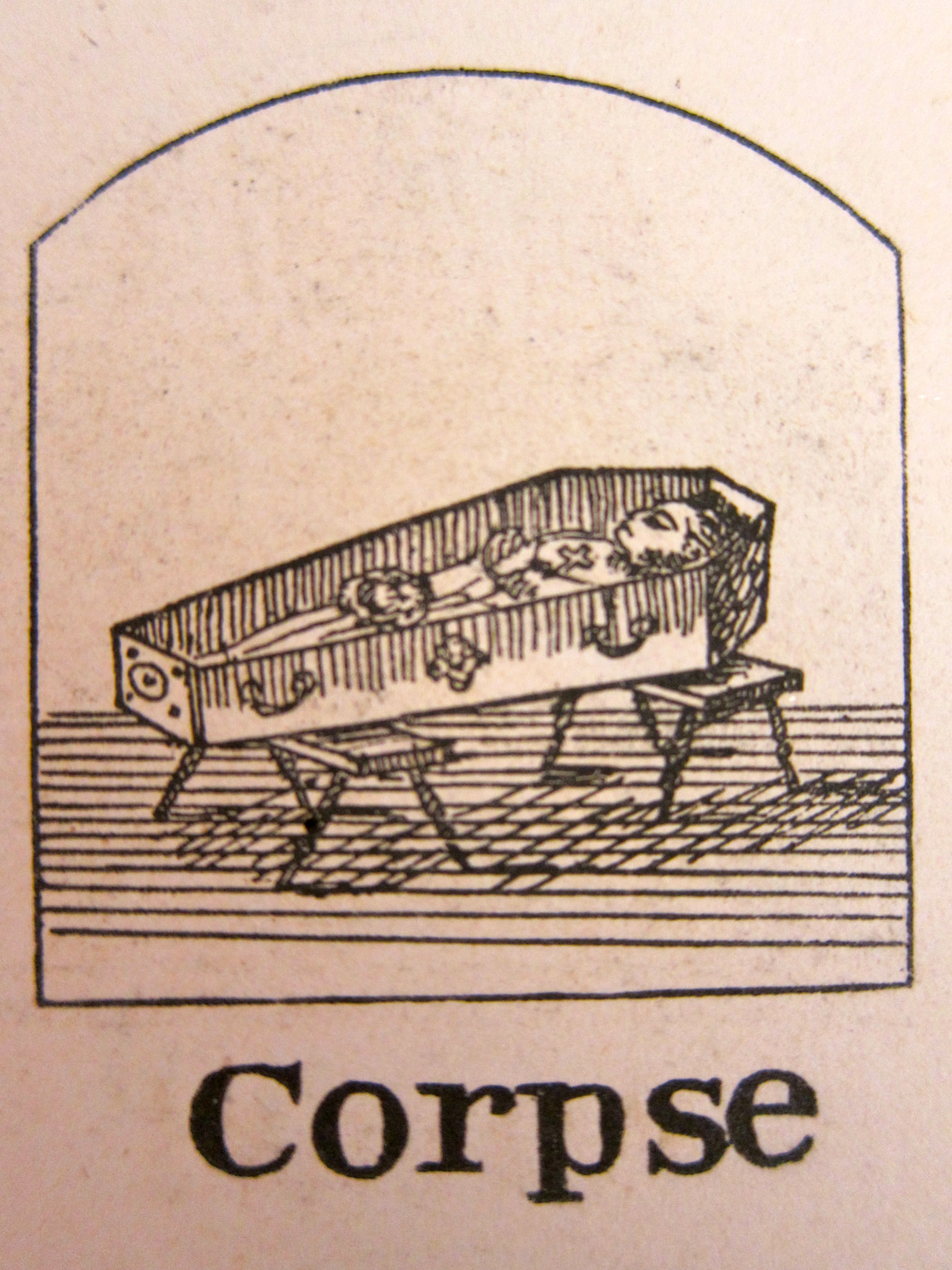
What sad sewing went on today. Sarah Ames Witherell, a thoughtful, dutiful woman who had sewn so many things for friends and family, now sat and made a shroud for her first-born child, George. Only fourteen years-old, he had died the day before after a painful bout of rheumatic fever. Of the three children Sarah had borne, only her middle child, Emily, was still alive.

The steady rain must have enhanced the gloom. Old Oliver wrote that “it began to rain before noon wind north east and it grew cold and raind all the afternoon.”* Evelina must have done her planting first thing in the morning, after which she helped Sarah with the robe for George. She also worked on a skirt for Susan, and swept and dusted while Jane McHanna ironed. She was probably not the only family member who was recovering from “being broken of my rest.” Everyone was trying to return to a normal routine after the disruption and sorrow of George’s illness, although next door, Helen Angier Ames was still suffering from a case of blisters and facial swelling.

*Oliver Ames, Journal, Stonehill College Archives, Arnold Tofias Collection


May 11, 1852

Abbott H. Thayer, Angel, 1887, oil Smithsonian American Art Museum Gift of John Gellatly

Abbott H. Thayer, Angel, 1887, oil
Smithsonian American Art Museum
Gift of John Gellatly

Tuesday May 11th  George died this morning about eleven

Has not spoken so that we could understand

since yesterday noon.  died at last very easy

without a struggle or groan.  Mrs S Ames & self

laid him out,  His mother has slept but about

two hours for two days and nights. Have trimmed

my straw bonnet. Miss Copeland sewed it over  Spent

about two hours in Olivers this afternoon.  Helen has a 

blister on her arm  The gardener set out some rose plants.

Prairie Rose Baltimore bell and Fraxinella sent

from Boston

George Oliver Witherell, aged fourteen, died on this day from rheumatic fever.  He had been suffering for many days, but “died at the last very easy.”  His Aunt Evelina had been with him for much of the illness, spelling his exhausted mother, Sarah Ames Witherell. She and her other sister-in-law, Sarah Lothrop Ames (who had her own sick child at home), laid out the corpse.

The family must have expected George’s death by this stage of his illness; certainly the attending physician had already predicted it. But anticipation is not the same as actuality, and the death of the young man would have hit everyone hard. Evelina dwelt in her diary on George’s last few minutes, but then added a few mundane notes about her summer bonnet, her niece Helen’s continued battle with an unnamed infection, and some new additions to the flower garden. She might have wished to move on to less painful concerns.

George’s grandfather, Old Oliver, noted his grandson’s death succinctly: “George Witherell dyed to day about eleven O clock.” Oliver rarely included personal items in his daily record; that he wrote of George’s death is a sign of regard, however minimal we might consider it. His grief would have been real.

Of Sarah Ames Witherell’s feelings, we’re told nothing, and must imagine her utter exhaustion and complete sorrow.

May 9, 1852

wetsheet


Sunday May 9th  Our own family all went to meeting

& Oliver  George is much worse and we fear

will never be any better is very much out of his

head  Helen is quite sick with her face

had the Dr  Went into Mrs John Howards

at noon & carried her some flower seeds.

Mr & Mrs Swain made a long call this afternoon 

after they left I went to sit with George to assist

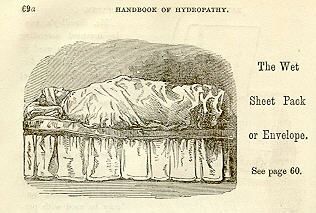
Sarah  They are laying a wet sheet once an hour


George Witherell was getting sicker and sicker. Perhaps to lower his temperature and reduce the involuntary spasms in his limbs and face, his family and physician were “laying a wet sheet once an hour.” They wrapped his body in a cold, wet sheet, and covered him with wool blankets to make him sweat. Everyone was trying to bring down his fever, soothe his nervous system and help him sleep. It was a desperate measure, but in the absence of effective medicines, it was the only option.

A wet-sheet wrap is a form of hydrotherapy, a controversial treatment meant to quiet a violent or agitated person. Opponents of this form of hydrotherapy feel that it’s been misused in certain psychiatric institutions, some patients attesting to being tied up for ten to twelve hours in icy sheets, an application that seems more punitive than restorative. Yet others in the medical profession, such as alternative care-givers in our modern age, tout wet-sheets – if applied properly – as a healthful therapy that induces sleep and calms the nervous system. Its effectiveness seems tied to the intention of the person applying the therapy and the nature of the illness of the person being wrapped.

Helen Angier Ames next door was also “quite sick.”  No wet sheets for her, but she was having her swollen face attended to. It sounds as if she might have had a bad abscess, also a dangerous condition in the era before antibiotics. Dr. Swan, if it was he who was attending the Ameses, was being kept busy.  His little gig would have been pulling up to the Ames compound at all hours of the day and night. Few in the family were getting any rest.  Evelina left the house briefly, to take some flower seeds to Caroline Howard, but returned home to help her sister-in-law.