October 31, 1851

apple_barrel

*

Friday 31st  Have taken up the bedroom and stair carpets

and Bridget has cleaned the front entry

I have been very busy all day about the house

Mrs Hubbell, Ames, and Mrs S Ames have been

to Sharon  Mrs Witherell called at Mrs Swains

this afternoon but I was so busy that I could 

not accompany her.  Passed the evening in

the other part of the house.  Mr Scott painting

Mr Hawkins lectured at the methodist meeting house


Evelina’s autumn version of spring cleaning continued today as she tackled the upstairs carpets. Mr. Scott was still in the house, painting, and servant Bridget O’Neill cleaned the front entry which had also undergone repainting. “Very busy all day about the house,” Evelina evidently didn’t even venture out of doors.

Others did go outside. Sarah Ames Witherell paid a call on new mother Ann Swain, while Sarah Ames, Almira Ames and Mrs. Hubbel rode to nearby Sharon. Old Oliver noted in his journal that “this was a fair day + some cooler wind north west +considerable of it.”

Some miles northward, in Concord, Henry David Thoreau noted in his journal that “The wild apples are now getting palatable. I find a few left on distant trees, that the farmer thinks it not worth his while to gather. He thinks that he has better in his barrels, but he is mistaken, unless he has a walker’s appetite and imagination, neither of which can he have.”**  Two farmers in Evelina’s life, her father-in-law, Old Oliver, and her brother, Alson Gilmore, might take exception to Thoreau’s characterization of them as men without imagination.

In the evening, a Mr. Hawkins gave a lecture at the Methodist meeting house, right in the village.

* Barrel of apples, http://nbarnett2.wordpress.com/2010/02/15/the-importance-of-good-packing/

**Henry David Thoreau, Journal, http://hdt.typepad.com/henrys_blog/2004/10/october_31_1851.ht
October 29, 1851

1157676_l

*

Wednesday Oct 29.  I have been what I call puttering

about house most all day and have accomplished

but very little.  papered the fireboard and pasted

the loose places in Franks chamber  Mr Scott

has painted the sitting room & closet

Mrs Hubbel & Ames came from New York this morning

H O A Orr came for Susan this afternoon  Mr

Walton is there. Mrs Holmes and Abby called

Mr Ames came home from Boston to night

Many comings and goings in North Easton today, under a cloudy sky.  Almira Ames, widow of George, an Ames cousin, arrived from New York with a Mrs. Hubbel in tow. They came for a visit with the obliging Sarah Witherell and Old Oliver Ames in the other part of the house.

Susan Orr, meanwhile, who had been staying with Sarah Witherell and her father for almost a month, was picked up this afternoon by her brother, Hector Oakes Orr. Susan, age 53, and Hector, age 51, were first cousins of Sarah Witherell and her siblings on the Angier side of the family.  Susan and Hector were two of five children of Susanna Angier Ames’s sister, Mary and her husband, Dr. Hector Orr, of Bridgewater. Their shared grandparents were Oakes and Susanna (Howard) Angier.

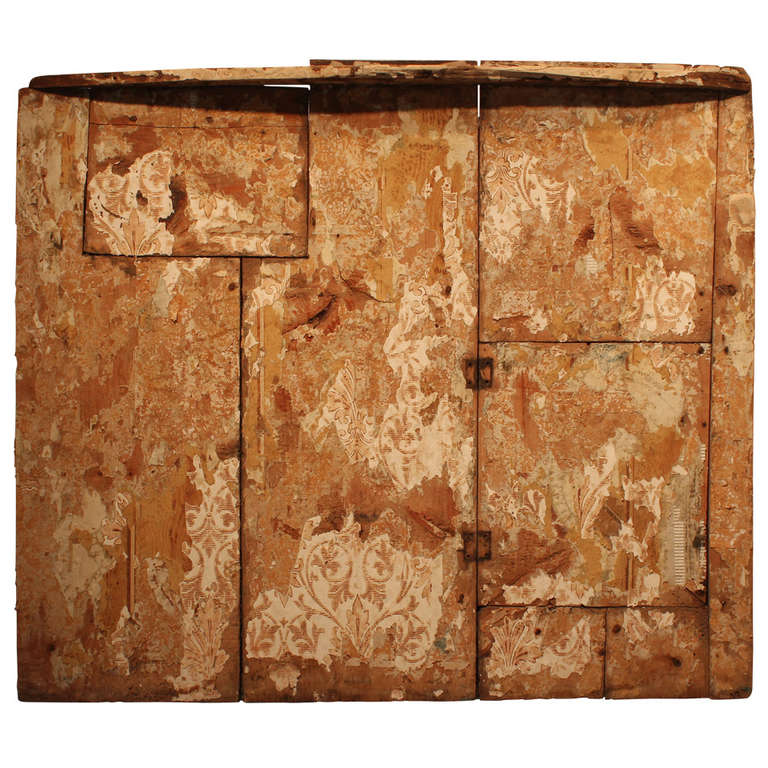
Evelina’s niece on the Gilmore side, Abigail Williams Torrey, paid a call with Harriet Holmes (the neighbor who had been so ill back in August). A Mr. Walton floated somewhere in the picture; Evelina’s inclusion of his name is a bit vague. And chugging along in the background of the various calls was Mr. Scott painting the woodwork in the sitting room. Evelina concentrated on papering a fireboard when she wasn’t attending to the influx of visitors. For readers who don’t have fireplaces, a fireboard was a piece of wood, textile or ironwork fitted to the opening of a fireplace for periods when the fireplace wasn’t being used.  Fireboards made from wood, most common in the countryside, were often decorated with wallpaper or painting.


* 19th century papered fireboard, Pennsylvania, courtesy of 1stdibs.com.


October 21, 1851

scraping-wallpaper-renovation-14163480

Tues Oct 21st  Have been scraping off the paper again

to day and getting ready for the painters

Have been to work some on the sleeves

of my cashmere have sewed part of the 

trimming on.  Hannah called to ask

me to take care of her babe for her to go

to Boston tomorrow  Was in the other part

of the house part of the afternoon 

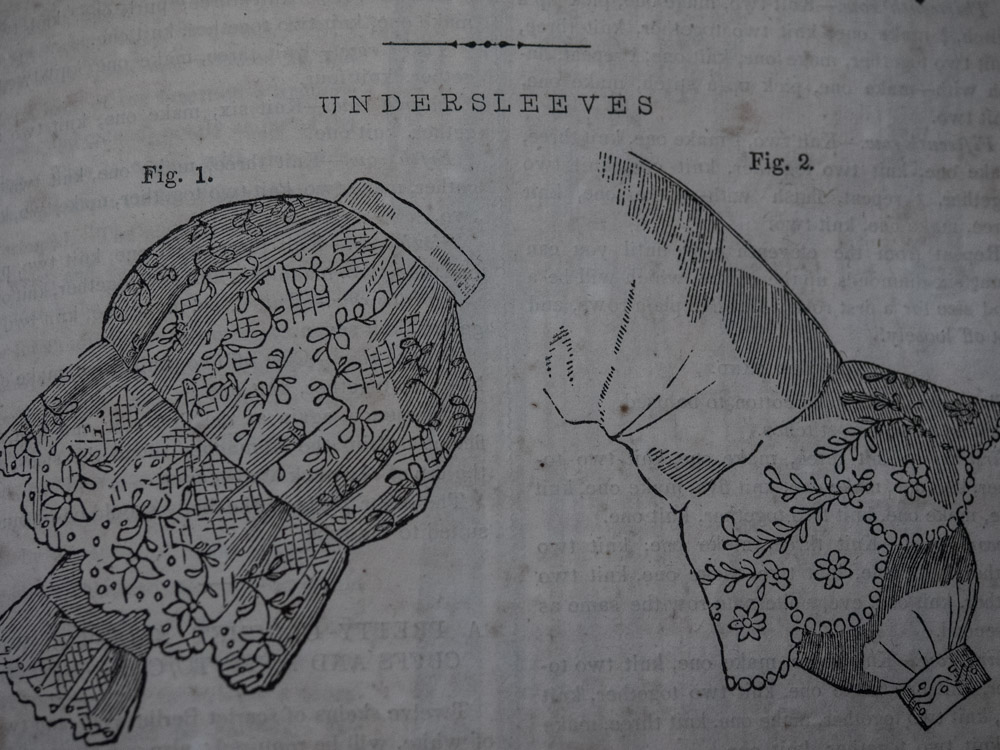
The house continued to be in some upheaval this morning as Evelina scraped more wallpaper off of the parlor walls in order to get “ready for the painters.” Her arms and hands must have ached with the effort. Soon enough she broke away from that task and turned to her sewing, probably with relief. For some time she had been working on a new wool dress and today sewed some trim on.  Did she add fringe, or piping, or lace? Or did she add the ribbon she’d been looking for lately?

The bad weather from the weekend had disappeared. According to Old Oliver’s daily chronicle “there was a large fog this morning + after it went of[f] it was verry warm wind brisk from south west Mr Arnold came here to day to sleight the shop at great pond.”

Hannah Lincoln Gilmore, wife of Evelina’s nephew Alson “Augustus” Gilmore, came by to ask her aunt to babysit the next day. Evelina, always a friend to younger women, agreed to watch Hannah’s infant son. It’s worth noting that in order to ask that favor, Hannah had to walk over from the village to physically appear at Evelina’s house. That, or she could have written a note and asked someone to deliver it.  There was no phoning, no texting, no emailing, no instant messaging. Instead, there was a knock on the door and a face-to-face request. That’s how it was done in 1851.

Evelina wound up the day with a visit to Sarah Witherell and her houseguest, Susan Orr, in the other part of the house.


October 18, 1851


Herman_Melville_1860Herman Melville

Sat Oct 18  Have been to Boston with Mr Ames to day &

have bought Paper for the sitting room &c &c

went into all the stores where there were ribbons

to match my dress could not find a good one

Did not get near all the things I wanted

Lavinia came here to night.  Mrs S Witherell

& Miss S Orr called a few moments

It was a full Saturday for Evelina. She accompanied her husband into Boston and while he probably visited customers and took orders for shovels, or collected payments from various vendors, Evelina went shopping. She purchased new wallpaper for the sitting room and more. She was on a tear to refurbish the old homestead – or at least her half of it – yet wasn’t able to “get near all the things” she wanted.  She searched for ribbon, too, maybe to go with the new cashmere dress that she and Julia Mahoney only recently finished.

Evelina and Oakes returned to Easton in time to welcome niece Lavinia Gilmore for the night. As they traveled back from the city, they may have noticed the sky beginning to cloud up, pushed along by winds from the south. After their return, Sarah Witherell and her houseguest, spinster Susan Orr, popped in from the other part of the house, perhaps to ask what wallpaper Evelina had selected.

Far away, in London, 500 copies of a new novel called “The Whale” were published today in three small volumes. In a month, the same book, written by young American author Herman Melville, who dedicated it to his friend Nathaniel Hawthorne, would be published in New York with an added title: “Moby-Dick.”  Evelina never mentioned it, but might she have read it?

October 14, 1851


Corpse


Tues Oct 14th  Expected Julia here to work this 

morning but she sent word that she would not come

untill afternoon and it has put me back about my work.

Went to the store and got muslin for Mrs Willis robe,

and linings for dresses.  Helped Mrs Witherell & Mrs S

Ames make the robe  Julia came this afternoon & cut

the waist to my dress  Mr Ames has been to Boston &

Braintree

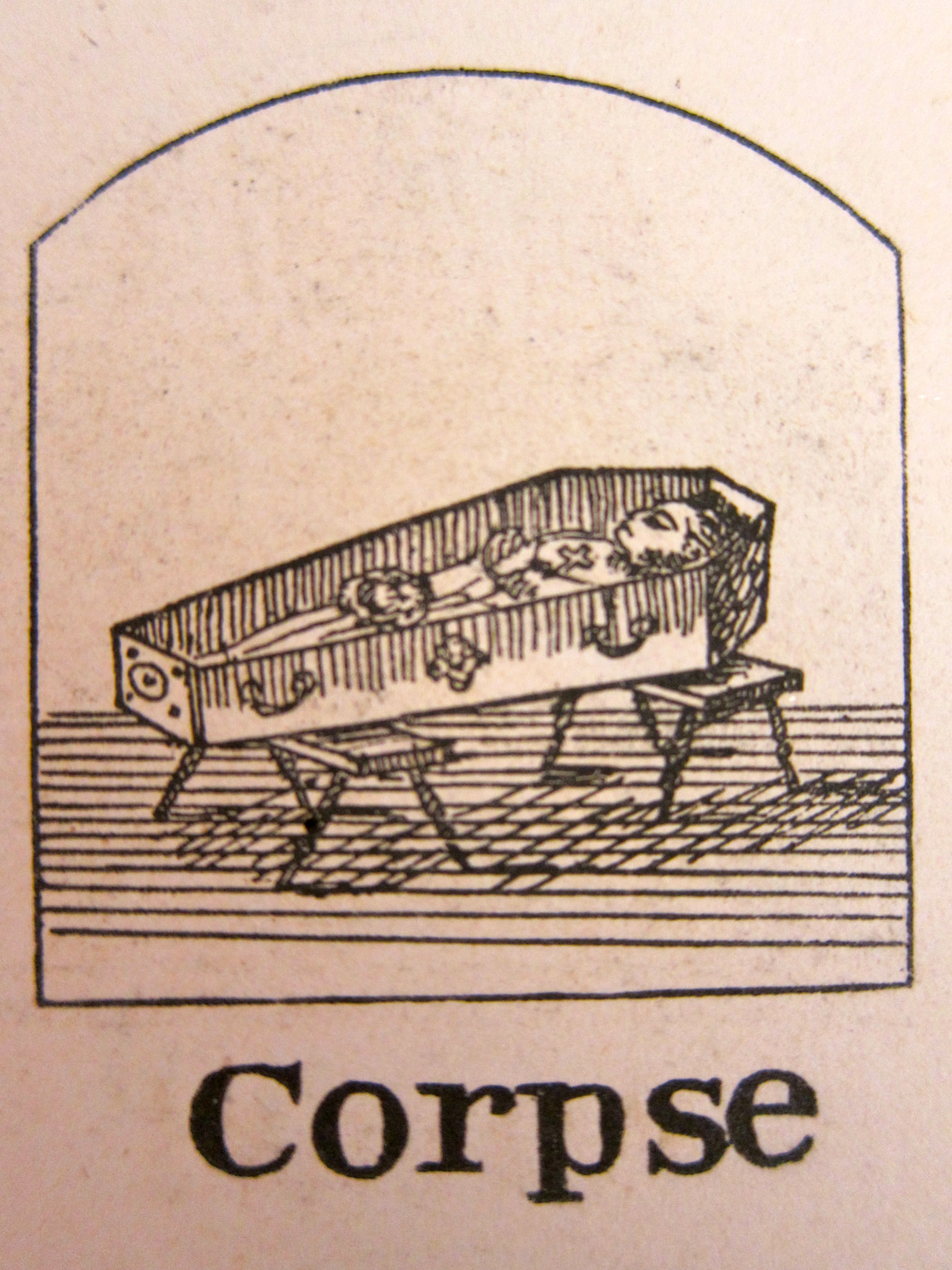
The sad business of sewing a robe, which is what the Ameses called a shroud, fell to Evelina and her sisters-in-law. The Ames women often were called on to make robes for the deceased, as they did today for a neighbor, Mrs. Willis. Mrs. Willis, who had died the day before, presumably had no family members who could otherwise sew the robe. Evelina herself picked up the muslin, the traditional material for a burial sheet, from the Ames store. The process of preparing the dead for burial tended to follow the existing customs:

“Before the Civil War, the care of the dead was largely the domain of the deceased’s family and neighbors. The corpse was customarily laid out on a board that was draped with a sheet and supported by chairs at either end. The body was washed, almost always by a female member of the household, and wrapped in a sheet for burial. A local carpenter or furniture maker […] supplied a coffin, a simple pine box with a lid. The undertaker, often the same carpenter or furniture maker […] took the coffin to the house and placed the body inside. With the family and friends gathered around, the minister performed the appropriate religious rituals, and then the undertaker conveyed the coffin to the graveyard.”*

Other sewing went on today as well. Evelina had spent the past several days piecing together a dress made of cashmere, and was waiting for the dressmaker of choice, Julia Mahoney, to work on the waist.  Julia was late, however, which threw a wrench into Evelina’s plans for the day. Evelina didn’t like tardiness, and was unhappy to have to rearrange her day. Eventually, however, Julia arrived and “cut the waist.”

Oakes Ames, meanwhile, went into Boston and Braintree, presumably on shovel business.  Saturday was his usual day to go into Boston; it being Tuesday, perhaps something beyond Oakes’s usual job of taking orders for shovels was called for.

*http://www.memorialhall.mass.edu/classroom/curriculum , “Death and Dying in the 18th and 19th Centuries”


October 13, 1851

OLYMPUS DIGITAL CAMERA

Oct 13th  Susan washed the […] dishes this morning and 

went to sewing quite early made the sleeves

to my cashmere dress and pocket made and

have got all ready for Julia to cut the waist in 

the morning.  Spent most of the afternoon in the

other part of the house  Mrs Willis died about

one or two Oclock this afternoon


“[V]erry warm and sultry like dog days” was Old Oliver’s assessment of today’s unseasonal weather. Evelina didn’t complain about it, nor did she mention any discomfort from the nettlerash that had plagued her for the last ten days.  Perhaps the burning and itching was finally subsiding.

Mrs J. Willis died today. There were a few women in North Easton who might have been this person; a possible candidate was a 44-year-old woman named Hannah Willis who lived in the Pauper’s House with her probable father-in-law, James Willis, and a child named James W. Willis. She had done some sewing for Jane McHanna back in March.

Evelina herself spent the morning with a needle and thread, making the sleeves and pocket for a cashmere dress.  She planned to use the services of Julia Mahoney to sew the waist. In the afternoon she went to the other part of the house, presumably to visit with her sister-in-law Sarah Witherell and a guest, Susan Orr. Given the heat and her slow recovery, Evelina moved around surprisingly well.

October 10, 1851

Track

Friday Oct 10th  This forenoon made the skirt to my

cashmere dress and sewed some for Harriet.  This 

afternoon Mrs H Mitchell and children left with

William for Erie.  They are to stop a few days in 

Goshen with William and then go on to meet Asa at

Erie  Hannah called with Eddy a few moments when

she returned I went as far as the store & got some

Linings for my sleeves & Susans dress

Back on April 19, Harriett Ames Mitchell and her three children, Frank, John and Anna, had arrived in North Easton from Pittsburgh.  Harriett’s husband, Asa Mitchell, had not arrived with them, although he visited North Easton briefly later in the summer. Harriett and the children had spent six months in North Easton, mostly without Asa, staying off and on with Harriett’s father, Old Oliver, and her sister Sarah Witherell. They had also stayed in Bridgewater, where the Mitchell family lived.  Now, the family was traveling back to Pennsylvania, this time to Erie, where they would meet up with Asa. Harriett’s next oldest brother, William Leonard Ames, who had been visiting Old Oliver, too, “went from here with them.”*

Erie, Pennsylvania had just that year been chartered as a city, and was becoming a thriving manufacturing spot. As one modern historian has noted, “Erie was, of course, aided greatly by its proximity to the coal fields of Pennsylvania.”**  It was that proximity to coal that must have drawn Asa Mitchell to the town; he was a dealer in the coal market. Evelina speaks very little about Asa and from that it’s tempting to infer that Asa didn’t have a strong roll in the Ames family life.  He may have played a part in the business dynamics of the various Ames enterprises, however, but if Evelina knew about that, she didn’t mention it.

What did Evelina think about her sister-in-law moving away again? Evelina had a brother, John, who also had moved away from the area, but most of her family was nearby.  Did she ever think about life beyond eastern Massachusetts?  Did she ever want to board a train to see where it might take her? She doesn’t seem to have suffered from wanderlust.


*Oliver Ames, Journal, courtesy of Stonehill College Archives

** http://www.theeriebook.com, published by Matthew D. Walker Publishing Company, 2014


October 9, 1851

IMG_1057

Thursday Oct 9th  Jane has been sick to day went to bed directly

after washing the breakfast dishes and I had to get

dinner  After dinner she was much better and was

able to […do] the dishes  This afternoon I have passed

in Olivers with Miss S. Orr.  Mrs Witherell & Mitchell

Mr Ames & William there to tea Have trimmed

Susans bonnet with dark ribbon


Jane McHanna was sick.  The domestic team at the Oakes Ames house was barely operational, what with Evelina herself still feeling the effects of a mean case of nettlerash. But between them, the two women, servant and mistress, managed to make meals appear on the dinner table in a timely fashion. Did the men of the house appreciate the extra effort going on behind the kitchen door?

Tea was a special event today, served next door at Oliver, Jr. and Sarah Lothrop Ames’s. Present were five of Old Oliver’s six surviving children: Sarah Witherell, Harriett Mitchell, Oakes Ames, William Leonard Ames, and the host, Oliver Ames, Jr. William was visiting, if not from New Jersey, then from his current way station on his journey to Minnesota. Harriett, too, held visitor status;  she and her children were about to return to her husband in Pennsylvania. Only Sarah Witherell, Oakes, and Oliver Jr. lived in North Easton and saw one another regularly.

Missing from the group was Horatio Ames, who lived down in Connecticut. No one’s favorite sibling, some – Oakes, particularly – may even have appreciated his absence. Interesting that Old Oliver himself isn’t mentioned as being present.

Another guest who was also there at this rare gathering of the clan was Miss Susan Orr, a long-time family friend (or relative?) who had known the group when they were children. She could remember Oakes Ames as a baby. Susan had been staying with Sarah Witherell and Old Oliver for about ten days. Meanwhile, a different Susan, only nine-years-old, got her bonnet trimmed with a new ribbon.


October 2, 1851

9904548_1_l


*


Oct 2d Thursday  Helped Ellen quilt some this forenoon 

She seems to do pretty well at it

Mrs Elijah & Ellen Howard & Mrs Abba Leach

spend the day and evening in the other part

of the house  I was there at tea.  Oliver &

wife have been to her fathers  Mr Ames has been

to Boston   Lavinia Williams came in the stage

with him but he did not speak to her

Evelina and her servant, Ellen, worked on the new quilt this morning .  Evelina had set the quilt up in the sitting room using a frame that could be dismantled and stored. The frame would have had four wooden legs at the corners, such as those in the illustration above.  Long boards around which the quilt edge was wrapped would have been fastened into the corners, creating an adjustable rectangle on which the women could work.  When finished the pieces of wood would be stowed away until needed again.

In the other part of the house, Sarah Witherell welcomed Nancy Howard, her daughter Ellen Howard, and Mrs. Abba Leach for the day. The women made a social visit that lasted all day and into the evening. Did they bring any needlework or sewing with them, or was conversation the only occupation? Evelina dropped in for tea, but Sarah Lothrop Ames from next door didn’t join them. She and her husband Oliver Jr were calling on her parents, the Hon. Howard Lothrop and his wife Sally. The Lothrop family may still have been wrestling over how to manage the family farm since the death of Clinton Lothrop, Sarah’s younger brother.

From Boston, where he was probably collecting orders for shovels, Oakes Ames returned home on the stagecoach where he sat with an acquaintance of Evelina, Lavinia Williams.  Mrs. Williams was the wife of Cyrus Williams, a local farmer of some means. Evelina seemed surprised that Oakes and Lavinia didn’t converse en route.

Even as Evelina was looking back at the day’s small social exchanges, she was beginning to feel unwell, something she wouldn’t report for another few entries.


September 21, 1851

1525-105430-a-flumere

*

Sunday Sept 21st  Have been to meeting  Mr Ames & self came

home at noon and Horace Pool came with us

and they rode up to the great pond where they are

building a new floom.  Brought Abby Torrey from

meeting & carried her back  She & Malvina are spending 

a week at Alsons  Miss Latham & her brother Edward

came to our meeting this morning and to the other 

part of the house after  I called into see them

The new flume going in at Great Pond was attracting local attention. After church, Oakes Ames and Horace Pool rode up to see it. Oakes had been in Boston when his father, Old Oliver, had begun the work, and no doubt he was curious to see the progress.  No one would have been working on it today, as it was Sunday.

The flume was intended to harness water power for the shovel factory. It was basically an inclined ditch lined with stones and boulders to shunt the water along. Some flumes – such as those used in lumbering – are lined with wood, but that wasn’t likely to be the case here, given the scarcity of wood, the availability of stones, and the expectation of longevity. Old Oliver’s oxen must have been used to haul the many stones, and man-power used to put each one in place.  The channel itself would have been dug with Ames shovels, naturally.

Evelina, perhaps moving about slowly on sore feet, went to church and caught up with various friends and family members, including nieces Abby and Malvina Torrey. She popped into the other part of the house – the section lived in by Old Oliver and his daughter Sarah Witherell – to greet some visitors there.  She was settling back into her routine after the Boston holiday.

Photograph of an old flume, blogoteca.com/afonsoxavier, courtesy of Hadrian