February 26, 1851

exps42325_TH1443683D45C

Feb 26  Wednesday.  Have been baking  Heat the oven twice

made 18 mince pies.  Cake brown bread & ginger snaps

Mr Whitwell called & brought home some books.

I called to see Miss Eaton this afternoon she has failed

very much since I saw her nearly two weeks since.  Mrs. 

Wright is sick with the pleurisy & lung fever, both have watches

Abby & Malvina spent this evening here   The boys have

all gone to the meeting house to a sing  Pleasant & mild

A[u]gustus here to dine

Eighteen mincemeat pies! Hard to fathom a domestic pantry, pie safe or cold shelf  that could hold 18 mince meat pies all at once, let alone an oven that would bake even half that number at one time.  Cake, cookies, and bread, too.

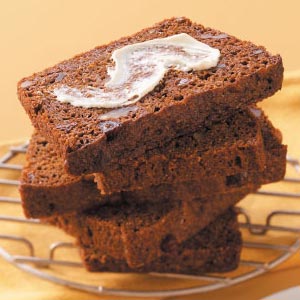
The brown bread that Evelina baked today was a staple of the New England kitchen, and was made from some combination of Indian (corn) meal and rye.  While other geographic areas of the United States, like the south, the mid-Atlantic and the expanding west, had turned to wheat as their preferred grain for baking bread, Yankee housewives, “who valued and esteemed brown bread as the food of their Puritan ancestors,*” held to the familiar cornmeal and rye.  So it was in Evelina’s kitchen.

According to Sarah Josepha Hale, who published The Good Housekeeper in 1841, brown bread was “an excellent article of diet for the dyspeptic and the costive.”   Mary Peabody Mann, in Christianity in the Kitchen pronounced brown bread to be “a nutritive bread, though inferior in this respect to wheat,” and agreed that it produced “a laxative effect upon the system.”  Lydia Maria Child, author of The American Frugal Housewife, liked brown bread for its economy and tradition.  She advised that it “be put into a very hot oven, and baked three or four hours.”

After she got away from the cook room, Evelina was visited by Reverend Whitwell who either borrowed some books from her or lent some to her – the passage is unclear. Both of their homes must have housed a collection of books, and borrowing and sharing was common.  A decade or so earlier, Easton had boasted of two or three lending libraries but these institutions had pretty well ceased to operate.  Other, better organized libraries would be formed later that century, but in 1851, if someone wanted a book to read, he or she borrowed it from a friend or bought the publication.

In the neighborhood, Miss Eaton was still failing and now, under the same roof,  Mrs. Wright, mother of Harriet Holmes, was believed to be dying, also.  Neighbors were helping Mrs. Holmes with the care and feeding of the two invalids.

*Judith Sumner, American Household Botany, 2004, p. 48

February 9, 1851

Elizabeth Missing Sewell Gertrude 1866 ( American edition)

Elizabeth Missing Sewell
Gertrude
1866 ( American edition)

Feb 9th Sunday  I have such a cold today that I thought it best

not to go to church or to the funeral of Uncle Seth Hall.  who

died last Wednesday & is to be buried to day at 1 Oclock.

Commenced reading Gertrude by Rev W Sewell.  Edwin called

this Evening and staid an hour or more  Think it rather tiresome to read all day

although I like to do it, but seldom have the privilege.

Had Oysters to night for a rarity  Quite pleasant

Evelina described this day as pleasant, yet in his own journal Old Oliver mentioned “trees loaded with ice”.  Small wonder that Evelina opted to stay home from church to nurse a stubborn cold.  She used the quiet time to start a new novel, Gertrude, by Reverend William Sewell.

Gertrude was actually written by Rev. Sewell’s sister, Elizabeth Missing Sewell, an English author known as much for her religious tracts as for her fiction. She wrote it early in her career and, for publication purposes, gave credit for it to her Anglican brother. Neither she nor her brother were fans of Roman Catholicism, and her books usually featured the Church of England in some way. In this tale of a young woman named Gertrude Courtenay, Sewell examined a lively topic of the day: the claim of duty.  Was devotion to church more important than devotion to the home?  Spoiler alert: Sewell believed in both, but posited that duty begins at home.

The opening page of Gertrude featured a quote from Wordsworth’s poem, Excursion:

Turn to private life

and social neighborhood; look we to ourselves.

A light of duty shines on every day

For all.

This quote is an apt description of Evelina, for whom duty was an essential motivation in life.  She tried to do what was expected of her; she didn’t always succeed, but she did try. Even today, when she didn’t feel well, it must have been a struggle for her to miss both church and the funeral of a Gilmore cousin, to the point where the opportunity to indulge in reading all day eventually paled.  She needed the rest, though, and the oysters at tea in the evening were a treat, as was a visit from a nephew with whom she was particularly close: Edwin Williams Gilmore.

February 2, 1851

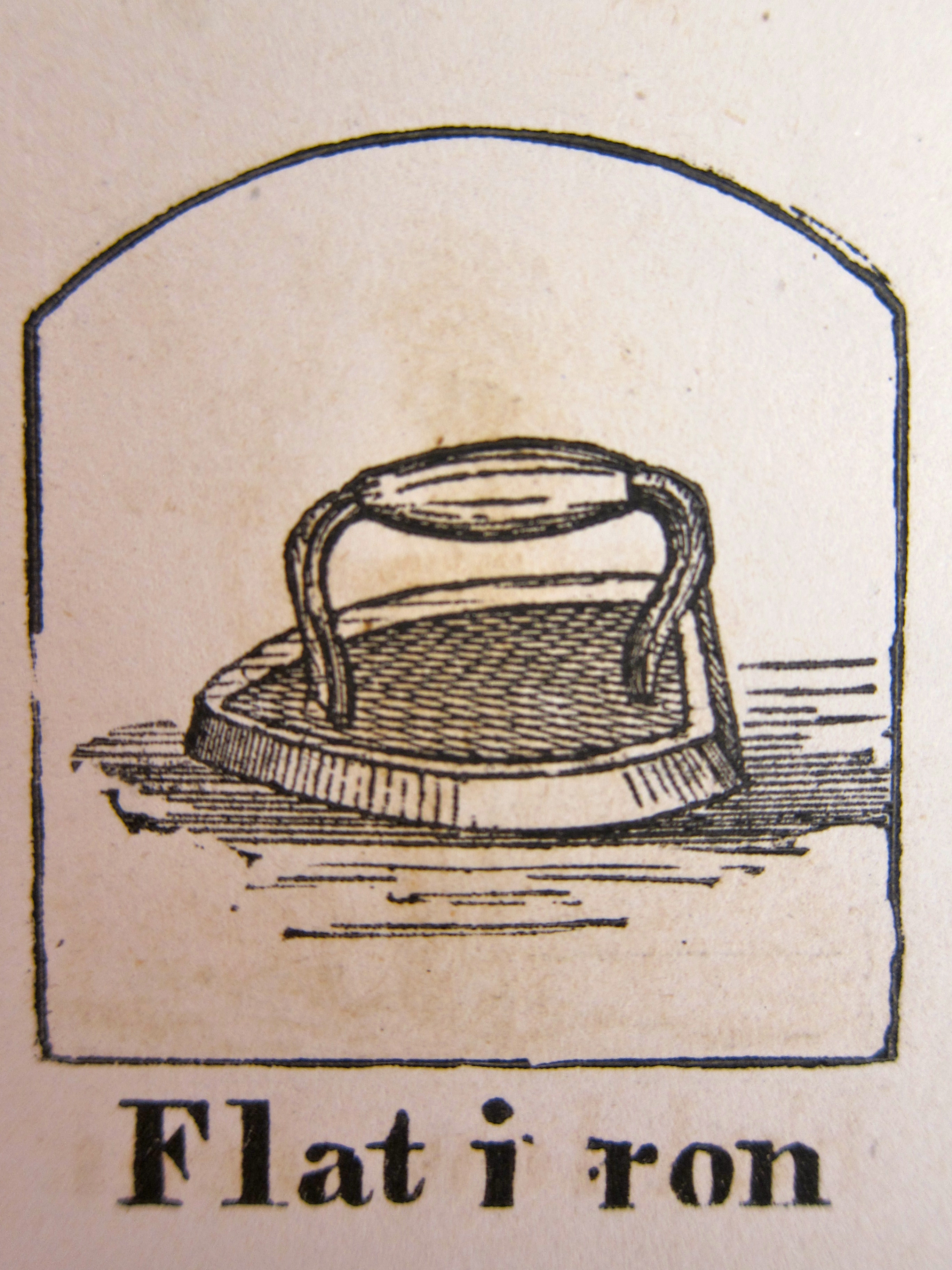
Flatiron

Sunday Feb 2d  It snowed very hard this morning but we

all went to meeting to hear Mr Brigham of Taunton

He gave us two very good sermons  he is very quick in his motions

& very independent in his manner  Mother went to meeting & home.

Since meeting have been reading in David Copperfield

Sarah A & Helen came in and stoped an hour or two.

This evening have hurt my foot quite badly by letting a

flatiron fall on it  It has cleared of[f] quite pleasant.

Snowy weather didn’t prevent attendance at meeting, and the Ames family stayed for both morning and afternoon service.  A visiting minister, Reverend C. H. Brigham, replaced Reverend Whitwell in the pulpit.  Mr. Whitwell, meanwhile, presumably officiated in Taunton.  This kind of swap was accomplished every month or so when ministers in the area switched places.  A Congregational practice that had been in place for years, the swap gave ministers the test of different congregations while, with fresh voice, it reiterated church dogma among a broad population.  Both congregations and ministers benefited however “quick in his motions” a visiting parson might be.

After church, Evelina’s brother Alson Gilmore carried their mother, Hannah, back to the farm in southeastern Easton.  Evelina had a little more time to herself, which she spent with Charles Dickens, at least until her sister-in-law Sarah Ames and daughter Helen stopped by.  Evelina has been reading David Copperfield – an 800 page book – for a week now.  But somehow in the course of the afternoon or evening – perhaps getting prepared for laundry day tomorrow? – Evelina dropped a flatiron on her foot.  Ow.  That took her out of commission for the rest of the day, perhaps allowing even more reading.

January 4, 1851

220px-GrahamsMagazine1852220px-Fashion_Engraving_1849-1

1851 Saturday Jan 4th

Mr Ames went to Boston this morning and I had to 

get breakfast pretty early.  My housework kept me busy

most all day  Francis came & brought a barrel of apples

Mr Foster came in the evening to get his watch that Mr

Ames brought from Boston.  After doing my tea dishes

read the papers  Mr A bought Ladys Book & Grahams,

of Jan 1st & a number of Harpers  I do not like this

doing my housework it makes my hands chap

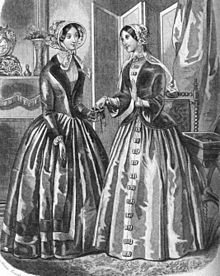
Evelina may not have enjoyed housework, but she dearly loved to read.  The magazines that her husband, Oakes, brought home to North Easton that wintry Saturday probably more than made up for her chapped hands. She sat that very evening by her oil lamp, leafing through Graham’s American Monthly Magazine and Godey’s Lady’s Magazine and Book, both of which were marketed to readers just like her.  Both periodicals were published in Philadelphia, yet Godey’s was always more popular and successful and had a longer run, from 1830 to 1878.

Godey’s was edited by Sarah Josepha Hale, an accomplished writer whose legacy includes – but is not limited to – authorship of “Mary Had a Little Lamb,” as well as credit for convincing Abraham Lincoln to make Thanksgiving a national holiday.  Her counterpart at Graham’s included, at one time, a man of antithetical sensibility.  Edgar Allan Poe,  author of “Murder in the Rue Morgue,” The Telltale Heart,”  and other gothic classics was the short-lived editor at Graham’s in the early 1840s.

Harper’s is the only periodical in the stack in the Ames’s sitting room that’s still in publication today.  In 1851, it was embryonic and carried mostly reprints of topical and political articles from English magazines.  It soon found its own American voice, however, and became a noteworthy magazine covering national issues, as Oakes Ames would learn many years later when elected to Congress.  On this cold, unremarkable evening, however, years away from fame, he and his wife were ignorant of such eventualities as they sat and discussed the day.

No doubt Evelina informed Oakes that her nephew, Francis Gilmore, had brought another barrel of apples from the Gilmore family farm.  It was  probably already safely stowed in the cellar, toted down the stairs by one of their sons.  Did she lock this barrel up, as she did the other day?

Images of Graham’s Magazine credited to Wikipedia.