June 15, 1852

LongShop

Recent image of Long Shop 

June 15th  Tuesday  Julia here and I have been sewing

some but have not had much time […] I

t’s very hot weather mother spent the

day at Edwins I called there awhile and 

ripped my green gingham dress to have 

it made over.  had quite a heavy shower 

this morning which was needed very much

Everyone agreed that this day was “verry warm” and that rain was needed.* Evelina, looking up from her sewing, reported that they had “quite a heavy shower.” Her father-in-law, however, described the rain as “a small shower in the forenoon about an eighth of an inch.” Her glass was half-full, his was half-empty when it came to considering the benefit bestowed by this particular rainfall.

Such quick rain wouldn’t have been enough to interfere with the building of the new stone shops at the factory. Workers had begun to arrive on Saturday and, surely, some initial construction was already underway.  Old Oliver would have made sure of that. This first building on the new site, which was much closer to where the Ames family lived, was dubbed the Long Shop.

Industrial historian Greg Galer describes the Long Shop as “a simple, narrow, gable-roofed, two story building 525 feet long and 35 feet wide with a 60 by 50 foot ell and an additional 30 by 10 foot engine house. “**  This sturdy, less flammable facility would be up and running by the end of the year, and soon include a 60 hp steam engine.

Residents of North Easton today know the Long Shop as one of several shovel factory buildings repurposed for residential use. Along with others, Mr. Galer was instrumental in the successful effort to preserve the historic character of the Long Shop as the site was developed.

* Oliver Ames, Journal, Stonehill College Archives, Arnold Tofias Collection

** Gregory Galer, Forging Ahead, 2002, p. 150
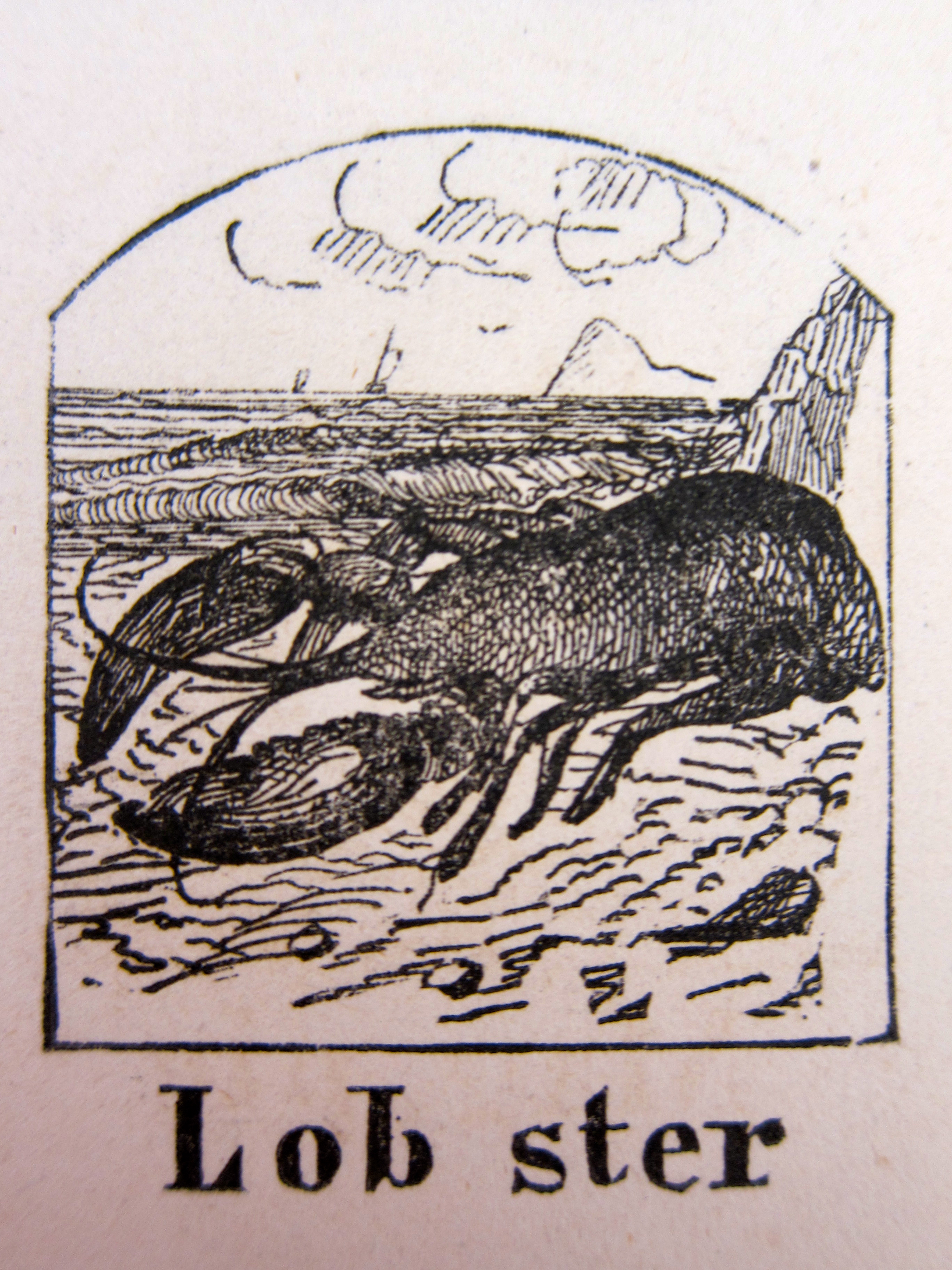
June 13, 1852

Lobster

June 13

1852 Sunday  Went to meeting this morning & returned

at noon and mother came with me to make

a visit  Did not go back this afternoon on

account of getting tea  Mr Patterson is here

came last night  Edwin & wife stoped to 

tea from meeting had lobster.  Read to

mother in  [entry incomplete]


The Sabbath was another “fair day + pritty warm + verry dry.”* Old Oliver had to be getting edgy about the prospects for this year’s hay crop, not to mention the potentially poor output from the cornfields and the crop gardens all around town.

The family all trooped to church for the morning service, but Evelina, bringing her eighty-year old mother home with her, skipped the afternoon sermon “on account of getting tea.” She had to prepare lobster for Edwin and Augusta Gilmore. We might assume that on the previous day, Oakes Ames picked up a lobster (probably quite fresh, although cooked and canned were available) in Boston on his usual Saturday visit. Lobsters were plentiful, inexpensive and, as a rule, larger than those we dine on today. He was probably familiar enough with the crustacean to buy one that was fresh.

The well-known household advisor Lydia Maria Church approved of lobsters, and offered advice on buying them:

‘A female lobster is not considered so good as a male.  In the female, the sides of the head, or what look like cheeks, are much larger, and jut out more than those of the male. The end of the lobster is surrounded with what children call ‘purses,’ edged with a little fringe.  If you put your hand under these to raise it, and find it springs back hard and firm, it is a sign the lobster is fresh; if they move flabbily, it is not a good omen.’

Moving flabbily could never be considered a good omen.


*Oliver Ames, Journal, Stonehill College Archives, Arnold Tofias Collection

** Lydia Maria Church, The American Frugal Housewife 


June 10, 1852

 FullSizeRenderOld view of Gilmore house near Foundry and Washington Streets*

June 10th Thursday  This morning worked a few moments

on my bonnet and about half past ten Mr &

Mrs Orr Mr Ames & self went to Alsons to

spend the day  Mr Ames Orr & Alson rode

to W Bridgewater after noon  Mother is most 

sick with a cold  Called at Mr Copelands

to get Susans hat & Lavinia mended it where

it was burned

The Orrs of Boston continued their visit with Evelina and Oakes. The rain showers – too brief to satisfy area farmers – receded and the sunshine returned, along with wind that was “strong and verry dusty.”** The Ameses and the Orrs took to the road, traveling a few miles south to spend the day with Evelina’s mother at the Gilmore farm.

After midday dinner with the Gilmores, Oakes Ames, Robert Orr and Alson Gilmore rode east to West Bridgewater. What was their business? Evelina and Melinda stayed behind with elderly Mrs. Gilmore who was poorly. Evelina managed to go over to the Copelands to pick up a hat she had left there for Susan, which Lavinia proceeded to mend for her little cousin.

Old Oliver, meanwhile, was looking ahead to bringing in the hay, assuming it hadn’t been ruined by the lack of rain.  He “bought a yoke of cattle from Howard Lothrop,”** the latter a well-known man in Easton who, according to a 19th c. history of Plymouth County, “styled himself a farmer, yet did much business of a partially legal character [..] for which work his superior business qualities and excellent judgment especially fitted him.” The Honorable Mr. Lothrop was also a former town clerk, state senator, member of the Governor’s Council, and father of Sarah Lothrop Ames. Between the two strong men, seller Howard and buyer Oliver, who got the best deal?

*Image from Howard Gilmore Papers, Courtesy of Easton Historical Society

**Oliver Ames, Journal, Stonehill College Archives, Arnold Tofias Collection

***usgwarchives.org

June 9, 1852


IMG_0582


Example of bonnet frame


June 9th  Wednesday  Mr & Mrs Orr  Mr Ames & self dined

in Olivers and Oakes & Frank came to tea

with us.  Mrs Davidson & two daughters there

Mr Ames & Mr Orr rode to Canton

Mrs Orr brought me a frame for a lace

bonnet and I have fitted it to my head ready

for the trimming

With their guests, Robert and Melinda Orr, Evelina and Oakes ate midday dinner next door. It was a rare occasion to be invited to dine at Oliver Jr.’s and Sarah’s, an indication of how important the houseguests were.  At tea time, they were joined by Betsy Davidson, wife of the postmaster, and her little girls Lizzie and Julia. Oakes Angier and Frank Morton Ames joined the group, too, after finishing work at the shovel shops.

Evelina was given a special bonnet frame by Melinda and got right to the pleasant task of creating a new bonnet, “ready for the trimming.” The two friends probably sat and chatted as Evelina worked on it. Perhaps Melinda had brought some lapwork with her, or perhaps Evelina gave her something to sew. Neither woman would have been apt to sit idly while the other worked.

After dinner, Oakes and Robert rode over to Canton, probably to visit the Kinsley iron works. Back at home, Old Oliver Ames was breathing a bit easier after the much-needed rainfall of the previous day and night, reporting that “the plowd land is wett down considerable.” Just what the farmer asked for.


June 6, 1852

FullSizeRender

Office of Ames Shovels, ca. mid-to-late 1850s

1852

Sunday June 6th  Have been to meeting as usual

Mr Whitwell preached  Came home alone

with Mr Ames at noon Have read

but very little partly written a letter

to Oliver.  Mr Ames said he would go 

with me to Augustus’ to make a call but

he did not come from the office in season

Sermons, reading and writing filled Evelina’s day. She began a letter to Oliver (3), off at college.

It may have been the Sabbath, but that didn’t preclude Oakes and Oliver Jr spending time in the office next door to the house. The two men often met there at the end of each workday “to catch up with their correspondence (all letters were written and copied by hand), discuss business together and go over accounts with the head bookkeeper.”* That they met on a Sunday evening seems unusual, but it may not have been. The shovel firm was about to build a new, stone factory, one that would be more fire-resistant than the old one that burned down in March. These plans were being developed even as the business was in swing, making shovels and filling orders. Oakes and Oliver Jr. were extra busy.

As had happened before, Oakes Ames forgot to take Evelina out as promised, or came home too late to go, so she missed a visit to her nephew Augustus Gilmore and his family. Was Oakes’s chronic oversight just absent-mindedness, or was he more consciously choosing to ignore social obligations when they proved inconvenient? And how did he make it up to his wife?

Winthrop Ames, The Ames Family of Easton, Massachusetts, 1938, p. 129


June 5, 1852

tbl00064-2

1852

Sat June 5th  Mr Scott has been tinkering around in 

one place and another to day  has worked part

of the day here and this afternoon Holbrook

and another man came and put a coat of

paint on the plastering in the entry chamber

and whitewashed Franks chamber & painted

the closet I cut out two of the shelves and 

the shelves in my chamber closet.

Mrs Patterson here

Consul & slab came

and Olivers furniture


The dependable Mrs Patterson was on hand again today, as workmen tinkered, plastered and whitewashed different areas of the house. Evelina herself tinkered with the shelves of her closet in the master bedroom, cutting away two of them, perhaps to make room to hang clothes rather than fold them.

The arrival of new furniture from Boston was exciting for both Evelina and Sarah Lothrop Ames. Evelina and Oakes were to have a new console table – probably for the parlor – with a slab of stone – probably marble – on top. The Oliver Ameses next door got a delivery of new furniture, too.  The families were upgrading. It must have taken an industrial-strength wagon pulled by oxen to bring the pieces out from the city.

The delivery wagon had a “fair day”* for its route, and Old Oliver Ames had a good day to watch the new sills “for the cariage hous”* being laid down. He did enjoy building things, and his daughters-in-law enjoyed furnishing them.


*Oliver Ames, Journal, Stonehill College Archives, Arnold Tofias Collection

June 3, 1852

Ice


Thursday June 3d  Mrs Patterson went to Bridgewater

but was not satisfied with the house and 

returned to night  I have painted my 

ice closet and have been to work about

house all day  Jane is not worth much

she is so forgetful and if she stays I

shall have another girl

After two days off, Evelina was back in her apron. She did her chores and painted the new ice closet. Did she use the green paint that covered so much of the rest of the home’s interior?

Evelina had relied heavily on her servants during spring cleaning.  Mrs. Patterson, in particular, had proved a real help with the work. She was apparently more industrious than Jane McHanna, providing an unfavorable contrast. Jane may have been slacking off, her attention pulled away by events we can’t know, or Mrs. Patterson was just better at housework. Whatever “forgetful” Jane was up to, Evelina was becoming dissatisfied with her.

The weather report from Old Oliver was a bit gloomy: “[T]he 3d of June was a verry warm day […] it has bin fair weather and verry drying since the 23d of May and grass on the high land is wilting there was a little rain yesterday.” He was worried about the hay and the corn.

*Oliver Ames, Journal, Stonehill College Archives, Arnold Tofias Collection

June 2, 1852

Thread

1852

Wednesday June 2d  Lazy this day as usual after being

in Boston   Have been with Mrs S Ames

to the sewing circle at Mr Wm Reeds.  Had

a very pleasant time as we always do there

not very many present. Mrs Patterson here

again to day.  yesterday she staid home to

do her washing  She & Jane have done very

little ironing this afternoon

The intense labor of spring cleaning was over, at least for Evelina.  She was “[l]azy this day” after yesterday’s trip into Boston with her sisters-in-law. Shopping wore her out more than washing windows or scrubbing floors, it would seem. She summoned enough energy to attend the Sewing Circle at Abigail Reed’s, though.

Sarah Witherell didn’t attend the Sewing Circle; she probably wasn’t socializing outside the family yet. So Sarah Ames and Evelina went without her and enjoyed themselves “as we always do.” Back at the house, however, Evelina’s servants didn’t attend to the ironing as Evelina had hoped they would. Evelina wasn’t pleased. When she worked, she worked very hard, and expected others to do the same. She felt that Mrs Patterson and Mrs McHanna should have been able to do more in her absence.

In the other part of the house, to which Sarah Witherell had retreated after yesterday’s outing, Old Oliver was watching the weather.  He noted the welcome arrival of “a little rain […] that wett the ground about an inch deep.”*  The spring had been dry.


*Oliver Ames, Journal, Stonehill College Archives, Arnold Tofias Collection


May 31, 1852

Woodhouse

1852

May 31st Monday  Mrs Patterson & Jane have done

the washing and I have been about house

all day  Mr Scott has painted the dining

room over the second time  Jane will

go against the door in spite of all that I

can do  Shall I ever get settled again so that

I can sew some  Have got an Ice closet in the 

wood house

Spring cleaning was almost finished, and Evelina sounded ready to have it be done. Mr Scott had to paint a second coat in the dining room, perhaps because Jane McHanna kept banging the door against the wall. Evelina was irritated with Jane and longed to get back to her sewing.

The weather had been dry for some time.  Old Oliver, uncharacteristically, hadn’t written in his daily journal for nine days.  When he finally picked up his pen, he noted that the fair skies had been “verry drying.” Being without rain at the start of the growing season endangered the crops and put him in an ill humor.  Perhaps Evelina was feeling some of that, too.  And, perhaps, she was still grieving.

One thing that pleased Evelina, though, was getting a new ice closet at the back of the house, in the wood shed. And one thing that pleased Old Oliver was that “Mr Seve began to frame the Cariage hous”* on this day.  This building was going up on Ames property off of Main Street, on land behind the residence of Oliver Ames Jr and his wife, Sarah Lothrop Ames.

Oliver Ames, Journal, Stonehill College Archives


May 21, 1852

67

*

1852

Friday May 21st  Mrs Patterson came to help clean house

to day and has done very well.  We have

cleaned the boys chamber and put down the

carpet & the store room,  all […] that is necces-

sary for painting the dining room.  have put

some clean paper on part of the dining room.

Have not changed my dress to day and have not

had a chance to sit scarcely a moment.  Have a

trellis from Lucius Clapp

“[T]his was a fair day neither verry cold or warm,” recorded Old Oliver in his journal; he was beginning to look for rain for his crops, as the spring was turning dry.

Evelina probably paid less attention to the weather than her father-in-law, because she was focused on the ritual spring cleaning. She hired extra help in the form of Mrs. Patterson, who may have been Mary Patterson, the forty-ish wife of Thomas Patterson, a farmer in Bridgewater.

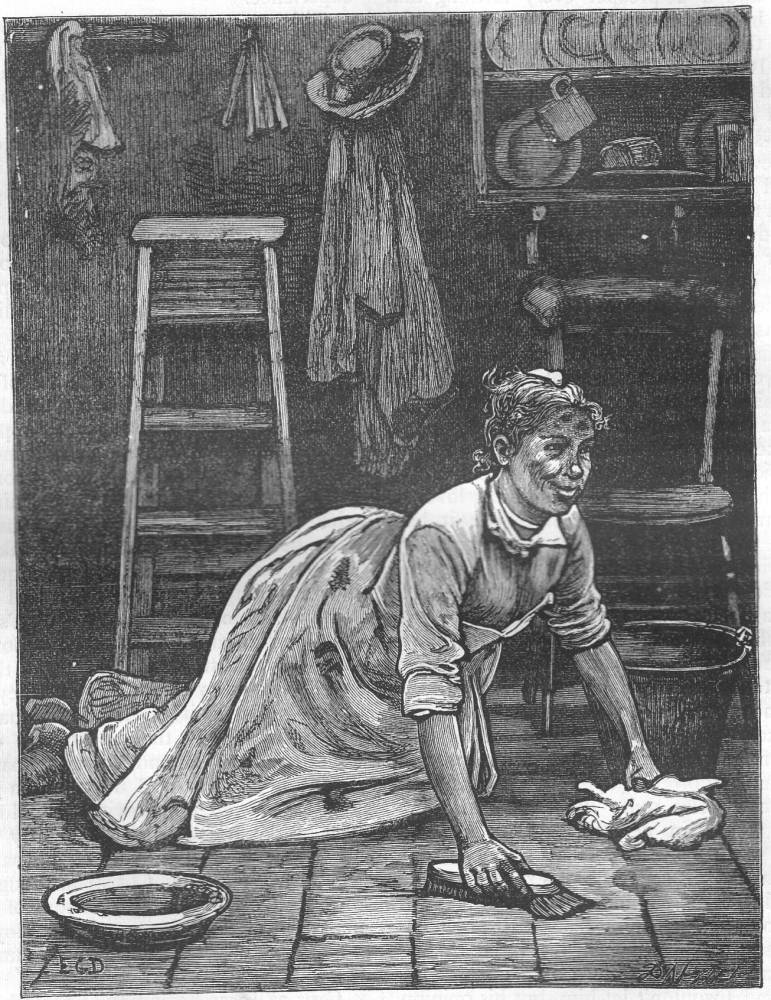
Whoever she was, Mrs. Patterson proved a boon to Evelina. The two women were busy all day cleaning, washing the floors, putting down carpet, and putting up new wallpaper. Evelina never changed out of her work dress, as would have been customary in the afternoon, and barely sat down. Meanwhile, the regular servant, Jane McHanna was preparing the meals and tending to the ordinary chores of the house.

The trellis that Evelina and Oakes ordered from Lucius Clapp arrived today, and was most likely placed, free-standing, somewhere in the yard. It could well have been a centerpiece for Evelina’s flower garden.

*Illustration from “Mrs. Lirriper’s Lodgings,” 1863, published in Charles Dickens’ periodical, All the Year Round