September 8, 1852

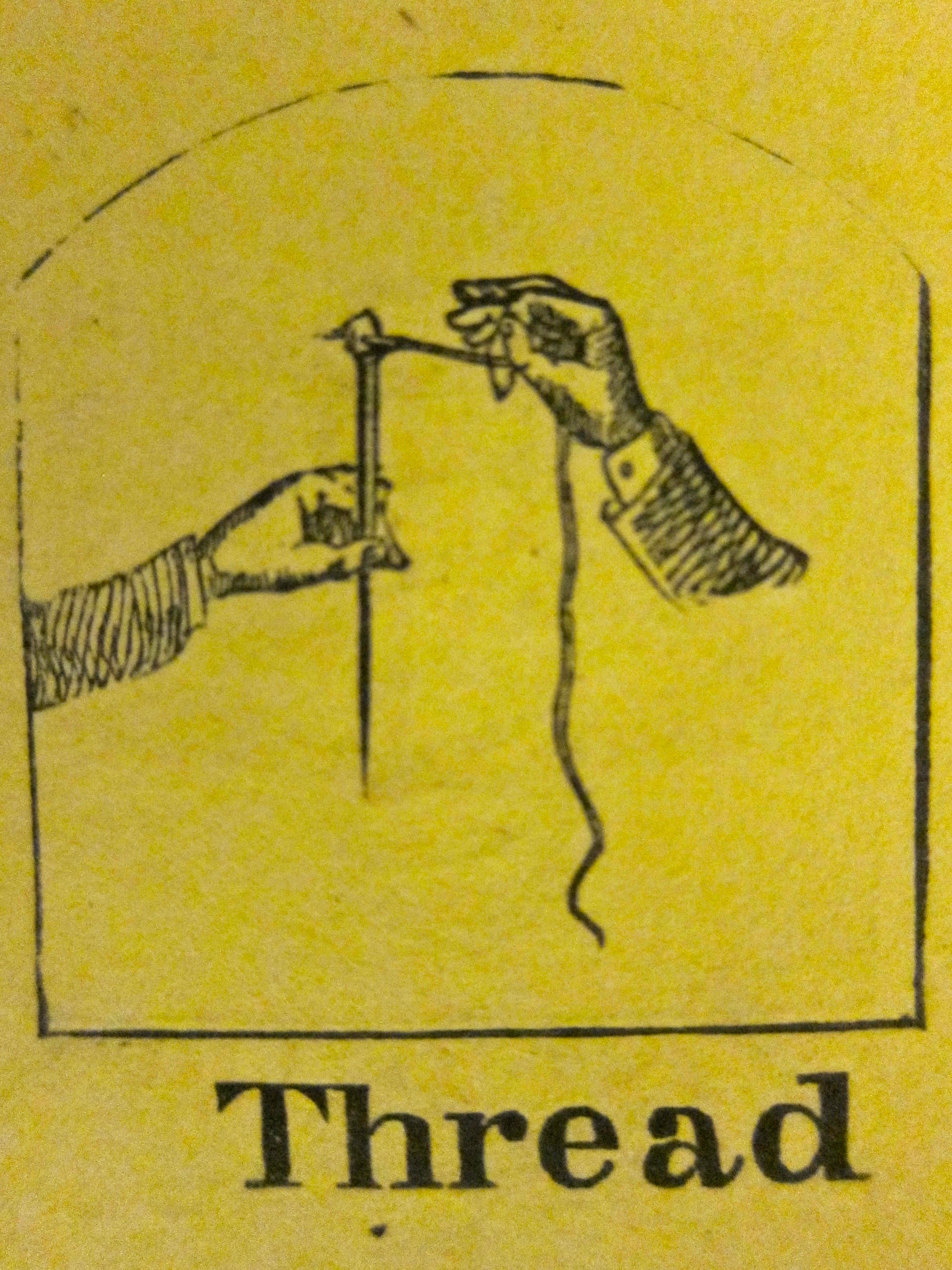
Thread


Wednesday Sept 8th  Was baking and at work

about house all the forenoon and this afternoon

have been to Olivers to the sewing Circle  Had

a pretty full meeting  Mrs Buck & Sarah were there

and worked on Mr Ames shirts  After tea we

all went into the gardens  Mother came from

there to night and will stop a few days here

It was time for Sewing Circle again.  The ladies of the Unitarian Church and their pastor, William Whitwell, met right next door at the home of Sarah Lothrop Ames and Oliver Ames Jr. They sewed, socialized and probably listened to a few words from Mr. Whitwell. Evelina was pleased to get some help making shirts for her husband.  The women all had tea and then walked about the garden, which must have been in its last foliage. Old Mrs. Gilmore, who probably had been brought to the meeting by her daughter-in-law, Henrietta, stayed over to spend a few days with her daughter.

Also on this date, another gathering of mostly women took place in Syracuse, New York. Led by suffragist Lucretia Mott, the Third National Women’s Rights Convention ran for three days and was certainly a headier, more disruptive kind of meeting than the one that Evelina attended. Mrs. Mott kept order well, although “at one point she felt it necessary to silence a minister who offended the assembly by using biblical references to keep women subordinate to men.” Many suffragists spoke, including Ernestine Rose, who responded to the offending minister with a reminder that ” the Bible should not be used as the authority for settling a dispute, especially as it contained much contradiction regarding women.” *

Two particularly noteworthy incidents happened at this annual gathering. Lucy Stone wore a pair of Turkish trousers, better known at “Bloomers, ” and the attendees were treated to the first public speech of a newcomer to the cause of suffrage: Susan B. Anthony.  Did Evelina read about any of this in the papers? Was she scornful or curious or disinterested? At no point in her diary does she comment on the nascent suffrage movement.


*National Women’s Rights Convention, Wikipedia, accessed Sept. 7, 2015


September 1, 1852

Men's Work Shirt, mid-19th c.

Men’s Work Shirt, mid-19th c.

Wednesday

Sept 1st 1852  Have been cutting out shirts & fixing

them for Catharine to sew  She does very

well at sewing but I have to get it ready for

her  Mrs James Mitchell & Catharine Hobart

came before noon at Olivers   And I have

been in there  Did not get ready to go

very early  Mr Ames has gone to the 

Whig convention at Worcester


Evelina had settled back into her sewing routine, the latest project being shirts for the men in her family. The last time she had sewn a large batch of shirts was back in March, 1851. It looks like the men had worn through the allotment and needed new ones. Evelina and her servant, Catharine, probably used the Bartlett sheeting mentioned two days earlier for material.

Next door, Sarah Lothrop Ames welcomed some visitors from Bridgewater: Harriet Lavinia Angier Mitchell (not to be confused with Harriet Ames Mitchell) and Catharine Hobart, the latter a classmate of her daughter, Helen.  In another three years, Catharine Hobart would later become a member of the family when she married Oakes Angier Ames. We might imagine that Catharine asked after him, perhaps expressing concern for his health. How much information did the family share about Oakes Angier’s lung condition?

While the women worked and socialized at home, the Ames men were out and about. Oakes Ames attended the Whig Convention in Worcester to help put together the Whigs’s slate for the fall election, and Old Oliver “went to quincey + Braintree to get stone for the foundation for the steam enjoin”.  The building of the new factory to replace the one that had burned down in the spring was not yet complete.


July 28, 1852

Sharps

Sharp’s Pistol, 1848-1850


July 28th, 1852

Wednesday Julia Mahoney has been here

to work to day on my travelling dress

but I have sewed but very little

Was about house all the forenoon 

making cake & pies &c &c  Mrs Ames &

Witherell have been to Dover  Horatio

Ames Jr came last night & I expected

him & father to dine but they went to

Olivers  Horatio went with Mr Ames

to Canton this afternoon & was here to tea

Horatio Ames Jr., a grandson of Old Oliver and nephew of Oakes, had come to the other part of the house for a short visit. By contemporary accounts, he was a troubled young man. The second child of Horatio and Sally Ames, he was born in Albany when his father was working there, but grew up in Connecticut.  In 1849 and 1850, he attended Rensselaer Polytechnic Institute in Troy, New York, but evidently left after just one year.

Early in 1853, Horatio Jr. was in Boston where he married Sophronia Eliot Hill of Salem. He worked as an iron monger at that time, but by 1858 was working as a clerk. On October 27, 1858, he killed himself.

What happened between his year in college and his suicide less than a decade later may pivot on the scandalous divorce of his parents, proceedings for which got underway late in 1852. His mother cited her husband’s multiple infidelities and harsh treatment to herself and her children. Horatio Jr. sided with his mother during and after the breakup. A 20th century account reports that Horatio Jr:

left home shortly after his parents’ divorce and so was out of touch with his father for some years. But he returned home in 1856 following his father’s remarriage. During an argument, he fired at his father in an attempt to kill him. Newspaper accounts of the incident, based on Horatio Sr.’s version of the events, depict him winning a heroic struggle for his life, but then magnanimously letting his son leave. Only after further warnings from his younger son, Gustavus, did Horatio finally have his son arrested. Horatio called his son ‘the worst hardened villain I have ever seen’, but then dropped the charges once Horatio Jnr. became contrite, begging forgiveness.*

The newspaper accounts on which this summation is based present only Horatio Sr.’s side of the story. We simply can’t know exactly what transpired between father and son, but we can know that the son eventually took his own life.  According to some 19th century records, Horatio Jr. is buried in Salem.

*John Mortimer, Zerah Colburn the Spirit of Darkness,2007


July 27, 1852


Asleep

Tuesday July 27th  Mrs Savage had quite a

comfortable night & I came home a

little before 5 Oclock & went to bed

did not rise untill nearly nine

Elizabeth Pool & Augusta came

in this forenoon with their work

Mrs Whitwell Reed Howard & Miss

Jarvis called on us all & Alsons wife

was here to tea & Mother at Augustus’

Evelina’s all-nighter at the bedside of Mrs. Savage didn’t seem to impinge on her day.  After a catch-up sleep in the early morning, she was back on her feet.  Augusta Gilmore and her young sister Elizabeth came over “with their work,” meaning that they brought some sewing with them, and the women sat, sewed, and visited. Later in the day, several ladies from her Unitarian circle of friends “called on us”.  Her brother Alson’s wife, Henrietta Williams Gilmore, came by for tea. A most sociable day, it was.

In the other part of the house, “Horatio Ames Jun r came here to day.”* Horatio was, obviously, the eldest son of Horatio Ames, who was the brother of Oakes, Oliver Jr., Sarah Witherell, Harriet Mitchell and William Leonard Ames. Repeating previous posts, Horatio ran a forge in Connecticut, far from the shovel shop in Easton, but still connected to it financially and emotionally. He and his son were not on friendly terms, and it’s hard to determine just what had brought Horatio Jr to Easton.  He arrived in the evening and for some reason Evelina didn’t mention it in her diary.


*Oliver Ames, Journal, Stonehill College Archives, Arnold Tofias Collection


July 23, 1852

il_570xN.416155936_i0fm

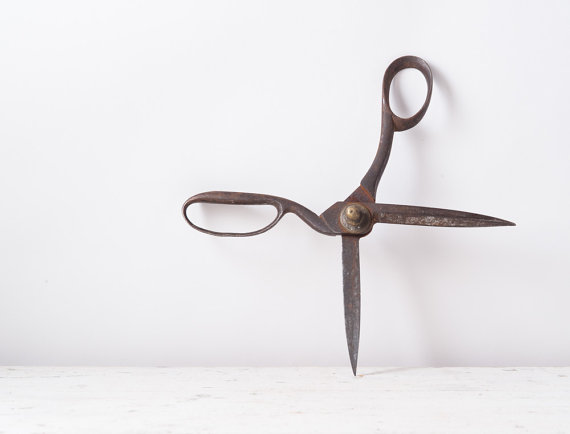
19th century tailor’s shears*

July 23d  Friday  Have cut the skirt & sleeves

& cape to my traveling dress and 

have set Mary to work on the skirt

and I have taken the sleeves

Mrs Stevens has sent me the lining

but not the trimming  Julia Mahoney

is at work at Olivers  Mr Torrey

and Abby called this morning

Evelina was back in good humor today. The thermometer was going down and she had a new project to work on. Shears in hand, she cut out the pieces for her new traveling dress, and probably the lining, too. Designed with a cape to fit over the shoulders, it would be a very fashionable outfit. She didn’t yet have the trimming she needed, and the dress would take longer to sew than she wished, but it would be finished in time for a trip she didn’t even know she would have to make.

Col. John Torrey, the widower of Evelina’s late sister Hannah, came to call.  As we have noted in earlier posts, Mr. Torrey lived in the village of North Easton in a building – a boarding house of sorts – whose spare rooms he rented out. Through Rev. William Chaffin’s history of the town, we learn that Mr. Torrey was a controversial character. Listed as a trader in the town census, and a one-time colonel of the local militia, he was considered laughable by some. Another local character, an erudite shovel-worker named James Adams, wrote a mock-heroic poem about him, the “derisive and scathing”* verses of which are lost. Yet Evelina appeared to enjoy her brother-in-law’s company and brand of humor, and she was devoted to his daughters Abby and Melvina.

*William Chaffin, History of Easton, Massachusetts, 1886, pp. 764-765


*Image courtesy of etsy.com

July 14, 1852

1852

P1070606-X2

High water (flood level) mark in canal in Lowell, Massachusetts


Wedns July 14th  Julia came again this morning

but we have not got along very fast

on my dress  Have no trimming for the

sleeves have written for Mrs Stevens to

get me some   There is a great deal to

do to finish my dress  Hannah & Mary 

have both been ironing all day and 

have it all done

Evelina was indoors, sewing a new dress with the help of dressmaker Julia Mahoney. Old Oliver was out haying, “jawing” orders at local men gathering up this year’s meager crop. Oakes Angier, Frank Morton and probably Oliver (3), now that he was home from college, were each posted in some area of the factory, making shovels alongside the workers. Oakes and Oliver Jr. were supervising, perhaps striding around the shovel complex watching the new building go up or sitting in the office looking at accounts.

If we modern readers want to find a day that typifies life in North Easton in the middle of the 19th century, we couldn’t do better than this ordinary summer day in 1852. In other years and in other places, July 14th has hosted more momentous events: the storming of the Bastille, the first ascent of the Matterhorn, the shooting of Billy the Kid, the day Jane Goodall arrived in Tanzania to study chimpanzees. Nonesuch in North Easton; according to Old Oliver’s record, July 14, 1852 was simply a “warm good hay”* day. Routine ruled.

This is not to say that history wasn’t happening. It was. Yet as Evelina noted, “we have not got along very fast,” a phrase that is applicable to so much of history. Change often quietly accumulates, transforming what we know in a stealthy fashion. Evelina’s hand-sewing, Old Oliver’s oxen-driven hay-wagons, Oakes’ and Oliver Jr.’s water-powered shovel machinery: all have since disappeared, replaced by modern equipment invented over time. The life that the Ameses lived was already altering, irrevocably, bit by bit.

Oliver Ames, Journal, Stonehill College Archives, Arnold Tofias Collection


July 6, 1852

500px-Illinoisoldcapitol

Old State Capitol Building, Springfield, Illinois, built 1839

1852

July 6th Tuesday  Was very busy sewing this forenoon

Mary made the sleeves to my purple cambric

calico and sewed the drugget for the sitting

room  This afternoon have been into Olivers

to tea with Mrs Witherell & Mrs Ames &c &c

Mr Jones from Foxboro called.

Received a note from Cassander Gilmore that 

Henry died this morning requesting us to attend the funeral 


In the statehouse in Springfield, Illinois, a practicing lawyer and former U. S. Representative named Abraham Lincoln gave a eulogy today for Henry Clay, the Senator from Kentucky who had just passed away. Clay had been Lincoln’s idol, his “beau ideal of a statesman.”* In 1832, Lincoln cast his first presidential vote for Clay; in 1844, he campaigned for Clay and served as an elector from Illinois. Clay’s influence on Lincoln would be life-long.

On the occasion of Clay’s death, Lincoln spoke for some time, quoting at length a laudatory editorial which lamented “that never again that majestic form shall rise again in the council-chambers in his country to beat back the storms of anarchy which may threaten, or pour the oil of peace upon the troubled billows as they rage and menace around…” Lincoln then moved on to his own simpler words. He praised Clay for his wisdom, eloquence, and perseverance, noting that “Mr. Clay’s predominant sentiment, from first to last, was a deep devotion to the cause of liberty – a strong sympathy with the oppressed everywhere, and an ardent wish for their elevation.”*

In the town of Easton, Massachusetts, on this same day, Evelina received a letter asking for her presence at a different funeral. Her cousin Henry Gilmore of Raynham had died this very morning, as his brother Cassander Gilmore wrote to say, and she and her family were pressed to attend the funeral the next day.


* henryclay.org

June 27, 1852

??????????

Carl Christian Anton Christensen, “Interior of the Carthage Jail”*

1852

Sunday June 27  Have not been to meeting at all

to day on account of having a bad cough

Alson came here at noon with Mr

Ames  Have been reading most all

day  Augusta made a call this morning

to say she should not got to meeting

Made ice cream this afternoon


Evelina felt ill today and missed church. Other Ames family members, however, attended the Unitarian meeting. Mr. Whitwell probably led the service in the typically thoughtful but unadorned style of this Protestant sect. Other services around town, such as the Catholic mass at the chapel on Pond Street, would have been more elaborate, with communion being taken, for instance, the service in Latin, and a great focus on Christ, the Virgin Mary, and various ancient saints.

In Salt Lake City, many miles to the west, a different service altogether would have been held at the Church of the Latter Day Saints, known to most of us as the Mormon Church. Believers in Jesus Christ, the Mormons were, and are, a truly modern religious group, having only developed in upstate New York during the 1820s from the sayings and visions of their leader, Joseph Smith. Smith and others tried to lead his followers West to settle with more freedom than they had in the East, but ran into many problems and pockets of persecution along the way.

In fact, on this exact date eight years earlier (June 27, 1844), Joseph Smith and his brother Hyrum were killed by a mob while in jail in Carthage, Illinois. The illustration above is a folk painting of that murder by a 19th century artist. Smith’s followers recovered from this tragedy and found a new leader in Brigham Young (and others, known as apostles), who led them to the Great Salt Lake in Utah, where they founded Salt Lake City in 1847.  By 1852, the year that Evelina is recording in her diary, the Mormons were well established there.  In August, 1852, in fact, the elders of the church would approve the practice of polygamy, a choice that would bring them certain notoriety.** They were, and are, a sect unto themselves.

In years to come, Oliver Ames Jr. and Oakes Ames would have extensive dealings with Brigham Young over railroad matters.

Image courtesy of the Brigham Young University Museum of Art

** In 1890, the LDS would renounce the practice of polygamy.

June 19, 1852

manx40rimwh


A “Visite”

Sat June 19th  Have been weeding in the garden and

transplanting   Spent the afternoon in 

Olivers with Mother  Mrs Witherell & Augusta

were there awhile  Finished Susans visite

quite late in the evening  It has not been

much of a job to make if I could have sat

down steady

Evelina worked in her garden today, weeding and moving some of her plants around. After midday dinner, she and her mother, who was visiting, “spent the afternoon” next door “in Olivers,” meaning at Sarah Lothrop Ames’s. In citing Oliver rather than Sarah as the owner of the house, Evelina was only following the norm of the time, whose patriarchal laws prevented women from owning property. Sarah and Evelina lived in homes that belonged solely to the males in the family.

Old Oliver, Ames patriarch above all the rest, reported that “this was a fair day wind southerly + quite warm we have bought two yoke of cattle this weeke one yoke of N Warrin of Stoughton, 6 years old for $110 and one yoke of Thomas Ames 9 or 10 years old for $100.” He was probably buying cattle to help with the approaching hay harvest.

Once indoors, perhaps even after others had gone to bed, Evelina finished a mantle for her daughter Susie. Also known as a visite or paletot or pardessus, a mantel (or mantilla, as Evelina labeled it the previous day) was a three-quarter length cloak with pagoda or cape-like sleeves. It was often adorned with lace, ruching, and especially fringe, which was very big about this time. Many visites were unlined, which no doubt simplified the process of making them. That may be why Evelina thought the garment had “not been much of a job.”


June 9, 1852


IMG_0582


Example of bonnet frame


June 9th  Wednesday  Mr & Mrs Orr  Mr Ames & self dined

in Olivers and Oakes & Frank came to tea

with us.  Mrs Davidson & two daughters there

Mr Ames & Mr Orr rode to Canton

Mrs Orr brought me a frame for a lace

bonnet and I have fitted it to my head ready

for the trimming

With their guests, Robert and Melinda Orr, Evelina and Oakes ate midday dinner next door. It was a rare occasion to be invited to dine at Oliver Jr.’s and Sarah’s, an indication of how important the houseguests were.  At tea time, they were joined by Betsy Davidson, wife of the postmaster, and her little girls Lizzie and Julia. Oakes Angier and Frank Morton Ames joined the group, too, after finishing work at the shovel shops.

Evelina was given a special bonnet frame by Melinda and got right to the pleasant task of creating a new bonnet, “ready for the trimming.” The two friends probably sat and chatted as Evelina worked on it. Perhaps Melinda had brought some lapwork with her, or perhaps Evelina gave her something to sew. Neither woman would have been apt to sit idly while the other worked.

After dinner, Oakes and Robert rode over to Canton, probably to visit the Kinsley iron works. Back at home, Old Oliver Ames was breathing a bit easier after the much-needed rainfall of the previous day and night, reporting that “the plowd land is wett down considerable.” Just what the farmer asked for.