January 9, 1851

images

/51

Jan 9th Thursday

This morning after cleaning my room & doing

my usual mornings work, finished my collars & the

book Mr Whitwell brought.  Cut Susan a sack out of

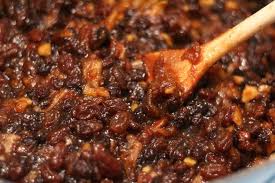
her plaid cloak.  Prepared some mince pie meat ready

for baking & this evening have been writing in this book.

Had to take the foregoing from memory.  Mr Ames, ague in his face

and come home from the office very early.  Has been

troubled with it several days.  Unpleasant this afternoon

Oakes Ames still had his head cold and came home early from work, something almost unheard of.  He was always on the go. Evelina, meanwhile, worked in the cook room preparing mince meat, a lengthy process that calls for a lot of chopping of meat and suet, not to mention the “stoning” of raisins.

Sarah Josepha Hale, intrepid editor of Godey’s Lady’s Book, had nothing nice to say about mince meat pies. In her book, The Good Housekeeper (1841), she urged American housewives to serve mincemeat only on special occasions:

“The custom of eating mince pies at Christmas, like that of plumb puddings, was too firmly rooted for the ‘Pilgrim fathers’ to abolish; so it would be vain for me to attempt it.  At Thanksgiving, too, they are considered indispensable; but I may be allowed to hope that during the remainder of the year, this rich, expensive and exceedingly unhealthy diet will be used very sparingly by all who wish to enjoy sound sleep or pleasant dreams.”

Evelina was a regular reader of  Godey’s Lady’s Book, but she paid scant attention to Mrs. Hale’s admonishment against mince meat pies.  She served them often; they were a familiar presence at the Ames dinner table.  Considering  the large family to be fed, including three physically active sons between ages 17 and 21, and the ready availability of meat and suet from the oxen provided by her father-in-law, it’s small wonder that Evelina turned to a dish that was hearty and filling.   Mincemeat was a standard in many farming families.

January 7, 1851

 Sleighing

/51 Tuesday Jan 7th Jane better and finished her washing and I did the

housework this morning.  Mr Ames went to Boston to get

some grindstones  This afternoon wrote a letter to O

Foss & cut Susan a gingham apron  Mr Whitwell called.

Robinson primed the mantelpieces ready for painting

Ann commenced making fire in the Furnace  Daniel

Wheaton & wife passed the evening at Olivers and we

played cards.  Pleasant & beautiful sleighing

After the cold weather of the previous few days, this Tuesday was mild enough for people to be out and about, enjoying the relative ease of gliding along in their sleighs.  Not so for Oakes Ames; he went into the city in search of grindstones for the shovel shop, most likely taking an ox-drawn wagon to bear the heavy load home.

The Reverend Mr. William Whitwell paid a call at the house.  He and his wife Eliza were relatively new to the community and were becoming good friends with Oakes and Evelina.  Mr. Whitwell would serve as acting  pastor for Easton’s Unitarian congregation for the next seven years.  His eventual successor, the Reverend William Chaffin, described Whitwell as “a good man and a cultivated scholar” whose term was “quiet and uneventful.”*  In fact, Whitwell’s writing on St. Paul can be found in a famous Unitarian publication of the day, The Christian Examiner.

Other little moments in this ordinary day included a new sewing project and the repainting of mantels by Mr.  Robinson, a local painter and paperer.  Meanwhile, Ann Orel, a teenage Irish maid who worked for Sarah Witherell, started up the new coal furnace.  Perhaps the arrival of coal dust necessitated the painting of the mantels?

This evening, Evelina and Oakes walked next door to play cards with Sarah and Oliver Ames Jr. and their mutual acquaintances, Daniel and Hannah Wheaton.  Unitarians had no problem with card playing.

* Chaffin, History of Easton, Massachusetts, 1886, p. 362

January 4, 1851

220px-GrahamsMagazine1852220px-Fashion_Engraving_1849-1

1851 Saturday Jan 4th

Mr Ames went to Boston this morning and I had to 

get breakfast pretty early.  My housework kept me busy

most all day  Francis came & brought a barrel of apples

Mr Foster came in the evening to get his watch that Mr

Ames brought from Boston.  After doing my tea dishes

read the papers  Mr A bought Ladys Book & Grahams,

of Jan 1st & a number of Harpers  I do not like this

doing my housework it makes my hands chap

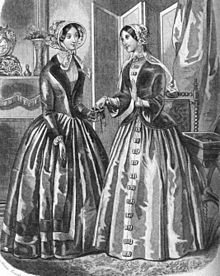
Evelina may not have enjoyed housework, but she dearly loved to read.  The magazines that her husband, Oakes, brought home to North Easton that wintry Saturday probably more than made up for her chapped hands. She sat that very evening by her oil lamp, leafing through Graham’s American Monthly Magazine and Godey’s Lady’s Magazine and Book, both of which were marketed to readers just like her.  Both periodicals were published in Philadelphia, yet Godey’s was always more popular and successful and had a longer run, from 1830 to 1878.

Godey’s was edited by Sarah Josepha Hale, an accomplished writer whose legacy includes – but is not limited to – authorship of “Mary Had a Little Lamb,” as well as credit for convincing Abraham Lincoln to make Thanksgiving a national holiday.  Her counterpart at Graham’s included, at one time, a man of antithetical sensibility.  Edgar Allan Poe,  author of “Murder in the Rue Morgue,” The Telltale Heart,”  and other gothic classics was the short-lived editor at Graham’s in the early 1840s.

Harper’s is the only periodical in the stack in the Ames’s sitting room that’s still in publication today.  In 1851, it was embryonic and carried mostly reprints of topical and political articles from English magazines.  It soon found its own American voice, however, and became a noteworthy magazine covering national issues, as Oakes Ames would learn many years later when elected to Congress.  On this cold, unremarkable evening, however, years away from fame, he and his wife were ignorant of such eventualities as they sat and discussed the day.

No doubt Evelina informed Oakes that her nephew, Francis Gilmore, had brought another barrel of apples from the Gilmore family farm.  It was  probably already safely stowed in the cellar, toted down the stairs by one of their sons.  Did she lock this barrel up, as she did the other day?

Images of Graham’s Magazine credited to Wikipedia.

January 3, 1851

Oakes Ames

Oakes Ames

Friday Jan 3

Got breakfast this morning about 1/2 past 6 Oclock

Worked about house most all day.  Did not sew but

a very little   Finished a letter to Pauline Dean for

Mr. Ames to mail at Boston    O A wrote a few lines and

sent her a pr of Cuff pins   Mr Ames has the ague in his

face.  Read untill half past nine in the papers.

Pauline writes that Mrs Brooks & little boy are there

Came with Mr Reed.  Mr Brooks is to come for them

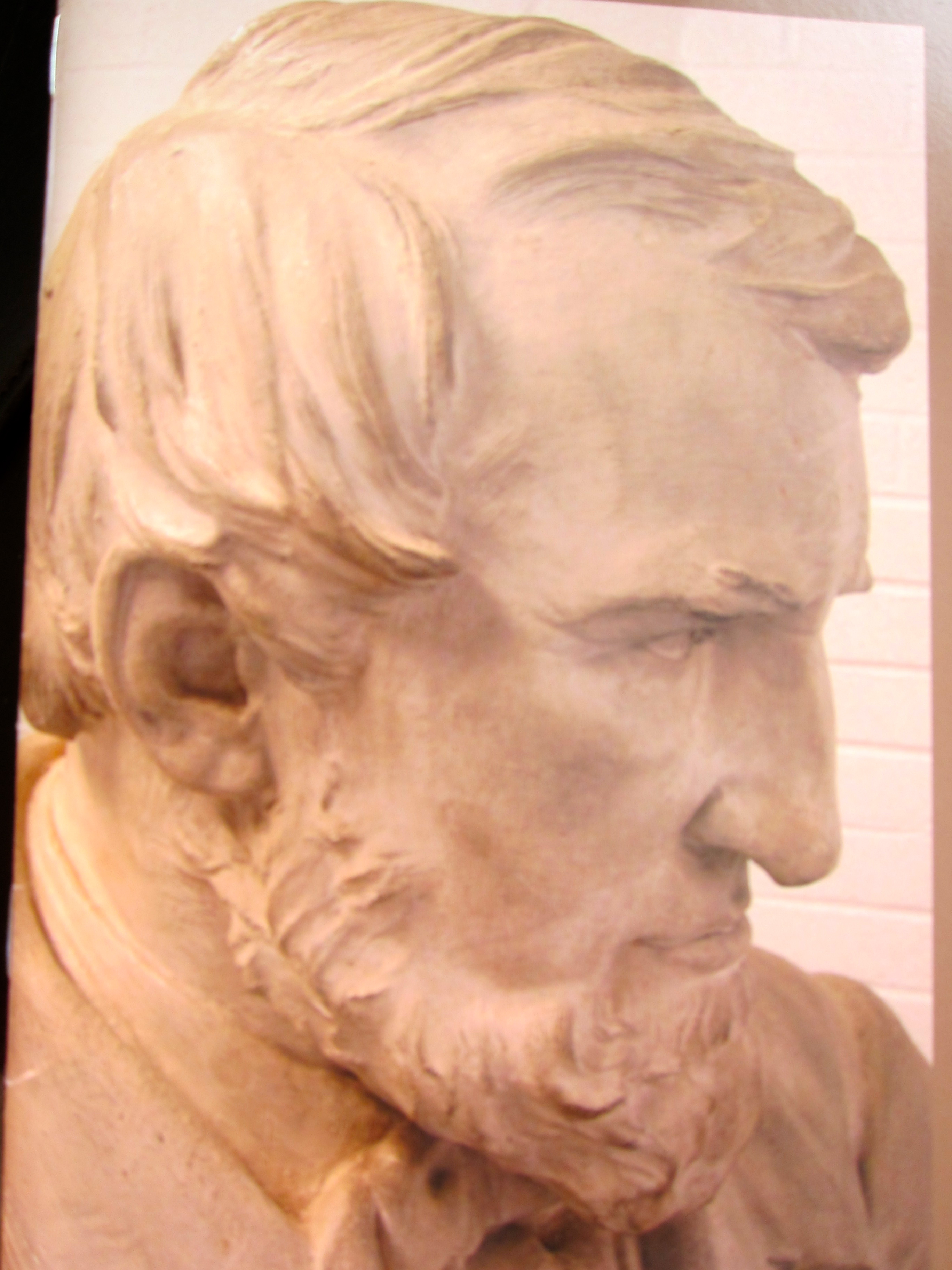
“Mr. Ames” is Oakes Ames, of course: Evelina’s husband.  “O A” is their eldest son, Oakes Angier Ames.  With one notable exception that occurs much later in her diary, Evelina always referred to her husband using his surname.  That a woman of her age and upbringing would be so formal in talking about her husband shouldn’t surprise us; in 1851, anyone with a similar education and background would have done the same.  The 19th century was a formal century.  Titles and surnames were used in conversation, in correspondence and even in a diary that, presumably, would be read only by its author.

“Ague” is an old term for fever, usually defined as “chills and fever.”  So how Oakes Ames had a fever in his face is hard to imagine.  Perhaps this was a country expression for having a cold or sinus pain in one’s head.  Certainly, it was the time of year for colds and illness.  The ague affliction stayed with Oakes for several days during a spell of weather that his father, Old Oliver, described as “verry cold.”  Something like January 3, 2014!

New Year’s Day, 1851

IMG_2728

January 1st 1851

Did not rise as early as I ought to commence a new year …

it being about 7 Oclock before we had our breakfast   All wide

awake to get the start of wishing Happy New Year.  Finished

our ironing, and swept the chambers   A A Gilmore & wife

called P M stoped about two hours.  Mrs Witherell finished 

the underclothes for Susans doll.  Elisa at Olivers [Jr] cutting

Helens dress  Commenced a letter to Pauline in answer to one

received last night  Pleasant but very cold.

Most of the people named in Evelina Ames’s first diary entry are family members.  A. A. Gilmore, for instance, is her 30-year old nephew Augustus.  Mrs. Witherell is her sister-in-law, Sarah, busy with doll clothes for Evelina’s youngest child, Susan.  Oliver, Jr. is Evelina’s brother-in-law; his daughter Helen is having a dress made.  They all live in the small, industrial village of North Easton, Massachusetts.  Most live within the Ames family’s substantial compound.

Evelina herself is 42 years old.  Raised on a farm several miles south of the center of town, she has been married to Oakes Ames, a shovel-maker, since 1827.  With three sons and one daughter, she and Oakes live in the family homestead that they share with Evelina’s father-in-law and his aforementioned, widowed daughter, Sarah Witherell, along with her two children.  The Ames men work at the shovel shop, the younger children go to school, and the women tend the home.  Everyone is occupied.

The diary that Evelina kept during 1851 and 1852 offers a modest but illuminating window on daily family life in New England in the ten years before the American Civil War, which they will call “The Great Rebellion.”  It was a decade that marked the end of much of what had come before.  Evelina’s remote, quotidian and predictable life was changing as the railroads moved in, travel became expedited, goods became more accessible and plentiful, and religious thinking was challenged.  As far as her personal circumstances are concerned, much more will change for the family in the years ahead than anyone could have imagined on that cold New Year’s day in 1851.  Of course, we know this now, looking back with perspective, but Evelina didn’t.  She only knew about each day as it happened – which is much of the charm of reading her record.

Hope you will enjoy following along.