February 15, 1851

Chemise

Chemise

Sat Feb 15  This morning mended a pair of pants for Frank

and some other things.  Finished two chemise for Susan

made her a skirt out of an old quilted one of mine.

It has been a very stormy day.  the public school

finished this afternoon.  Oakes A, Mr Pratt, Davidson,

Barrows, R. Willis, Lillie & one or two others visited the 

school.  There were no ladies on account of the rain

Mr Ames went to Boston.  Brought Miss Eaton some maple sugar

While her husband went into Boston today despite poor weather, Evelina stayed in, mended clothes and completed two chemises for Susan. The chemise, a forerunner of today’s slip, was a standard undergarment for women and girls in the 19th century, worn right under the dress (and under the corset, when corsets were worn.)  As Evelina suggests, some undergarments were quilted for warmth, an essential consideration in cold New England. On stormy days like this one, women needed all the padding they could accommodate under their wide skirts.

Oakes Angier Ames visited the local schoolhouse today with men from the school’s superintending committee: Amos Pratt, a teacher; Thomas Davidson, the town’s postmaster; Joseph Barrows, a “shovelmaster” with legal training who lived in a house built by Old Oliver; Rufus Willis, a shoe manufacturer; and Daniel Lillie, another employee of O. Ames & Sons.  Daniel and Oakes Angier were in their early twenties, while the other men were older.  Daniel would be close to the Ames family over the years, and ultimately serve as a pallbearer at Oakes Ames’s funeral in 1873.  Today, however, in the rain, without their wives, the men appeared at the public school on the last day of this session.  Why was Oakes Angier along?  He wasn’t a member of the committee, but perhaps he was developing an interest in local politics.

Oakes Ames, meanwhile, returned from Boston in the evening, bringing with him a gift of maple sugar – a sign of spring – for the failing Miss Eaton.   He may also have returned with news of a serious incident in the city.  Shadrach Minkins, a fugitive slave living and working in Boston, was arrested today by federal marshals at a coffeehouse on Cornhill Street. Minkins would be taken to court, only to be rescued by an anti-slavery group, the Boston Vigilance Committee, who hid him and helped him escape to Montreal.  The controversial new Fugitive Slave Law was being tested.  Had Oakes witnessed any of this?

January 30, 1851

Flames

Jan 30th  Thursday  Mended Mr Ames pants which

took me most of the forenoon, read some to Mother.

Spent this afternoon at Olivers with mother & Mr

Whitwell.  They sent the carriage for Mrs Whitwell

but it was so cold that she did not come.  Mr Ames

took tea with us & Mr Ames Oliver Jr C Lothrop & 

Helen played cards I commenced a stocking of the yarn

Mrs Foss gave me.  A bitter cold day & quite windy.

A great fire in Taunton

“A verry bad day to go out in,” noted Old Oliver in his journal today.  Eliza Whitwell refused to leave her home several miles away to join the Ames ladies in the afternoon, even though her husband was there.  The carriage – did it belong to Old Oliver, or Oliver Jr, or to the family in general?  Whoever owned it, its likely driver was Michael Burns, an employee of Old Oliver who looked after the horses and carriages.

While Michael drove to and from the parsonage in the howling cold, various family members gathered next door at Oliver and Sarah Lothrop Ames’s house for tea. Oakes and his son Oliver (or possibly his brother Oliver – unclear) played cards – probably whist – with Cyrus Lothrop and Helen Ames.  Cyrus was an unmarried brother of Sarah Lothrop Ames who lived with Sarah and Oliver, Jr. for many years. Helen was their only daughter; their son, Fred, was probably away at Phillips Exeter Academy on this occasion.  Evelina knitted and kept her mother company.

In nearby Taunton, Massachusetts, Evelina reported, the furious wind contributed to a “great fire.”  The histories of that period don’t mention this fire, so perhaps it was not as great as Evelina thought.  That, or it paled in comparison to the larger fires that Taunton suffered in 1838 and 1859.*  Fire, naturally, was the dread of every homeowner and municipality; towns and cities in the 19th century (and before) were pock-marked by periodic burnings, its citizens haunted by the loss of life and property that fires engendered. The fire on this day in Taunton would have been made especially difficult by the frigid air and icy wind.

*Information obtained from Old Colony Historical Society, Taunton, Massachusetts

January 26, 1851

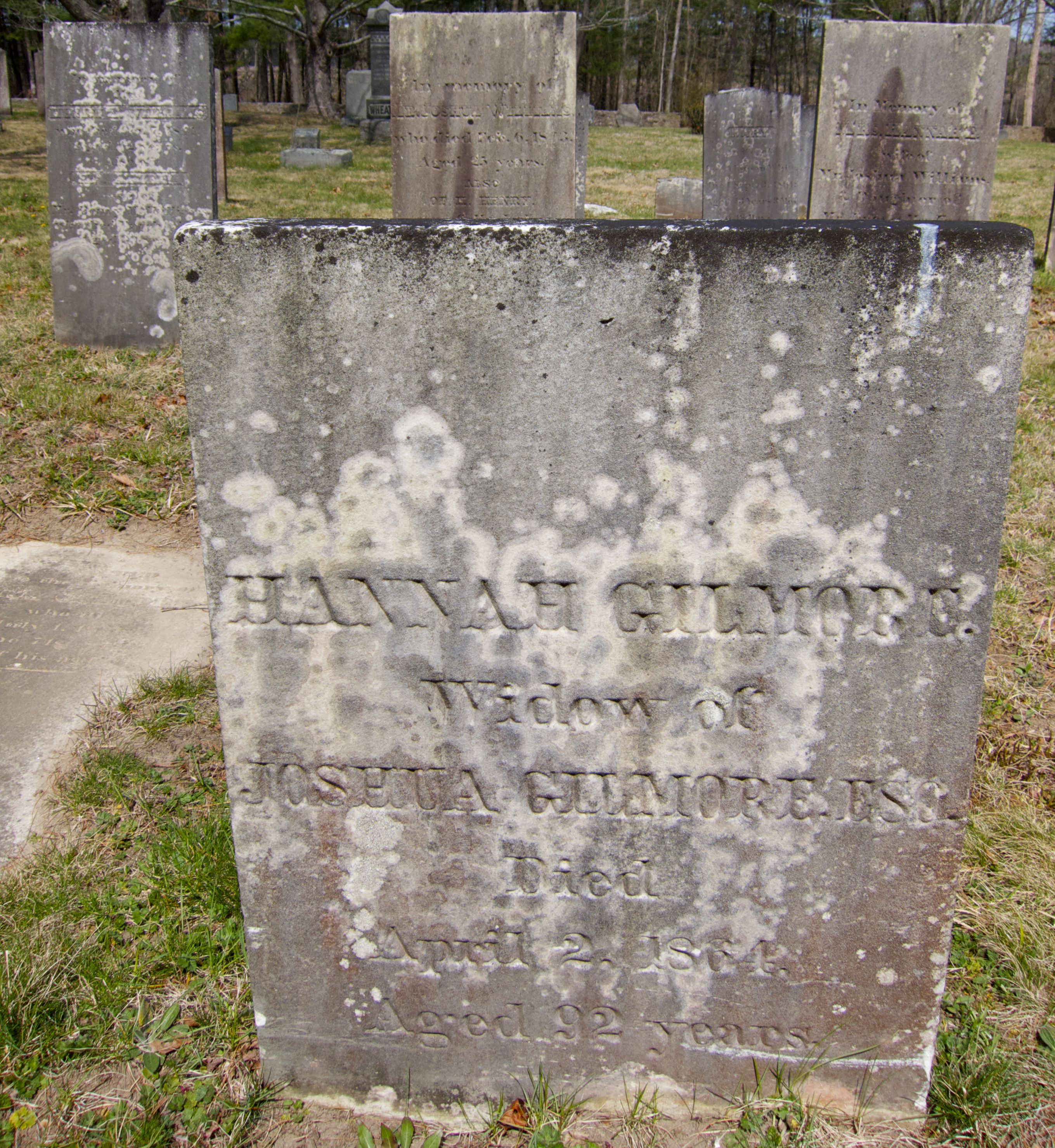
Gravestone of Hannah Gilmore

Gravestone of Hannah Gilmore

Jan 26  Sunday  Have been to meeting all day and heard two

excellent sermons from Mr Whitwell  Came home

between meetings.  Alson rode home with Mr Ames

Mother came with us from the afternoon meeting will

stop a few days.  Mr Whitwell walked up this morning

expecting to exchange with Mr Lovell but he (Mr Lovell)

was not prepared.  Mr W says a minister ought always to

be prepared.  Edwin called this evening.  It is a beautiful day.

A scheduling mix-up at church today caused consternation.  Most congregations had a practice of exchanging ministers.  On a regular basis, a minister from one church would swap one Sunday with a minister from another, allowing the congregations to listen to other voices and sermons.   On this Sunday, the scheduled switch between Reverend Whitwell of the Unitarian Church and Reverend Lovell of the soon-to-disband Protestant-Methodist assembly failed to take place.  Mr. Whitwell wasn’t pleased, but he seemed to recover just fine.  He delivered two more “excellent sermons.”

“Mother” was Hannah Lothrop Gilmore, or Mrs. Joshua Gilmore, as she would have been known, or perhaps  The Widow Gilmore, her husband having passed away in 1836.  One year shy of eighty, she was the mother of eight children, of whom only three were still alive.  Evelina was her only living daughter.

Mrs. Gilmore lived most of the time with her middle son, Alson, his wife, Henrietta, and their children at the family farm in the southeastern corner of Easton.  Just north of the town line with Raynham, the Gilmore property lay on what was known as the Turnpike Road.  In the distant past, Joshua Gilmore had maintained a tavern at that site, and had collected the fees from travelers on that road.  In 1851, the family still got income from the Turnpike, but the tavern was gone.  The land was all farm.

Occasionally, Mrs. Gilmore would visit with her daughter in North Easton.  Alson would carry her to church and after the service was over, Hannah would leave with Oakes and Evelina to stay at their home for the week.   While in North Easton, she’d be able to visit not only with her Ames grandchldren, but also with other grandchildren in the area, like Abby and Malvina Torrey.  And on this Sunday, her grandson Edwin Williams Gilmore, a grown son of Alson who no longer lived at the farm, paid a visit.  He would soon be building a home close to the Ameses.

January 25, 1851

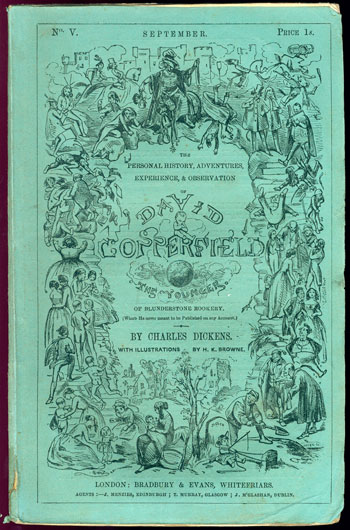
Charles Dickens, David Copperfield

1851

Jan 25 Saturday.  Have been sweeping and dusting the house and 

have done a little of everything and not much of anything.  Have got

the chambers in pretty good order for once in my life.  Have

mended Mr Ames coat & vest.  Took the time when he was 

from home because he has but one suit beside his go to meeting

poor man!  Called at Mr Torreys just at night.  This eve

have been mending & have had no time to read.  Commenced

reading David Copperfield.  Mr Ames at Boston.  Very warm & fine

Evelina could be critical of others, but she was most critical of herself.  Her self-deprecation often took a humorous tone, as in having done “a little of everything and not much of anything.”  She really tried to get things organized at home today, tackling perhaps one of her biggest challenges: keeping her husband Oakes in decent clothes.

Family lore would have it that Evelina was miserly, lore that is reinforced by Reverend William Chaffin.  Chaffin blamed Evelina for Oakes’ shabby “pantaloons,” believing that Evelina  “being economical kept them well mended instead of encouraging him to buy new ones.”  Yet Chaffin also acknowledged Oakes’s indifference to outfit, telling us that while on a trip into Boston with a friend, Reuben Meader, Oakes responded to Meader’s suggestion that he should wear better clothes by saying: “Oh, I can wear poor clothes if I want to, but some men can’t.”

Oakes spent money on gifts; he was well-known and well-liked for his charitable instincts.  However, unlike his brother, Oliver Jr., who shopped for bespoke outfits in Boston, Oakes didn’t spend a dime on his apparel; he simply didn’t care, so  Chaffin was unjustified to blame Oakes’s appearance on Evelina.  She tried to keep him mended, and we know that she was willing to spend money on clothes; certainly she kept the dressmakers in Easton occupied.  But she must have met resistance if and when she tried to improve her husband’s wardrobe.

Today’s hard work had a reward: opening the pages of David Copperfield, the newest book by Charles Dickens.

January 18, 1851

Lid

/51 Jan 18 Saturday  I was very lazy this morning as usual after

being in Boston.  We tried out the suet & salted the 

quarter of beef & boiled the tripe  Jane has been

busy all day but I have not done much.  Have mended

the stockings painted Susans wooden dolls head & arms

Mr Robinson has at last finished painting our chimney

pieces.  it is 5 weeks since he commenced them & I could

not nail down the carpet  Mr Ames has been to Boston.  Pleasant.

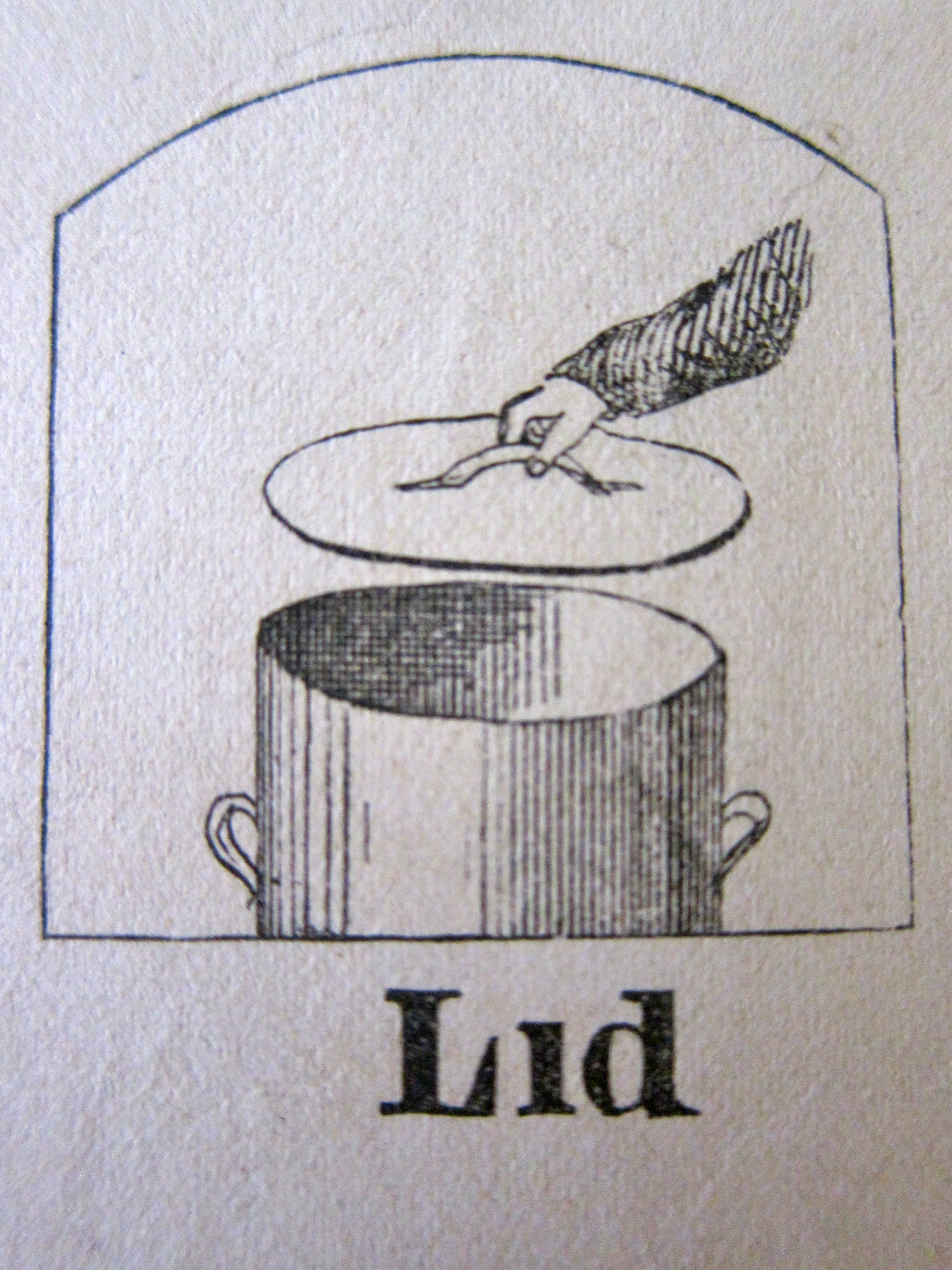
It was back to domestic life today after an enjoyable trip to the city.  No more dining on oysters. The kitchen was humming with more familiar fare as Jane McHanna processed a huge gift of meat that Old Oliver had sent a few days back.  She may have kept it cold in the snow or in an ice house until today when they had time and table top to deal with it.

“Ox beef is considered the best,” noted Sarah Josepha Hale in her 1841 guide, The Good Housekeeper.  Lucky for Evelina’s family that Old Oliver raised his own oxen. Jane salted it, salting or “corning” being a time-honored way to preserve it. Typically, the beef was placed in a container – likely a barrel – and covered with a brine solution.  One recipe for brine in an 1858 cookbook* called for four gallons of water, two pounds of brown sugar and six pounds of salt.  Beef stored this way could keep for months.

The suet, which, strictly defined, is the fat from around the kidneys, was “tried,” meaning that it was boiled and rendered into lard.  The tripe, from the stomach, was boiled as well.  The odor from both these boilings was strong and would have been noticed throughout the house.

By her own confession, Evelina didn’t get too involved with anything going on in the kitchen today, leaving it to Jane’s good offices. Instead, she puttered here and there, unpacking, doing a little mending, painting her daughter’s wooden doll and standing over Mr. Robinson’s shoulder as he finally completed painting the mantels.   We might describe her day as “re-entry.”  Oakes, meanwhile, was in Boston on shovel business.

* Mary Peabody Mann, Christianity in the Kitchen

January 16, 1851

Muff & Tippet B & W

1851

Jan 16 Thursday  Went to Boston with S Ames.  Oakes A carried 

us over to the stage.  We found it very bad walking 

could scarcely cross the street without going over

shoe in snow & water but otherwise a delightful day

We bought some druggett & Sarah a muff & tippet

for herself & cuff & tippet for Helen.  We got us some

oysters at Vintons.  Called at Mr Orrs about four thirty

that we should have time to reach the cars but we were left.

Boys went to an assembly at Canton

Alson & Augustus dined here.

O, joy, a trip to Boston, an event that Evelina typically finds “delightful” no matter what the weather.  After two days of sadness about the death of Lewis Carr, Evelina and Sarah Lothrop Ames headed into the city via stage coach on a shopping excursion.  The railroad, which they called “the cars,” did not yet reach North Easton, but did stop in Stoughton.  The women intended to return by train at nightfall, and be carried home from Stoughton by one son or other, but missed the train and had to stay overnight.  They may not have been disappointed to have to stay in town.

Sloppy weather didn’t prevent the successful acquisition of goods.  Evelina bought some drugget, or carpeting, while Sarah found accessories for herself and her daughter.  Muffs and tippets, naturally, were very much in fashion for winter wear.  Dining on oysters was another highlight, as was a visit to an old family connection, Mr. Orr.

The homefront in Easton was busy, too.  Evelina’s brother, Alson, and his oldest son, Augustus, took midday dinner with Oakes and his children.  Little Susie would have been the only girl at the table.  In the evening, Oakes Angier, Oliver (3) and Frank Morton headed to Canton to a dance.  Everyone’s spirits seemed brighter today.

Photo of muff and tippet, ca. 1840,  from Minnesota Historical Society

January 14, 1851

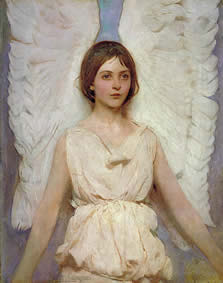
Abbott H. Thayer, Angel, 1887, oil Smithsonian American Art Museum Gift of John Gellatly

Abbott H. Thayer, Angel, 1887, oil
Smithsonian American Art Museum
Gift of John Gellatly

/51

Jan 14  Tuesday.  This morning after taking care of my room went

to the store and into Mr Carrs to offer my assistance there.

Lewis Carr died last night very suddenly bleeding at the 

lungs.  Has been in a decline since last July but was about

the house as usual yesterday and conversed with O A and 

his friends in the evening & told what he was going to do when

he got well.  about ten or eleven Oclock called to his mother

to come quick which was the last word & died almost instantly

This afternoon carried Mr & Mrs Whitwell to A A Gilmores.

The “white plague,” consumption, was a killer; today we know it as tuberculosis and, in parts of the world, it’s still killing.  In 19th century America, it was a leading cause of death, the scourge of young lives, particularly.  Its contagious properties were unknown, which helped it spread.  Although different treatments, such as prolonged rest in warm climates, were tried (when possible), no cure for the disease would be found until the middle of the 20th century.  Some people did recover from TB; most did not.

Lewis Carr, a friend of Oakes Angier Ames, was barely 20 years old. He was the son of Caleb and Chloe Carr of North Easton where the family had lived for generations.  His father, known as “Uncle Caleb” in his later years, was a life-long employee of the shovel works and close to the Ames family.  So close, in fact, that two decades later, Caleb would serve as a pall-bearer at Oakes Ames’s funeral.

It is typical that Evelina would help the Carr family at this time.  She and her sisters-in-law were often called upon to sew the shrouds that corpses were wrapped in, which is what she did on this day for the family.

January 13, 1851

Washing

/51 Jan 13  Washing day of course, and I have been

about house in the morning as usual.  A Augustus dined

with us, come up in the stage.  Made a hair cloth back to

another rocking chair  Went to Mr Whitwells with Mr

Ames this evening, met with Alson & wife.  It is a

beautiful moonshiny evening and we have had a

pleasant ride and have enjoyed myself very much.  Mr &

Mrs Whitwell I like very much  Father killed another

yoke of oxen to day and we have a quarter & the tripe.

Boiled that we had last week to day.

Monday is Wash Day.  This might be a Yankee commandment, were there a written code.  History has it that the first day the Pilgrims got off the Mayflower was a Monday, and the first thing the women did after all those weeks at sea was to wash their clothes.  The timing stuck, and remained a custom for centuries.  On Mondays at the Ames house, Jane McHanna washed the family clothes and linens while Evelina did almost everything else in terms of housework and cooking.  Evelina was not fond of putting her hands into soapy water.

The roads around town must have improved.  This evening, Evelina and Oakes finally got over to the Whitwells’ house, presumbly for a delayed acknowledgment of Mr. Ames and Mr. Whitwell’s shared birthday.  Evelina clearly enjoyed herself.  Another couple was there: Alson and Henrietta Gilmore. Alson is Evelina’s older brother.  He owns the old family farm in the southeast corner of Easton, just north of the town of Raynham.  He and his wife have six children together, as well as a son from Alson’s first marriage.  This is Alson “Augustus” Gilmore, who had midday dinner at the Ames house today.  Augustus lives in Boston as the year opens but will soon move back to North Easton.  He does courier work for the Ames brothers.

Evelina is close to her nieces and nephews; their presence in her life, and her affection for them, is evident throughout the diary.  Less certain is the regard that other members of the Ames family held for the Gilmores; family lore has it that the two families moved in different social circles and that even into the 20th century, the Gilmore clan was looked down on by members of the Ames clan. From Evelina’s happy description of the day, however, we can surmise that she was unaware, on this lovely, “moonshiny” night, anyway, of any discrimination.

January 12, 1851

Preach

/51 Jan 12 Sunday  Have been to church all day and heard two

excellent sermons from Mr Whitwell.  The afternoon text was

“Train up a child in the way he should go and when he is old

he will not depart from it”  Passed this evening at Mr Willard

Lothrop with Mr Ames & met with Minister Norris & Mr Torrey

This noon I stopped to hear Mr Whitwells class in the Sabbath

School afterwards went into Mr Daniel Reeds with Mother

Very warm + pleasant for the time of the year

The Ames family, Unitarians all, attended meeting today and stayed for both services, which encompassed a morning program, an intermission, and an afternoon program.  In their family pew, Evelina, Oakes, Oakes Angier, Oliver (3), Frank Morton and Susan sat with or near Old Oliver, Sarah Witherell and her children, George and Emily.  Also nearby, if not in the same pew, sat Oliver Jr, Sarah Lothrop Ames and their children, Fred and Helen, faces upturned to hear Reverend Whitwell deliver the day’s two sermons.  Eight-year old Susie may have squirmed in her seat; she wasn’t inclined to sit still for the second service.  And Oakes Ames was known to fall asleep, however inspiring Mr. Whitwell’s words were to Evelina.

In 1851, the Unitarians congregated at a church in Easton Centre, a few miles south of the village of North Easton (but still within the boundaries of the Town of Easton, Massachusetts.)  Like many families, the Ameses had to travel by carriage or sleigh to attend Sunday service.  The adults would have ridden, or “been carried,” as the expression went,  but the children may have had to walk the distance.  Children walking to church, regardless of distance, was common.  If this was true for the Ames family, we might imagine that cousins Oliver (3) and Fred walked together, as they were close friends.

At intermission, children went into Sunday School and the adults socialized.  Winthrop Ames, a grandson-to-be, described the scene in his family history (from 1937):

“They tethered their horses in a long, open shed and stayed through both morning and afternoon services, eating the luncheons they had brought and gossiping with the townsfolk during the intermission.”

On this winter Sunday Evelina and her mother, Hannah Lothrop Gilmore visited at the nearby home of Daniel and Mary Reed.  Socializing continued in the evening as Evelina and Oakes called on Willard Lothrop.

January 10, 1851

tcrr_ames

/51

Jan 10th Friday.  Have been baking most all day  Heat

the oven three times.  It rained very hard last night

and carried off most all the snow and it is very wet

and sloppy.  Margaret Keighan here to see Jane.

This is Mr Ames & Mr Whitwells birth day  both

of the same age 47 years.  Have been expecting Mr & Mrs

Whitwell here this afternoon and as they did not come

would have rode there this evening but Mr Ames is engaged

If Evelina and Oakes had been able to visit the Whitwells tonight, they would have had to take the carriage rather than the sleigh because of recent heavy rain.  According to Old Oliver, the sudden wet and warm weather has “took the snow of[f] so much that it spoilt the slaying.”  Evelina, meanwhile, was so tied to the brick oven all day, baking mince meat pies and such , that she had a right to be a little disappointed not to go out this evening.

The Ames family, Puritan stock that they are, don’t overly celebrate anyone’s birthday.  Yet Evelina notes the shared birthday of her husband and the minister.  Oakes Ames was born in North Easton on this day in 1804.  He was the first child of an eventual eight to be born to Oliver Ames and Susannah Angier Ames.  The others to follow would be Horatio, Oliver Jr., Angier (d. in infancy) William Leonard, Sarah, John and Harriett.

Besides Oakes, Oliver Jr. and Sarah are the only siblings who still live in North Easton in 1851.  Except for a stint away at school, Oliver Jr. never moved away.  He and his wife live next door.  Sarah, on the other hand, left for New York in 1836 when she married Nathaniel Witherell, Jr.  Now a widow, she returned to North Easton in the late 1840s and moved back into the old homestead to care for her father after the death of her mother in 1847.

The absentee siblings are away but never forgotten; among the brothers, especially, business deals are ongoing.  Horatio, the black sheep of the clan, lives in Connecticut and runs a forge.  William Leonard had been in New York City and Albany, working as a merchant who sold, among other items, Ames shovels.  When those enterprises failed, he switched to managing a blast furnace, in keeping with the family talent for manufacturing.  But this proved unprofitable, too. By 1851, William Leonard was making his way as a cattleman on the Minnesota frontier.  John, who had also moved to New York City, died in 1844 of a chronic lung ailment.  Harriett is married to a man from Bridgewater named Asa Mitchell, and at this time lives in western Pennsylvania.

As a boy, Oakes moved with his parents to Plymouth while his father worked at various manufacturing efforts, although shovel making predominated.  The family moved back to North Easton in 1813, after the conclusion of the War of 1812, whereupon Old Oliver threw himself into the manufacture of shovels. After that, the family stayed put.