1851
March 29 Sat Have a very bad cold and cough some
but it has not increased with my cold which is unusual
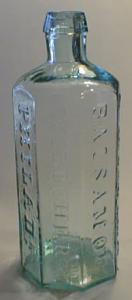
Have taken Wisters Balsam This afternoon mother
Orinthia & self called awhile in the other part of the
house Abby came here about four & stoped one
hour or two, but did not stay to tea I finished Mr
Ames bleached shirt and Orinthia finished a
coarse shirt for him Pleasant and fine traveling
Evelina caught a “very bad cold,” her second one since the start of the year. The first cold she treated by concocting a time-honored home remedy of which her Puritan ancestors would have approved. It included honey, a little horehound from her own garden, and more. The new cold, however, she dosed with a commercial product, Wistar’s Balsam. This bottle of patent medicine was something she purchased “over-the-counter,” as we would say today, with the expectation that a commercial product offered an improvement over what she might have made for herself. Such a transition from home-made to manufactured goods was very much part of the mid-19th century world in which she lived.
Dr. Wistar’s Balsam of Wild Cherry was the most popular of many patent medicines available in the marketplace for the self-treatment of various ailments. With its “heady melange of cherry bark, alcohol and opiates,” it claimed to have “‘effected some of the most astonishing cures ever recorded in the History of Medicine!'”* With no regulatory oversight or standards to adhere to, it and other nostrums could and did claim curative powers over everything from colds to consumption. A consumer like Evelina could be completely taken in.
How Wistar’s Balsam helped Evelina’s cold is uncertain, but she temporarily felt better for the drugs she imbibed. She was able to sit up with her mother, Orinthia and Sarah Witherell, visit with her niece Abby Torrey, and finish sewing a fine shirt for her husband.
*footnotessincethewilderness.wordpress.com/2010/07/13/henry-wister-and-the-nations-leading-patent-medicine-dr-wistars-balsam-of-wild-cherry
 evelinaames