April 10, 1851


photo

1851

April 10th Thursday  This day is Fast but no one would

think it by the way I have spent it.  I have

moved the bed from the dark bedroom and 

put it in Franks chamber and moved his

cot into Oakes & Olivers chamber for a few

weeks Oakes A Lavinia Orinthia & Susan went

over to the Methodist meeting house to a sing & called

on Ellen H took her with them.  Weather Pleasant

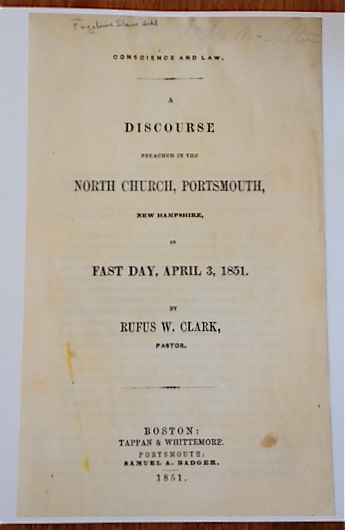
For nearly 275 years, Fast Day was a published holiday in Massachusetts and other New England states (like New Hampshire, above, which celebrated Fast Day on April 3.)   A religious practice brought over from England by the Puritans, the original Fast Days were pious rites of repentance and supplication marked by abstinence and day-long prayer in church, “a day set apart that all might join in the prayer to the Almighty for strength and wisdom”.*  Any calamity, misfortune, drought or disease, regardless of season, might prompt a church leader to call for fasting.

Dating from about 1622, the earliest Fast Days were under the purview of the local clergy, but the practice eventually became widespread enough to become the domain of the state governments.  And where once they were observed on an ad hoc basis as the need for divine intervention arose, Fast Days gradually became a single, annual holiday, usually observed in early April right before spring planting. Over the years, it became a more secular observance and by the latter part of the 19th century, “Not much fasting is done and less praying.”*  In 1894, the governor of Masschusetts abolished the practice of Fast Day and substituted a new holiday, “Patriots’ Day,” in honor of the 1775 Battles of Lexington and Concord and the anniversary of the first bloodshed of the Civil War at a skirmish in which four Massachusetts militiamen died.

Evelina’s entry in her diary proves that Fast Day was anything but a day of prayer and supplication at the Ames’s. Instead, this temperate day in early April marked the start of spring cleaning. Evelina and Jane and perhaps others began upstairs, moving furniture around in order to clean and refurbish two or three of the bedrooms. Much would be disrupted before they were through.

The temporary upshot was that Frank Morton Ames moved into the bedroom shared by his two older brothers. This rearrangement of their sleeping quarters brought the three brothers together in dormitory fashion, yet each maintained his own personal agenda. Tonight, Oakes Angier headed out to a sing at the Methodist meeting house right in the village, taking along a small coterie of females: Cousin Lavinia, sister Susie, the boarding teacher, Orinthia and their mutual friend, Ellen Howard.  Spring was in full swing.


*New York Times, April 20, 1896
 

March 23, 1851

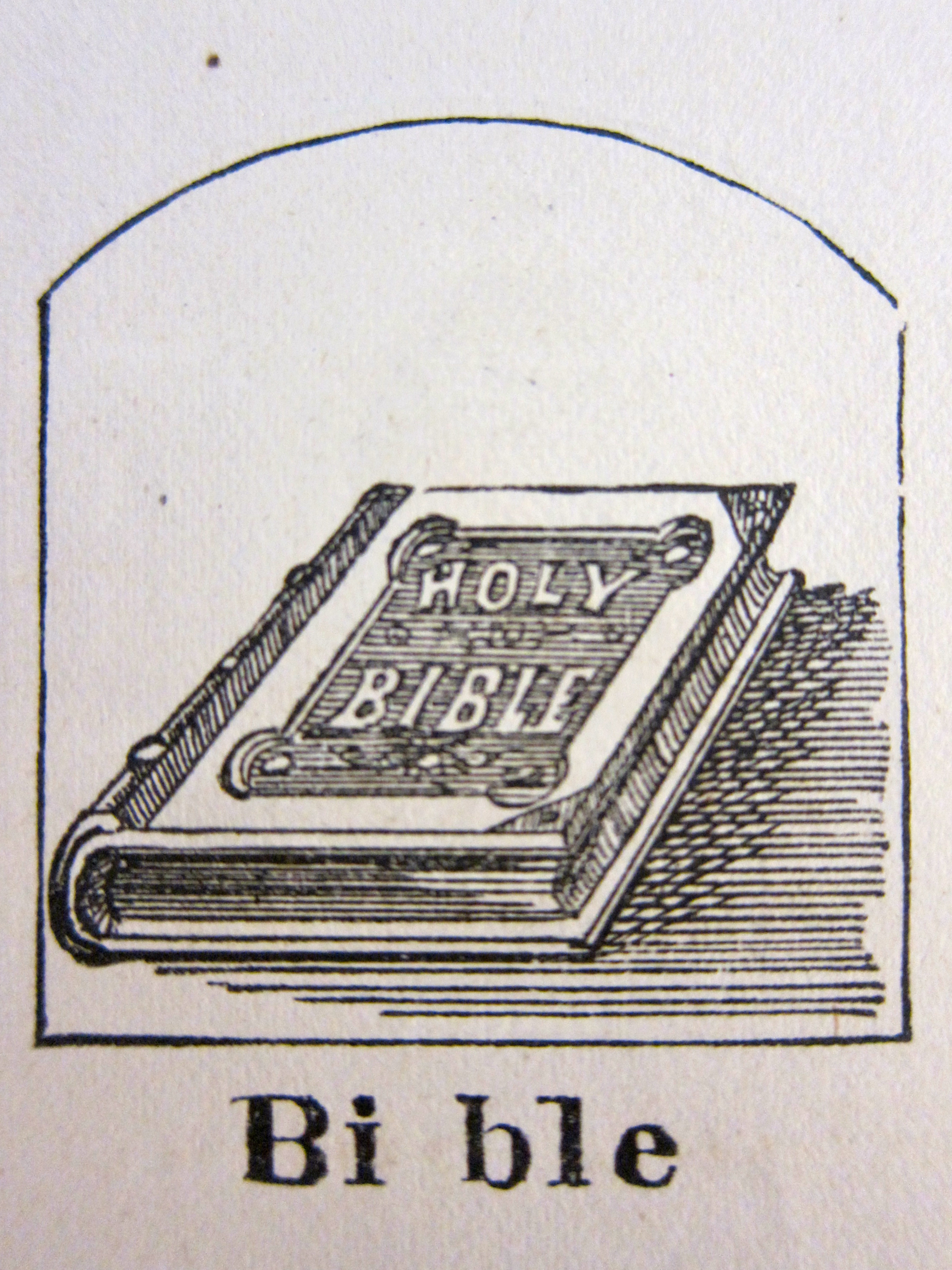
Bible

1851

March 23 Sunday.  Have been to church to day and 

stoped at noon to hear the bible class

with Alsons wife & others, got some subscriptions

for the blinds.  Mother came home with

us from church to make a visit.

Orinthia & myself read to Mother a story in 

The Boston Museum a long one but not worth

much Edwin called and Fred & Helen

A beautiful day it has been

Not only was Helen home from school for a visit, but her older brother Fred was back, too, from Philips Exeter Academy where he was preparing for college. How pleasant for Oliver Jr and Sarah Lothrop Ames to have their two children home, however briefly. Helen and Fred stopped in to say hello, as did another cousin on the Gilmore side, Edwin Williams Gilmore. Plus, Evelina’s aged mother, Hannah Gilmore, returned from church with the Oakes Ames family to “make a visit” of a few days. The old house was busy toward the end of the day, and tea this evening must have been especially sociable.

Earlier in the day, at the intermission between services, Evelina popped into a Sunday School class – perhaps for adults? She also did a little fund-raising for the church, or for a charity with which the church was affiliated.  She and others raised some “subscriptions for the blinds” (which does not mean they were ordering new window treatment!)  They were hoping to help the sightless.

Although Evelina was both devout and charitable, she was not sanctimonious. In her diary, she never mentions reading the Bible. She loved reading, and made note of various novels, stories and articles, such as today’s story that “was not worth Much.” But the Bible itself went unnamed.  If she did read chapter and verse from time to time, which seems likely, she simply never said so.  Perhaps reading from it may have been as automatic as looking something up in the dictionary might be for us.  She didn’t feel the need to remark on it.

March 9, 1851

Down_in_the_Cave_Church_Pews_Company_Town_Exhibition_Coal_Mine_Beckly_WV_8576_(7536218802)_(2)

/51

March 9  Sunday  Have attended meeting all day.  Mr

Whitwell gave us two excellent sermons particularly the

afternoon  William is here & went to meeting.  came

Friday morning  I spent the intermition with Mrs Elijah

Howard at the meeting house very pleasantly indeed.

After meeting looked over some of the old Saturday

Couriers  Edwin made a call is about sick with a cold

It is quite pleasant, but snow on the ground & bad

traveling

Evelina and Oakes saw Oakes’s younger brother William at church, probably for the first time since William had returned to town. The relationship between the two brothers was not cordial, but the families sat together in the same pew (or set of pews, given the size of the extended family) and could hardly have avoided one another.

As usual, Evelina enjoyed listening to Mr. Whitwell’s sermons.  She enjoyed the “intermition” between the morning and afternoon service at the church, too.  She spent it sitting with Nancy Howard, mother of Ellen Howard on whom Evelina had called earlier in the week.  The formality of the times shows in Evelina’s referring to Nancy not by her first, or Christian, name, but by her husband’s name. Even in her own journal, writing of friends, Evelina maintained the nomenclature of “Mr.” and “Mrs.”  Formality of address was second nature to her, as it was to most well-bred people of the day.  Even husbands and wives typically referred to one another as “Mr.” and “Mrs.” when speaking in the third person.

Oakes Ames must not have gone into Boston the day before or, if he did, he failed to return with the latest magazines.  For her reading that night, Evelina opted to look over old issues of  The Saturday Courier .  Where was this paper published?  Not in Easton, not in Boston.  Bridgewater? Canton? Stoughton? Taunton? Does any reader know about this newspaper?

It also may be that Oakes was away from Easton this week.  He often traveled to other nearby states for the shovel company, taking orders and collecting accounts, a task that his middle son, Oliver (3), would eventually take on.

*Photo from Down in the Caves Church Pew Company.

March 2, 1851

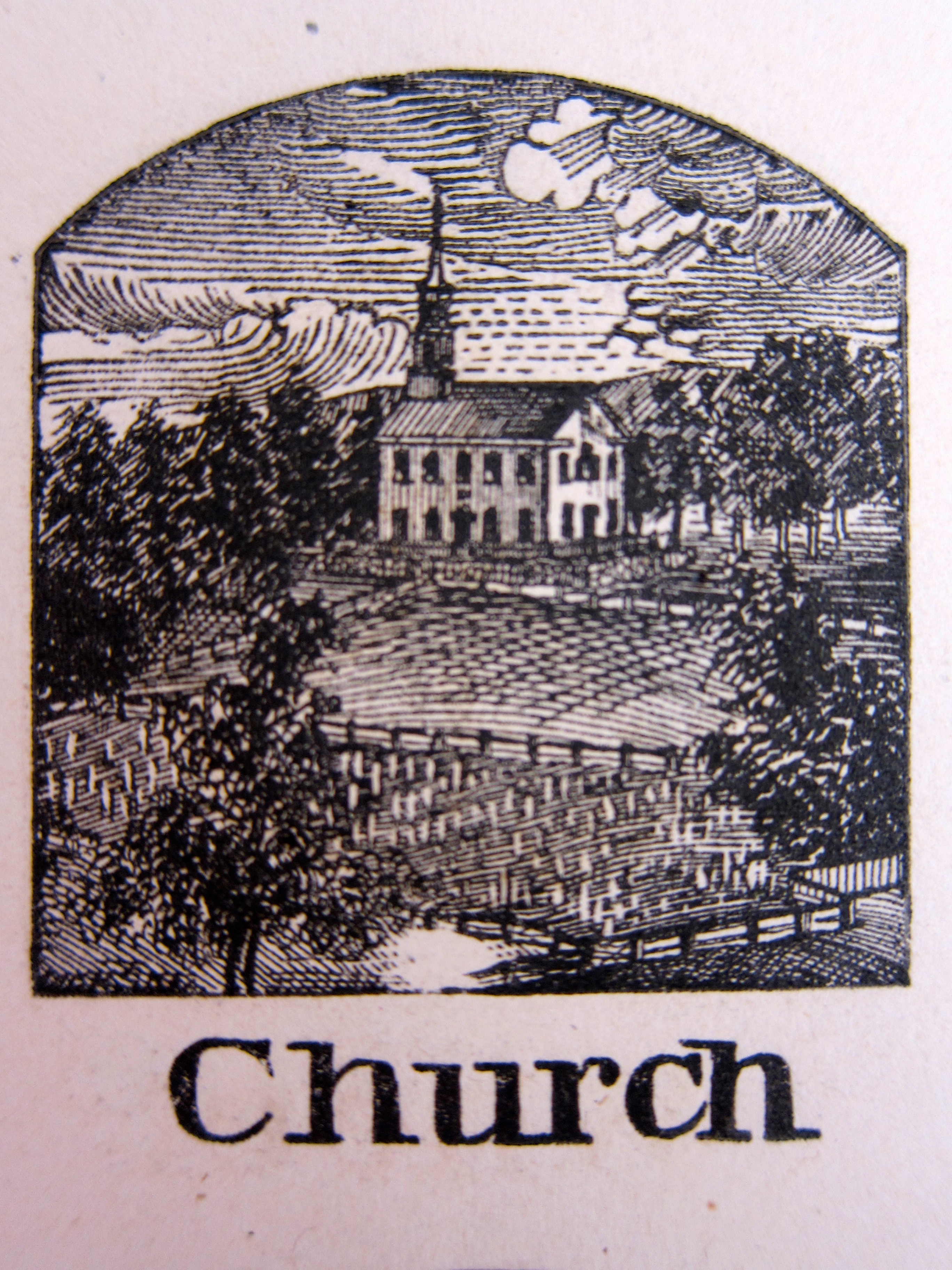
Church

March 2nd  Sunday.  Have been to meeting all day.  Mr Whitwell read

notes for Mr Guilds family  His text in the morning was

I would not live alway  It was an excellent sermon.

In the afternoon his sermon was for the male part

of the congregation.  The good man of the house.

An excellent sermon for my dirty boys if they

would only profit by it.  This evening commenced

reading Woman’s Friendship.  Rather pleasant but cold

Evelina went back to church today for the first time in three weeks.  She had been absent since February 10, the week that she hosted a Unitarian Sewing Circle meeting to which no one came.  To her diary she cited a bad cough as reason for her absence.   On this Sunday, she had finally recovered from that cold.  She had also, evidently, regained her dignity.  Back to church she went and sat right down in the family pew.

Her attention was focused on Reverend Whitwell and his thoughtful words.  She wouldn’t live “alway,” and in the meanwhile she had to work on her sons to become better people.  What did she think of her sons to describe them as “dirty boys?” What did Mr. Whitwell mean, “the good man of the house?”  Did her own good man of the house, Oakes, pay attention to this sermon?

Oakes Ames was actually known for sleeping in church, according to town historian, Reverend William Chaffin.  Chaffin charitably suggested that “Mr. Ames was so hardened with business affairs that he invariably went to sleep in church during the sermon.”  Chaffin also remembered that Oakes Ames stayed awake during his own maiden sermon in North Easton.  Used to seeing Oakes with his eyes closed, someone in the congregation that day chided him about it, to which Oakes replied with typical bonhomie, “Well, I knew Mr. Chaffin was here as a candidate for settlement, and I had to keep awake the first Sunday to see if his preaching was safe enough to sleep under.”


February 23, 1851

Map of Maine, 1850

Map of Maine, 1850

1851

Feb 23  Sunday  Have not been to church to day on account

of my cough, although it is a great deal better.

Orinthia staid at home too, having a bad cold and 

being a good deal fatigued.  We have had a nice 

quiet time talking over Maine affairs.  She spent

Thursday night at Mr Mowers.  Have written a long

letter to Louise J. Mower to day.  Mr Whitwell exchanged

with Mr Bradford of Bridgewater.  It is a lovely day.

This was the second Sunday in a row that Evelina missed going to meeting.   She stayed behind ostensibly to keep the new boarder company and to nurse the lingering cough that she admitted to herself was much better.  Was she still avoiding certain people at church, or had she gotten past the Sewing Circle incident?  Whatever her reasoning, she had a pleasant visit with young Orinthia Foss, the new schoolteacher.

Orinthia seems to have hailed from the state of Maine, where the Ames family had vital business connections.  The wooden handles of the Ames shovels came from Maine, where good wood like ash was still plentiful. Massachusetts, on the other hand, in 1850, was fairly well devoid of decent stands of hardwood after two centuries of settlement and development.  Wood from Maine was a critical resource for the Ames enterprise and over the years, one or other of the Ames men made a periodic trip north to examine the supply and cultivate the connections. Oliver Jr., for instance, made a trip to Wayne, Maine, near Augusta, in the mid-1860s.

On her journey to North Easton, Orinthia Foss spent a night with the Warren Mower family in Greene, Maine, a town near today’s Lewiston-Auburn area. Quite wooded, and close to the Androscoggin River as well.   Mrs. Warren Mower was the former Louisa Jane Gilmore born in Leeds, Maine, in 1820. Was she a relative, perhaps? Evelina’s eldest brother, John Gilmore, lived in Leeds, having moved there from Easton in the 1840s.  What was the connection? Whether or not they were related, Evelina and Louisa were clearly friends who corresponded regularly.

February 16, 1851

Hoarhound or horehound

Hoarhound or horehound

Sun Feb 16  Did not go to church to day on account of a bad

cough  Boiled Molasses, honey, & sugar and a little 

hoarhound for it.  Jane has been to meeting at the

boarding house.  Michael & sister called to see her.

Have been reading some in Margaret by Mr Judd

do not like it at all I believe I shall not finish it

but can spend my time for a better purpose

Mr Whitwell exchanged with Mr Lovell  Very pleasant

Evelina’s cold was long gone, but her cough lingered.  To make it better, she cooked up a nostrum that included hoarhound (or horehound), a medicinal herb cultivated for its efficacy as an expectorant.  She likely grew it in her kitchen garden, or knew where to find it wild.  Brewed with honey, sugar and molasses – the latter being recommended by many household guides as good for the throat –  Evelina’s dose of medicine was warm and comforting.

Her cough may have been real, but it probably wasn’t the only reason Evelina avoided going to meeting this morning.  At church, she would have had to face some of the women who had not attended her Sewing Circle meeting. Her feelings may still have been too hurt to do so and her cough made an excellent excuse for her absence.

Everyone else seemed to be practicing their faith today. The Ames family presumably all went to church and heard Reverend Stephen Lovell stand in for Reverend Whitwell; the two men had finally swapped meetings as originally planned a few weeks ago.  Jane McHanna, the Ames servant originally from Ireland, attended a Catholic service held in the dining room of the Ames boarding house, and apparently came home with fellow-countrymen Michael Burns, the Ames coachman, and his sister.

Today’s new book, Margaret by Reverend Sylvester Judd, did not pass muster.  Evelina started the novel, a story about a young woman raised in the wilds of Maine, and emphatically did “not like it at all.”   Reverend Judd, a Unitarian minister, was a peripheral member of the Transcendental circle; his book is considered one of a very few works of Transcendental fiction.  Margaret Fuller, author of Woman in the Nineteenth Century,  described it as a “work of great power and richness” but critics and other readers such as Evelina found the book incomprehensible.

February 9, 1851

Elizabeth Missing Sewell Gertrude 1866 ( American edition)

Elizabeth Missing Sewell
Gertrude
1866 ( American edition)

Feb 9th Sunday  I have such a cold today that I thought it best

not to go to church or to the funeral of Uncle Seth Hall.  who

died last Wednesday & is to be buried to day at 1 Oclock.

Commenced reading Gertrude by Rev W Sewell.  Edwin called

this Evening and staid an hour or more  Think it rather tiresome to read all day

although I like to do it, but seldom have the privilege.

Had Oysters to night for a rarity  Quite pleasant

Evelina described this day as pleasant, yet in his own journal Old Oliver mentioned “trees loaded with ice”.  Small wonder that Evelina opted to stay home from church to nurse a stubborn cold.  She used the quiet time to start a new novel, Gertrude, by Reverend William Sewell.

Gertrude was actually written by Rev. Sewell’s sister, Elizabeth Missing Sewell, an English author known as much for her religious tracts as for her fiction. She wrote it early in her career and, for publication purposes, gave credit for it to her Anglican brother. Neither she nor her brother were fans of Roman Catholicism, and her books usually featured the Church of England in some way. In this tale of a young woman named Gertrude Courtenay, Sewell examined a lively topic of the day: the claim of duty.  Was devotion to church more important than devotion to the home?  Spoiler alert: Sewell believed in both, but posited that duty begins at home.

The opening page of Gertrude featured a quote from Wordsworth’s poem, Excursion:

Turn to private life

and social neighborhood; look we to ourselves.

A light of duty shines on every day

For all.

This quote is an apt description of Evelina, for whom duty was an essential motivation in life.  She tried to do what was expected of her; she didn’t always succeed, but she did try. Even today, when she didn’t feel well, it must have been a struggle for her to miss both church and the funeral of a Gilmore cousin, to the point where the opportunity to indulge in reading all day eventually paled.  She needed the rest, though, and the oysters at tea in the evening were a treat, as was a visit from a nephew with whom she was particularly close: Edwin Williams Gilmore.

February 2, 1851

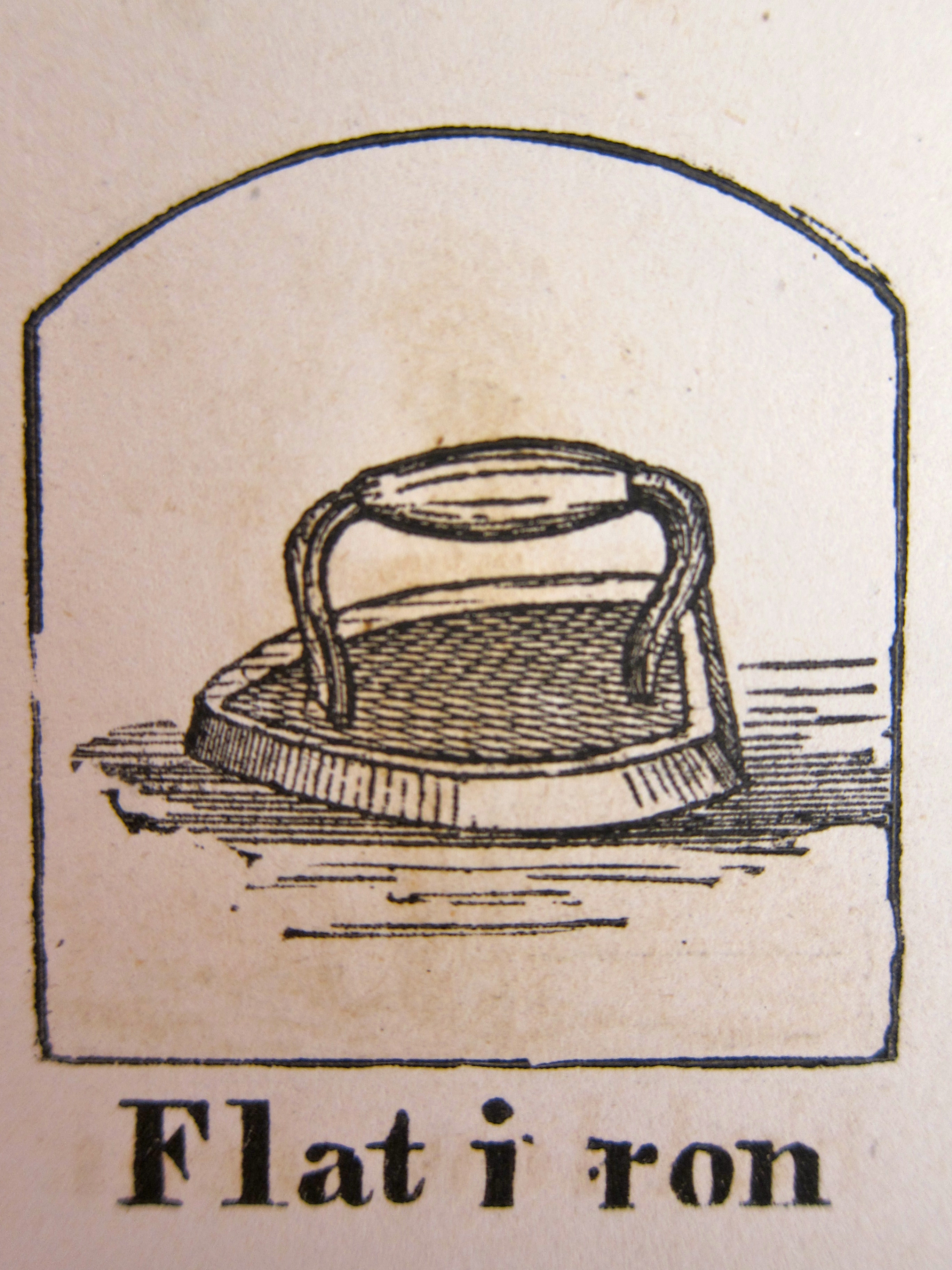
Flatiron

Sunday Feb 2d  It snowed very hard this morning but we

all went to meeting to hear Mr Brigham of Taunton

He gave us two very good sermons  he is very quick in his motions

& very independent in his manner  Mother went to meeting & home.

Since meeting have been reading in David Copperfield

Sarah A & Helen came in and stoped an hour or two.

This evening have hurt my foot quite badly by letting a

flatiron fall on it  It has cleared of[f] quite pleasant.

Snowy weather didn’t prevent attendance at meeting, and the Ames family stayed for both morning and afternoon service.  A visiting minister, Reverend C. H. Brigham, replaced Reverend Whitwell in the pulpit.  Mr. Whitwell, meanwhile, presumably officiated in Taunton.  This kind of swap was accomplished every month or so when ministers in the area switched places.  A Congregational practice that had been in place for years, the swap gave ministers the test of different congregations while, with fresh voice, it reiterated church dogma among a broad population.  Both congregations and ministers benefited however “quick in his motions” a visiting parson might be.

After church, Evelina’s brother Alson Gilmore carried their mother, Hannah, back to the farm in southeastern Easton.  Evelina had a little more time to herself, which she spent with Charles Dickens, at least until her sister-in-law Sarah Ames and daughter Helen stopped by.  Evelina has been reading David Copperfield – an 800 page book – for a week now.  But somehow in the course of the afternoon or evening – perhaps getting prepared for laundry day tomorrow? – Evelina dropped a flatiron on her foot.  Ow.  That took her out of commission for the rest of the day, perhaps allowing even more reading.

January 12, 1851

Preach

/51 Jan 12 Sunday  Have been to church all day and heard two

excellent sermons from Mr Whitwell.  The afternoon text was

“Train up a child in the way he should go and when he is old

he will not depart from it”  Passed this evening at Mr Willard

Lothrop with Mr Ames & met with Minister Norris & Mr Torrey

This noon I stopped to hear Mr Whitwells class in the Sabbath

School afterwards went into Mr Daniel Reeds with Mother

Very warm + pleasant for the time of the year

The Ames family, Unitarians all, attended meeting today and stayed for both services, which encompassed a morning program, an intermission, and an afternoon program.  In their family pew, Evelina, Oakes, Oakes Angier, Oliver (3), Frank Morton and Susan sat with or near Old Oliver, Sarah Witherell and her children, George and Emily.  Also nearby, if not in the same pew, sat Oliver Jr, Sarah Lothrop Ames and their children, Fred and Helen, faces upturned to hear Reverend Whitwell deliver the day’s two sermons.  Eight-year old Susie may have squirmed in her seat; she wasn’t inclined to sit still for the second service.  And Oakes Ames was known to fall asleep, however inspiring Mr. Whitwell’s words were to Evelina.

In 1851, the Unitarians congregated at a church in Easton Centre, a few miles south of the village of North Easton (but still within the boundaries of the Town of Easton, Massachusetts.)  Like many families, the Ameses had to travel by carriage or sleigh to attend Sunday service.  The adults would have ridden, or “been carried,” as the expression went,  but the children may have had to walk the distance.  Children walking to church, regardless of distance, was common.  If this was true for the Ames family, we might imagine that cousins Oliver (3) and Fred walked together, as they were close friends.

At intermission, children went into Sunday School and the adults socialized.  Winthrop Ames, a grandson-to-be, described the scene in his family history (from 1937):

“They tethered their horses in a long, open shed and stayed through both morning and afternoon services, eating the luncheons they had brought and gossiping with the townsfolk during the intermission.”

On this winter Sunday Evelina and her mother, Hannah Lothrop Gilmore visited at the nearby home of Daniel and Mary Reed.  Socializing continued in the evening as Evelina and Oakes called on Willard Lothrop.