September 20, 1852

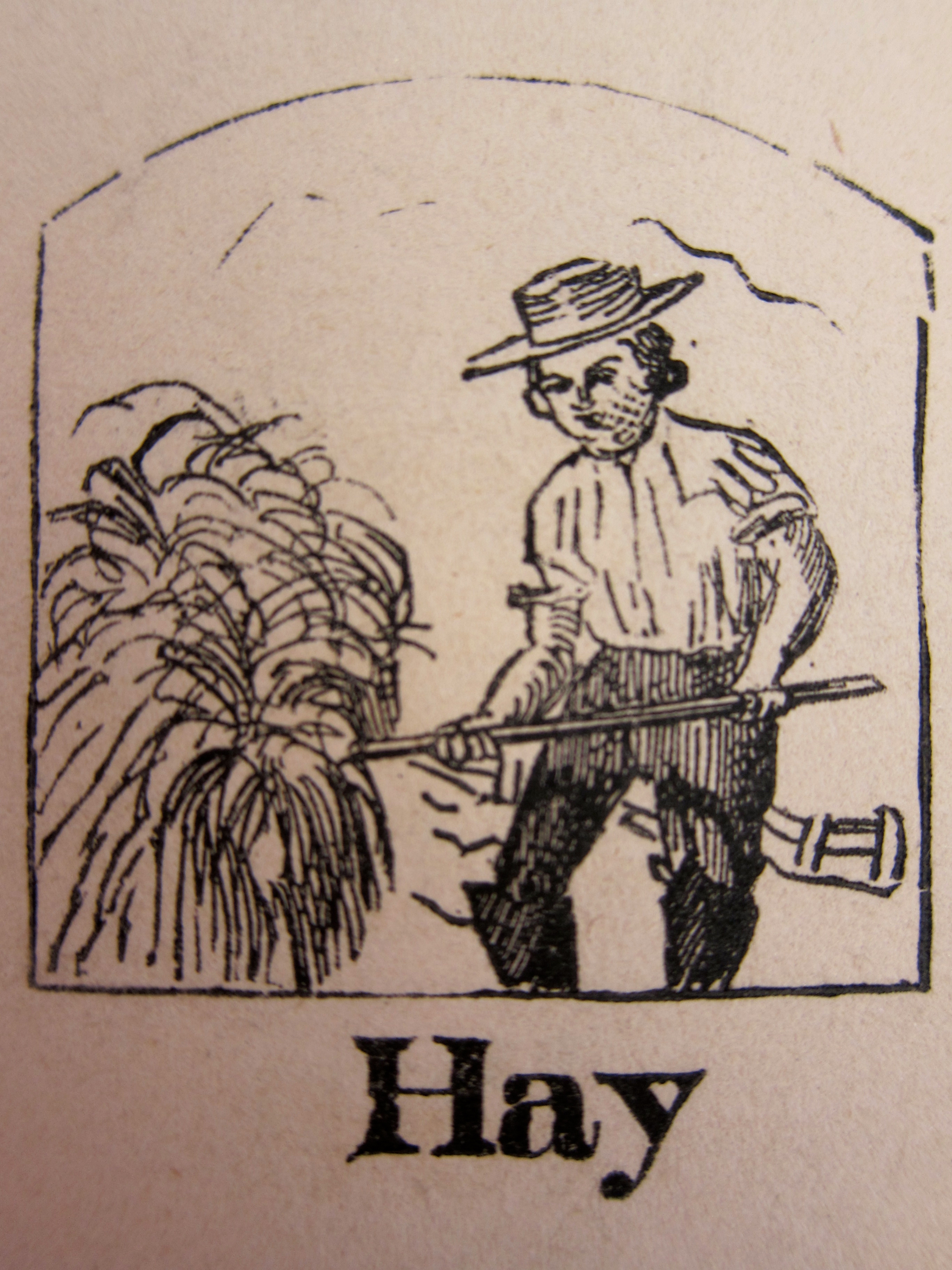
Hay


Monday Sept 20th  Staid at Edwins last night

and slept with Emeline as I did not like

to leave them alone  Augusta rested very

well and is much better to day.  Hannah

left this morning & Louisa McAvoy came

and she & Catherine have washed  I have

worked hard all day  Augustus’ wife called

here this afternoon


Worried about her neighbor, Evelina spent the night at the Edwin Gilmore house in case Augusta took a turn for the worse. Also staying there was fourteen-year old Emeline Pool, Augusta’s youngest sibling, who may have been sent up by the Pool family to sit with her ailing sister. Everyone was unnerved by Augusta’s continued illness, but in the morning Evelina was able to report that Augusta had improved.

At the Ames house, of course, and, indeed, all over town, it was washday. Servant Hannah Murphy departed, as anticipated, but the new servant, Louisa McAvoy and the remaining servant, Catharine Middleton, were on task. The washtubs were out. Evelina did her usual Monday choring and tidying, and the house stirred with activity.

Also on task were men who worked for Evelina’s father-in-law, Old Oliver Ames. They were mowing. Old Oliver reported that “this [was] a fair day part of time + cloudy a part wind southerly + midling warm  began to mow second crop to day.”*  The hay that had been sown in early August was being cut, each worker mindful of the importance of the crop. “[T]he most important matter connected with American agriculture,” declared one farming expert a decade later, “the hay crop is of more value than the cotton, the corn, or the wheat crop, or any single article of farm produce upon which the lives of three fourths of all the horses, cattle, and sheep depend from November to April.[…] Farmer! Have you thought how much depends upon the four weeks of haying time?”** Old Oliver could have answered that question with alacrity.

*Oliver Ames, Journal, Stonehill College Archives, Arnold Tofias Collection

** Solon Robinson, Facts for Farmers, January 1865, pp. 772-773
September 19, 1852

Abbott H. Thayer, Angel, 1887, oil Smithsonian American Art Museum Gift of John Gellatly

Abbott H. Thayer, Angel, 1887, oil
Smithsonian American Art Museum
Gift of John Gellatly


Sunday 19th Sept  Have been to meeting as usual, rode

home at noon alone with Alson  Rode in

our new carriage for the first time & like it

very well  Mr Dawes & Miss M J Alger called

since meeting  Augusta is more unwell again

and is in great pain and sick to her stomach

Edwin came in after me and I have been there

since Mr Dawes went away

The new carriage took various Ameses to church this morning, and the ride went “very well.” Was it Oakes’s horse Kate who pulled the reins? Evelina herself came home at noon with her brother; perhaps they had something about their mother to attend to. Perhaps Evelina was preparing for company later in the day, or was tending to serious matters in the village.

Hannah Savage, a neighbor, died today after months of illness. Surely, those who knew her were grateful that she was finally out of her misery. Her slow decline from tuberculosis had taxed not only her body and soul, but the goodwill and resources of her family and friends. Consumption was truly a wasting disease.

There was more illness nearby. Augusta Pool Gilmore still hadn’t gotten the best of a gastrointestinal disorder that had kept her in bed for almost three weeks, and today she had a serious relapse. She was in her second trimester of pregnancy, too, which had to have everyone worried. As soon as Evelina said goodbye to her guests, she hurried over to tend to poor Augusta.

September 15, 1852

Cake

Wednesday Sept 15th  Mr & Mrs Oliver Ames Helen & Miss Hobart

here to tea  Made cake & baked it in the stove

Mr Torrey made a long call here just after

dinner  He is quite neighbourly about this

time  Mrs Stevens need not take the credit of it

Augusta is not quite as well  sent for me to

come there & has had the Dr again

Oliver went to Providence this morning to the fair


Evelina baked a cake in her new cast-iron stove, something she was proud to note.  That was a real change for her, as before this she had used the family’s old, built-in brick oven for her baking. New technology in the kitchen was changing her ways.

The cake must have been a success; she served it at tea. Her husband and sons, minus Oliver (3), were present. Sarah Lothrop Ames and Oliver Ames Jr. came over from next door, too, bringing their daughter Helen Angier Ames and her friend, Catherine Hobart, with them. This was the last night of Catherine’s visit and it was sweet that her host and hostess took her next door for tea. Was there a conscious design behind the invitation and acceptance? Had the elders noticed a spark between Catherine and Oakes Angier Ames? Had Evelina contrived to make this happen? Were the young folks self-conscious on the occasion? Or was it just an average family gathering that inadvertently portended something more?

Catherine wasn’t the only guest. Mrs. Stevens was still visiting the Ameses and, inadvertently or otherwise, had made Evelina a little jealous. Col. Torrey, Evelina’s former brother-in-law – now a widower – had been calling more often than usual, and Mrs. Stevens had evidently volunteered the possibility that his attention was directed at her. Evelina, however, as we read from her rather ungracious entry, is reluctant to let her guest get any “credit.” Generous as she could sometimes be, Evelina was not inclined to share her friendship.

Across the street, meanwhile, young Augusta Pool Gilmore had had a relapse of her intestinal disorder, known in that day as “Cholera Morbus.” Certainly, her family and friends were worried about her.


September 9, 1852

Sarah Ames Witherell

Sarah Ames Witherell  (Mrs. Nathaniel Witherell, Jr.)

(1814 – 1886)

Thursday Sept 9th  This has been a very warm day indeed

and not much air stirring  We went in to see

Augusta awhile this forenoon and found her

rather more comfortable  This afternoon have

been sitting in the parlour chamber sewing it

being the coolest place  Mrs Witherell & Mrs

S Ames came in awhile  Mrs W watched with Mrs

Savage last night

Evelina and her father-in-law agreed that this day and the one before “were fair days + […] verry warm indeed.” Oppressively hot for September, we might think.  Evelina, her mother Hannah Lothrop Gilmore and her friend Mrs. Stevens went across the street early in the day to check on the ailing Augusta Pool Gilmore and must have been pleased to find her “rather more comfortable.” Back to the house it was, where the three ladies moved into the parlor to sew. Usually they would work in the less formal sitting room, but the parlor perhaps offered less direct sunlight. It was “the coolest place.”

Evelina’s sisters-in-law, Sarah Lothrop Ames and Sarah Ames Witherell, paid a call. It was Sarah Witherell’s 38th birthday. A widow for only four years, her most recent year hadn’t been a happy one: she had burned her foot badly, had all her teeth pulled, lost her elderly father-in-law and, most awful of all, lost her fourteen year old son, George, to rheumatic fever. Yet she was moving through the proscribed stages of real mourning in a seemingly graceful way. She was still taking care of her father, Old Oliver, and her one remaining child, Emily, and was ever helpful around the family compound. As we see from the diary entry, Sarah had spent the previous night watching over the dying Hannah Savage. “Dignified,” is how one family friend described her, and we readers might add “dutiful” and “kind” as well.

In another decade, after her father had passed on, Sarah and her daughter Emily would move into Boston and take up residence there at the Hotel Hamilton. Sarah would continue in a quiet way to participate in both family and city life, and would enjoy traveling with her sister Harriet. Her brother Oliver Jr would make it a point to look after her.

September 7, 1852

Cucumber

Tuesday Sept 7th

1852  I have not sewed much again to day

I was at work on pickles  swept the parlour

washed the windows &c &c and did not sit down

to work untill after dinner.  This afternoon 

Mrs Seba Howard  Miss M J Alger called

& Abby passed the afternoon.  We called 

to see Augusta.  Julia Pool is there taking

care of her she is not able to sit up much


“Pickles are very indigestible things, and ought rarely to be eaten,”* declared Sarah Josepha Hale, editor** of Godey’s Lady’s Book, and author of many poems, novels, cookbooks, and household guides. Respectful as Mrs. Hale invariably was of women’s domestic virtues and products, she clearly had no love for pickles, a kitchen staple. Their only value “in cookery,” according to her, was the flavor they added to vinegar.

Evelina and most other housewives and cookbook writers disagreed with Mrs. Hale. Pickles were standard fare, and this time of year many a housewife in many a kitchen was busy turning a cucumber harvest into pickles for the winter ahead. Lydia Maria Child, another popular 19th century writer, offered a detailed recipe in The American Frugal Housewife:

Cucumbers should be in weak brine three or four days after they are picked; then they should be put in a tin or wooden pail of clean water, and kept slightly warm in the kitchen corner for two or three days.  Then take as much vinegar as you think your pickle jar will hold’; scald it with pepper, allspice, mustard-seed, flag-root, horseradish, &c., if you happen to have them; half of them will spice the pickles very well.  Throw in a bit of alum [ammonium aluminum sulfate] as big as a walnut; this serves to make pickles hard. Skim the vinegar clean, and pour it scalding hot upon the cucumbers. ***

The last step in the process was to store the pickles in glass jars. as opposed to ceramic containers. Most 19th century pantries and cellars held tall, slightly blue or green glass pickle jars on their shelves. So it was at the Ames’s.

After the morning’s work and midday dinner, Evelina welcomed Eleutheria Howard, Miss Alger and niece Abby Torrey into the parlor. How strong the smell of pickles in the house must have been! The ladies then left to call on poor Augusta Pool Gilmore, who was still ailing from an intestinal disorder. Her sister Julia was staying with her.


*Sarah Josepha Hale, The Good Househkeeper, 1841, p. 71

**Mrs. Hale actually preferred the term “editoress.”

***Lydia Maria Child, The American Frugal Housewife,” pp. 61-62

September 5, 1852

books

Illustration from Godey’s Lady’s Book*

Sunday Sept 5th  1852 Went to meeting and came home

at noon with Mr Ames & Mrs Stevens.

Was very sleepy this forenoon and did

not hear much of the sermon but thought

it good what I did hear. Had an excellent

sermon this afternoon  Mr Whitwell preached

After meeting Mr Ames & Mrs Stevens & self

walked to the new shops called at Edwins.

Finished a letter to Harriet Ames

Reverend William Whitwell delivered two good sermons today, even if Evelina slept through parts of the first one. Were she and Oakes both nodding off in the Ames pew? Hopefully their sons, Oliver (3) and Frank Morton, and their guest, Mrs. Stevens, stayed upright as Mr. Whitwell spoke.

A walk “to the new shops” was the exercise they took after church. Construction work on the factory building must have been well along, if not finished on the exterior. Stopping in to see Edwin and Augusta Gilmore afterwards would have been easy, as the young couple lived right across the street from the new Long Shop and its grounds .

Letter writing, and probably a little reading, filled the remaining quiet hours of Evelina’s Sunday, As a subscriber, she would have had this month’s Godey’s Lady’s Book to look at. The September issue included fiction in the form of stories and poems, as well as prose articles on the Crusades, the printing of calico, a history of boots and shoes, archery, the employment of women in cities (in this issue focusing on the Philadelphia School of Design), and “Lingerie: Caps for the Chamber and Sick-Room.” * Evelina had been in various sick rooms enough lately to make this article of particular interest to her – although we cannot know whether she read it or not, or whether any of the women she helped nurse had adorned themselves with such headgear. We can know, however, that this particular article took credit for introducing the word “lingerie” to America, whose readers who were “doubtless […] unfamiliar” with it.

*Godey’s Lady’s Book, September, 1852, p. 287

September 3, 1852

stock-illustration-20625662-woman-on-death-bed-friend-at-bedside-1862-magazine


Friday Sept 3d  Watched with Mrs Savage last night

She is very low but had a pretty comfortable

night I came home about 5 Oclock and

went to bed got up at nine  Went over to

Edwins to see how she was found her some

better  Have sewed on Shirts  Have

got six cut out and some partly made


Evelina was the nurse of the day, tending to two sick women in the neighborhood. She spent the night at the Savage’s home to watch over the ailing Hannah Savage. Hannah had been dying of tuberculosis for months and, in this final stage, many women in the neighborhood were taking turns keeping vigil at night. It wouldn’t be long now.

Getting home at dawn, Evelina was able to sleep in only until about nine, whereupon she rose and bustled right into her day.  She walked across the street to check on her young neighbor, Augusta Gilmore, who had been taken ill with cholera morbus the day before. Augusta was “some better,” which good news enabled Evelina to go home and attend to her sewing. In production was a big batch of shirts for husband Oakes and sons Oliver (3), Frank Morton and, probably, Oakes Angier, despite his absence.  Her preference seemed to be to sew many at once, rather than singly. Helping her, too, must have been at least one of the Irish maids who worked for her.

September 2, 1852

Bowl

1852

Thursday Sept 2d  I was intending to sit down early

this morning to sew but while we were at

breakfast Edwin came in & said his wife was

sick and wanted me to go in there  I found

her sick with the Cholera Morbus.  Came

home & made her some gruel washed her 

dishes & came home and made some pies

& sent Susan in there to stay with her

Just at night called at Augustus

Fred has gone back to Cambridge  Emily went to Boston

Despite its frightening name, Cholera morbus was not the cholera we might recognize as the dreaded disease of epidemic capability, the bacterial scourge that swept through whole cities, but rather a Victorian name for a gastrointestinal disorder that was “characterized by nausea, vomiting, abdominal cramps, [and] elevated temperature.”* It may also have been used to describe appendicitis. Poor Augusta Gilmore had been felled by this miserable sickness, which was alarming enough to send her husband Edwin to the neighbors for help. Augusta must have been a little frightened that her sickness might be related to her pregnancy; she was almost four months along at this date.

Thank goodness for Evelina, ever dependable in a crisis of this nature. Evelina visited Augusta right away, tidied up for her, made her a bowl of gruel – a thin porridge – and sent Susie Ames over to sit with her. No doubt Susie was instructed to report on any change for the worse.

Back in her own home, Evelina baked pies and kept watch on all the neighborhood goings-on. The younger generation was moving around: Emily Witherell went to Boston, and Fred Ames returned to Harvard for another year. His departure may have caused Oliver (3), who had so wanted to return to Brown, some anguish. Fred got to finish college, and Oliver didn’t.

* Sylvan Cazalet, “Old Disease Names,” http://www.homeoint.org

August 31, 1852

1876-PlimptonEnvelope-white-1cent

Postal Stationery Envelope, circa 1876

Tuesday Aug 31st  Have not done any sewing to day Was

looking about house most of the forenoon and

fixing work for Catharine  Mr French and 

son were here to dine & Alson & Arden Hall.

Augusta & I have been to North Bridgewater

and home by West B and brought Susan

home  She has been at Mr Burrells

a week  We called at Rachels  Alson

& wife Arden Hall & wife there


There was sunshine today after several days of rain. “[I]t cleared of[f] to day pritty warm there was five inches of water fell in this storm + it raisd the water verry much”* was the upbeat report. The ponds were full.

The clear weather meant that Evelina could fetch her daughter, Susan, who had been staying in Bridgewater with the Burrell family, under the care of Orinthia Foss. With Augusta Pool Gilmore in tow, Evelina rode out in the afternoon. Ten-year-old Susie had been gone a whole week; one imagines she was ready to return home. The women also stopped to see Rachel Gilmore Pool en route.  Rachel was Evelina’s niece, and Augusta’s sister-in-law.

In Washington, D. C. on this date, Congress approved the very first pre-stamped envelopes, also known as postal stationery envelopes (PSE’s). The Postmaster General was authorized to provide “suitable letter envelopes with such watermarks or other guards against counterfeits… with the addition of the value or denomination of the postage stamps so printed or impressed thereon…”** The following year, the first set of stamped envelopes became available. They were known as the 1853 Nesbitt issues, after the contractor who produced them. This was high technology at the time.


*Oliver Ames, Journal, Stonehill College Archives, Arnold Tofias Collection

** Wikipedia, “Postal Stationery,” accessed August 27, 2015.


August 30, 1852

Cloth

Monday 30th Aug

1852  The girls were washing to day and Augusta

and I sat down to sewing  I let her have four

yds of Bartlett sheeting for a night gown

and she has cut it out & sewing it.  I have

been fixing work for Catharine and have

sewed but very little for myself  We went 

into Mrs Witherells awhile & Edwin & Augusta

have gone home again


After her ten-day trip to Vermont, and a Sunday of rest, Evelina went right back to her domestic routine. Rain kept her indoors with sewing, while two servants did the laundry. The wet clothes and towels probably had to be hung inside to dry.

The young neighbor, Augusta Pool Gilmore, pregnant with her first child, came over and the two women sewed together. Evelina’s sewing seemed mostly to consist of helping Augusta and directing a servant, Catharine, on various projects. She sewed “but very little” for herself.

Evelina writes of using “Bartlett sheeting” for a nightgown for Augusta. Sheeting was another word for cotton cloth, and Bartlett was likely the name of the mill from which the cloth came. There were many active textile mills in Massachusetts in the 1850s. Does any reader know of a Bartlett Mills? There was one in Oxford, Massachusetts, but its date of origin is listed as 1870. Regardless, Evelina had obtained a bolt of cloth from a particular mill, and was generously sharing it with her nephew’s bride.