March 5, 1851

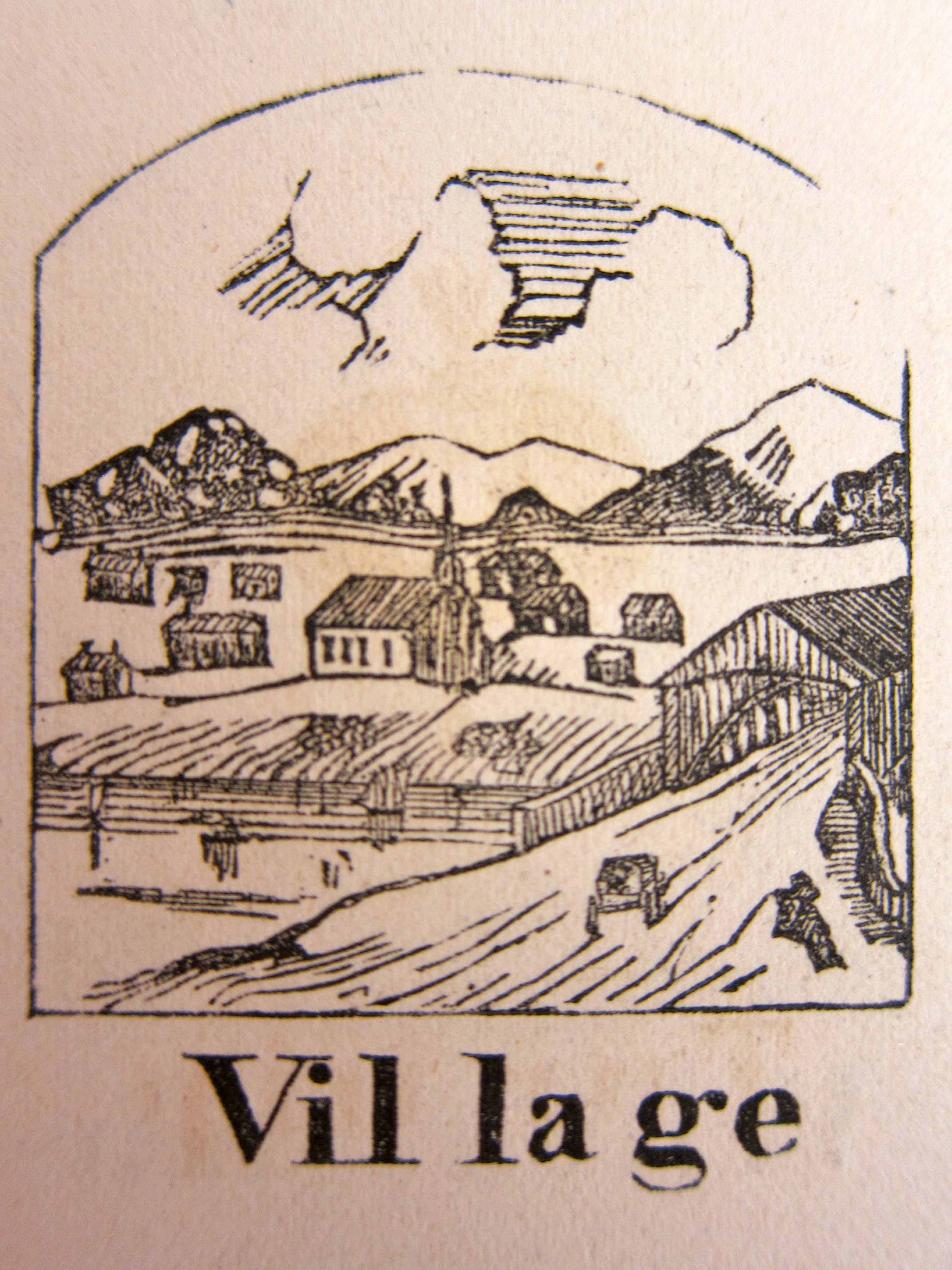
Village

1851 March 5th  Wednesday  Early in the morning worked about

house.  About nine Oclock called at Mr Holmes 

to see Mrs Wright and to enquire for Miss Eaton

She is comfortable but failing  Went into school

and staid until dinner time  like the appearance 

of the school very much & think Orinthia a good

teacher, calculated to gain the good will of the Scholars

This afternoon working on a shirt for Mr Ames.   A[u]gustus here

Abby spent the evening here  Very pleasant

A “very pleasant” day pulled Evelina out of doors this morning at a time when she ordinarily would be choring or sewing. Fresh air and sunshine were too welcome to resist.  She walked the short distance to the village and called at the Holmes’s to ask after the two invalid women there, Mrs. Wright and Miss Eaton.

This is the last point in the diary when Mrs. Wright is mentioned, which begs the question of whether or not she survived her bout with pleurisy.  Probably not, even though Evelina didn’t mention her demise or her funeral.  Based on Evelina’s continued, if periodic, interaction with the Holmes household without ever again mentioning the presence of Mrs. Wright, it makes sense that the latter passed away about this time.  Additionally, an 1855 census confirms her absence.

Interesting to note that Evelina wrote of calling at “Mr. Holmes”, even though she clearly went by to see the women of the house.  The patriarchal culture – and laws – of the day saw men, and men alone, as heads of any household.  A house belonged to a husband, not to a wife.  Unless Mrs. Holmes were widowed, the proper reference to her abode would acknowledge her husband’s tenancy, not hers.  This was a dictate that Evelina almost always practiced; even when she went next door to see her sister-in-law, Sarah Lothrop Ames, she wrote that she had gone to Oliver’s.  It was his house, not Sarah’s.

The little schoolhouse where Orinthia Foss taught was also in the village, and it was here that Evelina spent the rest of the morning, watching the young teacher and approving of her way with the children. Meanwhile, back at the house, Jane McHanna was preparing the midday dinner, for which all family members returned at noon.  Evelina stayed home after her morning out, and took up the inevitable sewing.  Her niece Abby Torrey visited, and may have helped with some of the stitching.

March 4, 1851

IMG_2913

March 4th  Tuesday  This forenoon finished a shirt for O Angier

Have got some old accounts books from the office

for scrap Books  Have been looking over some old

papers for receipts &c  Sarah came to pass the 

afternoon with Jane  Dr Deans & wife & Mr &

Mrs Whitwell spent the afternoon & evening in the

other part of the house  I was there at tea.

Augustus was here to dine  Pleasant but quite windy

Scrapbooks were a popular phenomenon in the 1800’s, as they had been for some time before. Sometimes called friendship albums, scrapbooks were assembled by individuals, usually ladies.  The books contained personal items as varied as pressed flowers, favorite illustrations cut out of periodicals, sketches or poetry, or special pieces of correspondence.  They were creative keepsakes, the “Pinterest” of the day.

Evelina’s approach to scrapbooking was more pedestrian than imaginative or sentimental. Her scrap books were pasted primarily with “receipts”, or recipes, cut out from newspapers, predecessors to the recipe boxes or similar notebooks that today’s cook might keep handy on a kitchen shelf.  These recipes supplemented, if not surpassed, the cookbooks available on the market by women such as Lydia Maria Child, Catherine Beecher, Sarah Josepha Hale, and Mary Peabody Mann.  With the articles clipped from periodicals, cookbooks and other household guides, a housewife or homesteader had a variety of options to refer to when it came to preserving and preparing food.  Even Old Oliver was known to pay attention to receipts; he hand-copied one for brining beef into his personal journal.

Always thrifty, Evelina used discarded account books or ledgers from the “Counting House” in which to paste her receipts.  She also used an empty ledger – the one illustrated in the photograph above, in fact – for her diary.  Its pages, meant for the posting of debits, credits or other accounting notations, were filled instead with her daily jottings.  Waste not, want not.

After a day of inevitable sewing and the more novel entertainment of working on her scrapbook, plus the company of her nephew Augustus at the dinner table, Evelina went to the other part of the house for tea.  There she joined her sister-in-law Sarah Witherell and their friends William and Eliza Whitwell and Samuel and Hannah Deans.

Dr. Deans and his family lived in Furnace Village, an area of Easton south and west of the Ames’s.  Dr. Deans, originally from Connecticut, had settled in Easton after studying medicine at the New Haven Medical School.  In addition to medicine, he also had “a warm and constant” interest in education, according to William Chaffin.  As a physician, Deans occasionally attended members of the Ames family when they took ill.

March 3, 1851

Men's Work Shirt, mid-19th c.

Men’s Work Shirt, mid-19th c.

March 3rd Monday  Have given the furnace up to Ann to take

care of, and feel thankful to get rid of it  Orinthia

assisted me in doing the work this morning

Have been working on a shirt for Oakes Angier

Jane went out this afternoon to Mrs Willis to get

a dress cut  Mrs Witherell & Mrs S Ames spent

the evening with us.  A letter from Helen  She 

is contented at her school  Cloudy & windy to night

Augustus not here

Evelina solved the problem of keeping the coal furnace going by delegating the task to Ann Orel, the 24-year old Irish servant who worked for Sarah Witherell in “the other part of the house.”  It being Monday, and thus laundry day, Jane McHanna was occupied in the kitchen boiling water and washing and rinsing clothes.   Today’s load couldn’t have been too heavy, however, or Jane wouldn’t have been able to leave the house in the afternoon to see about getting a new outfit made.

Jane’s preoccupations left the usual morning chores to Evelina, who got a little boost of help from Orinthia Foss, the boarder and schoolteacher.  Orinthia presumably soon departed for the schoolhouse, however, and Evelina had to carry on alone.

She turned to sewing, naturally, as she did on most days. Interesting that so far this year, except for a bonnet, she hadn’t sewed on much of anything for herself. Most of the sewing had been shirts and mending for the men, and aprons and chemises for her daughter.  Evelina sewed almost constantly, but her production capacity was limited.  Even with occasional help from others, she didn’t produce a surfeit of any article of clothing.  Historians of this period – Jane Nylander, in particular – have suggested that people had much less clothing then than we might imagine:

“[V]ery few people had large numbers of any kind of garment.  Women seldom owned more than four or five gowns and petticoats at a time; men usually owned a few coats and pairs of breeches or pantaloons, a few vests, and perhaps as many as half a dozen shirts..  Both owned a few pairs of stockings […] one or two pairs of shoes and boots; and a hat or bonnet […] Nobody changed all of their clothes daily.”*

If the average grown male owned an average of six shirts, and there were four men under Evelina’s roof, she was responsible for producing and/or maintaining approximately twenty-four shirts at any given time.  No wonder she often sought assistance from Sarah Witherell and others.  No wonder she worked at keeping them mended.  No wonder the laundry load was so big on Mondays.

One lovely note today: Sarah and Oliver Ames Jr heard from their daughter, Helen Angier Ames, who seemed to be settling into life at boarding school just fine.  If she was content, then her relatives were, too.

*Jane Nylander,  Our Own Snug Fireside, 1993, p. 156

March 2, 1851

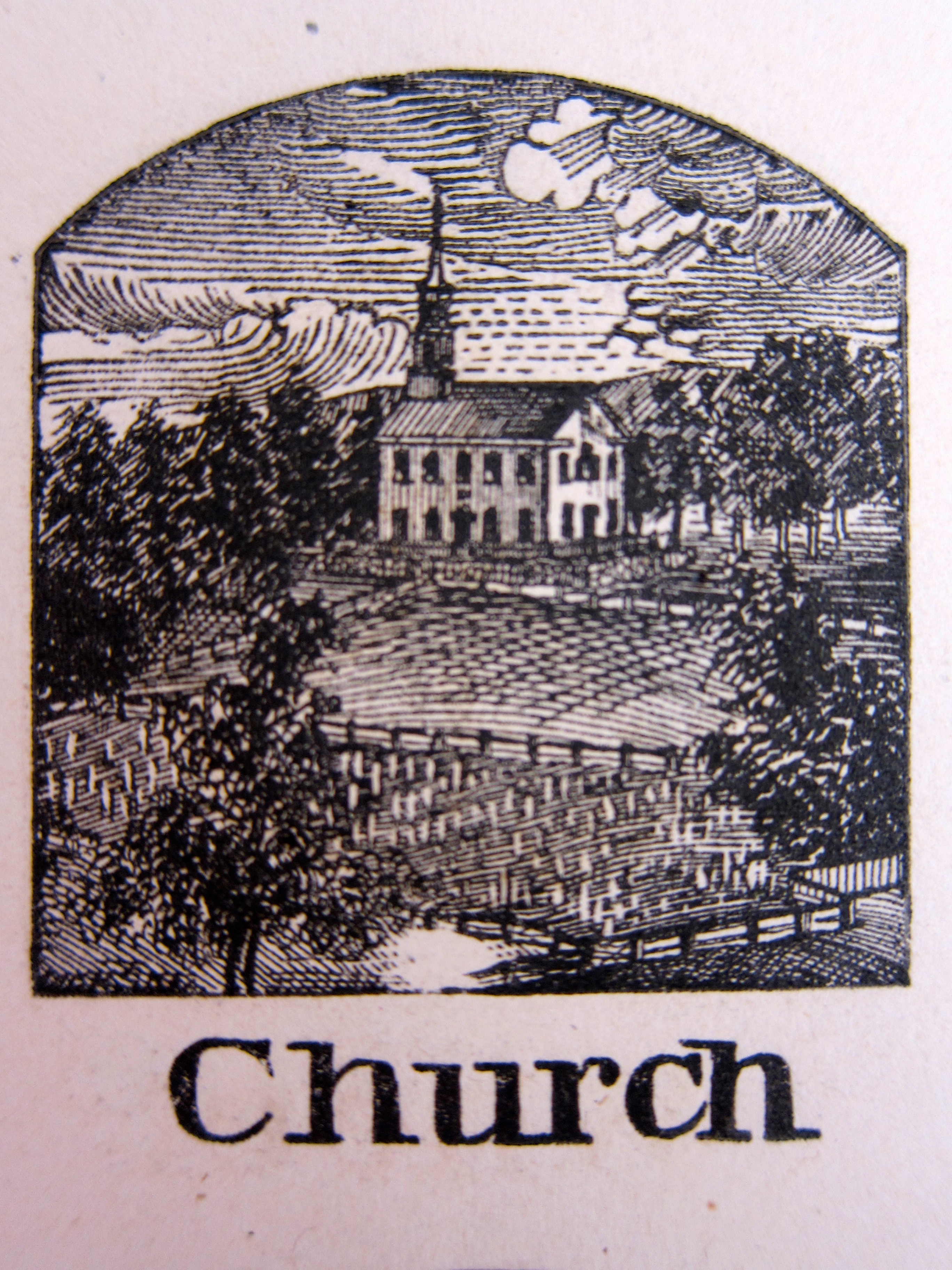
Church

March 2nd  Sunday.  Have been to meeting all day.  Mr Whitwell read

notes for Mr Guilds family  His text in the morning was

I would not live alway  It was an excellent sermon.

In the afternoon his sermon was for the male part

of the congregation.  The good man of the house.

An excellent sermon for my dirty boys if they

would only profit by it.  This evening commenced

reading Woman’s Friendship.  Rather pleasant but cold

Evelina went back to church today for the first time in three weeks.  She had been absent since February 10, the week that she hosted a Unitarian Sewing Circle meeting to which no one came.  To her diary she cited a bad cough as reason for her absence.   On this Sunday, she had finally recovered from that cold.  She had also, evidently, regained her dignity.  Back to church she went and sat right down in the family pew.

Her attention was focused on Reverend Whitwell and his thoughtful words.  She wouldn’t live “alway,” and in the meanwhile she had to work on her sons to become better people.  What did she think of her sons to describe them as “dirty boys?” What did Mr. Whitwell mean, “the good man of the house?”  Did her own good man of the house, Oakes, pay attention to this sermon?

Oakes Ames was actually known for sleeping in church, according to town historian, Reverend William Chaffin.  Chaffin charitably suggested that “Mr. Ames was so hardened with business affairs that he invariably went to sleep in church during the sermon.”  Chaffin also remembered that Oakes Ames stayed awake during his own maiden sermon in North Easton.  Used to seeing Oakes with his eyes closed, someone in the congregation that day chided him about it, to which Oakes replied with typical bonhomie, “Well, I knew Mr. Chaffin was here as a candidate for settlement, and I had to keep awake the first Sunday to see if his preaching was safe enough to sleep under.”


March 1, 1851

Photographing

March 1st  Saturday  This forenoon put a bosom into an old

shirt of Mr Ames.  After dinner worked on shirt

bosoms, carried them into Olivers and staid two

hours and then went to meet Orinthia at the

Daguerretype saloon.  Called at the store and on Abby

Torrey  On my return called on Miss Eaton found her

more comfortable than I have seen her for some time

Mrs. Holmes mother has been sick for a week.  Very 

pleasant.  Augustus not here

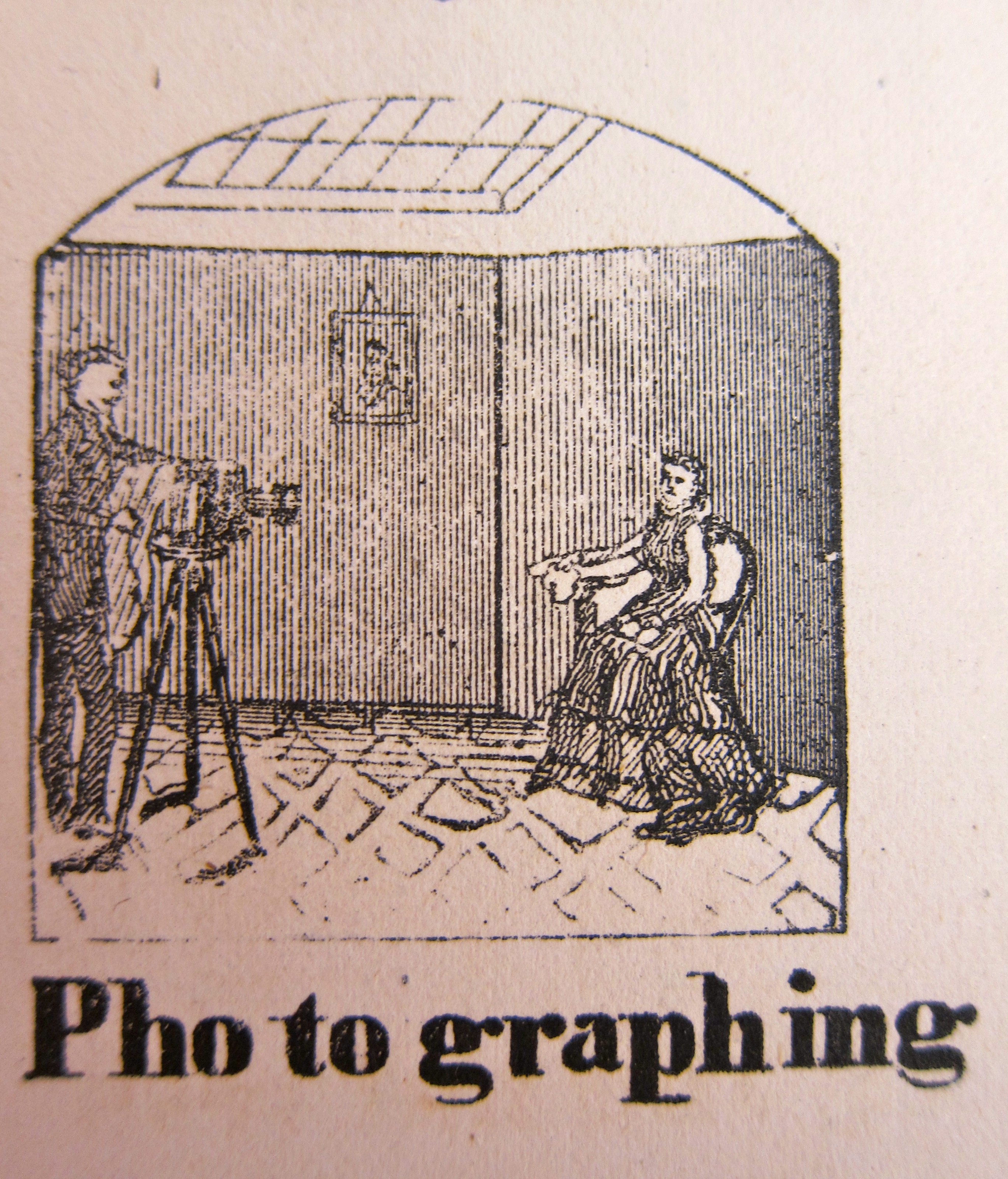
Only a dozen years after a Frenchman named Louis Daguerre reproduced an image of a Paris street onto a piece of treated glass, the new medium of photography had become so popular and successful that someone in the small town of North Easton, Massachusetts had seen fit to set up a “saloon” to take pictures.  What a novelty for the townspeople.

After a day of rather pedestrian sewing, Evelina Ames, housewife, went to the daguerreotype studio to meet Orinthia Foss, schoolteacher (and boarder at the Ames’s,) to have their likenesses taken. What a lark for them to go pose for the camera.  Whose idea was it? Did they pose together?  Did they pose alone?  Or did only one of them have an image taken? How long did she or they have to hold still?  Who ran the shop? Where are those photographs today?  What good friends Evelina and Orinthia are getting to be.

A stop at the company store and a visit with her niece, Abby Torrey, were next on the agenda for Evelina’s afternoon. Now that it was March, the daylight began to last a little longer, allowing more time for errands before heading home. One last stop at the house of Bradford and Harriet Holmes was in order. There, two invalids, Miss Eaton and Mrs. Wright, were being “watched,” or looked after by various friends and relatives, in a manner resembling today’s hospice care. Miss Eaton, of indeterminate age, had been in poor health for several months, probably with consumption.  Sixty year old Mrs. Wright, mother to Harriet Holmes, had also taken ill.  She was suffering from pleurisy and was not expected to recover. Spring might be on its way, but not for these two women.

February 28, 1851

Mailcoach

Feb 28  Friday  After doing my usual chores about house I

carried my work into the other part of the house

and staid until dinner time  Worked on shirt

bosoms & carried two in for Mrs Witherell to stich

This afternoon wrote a long letter to Cousin

Harriet Ames which took me most of the 

afternoon to write   Orinthia & myself spent

the evening in the other part of the house  Cloudy

Augustus not here

Cousin Harriet Ames was a spinster who lived in Burlington, Vermont with her widowed mother.  She was the daughter of Old Oliver’s older brother, John Ames.  Thus she was a niece of Old Oliver and first cousin to Oakes, Oliver Jr., Sarah Witherell and the rest of that generation of siblings.  Moving down one more generation, she was a first cousin once-removed to Oakes Angier, Oliver (3), Frank Morton and Susan.

It’s likely that Evelina wasn’t the only Ames to correspond with Cousin Harriet; her sisters-in-law Sarah Ames and Sarah Witherell probably wrote and received  letters from Burlington as well.  All three ladies would have corresponded by mail with distant friends and relatives.  It was the way.  Writing letters was how people kept up with one another.  There was no telephone, and there certainly was nothing that resembled today’s digital and instantaneous communication.  Telegraphs were only just coming on the scene; telegraph offices and wires would soon dot the countryside and lead the way west.  Big wooden poles would be dug into the ground by men wielding – what else – shovels.  In a decade or so hence, Oakes and Oliver Jr. would maintain an active communication by telegraph once Oakes went to Congress and both men became involved with the building of the Union Pacific.

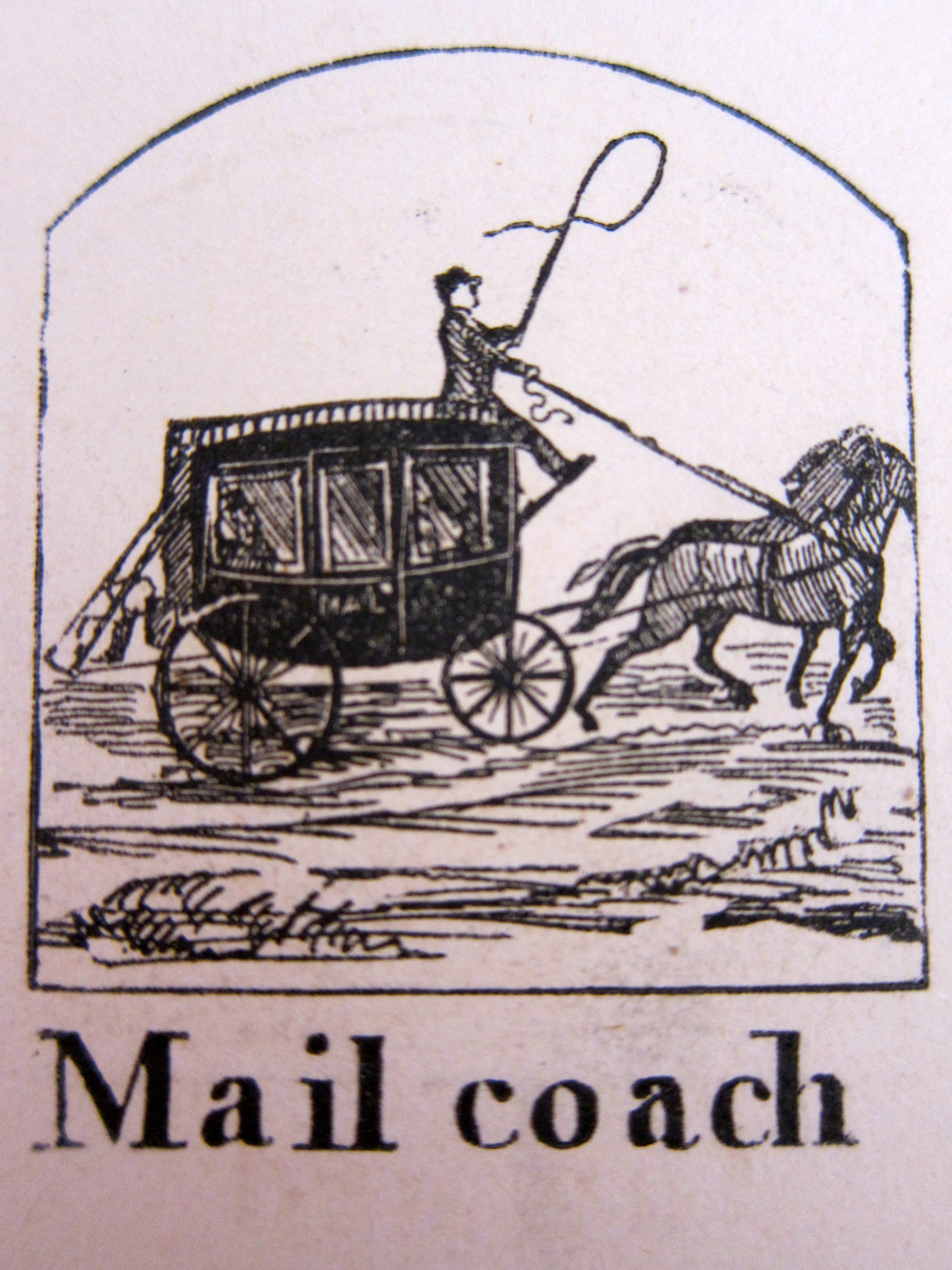
But they would all still write letters. Evelina wrote certain people regularly: Cousin Harriet in Vermont, Louisa Mower in Maine, and another friend named Pauline Dean. She must have been pleased when the mail coach came in, bringing letters to the little post office in North Easton, and taking them out to friends far away.

February 27, 1851

Coal scuttle

1851

Feb 27 Thursday  Cannot say much for my work to day

Orinthia cleaned the sitting room for me while I

was making the fire in the furnace.  had a good 

deal of trouble with it  Augustus made quite a

long call this morning talking over matters & things

Have finished putting in the bosom & wris[t]bands to 

the old shirt that I commenced Tuesday & mended one

for Mr Ames

It sounds as if Evelina’s normal routine was challenged today.  First, she had to struggle with the coal furnace, or stove, probably stoking it and trying to make it catch and hold.   She was certainly familiar with “making” fires, but coal was not her strong suit.  She had spent most of her life burning wood, and she didn’t manage the new furnace well.

Second, her nephew Augustus came to call in the morning at a time of day when she was likely to still be working about the house.  He was full of conversation about “matters & things,” probably filling her in on his move to Easton,  his decision to leave teaching, and his hopes for the new boot and shoe factory he was setting up in the Lothrop Building. Evelina, fond aunt that she was, was no doubt interested in what Augustus had to relate, but the housewife in her was perhaps worried about not getting through her choring or not finishing the last of the ironing or not getting to the necessary mending while Augustus made his long visit.  Happily, Orinthia Foss was around to help with some of the basic sweeping and dusting.

In the afternoon, her housewifely pace seemed to settle down and she was able to pick up her sewing.  She reworked an old shirt belonging to her husband, replacing the most worn areas with new pieces.  A shirt that today we might throw out or put into the rag bag, she saved.  No wonder Reverend Chaffin accused her of being “very economical.”  She was, with no apologies.  No apologies from her husband, either.

February 26, 1851

exps42325_TH1443683D45C

Feb 26  Wednesday.  Have been baking  Heat the oven twice

made 18 mince pies.  Cake brown bread & ginger snaps

Mr Whitwell called & brought home some books.

I called to see Miss Eaton this afternoon she has failed

very much since I saw her nearly two weeks since.  Mrs. 

Wright is sick with the pleurisy & lung fever, both have watches

Abby & Malvina spent this evening here   The boys have

all gone to the meeting house to a sing  Pleasant & mild

A[u]gustus here to dine

Eighteen mincemeat pies! Hard to fathom a domestic pantry, pie safe or cold shelf  that could hold 18 mince meat pies all at once, let alone an oven that would bake even half that number at one time.  Cake, cookies, and bread, too.

The brown bread that Evelina baked today was a staple of the New England kitchen, and was made from some combination of Indian (corn) meal and rye.  While other geographic areas of the United States, like the south, the mid-Atlantic and the expanding west, had turned to wheat as their preferred grain for baking bread, Yankee housewives, “who valued and esteemed brown bread as the food of their Puritan ancestors,*” held to the familiar cornmeal and rye.  So it was in Evelina’s kitchen.

According to Sarah Josepha Hale, who published The Good Housekeeper in 1841, brown bread was “an excellent article of diet for the dyspeptic and the costive.”   Mary Peabody Mann, in Christianity in the Kitchen pronounced brown bread to be “a nutritive bread, though inferior in this respect to wheat,” and agreed that it produced “a laxative effect upon the system.”  Lydia Maria Child, author of The American Frugal Housewife, liked brown bread for its economy and tradition.  She advised that it “be put into a very hot oven, and baked three or four hours.”

After she got away from the cook room, Evelina was visited by Reverend Whitwell who either borrowed some books from her or lent some to her – the passage is unclear. Both of their homes must have housed a collection of books, and borrowing and sharing was common.  A decade or so earlier, Easton had boasted of two or three lending libraries but these institutions had pretty well ceased to operate.  Other, better organized libraries would be formed later that century, but in 1851, if someone wanted a book to read, he or she borrowed it from a friend or bought the publication.

In the neighborhood, Miss Eaton was still failing and now, under the same roof,  Mrs. Wright, mother of Harriet Holmes, was believed to be dying, also.  Neighbors were helping Mrs. Holmes with the care and feeding of the two invalids.

*Judith Sumner, American Household Botany, 2004, p. 48

February 25, 1851

Helen Angier Ames

Helen Angier Ames

1851

Feb 25  Tuesday  This morning Helen left home for school

at Dorchester.  She felt so bad when she left

that I did not go in to see her.  Her Father & Mother

went with her and returned to night, they went into

Boston and stoped an hour or two.  Mr Jennings

& Crommet called this evening to see Orinthia

I have been to work on a bosom of shirt putting

a new one into an old shirt of Oakes Angiers.  Very windy.

A[u]gustus here

Under some duress, the teenaged Helen Ames was taken to boarding school today, clearly not wishing to go.  Her parents insisted and accompanied her to see her settled.  Their stop in the city on the way home might have been a lift of spirits for a mother and father who had just driven away from a disconsolate child.

The children of both Oakes and Oliver Jr. each went away to school for a portion of their education.  Oakes and Evelina’s boys had already gone and returned home; Susan still had her boarding school ahead of her.  Oliver Jr. and Sarah’s two children, Fred and Helen, were at this stage both away at school.  Oliver Jr. and Sarah were empty-nesters, to use a term they wouldn’t have recognized.  They might have recognized the emotion, however.  Strange to think of them in their separate house, just the two of them now, quiet, (although Sarah’s younger brother, Cyrus Lothrop, sometimes lived with them) while right next door in the old homestead lived a whole commotion of relatives.

Schooling seemed to be the theme of the day.  A Mr. Jennings and a Mr. Crommet called to see Orinthia Foss, presumably on matters of her employment as a schoolteacher. Does any reader out there know either of these names?

His wife and son still living elsewhere – Bridgewater, perhaps – while he set up their rented lodgings in North Easton, Augustus Gilmore was staying temporarily with his aunt Evelina and her family.  He would soon bring Hannah, who was expecting, and little Eddie to town.

February 24, 1851

School

Feb 24th Monday.  This morning Orinthia commenced a

private school at the school house had twenty

scholars.  Was choring about house all the forenoon

This afternoon made over a valance for

Franks bed and did some mending.

Martin Guild was burried at two Oclock.  None

of us attended the funeral  Helen & Sarah Ames

called a few moments this evening.  Heavy rain.

Looks like little Susie was back in school today, this time under the tutelage of Orinthia Foss, the new teacher.  Not only would Susie see Miss Foss in the school room every day, but also at home for breakfast, dinner, and tea. During her tenure in Easton, Orinthia would take turns boarding with different families in town beginning with the Oakes Ameses. The exact location of the schoolhouse where she taught is undetermined, but it may have been located right in the heart of the village, at the Rockery.*

As usual, Evelina spent this busy Monday doing housework, or “choring,” as she called it, in the morning, or “forenoon,” while Jane McHanna labored with the weekly washing. What do you suppose was served for midday dinner on Mondays, when the women of the house were preoccupied with everything except cooking?  Perhaps the family ate one of those mincemeat pies that had been prepared days in advance and kept very cold somewhere. Yankee housewives were known to keep some baked goods frozen for months, either by placing them on shelves in an ice house, or simply by storing them in unheated spaces not far from the kitchen. A risky practice, one might think, especially with the varied temperatures and rainy weather that has characterized this particular February.

Also as usual, Evelina turned in the afternoon to her mending and sewing. She refurbished a valance for Frank Morton’s bed.  Although his brothers Oakes Angier and Oliver (3) shared a bedroom, Frank had a space, if not a room, to himself.  A valance was an essential component of his bedstead, naturally offering some warmth and privacy that might otherwise be lacking.

* Information from Frank Mennino, Curator of the Easton Historical Society.  Thank you, Frank.