June 23, 1851

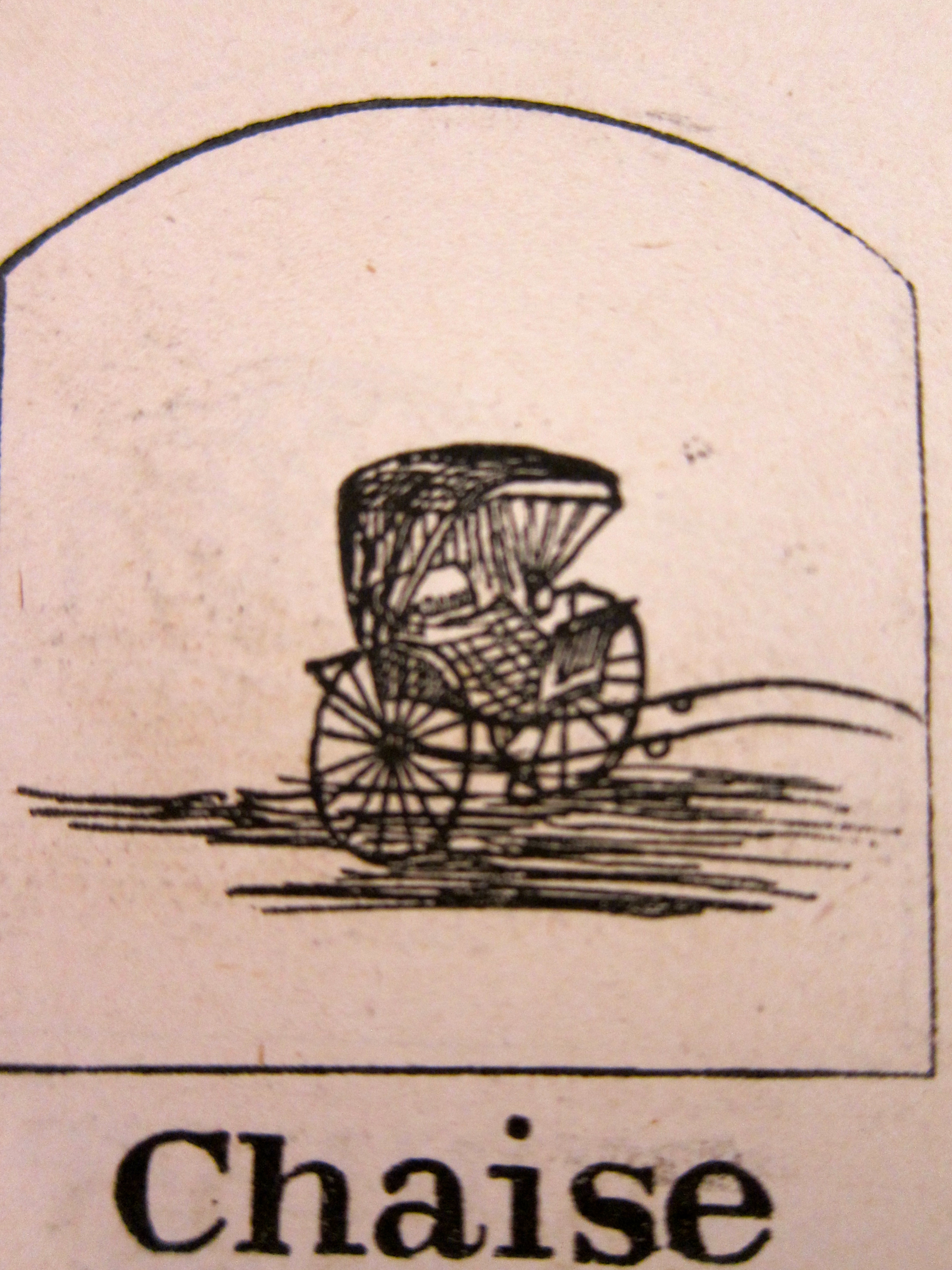
Chaise

1851

Monday 23  Emily is no better.  The Dr calls her

disease congestion of the brain  About ten Oclock she

was in great distress & I sent for the Doctor.  He was

just stepping into his chaise to go to Taunton

He came up immediately  found her asleep and easier.

Mrs James Mitchell & Miss Sarah Mitchell from

Freeport came to spend the day.  they passed the 

afternoon in Olivers.


Twelve year old Emily Witherell, only daughter of widowed Sarah Witherell, had been taken suddenly and seriously ill. Her symptoms seemed to worsen this morning, so much so that Evelina sent someone for the doctor, perhaps Dr. Samuel Deans who had stopped in yesterday. He or Dr. Caleb Swan, the two doctors who usually tended to the Ames family, diagnosed the illness as “congestion of the brain.”

Congestion of the brain was, by some modern accounts, a 19th century catch-all phrase for any number of illnesses that caused swelling of the brain. Known in the medical world as encephalaemia, it could be caused by a head injury or an infection.  Symptoms would include headache, fever and confusion.  Emily certainly seemed to be confused.

Why did Evelina send for the doctor, and not Sarah Witherell herself? Who went for the doctor on a Monday morning, when everyone was at work? Perhaps Michael Burns, who worked for Old Oliver? Good that the doctor was caught before he had left in his chaise for Taunton, and even better that he found Emily marginally better.

June 22, 1851


strawberry

1851

Sunday 22nd June  Have been to meeting to day Heard two

very good sermons from Mr Whitwell  Mother came

home with us to spend a few days.  Since meeting

mother Mr Ames & myself rode to the ponds and to 

Mr Manlys garden  Mother was delighted with her ride

seemed to enjoy it as much as a child  When we

returned we found Emily sick  She is very much

out of her head  Dr Deans called but did not come in

Went to Mr Horace Pools at noon for strawberries


“Doubtless, God could have made a better berry, but doubtless God never did,” was a well-known remark about strawberries made in the 17th century by William Butler. Unlike today, when modern agriculture has developed a system that brings us strawberries any time of year, in 1851, the fruit was still strictly seasonal and short-lived. Strawberry season was much looked forward to.

Horace and Abby Pool evidently had a good strawberry patch at their home in south Easton, to which they invited a few fellow parishioners during the intermission at church.  Had the strawberries already been picked, or did folks wander through a strawberry patch in their Sunday finest, a la Emma Woodhouse at Donwell Abbey? Was the fruit served with cream and sugar, or taken home to be eaten later?

The fine day continued after church when Oakes and Evelina took old Mrs. Gilmore for a ride north to see the ponds and visit Edwin Manley’s garden. On a less delightful note, Sarah Witherell’s daughter, Emily Witherell, suddenly took sick. “Out of her head,” Evelina described her, suggesting perhaps that Emily had a high fever. The doctor was called.

June 21, 1851

1687-Illustration_from_Theosophie_and_Alchemie-Michael_Maier_and_Johann_Theodor_de_Bry-300x282

21 June Saturday  Early this morning Mrs. Seba Howard

brought Orinthia up and found me in the

garden weeding. We worked there an hour or two

and then went to sewing.  Orinthia on her dress

and I on the hair cloth.  Harriet came and sat

with us awhile in the afternoon and while she

was in I worked on the sleeves to my plaid stone

colour borage  Orinthia called on Abby   Pleasant

Weeding continued to be the dominant occupation of Evelina’s early morning hours. On this Saturday morning her young friend, Orinthia Foss, arrived for the day and immediately stepped to the garden to help weed. Orinthia was carried up from the southern part of town by a contemporary of Evelina named Eleutheria Howard, wife of Major Seba Howard.

Today was summer solstice, the official start of summer and the high water mark of daylight; the women probably would have enjoyed being outside in the garden all day long, but sewing and other duties called. Each woman had a dress she was working on, and Evelina was still piecing together a horsehair cover for her new lounge. Just as they had sat on so many days during the late winter, so the two sat today, on chairs near the windows for light, with folds of cloth in their laps. Harriett Ames Mitchell, Evelina’s sister-in-law, joined them in the afternoon.

Later in the day Orinthia went to call on Abby Torrey, Evelina’s niece who lived right in the village of North Easton.

June 20, 1851

OLYMPUS DIGITAL CAMERA

20 June Friday.  Worked in the garden after breakfast until

half past eight.  After getting things in order for

dinner went to work on the hair cloth cover again

untill about two Oclock when Amelia & Samuel

came.  Mr Whitwell called and we had quite

a pleasant chat  Sent Samuel for Abby and

she came to tea and staid untill nine

The last few days have been very pleasant


As previously noted, Evelina was one of eight children.  Five of her siblings were deceased by the time she was writing in this diary, including her younger brother, Joshua Gilmore Jr.  He had died about two years earlier at age 35.  Today, his widow Amelia and one of their two living sons, Samuel Gilmore, came to visit.

No longer having a home of their own, assuming they had had one before Joshua died, Amelia and Samuel boarded with the Algers, a farming family in the south eastern quadrant of Easton, near the Gilmore farm.  They stayed with the Gilmores, too, from time to time while an older son, Charles (all of twelve years old,) may have hired out to another farm.  Amelia, presumably left without much income after her husband died, worked occasionally as a nurse, staying with families in households where someone was chronically or terminally ill.

What happened to young widows, or old widows, for that matter, when they found themselves bereft? For many, the former assurance of house or farm was threatened and lost. Some women remarried and regained footing and security with a new husband and his relatives.  Those women who didn’t remarry had to rely on their own relatives, their late husband’s relatives, and their own skills. In an age when few women were employed outside the home, survival could become a real challenge.


June 19, 1851

Barrel

June 19th Thursday  Weeding in the garden untill past

nine  Heat my grease and made a barrel

of soap.  poured the grease in hot and potash

cold with a little hot water and it has come well.

This afternoon have cut the sleeves for my stone

colour borage dress and have worked some on

the hair cloth cover for the lounge.  Harriet

come into my chamber for an hour or two.

Bridgett here. 


This was a fine June day for working out of doors.  Old Oliver noted in his journal that “We mowed back of Kellys to day,” describing a piece of land north of their house near the ponds.

At the house, or rather, in the yard, Evelina and probably Jane McHanna made soap. As their mothers had done before them, they boiled animal fat (of which they had plenty on hand) in an iron kettle over an open fire. When ready, they “poured the grease […] hot,” into a barrel and added potash, a generic term for lye, a product that was typically obtained from wood ashes. The Ames weren’t burning wood at the house anymore, though, so where and how Evelina got her potash is uncertain. Any thoughts, readers?

Evelina had made soap before and was confident in the process. “It has come well.”  However, she and countless other housewives would soon find that this skill was no longer necessary as commercial soap became available. After the Civil War, especially, manufactured soap would gradually replace homemade soap, except in the remote pockets and far reaches of the migrating frontier.

Some 750 miles to the west of Easton, in fact, in the bustling river town of Cincinnati, a candlemaker named William Procter and a soap-maker named James Gamble had been manufacturing soap for about fourteen years. Besides wanting to make a good product, they wanted to sell it to a broader market. Using the animal fats from the nearby “Porkopolis” slaughterhouses and fronting the Ohio river, they had both material and transportation right at hand. Their enterprise would succeed. Homemakers like Evelina would no longer need to stand over a hot kettle to make soap.


June 18, 1851

Black ticking-stripe-15

June 18th Wednesday  Worked again untill nine in the 

garden and then made the tick for the 

mattress.  This afternoon put the cotton in 

and tied it  Bridget was here a couple

of hours & picked over the curled hair

Towards evening called at Mr E Carrs, Dr Wales

and on Mrs J C Williams at Mr Torreys, Mrs S. Ames

called with me  Augustus gone to Boston

Mr Bartlett spent

last night here

Evelina was making progress on the mattress for her new lounge.  She “made the tick” for the cover and stuffed it with old cotton.  The final cover, to be made of horsehair, was still being worked on. Bridget O’Neil, a servant who usually worked next door, came over to help Evelina with the project.

The long-lasting light of day, as the calendar approached summer solstice, allowed for late socializing. Evelina and her sister-in-law, Sarah Lothrop Ames, went out calling.  They visited Esek Carr and, presumably, his wife, Ann; called on young Dr. Ephraim Wales and, again presumably, his wife Maria; and stopped at John Torrey’s to see Mrs. Joshua C. Williams.  Mrs. Williams, we might infer, was a boarder or renter at Col. Torrey’s apartment building, which Evelina called a tenement. Was Mrs. Williams possibly a widow?

A Mr. Bartlett had spent the night with the family.  He was from Maine, so likely had some connection to the shovel works and their ongoing need of wooden handles.


June 17, 1851

DSCF1590small

1851 June 17th  Worked untill about nine Oclock in

the flower garden  Then cut the tick to the mattress

a[nd] basted it ready to make  Jane was ironing and 

I assisted about dinner  After dinner made three button

holes in Mrs S Ames dress.  Went to Mr

Wm Reeds to tea with Mr Ames, Oliver & wife

Mrs W, Mitchell & Mr & Mrs Whitwell & Alson & wife


Gardening, sewing, ironing and cooking made up today’s housework at the Ames’s home on Main Street.  Buttonholes, too, which could be challenging, were a particular specialty of Evelina; many people brought her their buttonholes.  The fact that Sarah Lothrop Ames took her buttonholes to Evelina rather than to a hired dressmaker underscores Evelina’s talent in this department.

William and Abigail Reed must have enjoyed Evelina’s company on Sunday between services, for they invited her back to a small tea party.  The whole Ames family was invited, in fact, and then some. Minus Old Oliver, and the young people, naturally, siblings Oakes, Oliver Jr., Sarah Witherell, and Harriett Mitchell, with wives Evelina and Sarah Ames, gathered at the old professor’s home for a “cuppa.” Reverend William Whitwell and his wife, Eliza, went too, as did Alson and Henrietta Gilmore. That was a good crowd for a 19th century parlor.

Tea was generally the most sociable meal of the day.


June 16, 1851

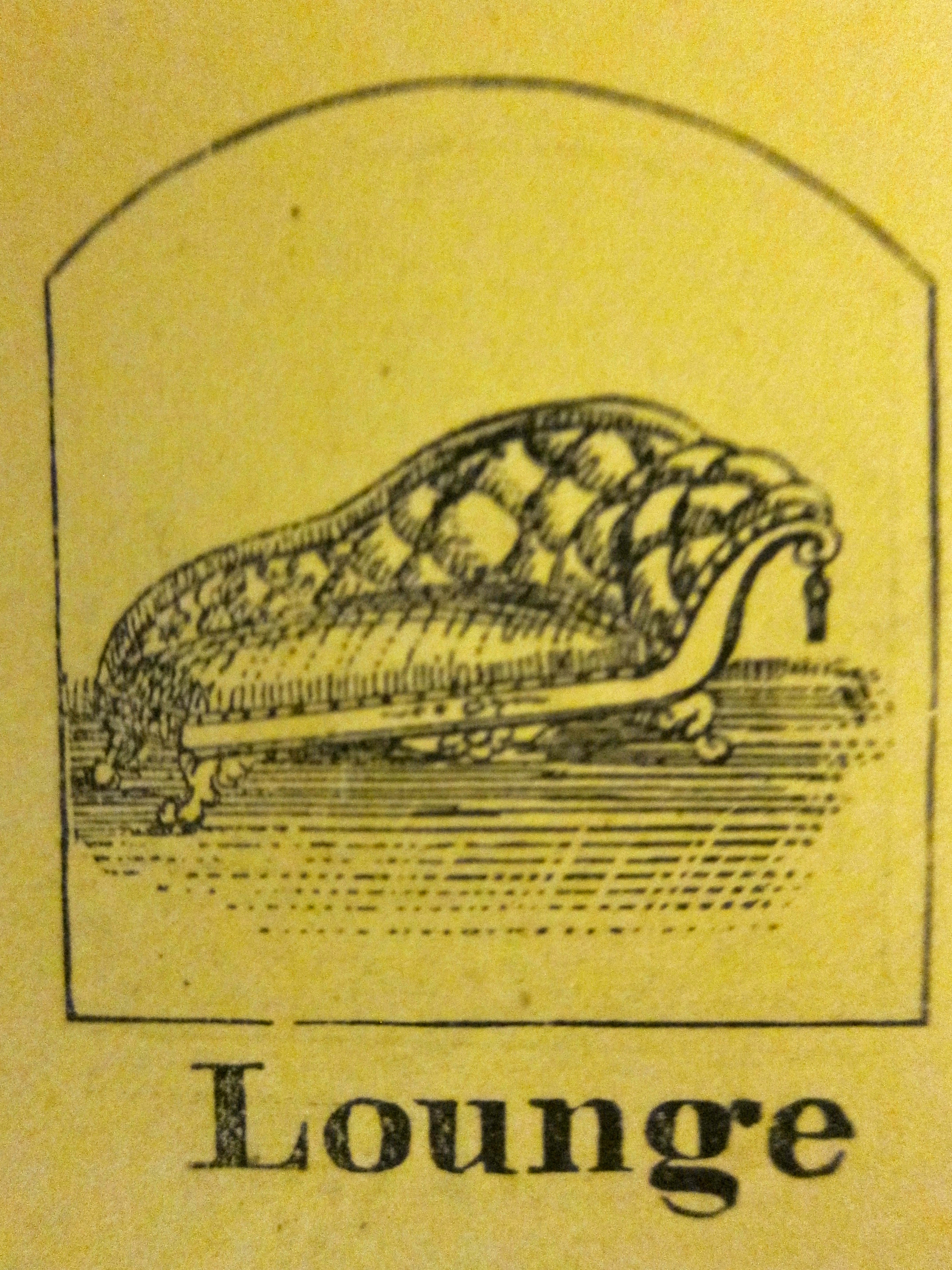
Lounge

1851

June 16th Monday  Worked about the house awhile

Boiled some curled hair (for the matress

for my lounge) that belonged to the sewing

circle, formerly the pulpit cushion.  Edwin

Manly brought me 5 dahlias and Miss Foss

sent me 20 dahlia slips  This afternoon 

have been fixing the cotton for the matress

have put it in some old cloth

Evelina undertook to fashion a horsehair cushion for the new lounge she just bought in North Bridgewater.  Horsehair was a popular and relatively inexpensive material, so it’s small wonder that Evelina chose it.  That the cloth was “recycled,” to use a word she wouldn’t have recognized, from an old pulpit cushion by way of the Sewing Circle made it all the more attractive. How old that horsehair must have been!

The material may have been cheap, but it would be a bear to cover the new mattress, or cushion, with it. She had to boil it, presumably to both soften and clean it, shape it and sew it onto a cotton covering. She was planning to use some old cotton, too, for the cushion. The work would take several days, but Evelina never minded long or complicated projects when it came to sewing.

Meanwhile, she had 25 dahlias to plant in her garden.

June 15, 1851

Burning_Bush_Dictamnus_Fraxinella_Seeds

June 15 Sunday  Have been to meeting all day.

At noon went with Alsons wife & Rachel to

Mr William Reeds had a very pleasant call

Since meeting walked with Mr Ames & Susan 

up to the fly away pond and home by

Edwin Manlys to see his flowers  he has 

fine plants in blossom, among others the

Fraxinella  It sprinkled some and we called

at Mr Peckhams & saw Mrs Washburn

The weather over the past week was so mild that, despite the occasional sprinkle, folks were outdoors as much as possible. Evelina made all kinds of social calls today.

At the intermission between services, she went calling with a sister-in-law from the Gilmore side of the family: Henrietta Hall Gilmore, wife of Alson.  Henrietta was Alson’s second wife, his first having died young, and mother of six of his seven children, including Lavinia, of whom we have seen much this past spring. With Henrietta was someone named Rachel, who was possibly Henrietta’s daughter or another niece with the same name. The ladies called at the home of William and Abigail Reed.  Mr. Reed, older than Evelina by a generation, was a former teacher at Milton Academy and a graduate of Harvard’s Divinity School, although he never settled in a particular parish.  An acting Justice of the Peace, Mr. Reed was well known and well liked.

This afternoon after church, Evelina, Oakes and their daughter walked the road to Fly Away Pond and on to Edwin Manley’s garden.  There the Fraxinella, also known as Burning Bush, caught Evelina’s eye.  More for her garden?


* Fraxinella, seedempire.com

June 14, 1851

Evelina Gilmore Ames

Evelina Gilmore Ames

June 14 Saturday

This is my birth day and it is very pleasant

weather.  Worked in the garden awhile in the

morning then baked in the brick oven.  Made

brown bread sponge & cup cake pies &c.

This afternoon have been to North Bridgewater

and paid Howard & Clark 16 dollars for bed

stead & lounge 50 cts for Castors.  Emily gave

me a box & Harriett a pr of Elastics


The diarist herself celebrated a birthday today, number 42.  She was born in 1809 on a farm in the southeastern quadrant of Easton, not far from the Raynham town line.  She was the seventh of eight children. Her parents, Joshua and Hannah Lothrop Gilmore, named her Evelina Orville after the heroine of Fanny Burney’s popular novel, Evelina, or the History of a Young Lady’s Entrance Into the World. In the book, pretty, fictional Evelina, after various comic travails, wins the heart of handsome, rich Lord Orville; did the real Evelina’s parents hope for similar material success for their youngest daughter?

In birth order, Evelina’s brothers and sisters were John, Arza, Daniel, Alson, Hannah, Rhoda, and Joshua Jr.  By the time Evelina reached 40, only John and Alson, and their mother, were still living. Evelina’s siblings carried mostly family names, meaning that Evelina’s name was a departure. Her grandson, Winthrop Ames, noted in 1937 that “Evelina, in its later form of Evelyn, has been a favorite female first name since Evelina Orville Ames first introduced it into the family when she married Oakes Ames in 1827.”*

As a eighteen-year old bride, Evelina moved to North Easton, right into the Ames homestead, a portion of which had been made over to accommodate the newlyweds. Still living at home at that point were most of her siblings-in-law: Oliver Jr., William Leonard, Sarah Angier Ames (aged 13 and, obviously, not yet married to Nathaniel Witherell), John Ames and Harriett Ames (who was only eight years old.) What a full dinner table they must have had!

The next quarter century flew by, as the years do, full of arrivals and departures.  Her children came into the world, even as family members on both sides departed it.  Only now, it seems, did Evelina lift her head from the home-making tasks that were always at her elbow to consider ways to fill the rare discretionary time that began to open up to her.  Flower gardening became one pleasant elective; writing in a diary was possibly another.


*Winthrop Ames, The Ames Family, 1937