October 9, 1851

IMG_1057

Thursday Oct 9th  Jane has been sick to day went to bed directly

after washing the breakfast dishes and I had to get

dinner  After dinner she was much better and was

able to […do] the dishes  This afternoon I have passed

in Olivers with Miss S. Orr.  Mrs Witherell & Mitchell

Mr Ames & William there to tea Have trimmed

Susans bonnet with dark ribbon


Jane McHanna was sick.  The domestic team at the Oakes Ames house was barely operational, what with Evelina herself still feeling the effects of a mean case of nettlerash. But between them, the two women, servant and mistress, managed to make meals appear on the dinner table in a timely fashion. Did the men of the house appreciate the extra effort going on behind the kitchen door?

Tea was a special event today, served next door at Oliver, Jr. and Sarah Lothrop Ames’s. Present were five of Old Oliver’s six surviving children: Sarah Witherell, Harriett Mitchell, Oakes Ames, William Leonard Ames, and the host, Oliver Ames, Jr. William was visiting, if not from New Jersey, then from his current way station on his journey to Minnesota. Harriett, too, held visitor status;  she and her children were about to return to her husband in Pennsylvania. Only Sarah Witherell, Oakes, and Oliver Jr. lived in North Easton and saw one another regularly.

Missing from the group was Horatio Ames, who lived down in Connecticut. No one’s favorite sibling, some – Oakes, particularly – may even have appreciated his absence. Interesting that Old Oliver himself isn’t mentioned as being present.

Another guest who was also there at this rare gathering of the clan was Miss Susan Orr, a long-time family friend (or relative?) who had known the group when they were children. She could remember Oakes Ames as a baby. Susan had been staying with Sarah Witherell and Old Oliver for about ten days. Meanwhile, a different Susan, only nine-years-old, got her bonnet trimmed with a new ribbon.

 

October 8, 1851

03615

*

Wednes Oct 8th  Have been sewing pretty steady to day have finished

my dark french print dress and have worn it this

evening  This afternoon called at Mrs Swains with

Mrs S Ames  Her brothers wife is there from Nantucket

with two children & her nurse is there and with her

father & mother made quite a family, nine of them

Mrs Swain said  She appears quite smart

She doesn’t mention her condition in her journal today, but Evelina was still afflicted with nettlerash, and would continue to be for another several days.  Why was her version of this troublesome condition so much more severe than her daughter’s had been?  Did the two, in fact, even have the same illness?

The only way to cope was to keep moving forward.  As least Evelina seemed able to sit and sew, enough to complete a “dark french print dress” she had been working on for some time. (Perhaps the fabric was not unlike the example of a 19th century French print fabric in the above illustration.) She even changed into the new dress for the evening.  Sarah Lothrop Ames may have stopped in from next door for the two sisters-in-law went to call on Ann Swain, wife of John Swain, the new bookkeeper and clerk at the shovel company.

Ann Swain was pregnant, almost at full term and doing well, appearing “quite smart.” She was surrounded by relatives – “nine of them” – who had evidently traveled from Nantucket in order to assist at the birth. The baby would be Mrs. Swain’s first, and her parents as well as others were on hand to help. Neither Sarah nor Evelina would be needed.

Courtesy of http://www.french-treasures.blogspot.com


October 7, 1851

Broom

Tuesday Oct 7th  Have been at work on the dark french

print  This forenoon swept the chambers and put Franks

chamber in order that he left.  Carried my work

into the other part of the house while  My humour

troubles me so that I can scarcely sit still.  Was quite 

sick awhile this evening  We have had very cold

weather for the season for a number of days


Whatever powdered medicine Dr. Swan gave Evelina on Sunday wasn’t working. Her “humour” troubled her all day and she was especially ill in the evening. Her nettlerash made her uncomfortable and sick. With some asperity, she noted the recent “very cold weather,” which wouldn’t have helped her frame of mind.  It’s interesting to note that her father-in-law, Old Oliver described this very same day as “a fair warm day wind northerly part of the day + southerly part of the day.” It’s likely that Evelina’s perception was colored by her overwhelming personal discomfort.

Does any reader think Evelina that might be suffering from shingles?

Nonetheless, she kept busy.  She swept the house and tidied up after her youngest son, Frank. She sat down to sew, though must have found it difficult to concentrate when her skin itched and burned.  She went into the other part of the house, where Miss Susan Orr, an elderly friend (or relative?) from Bridgewater was visiting. No doubt she sought conversation to take her mind off of her own troubles. Perhaps she wished her nephew, George Oliver Witherell, a happy birthday. He turned 14 on this date.


October 6, 1851

OLYMPUS DIGITAL CAMERA

*

Monday Oct 6th  Went down to Dr Swans before 7 or 8 Oclock

so that I might find him at home and he has given

me some powders  When I came back found the

dishes washed and put away  Jane has been remarkable

smart  I have finished my striped french print

and have worn it this afternoon  Mr Brown

commenced school again to day  Passed the evening

at Mr Holmes with Susan


Evelina sought help today from Dr. Caleb Swan, who gave her “some powders” for her nettlerash. She would have mixed a dosage with water and swallowed it.  What was the actual medicine that she ingested? Did it contain the laudanum that was often dispensed to women in that era? Whatever it was, it seemed to make Evelina feel a bit better.

Jane McHanna, the Ames’s servant, washed the breakfast dishes for Evelina while she was at the doctor’s. Jane usually did the cooking and Evelina typically did the washing up, but in this case Jane must have recognized how sick Evelina was.  Evelina was grateful for the assistance and praised Jane for being “remarkable smart.”

The day progressed well afterwards. Little Susie returned to school where Eratus Brown was her teacher. Did she miss her old teacher, Orinthia Foss? Evelina sewed and finished making a “striped french print” dress. Stripes were in fashion that fall, as the illustration above from Godey’s Lady’s Book shows. The illustration also shows that distortion of the female figure for advertising purposes was every bit as popular in 1851 as it is in 2014. The length of the woman’s legs in the drawing is improbable, unless she is standing on stilts under that full skirt. Look at her tiny foot sticking out from the hem!

Evelina even felt well enough to go out in the evening with her daughter.  They went over to the Holmes’s where they probably visited with Harriet Holmes, the neighbor who had been so ill earlier in the summer. The Holmeses had a daughter, Mary, who was about Susie’s age.


Fashion plate from Godey’s Lady’s Magazine, September 1851

October 5, 1851

Letter

Oct 5th Sunday  Mr Whitwell has gone to Philadelphia and

we have no meeting and Mr Ames self & Susan

staid at home  Oakes A & Charles Mitchell went

to N Bridgewater to meeting  Wm & Mr B Scott

came to the other part of the house this morning.

Mrs Latham & Aaron Hobart this afternoon.  I have

been writing most all day  Am not at all well

It has been a beautiful day.

Feeling as poorly as she did, Evelina was probably grateful not to attend church. Her rash was so irritating that she had trouble sitting still, yet lacked the vigor to move around much. Too, she had worked hard the day before putting up fruit preserves and may have felt tired from the effort. She wasn’t “at all well.”

Letter writing occupied her, and probably helped take her mind off her discomfort, just as playing with dolls had distracted little Susie when she was ill. Evelina often corresponded with several female friends and relatives, like Louisa Mower and Orinthia Foss in Maine, cousin Harriet Ames in Vermont and Pauline Dean, whose home address we don’t know. Which friends did she write to today?

Other family members were more active, despite the cancellation of the usual church service. Son Oakes Angier Ames rode over to North Bridgewater with Charles Mitchell (a younger brother-in-law of Harriett Ames Mitchell) to attend meeting there. Old Oliver and Sarah Ames Witherell, in the other part of the house, received several visitors, including Aaron Hobart.  Susan Orr was still visiting there, and may have been the draw for some of the new visitors.

October 4, 1851

Pick

Oct 4th Sat.  Preserved 25 pounds of peaches and 16 lbs

barbaries & about 23 lbs Apples with them.  Have

been about sick all day  Expect I have taken

the nettlerash from Susan have been troubled

with it three or four days.  Called this afternoon

at Augustus find them quite comfortably settled

Harriet trimmed my Bonnet with the ribbon I

wore last fall  Charles Mitchell came to see Mrs Mitchell


Evelina hadn’t felt very well for several days and began to feel even worse today. She believed she had “taken the nettlerash from Susan,” meaning that she now had hives, just as her daughter had had a week earlier. It made her feel “about sick” yet she stayed upright and worked in the kitchen most of the day. The fruit they had picked or gathered from friends and family wouldn’t keep, so the cooking had to get done.

In the kitchen, Evelina, probably with significant help from Jane McHanna, put up 64 pounds of fruit. She didn’t make jam, which would have consisted of cooked fruit pulp, nor did she make jelly, which would have been made from fruit juice.  She made preserves, which in this instance were pared peaches and apples, the latter mixed with barberries, that were placed whole or in chunks in sugar – lots of sugar – and then boiled down. And because “ingredients in […] loaf sugar are not always very clean,”* most cookbooks of the day strongly urged that the sugar be clarified.

Mrs. Cornelius, in her 1846 The Young Housekeeper’s Friend,* noted that “[t]he chief art in making nice preserves, and such as will keep, consists in the proper preparation of the syrup.  All sugars are better for being clarified.”* Mary Tyler Peabody Mann, more than ten years later in her cookbook, Christianity in the Kitchen, agreed with the necessity of clarifying the sugar The process was labor intensive; even with the help of Jane McHanna, Evelina would have had hours of work if she followed Mrs. Mann’s “receipt”:

“Put half a pint of water to every pound of sugar.  Stir in the white of an egg for every five pounds of sugar, and let it boil; when it rises, put in half a teacup of water and let it boil again, and repeat this process two or three times.  Set the kettle aside for fifteen minutes, then take the scum from the top.  Pout off the syrup; wash the kettle, and put in the fruit you wish to preserve.”**

After sitting at the kitchen table paring the fruit, or standing over the stove clarifying the sugar, or placing the fruit into the stoneware or glass jars, Evelina needed a break. She took a walk to the village to see her nephew Augustus and his family. Even if she wasn’t feeling well, the fresh air must have felt good after the heat and bustle of the kitchen.


Mary Hooker Cornelius, The Young Housekeeper’s Friend, 1846

** Mary Peabody Mann, Christianity in the Kitchen, 1858

October 3, 1851

OLYMPUS DIGITAL CAMERA

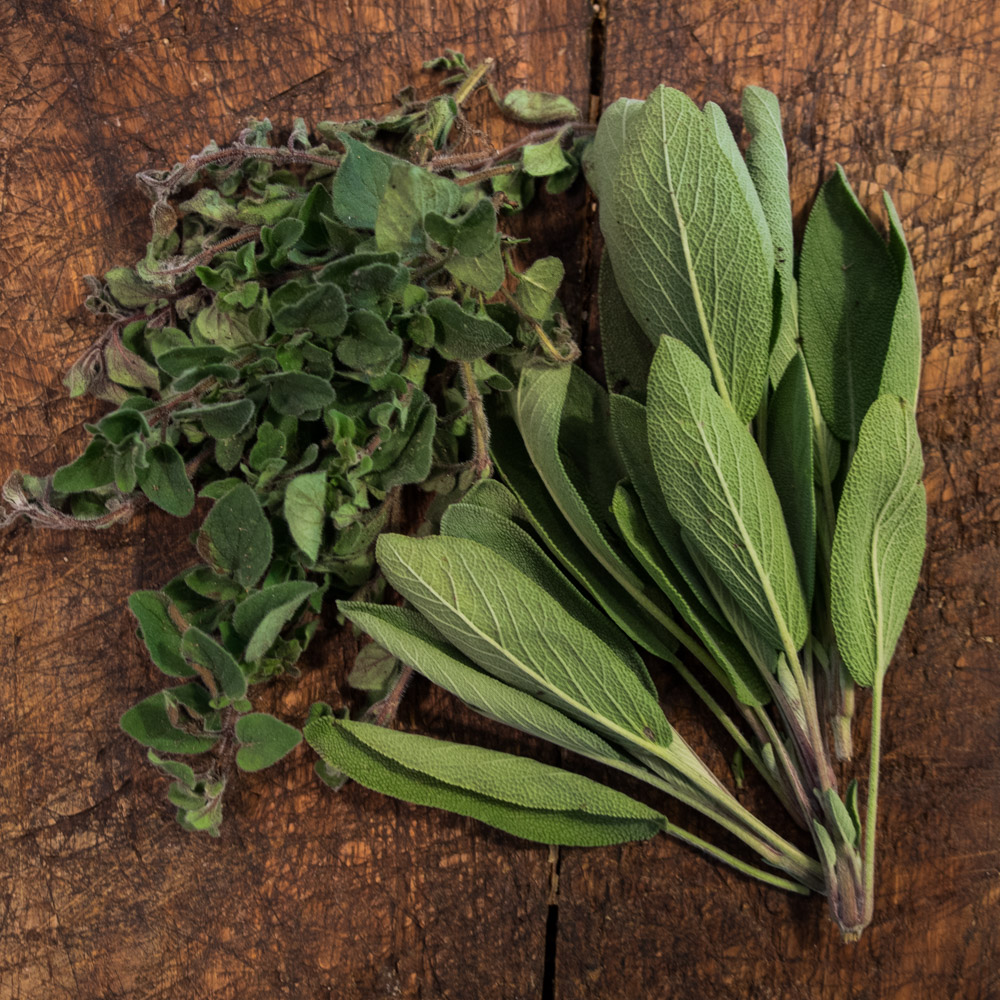
Mint and sage from the garden

Oct 3d Friday  Quilted most of the forenoon with Ellen

this afternoon have sewed some on my dresses

and paired some peaches that I had of Mr

Clarke and laid them down in sugar.  Cut

my sage and mint  Ellen has finished the

quilt and has it bound and the sitting

room in order  She will leave in the 

morning has been here nearly eight weeks

Putting the garden to bed continued to be one of Evelina’s chief occupations; today she cut her “sage and mint” and hung them somewhere to dry. The aroma of the newly cut herbs would have sweetened the air in the house. She also sewed, of course, and was pleased that the new quilt was finished. Ellen the servant bound the piece today, tidied up the sitting room and put away the quilt frame. Whose bed was that quilt to go on? Evelina never indicated for whom she was making it.

After midday dinner, Evelina moved to the kitchen for an afternoon of preserving fruit. She “paired” some peaches and then “laid them down in sugar.” She wasn’t kidding about the sugar if she used the proportions suggested in the various cooking books of the day. According to Lydia Maria Child, author of The American Frugal Housewife, “A pound of sugar to a pound of fruit is the rule for all preserves. The sugar should be melted over a fire moderate enough not to scorch it. When melted, it should be skimmed clean, and the fruit dropped in to simmer till it is soft.” The peaches would have been stored in stoneware or glass jars.

Ellen, a servant whose last name we never learned, was planning to leave in the morning.  She had joined the Ames household back the middle of August “to assist some about the house and help me sew.”  Given the absence of any complaints from Evelina, Ellen apparently had done her job well. Why she was leaving we don’t know, but servants often came and went as their personal circumstances – and the circumstances of their employers – changed. Evelina would hire someone new.


October 2, 1851

9904548_1_l


*


Oct 2d Thursday  Helped Ellen quilt some this forenoon 

She seems to do pretty well at it

Mrs Elijah & Ellen Howard & Mrs Abba Leach

spend the day and evening in the other part

of the house  I was there at tea.  Oliver &

wife have been to her fathers  Mr Ames has been

to Boston   Lavinia Williams came in the stage

with him but he did not speak to her

Evelina and her servant, Ellen, worked on the new quilt this morning .  Evelina had set the quilt up in the sitting room using a frame that could be dismantled and stored. The frame would have had four wooden legs at the corners, such as those in the illustration above.  Long boards around which the quilt edge was wrapped would have been fastened into the corners, creating an adjustable rectangle on which the women could work.  When finished the pieces of wood would be stowed away until needed again.

In the other part of the house, Sarah Witherell welcomed Nancy Howard, her daughter Ellen Howard, and Mrs. Abba Leach for the day. The women made a social visit that lasted all day and into the evening. Did they bring any needlework or sewing with them, or was conversation the only occupation? Evelina dropped in for tea, but Sarah Lothrop Ames from next door didn’t join them. She and her husband Oliver Jr were calling on her parents, the Hon. Howard Lothrop and his wife Sally. The Lothrop family may still have been wrestling over how to manage the family farm since the death of Clinton Lothrop, Sarah’s younger brother.

From Boston, where he was probably collecting orders for shovels, Oakes Ames returned home on the stagecoach where he sat with an acquaintance of Evelina, Lavinia Williams.  Mrs. Williams was the wife of Cyrus Williams, a local farmer of some means. Evelina seemed surprised that Oakes and Lavinia didn’t converse en route.

Even as Evelina was looking back at the day’s small social exchanges, she was beginning to feel unwell, something she wouldn’t report for another few entries.


October 1, 1851

Impatiens_Bush

 ***

Oct 1st Wednesday.  Put a quilt into the frame in the

sitting room got it in about ten marked it

and quilted awhile and went into the garden

to save some flower seeds.  have got some nice

Balsam seed and a few china pink seed among

others. Passed the afternoon at Olivers with

Mrs Drake & Torrey

Quilting, gardening, and socializing made up Evelina’s day.  She set up a quilt frame in the sitting room and worked on a quilt she had begun about ten days earlier. She couldn’t stay inside, though, as the day was “fair” and “pritty warm for the time of year.”* The sunshine drew her to the garden where she moved through her annuals, saving seeds for next year.

She got “some nice Balsam,” a flower that today we call impatiens. At the time, it was reckoned to be “one of the most prominent ornaments of the garden,”** according to Joseph Breck, a Boston horticulturalist.  Breck’s important guide, his eponymous Book of Flowers, had proved helpful to Evelina earlier in the year and must have been doing so again as she put her garden to bed. Breck particularly admired some of the variegated varieties of Balsam as “decidedly the most elegant.” He had specific advice about saving Balsam seed: “Old seed is considered by some to be the best, as more likely to produce double flowers. The seeds should be saved from double flowering plants only; all single flowering ones should be destroyed as soon as they appear.” Did Evelina follow his advice?

After gardening, Evelina probably changed her dress and went next door to see Sarah Lothrop Ames and her guests, Caroline Drake (Mrs. Lincoln Drake) and another woman, Mrs. Torrey. The two guests may have been related to one another (Caroline’s maiden name was Torrey.) They had no immediate connection to Col. John Torrey, however, who appeared often in Evelina’s journal. The women would have sat, had tea and chatted – a pleasant occupation on a pleasant day.


* Oliver Ames, Journal, Courtesy of Stonehill College Archives

** Joseph Breck, Book of Flowers, Boston, 1851, pp. 185 – 186

*** Heirloom impatiens balsamina, Courtesy of edenbrothers.com


September 30, 1851

IMG_0004

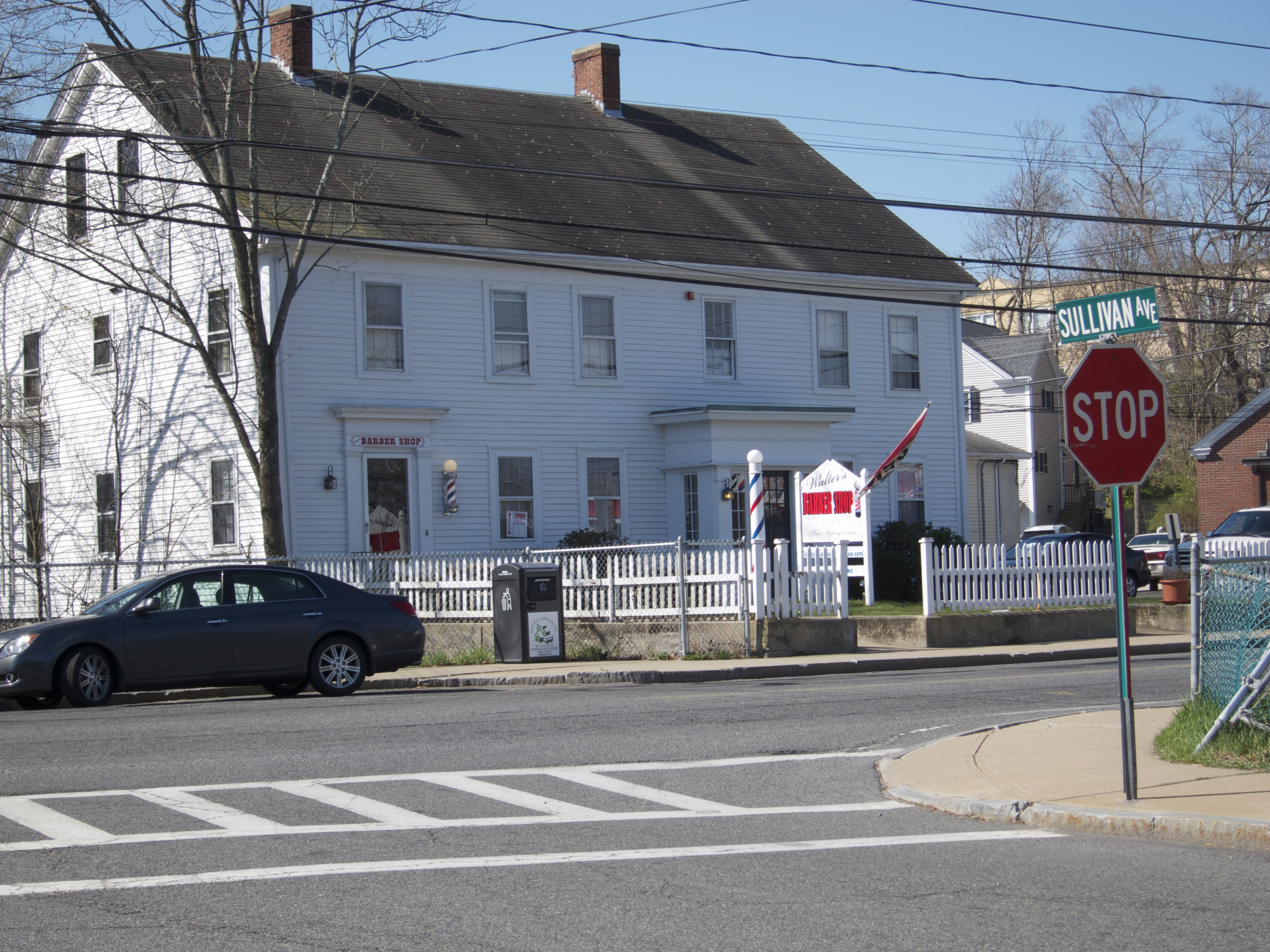
21st century view of apartment building owned by Col. John Torrey, which Augustus Gilmore and his young family moved into in 1851

Sept Tuesday 30  Augustus family left this afternoon for

their new place  his wife went this forenoon

and put down two ca[r]pets and put up two beds

I went about four Oclock and helped her

untill night   passed part of the evening in

the other part of the house  I have been to 

work a very little on my dresses and so

has Ellen  Helen left this morning for school in Boston

It was “a fair day + pritty warm”*, so folks who had stayed inside yesterday because of the rain were able to be out and about today. Evelina must have felt better, too, as she helped her nephew’s wife, Hannah Lothrop Gilmore, set up housekeeping in their new quarters in the village. Practiced mothers, they probably kept their eyes on Hannah’s small sons as they worked.

Helen Angier Ames, fourteen-year-old daughter of Sarah Lothrop and Oliver Ames Jr., left for Boston this morning.  She was going to a new school, the third one this year. Clearly she, or her parents, had had difficulty settling on the right situation. Perhaps this one would be the charm. We don’t know which academy or seminary she was headed to; there were probably several schools to chose from. The Auburndale Female Seminary was one that was established about this time (today is exists as Lasell College) though we have no indication that this was the one, among many, that the Oliver Ameses would have settled on for their daughter.

The Girls High and Normal School started up around the mid-19th century as well.  It was focused on training young women to become teachers, and thus was unlikely to be the institution that Helen Ames went to.  Helen didn’t need to be trained to make a living.  A smaller, private outfit was likely to have been the place for her.

* Oliver Ames, Journal