June 4, 1852

images-1

The El Dorado Gambling-Saloon and the Jenny Lind Theater, San Francisco, ca. 1852*


Friday June 4th  Mr Scott has varnished the Oilcloth

in the dining room this afternoon and painted

the cellar way and commenced on the entry

chamber  I have been all day waiting on

him and getting the rooms in order to paint

and varnish  Dining room whitewashed

I shall be thankful when we get through

with painting

Probably every member of the Ames family – not just Evelina – was going to be thankful to be “through with painting.” Lately there had been too much disruption at the Ames compound; getting the rooms back in shape would help life get back to normal.

Disruption being a part of life, it was happening on a civic scale in the city of San Francisco right at this time.  The newspapers called it the Jenny Lind Swindle, so disfavorably did they regard the situation. The city government had just purchased the recently established Jenny Lind Theater to be made over into their administrative offices, or “business chambers,”* the previous city hall having burned down the year before.

Built by an illiterate but entrepreneurial cabbie and bartender from New York named Tom Maguire, who was “profoundly ignorant of the stage,”* the Jenny Lind Theater had nonetheless opened the previous fall with much acclaim for its “handsome” interior. Within its “exquisite” walls, “the rowdy populace embraced” shows as diverse as Shakespeare and burlesque. Exactly why Maguire sold the building to the city is unclear – the need for money comes to mind – for he went on to build another elsewhere in town.

The cost of renovating the theater into office space was considerably greater than the acquisition of alternative sites, and the purchase of it with tax dollars was considered “scandalous.” “The public was growing very clamorous, the more so perhaps because it was impotent,” noted a contemporary commentator on the subject. In early June, a great crowd gathered in protest, and a heated debate ensued between a council member and a spokesman for the citizens. The venting was fractious, but didn’t change the plan. The city council moved into its new quarters as planned; ironically enough, the theater space was soon found to be too small.

Did Evelina read about this in the Eastern papers? Did Oakes? California and its politics must have seemed very far away, yet Oakes would soon play a key role in connecting California to the East Coast by way of a transcontinental railroad. Who knew?


*Annals of San Francisco, 1855  Image courtesy of foundsf.org


June 3, 1852

Ice


Thursday June 3d  Mrs Patterson went to Bridgewater

but was not satisfied with the house and 

returned to night  I have painted my 

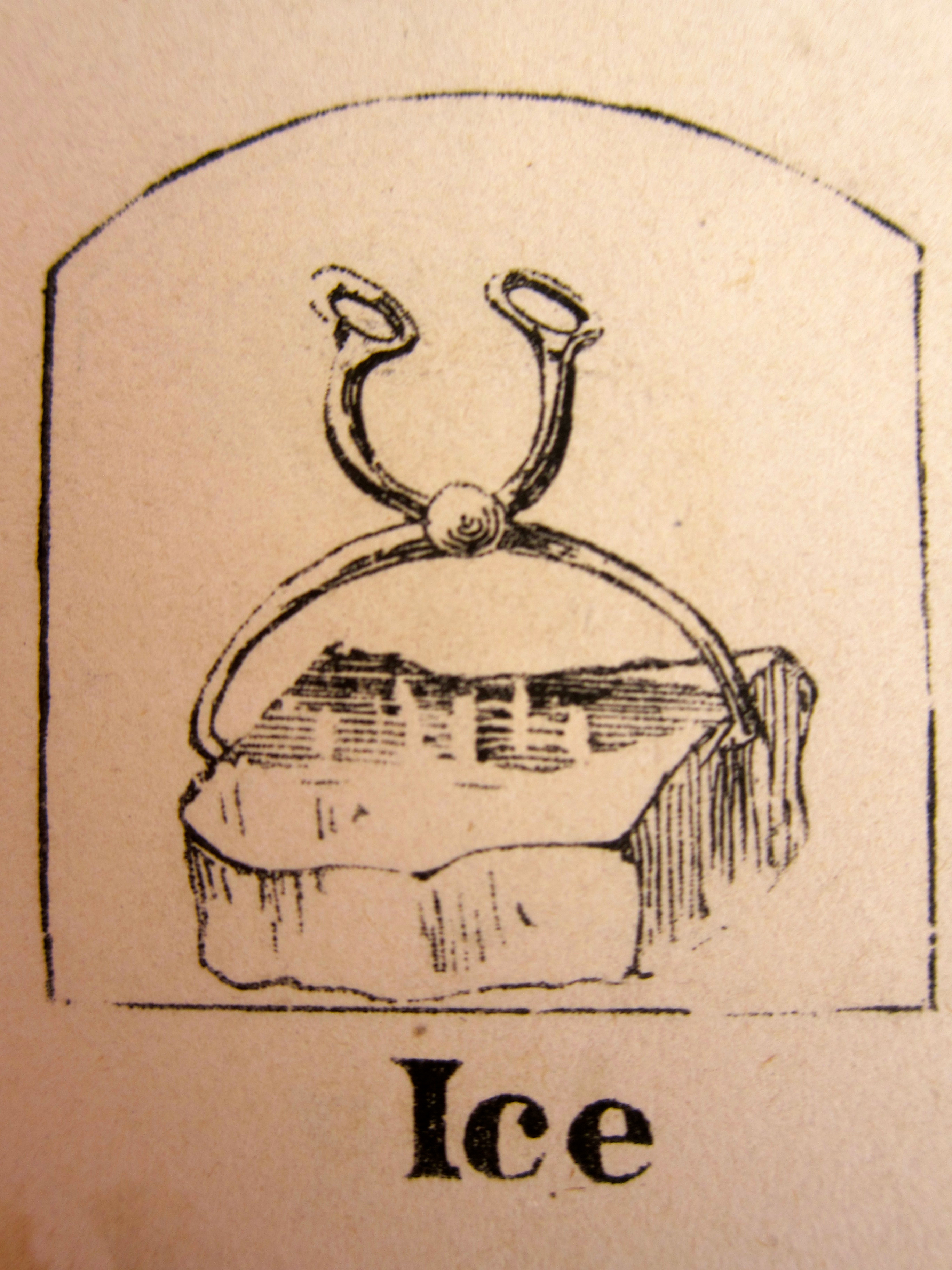
ice closet and have been to work about

house all day  Jane is not worth much

she is so forgetful and if she stays I

shall have another girl

After two days off, Evelina was back in her apron. She did her chores and painted the new ice closet. Did she use the green paint that covered so much of the rest of the home’s interior?

Evelina had relied heavily on her servants during spring cleaning.  Mrs. Patterson, in particular, had proved a real help with the work. She was apparently more industrious than Jane McHanna, providing an unfavorable contrast. Jane may have been slacking off, her attention pulled away by events we can’t know, or Mrs. Patterson was just better at housework. Whatever “forgetful” Jane was up to, Evelina was becoming dissatisfied with her.

The weather report from Old Oliver was a bit gloomy: “[T]he 3d of June was a verry warm day […] it has bin fair weather and verry drying since the 23d of May and grass on the high land is wilting there was a little rain yesterday.” He was worried about the hay and the corn.

*Oliver Ames, Journal, Stonehill College Archives, Arnold Tofias Collection

June 2, 1852

Thread

1852

Wednesday June 2d  Lazy this day as usual after being

in Boston   Have been with Mrs S Ames

to the sewing circle at Mr Wm Reeds.  Had

a very pleasant time as we always do there

not very many present. Mrs Patterson here

again to day.  yesterday she staid home to

do her washing  She & Jane have done very

little ironing this afternoon

The intense labor of spring cleaning was over, at least for Evelina.  She was “[l]azy this day” after yesterday’s trip into Boston with her sisters-in-law. Shopping wore her out more than washing windows or scrubbing floors, it would seem. She summoned enough energy to attend the Sewing Circle at Abigail Reed’s, though.

Sarah Witherell didn’t attend the Sewing Circle; she probably wasn’t socializing outside the family yet. So Sarah Ames and Evelina went without her and enjoyed themselves “as we always do.” Back at the house, however, Evelina’s servants didn’t attend to the ironing as Evelina had hoped they would. Evelina wasn’t pleased. When she worked, she worked very hard, and expected others to do the same. She felt that Mrs Patterson and Mrs McHanna should have been able to do more in her absence.

In the other part of the house, to which Sarah Witherell had retreated after yesterday’s outing, Old Oliver was watching the weather.  He noted the welcome arrival of “a little rain […] that wett the ground about an inch deep.”*  The spring had been dry.


*Oliver Ames, Journal, Stonehill College Archives, Arnold Tofias Collection


June 1, 1852

Mathew_Brady_-_Franklin_Pierce_-_alternate_crop

Franklin Pierce (1804-1869)

Photograph by Matthew Brady

1852

Tuesday June 1st  Have been to Boston with

Mrs Witherell Mrs S Ames Helen & Emily

Called at Mr Orrs the first place met

the other ladies at half past nine at Mr

Daniells & Co.  Was trying to get a bonnet

most all day at last got materials for a lace 

one  Went to Doe & Hasletons about my consol

Mrs Norris met us at half past two

Most of the Ames females decamped North Easton today and went into the city.  Even Sarah Witherell, dressed in black, rode into Boston to go shopping. Were her sisters-in-law hoping to cheer her up with an outing?

While Evelina and “the other ladies” went about Boston “most all day” in earnest pursuit of bonnets, furniture and more, a group of politicians was gathered in Baltimore some 400 miles south. The Democrats were holding their national convention for the nomination of their next presidential candidate.  Among the ten to twelve gentlemen in the running were Senators Lewis Cass of Michigan, Daniel S. Dickinson of New York, Henry Dodge of Wisconsin, Stephen A. Douglas of Illinois and Sam Houston of Texas, Governor Philip Allen of Rhode Island, former Secretary of State James Buchanan, and former Senator Franklin Pierce of New Hampshire. The latter, a dark horse candidate, was chosen.

Franklin Pierce would win the next election and serve as President from 1853 through 1857. Known as “Handsome Frank,” a sociable fellow with a difficult personal life and a probable addiction to alcohol, Pierce was an accomplished politician and fierce opponent of abolition. Once in office, he signed the inflammatory Kansas-Nebraska Act, then failed to be renominated for a second term. His purported response was “There’s nothing left to do but get drunk.”

After the Democrats’ gathering, another presidential convention would shortly be held in the same Baltimore hall, the Maryland Institute for the Mechanical Arts.  This time, the Whig Party would meet and nominate Gen.Winfield Scott, hero of the Mexican-American War.  Scott was the candidate that the Ames men would support.  The Ames women couldn’t vote, of course.

May 31, 1852

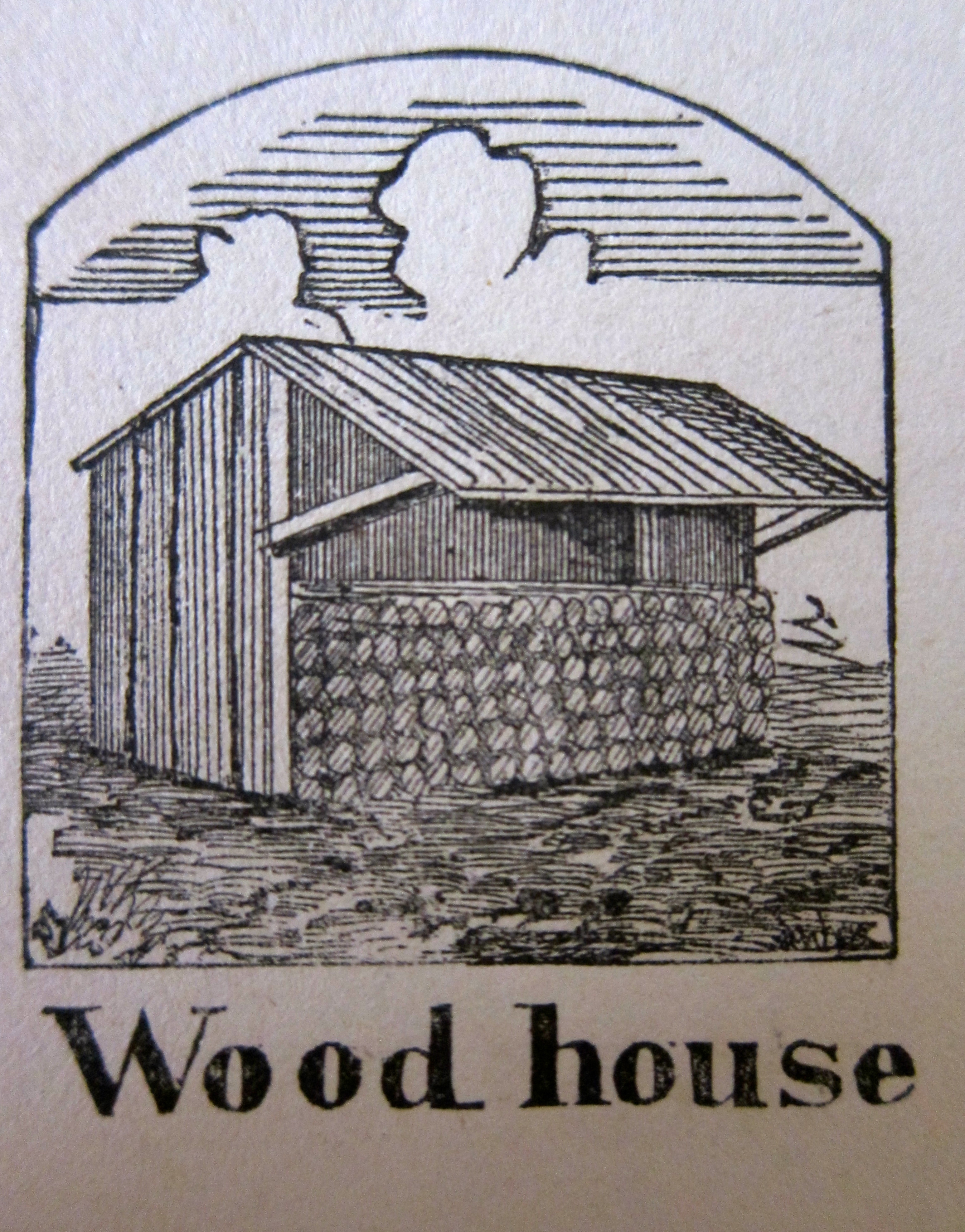
Woodhouse

1852

May 31st Monday  Mrs Patterson & Jane have done

the washing and I have been about house

all day  Mr Scott has painted the dining

room over the second time  Jane will

go against the door in spite of all that I

can do  Shall I ever get settled again so that

I can sew some  Have got an Ice closet in the 

wood house

Spring cleaning was almost finished, and Evelina sounded ready to have it be done. Mr Scott had to paint a second coat in the dining room, perhaps because Jane McHanna kept banging the door against the wall. Evelina was irritated with Jane and longed to get back to her sewing.

The weather had been dry for some time.  Old Oliver, uncharacteristically, hadn’t written in his daily journal for nine days.  When he finally picked up his pen, he noted that the fair skies had been “verry drying.” Being without rain at the start of the growing season endangered the crops and put him in an ill humor.  Perhaps Evelina was feeling some of that, too.  And, perhaps, she was still grieving.

One thing that pleased Evelina, though, was getting a new ice closet at the back of the house, in the wood shed. And one thing that pleased Old Oliver was that “Mr Seve began to frame the Cariage hous”* on this day.  This building was going up on Ames property off of Main Street, on land behind the residence of Oliver Ames Jr and his wife, Sarah Lothrop Ames.

Oliver Ames, Journal, Stonehill College Archives


May 30, 1852

OLYMPUS DIGITAL CAMERA

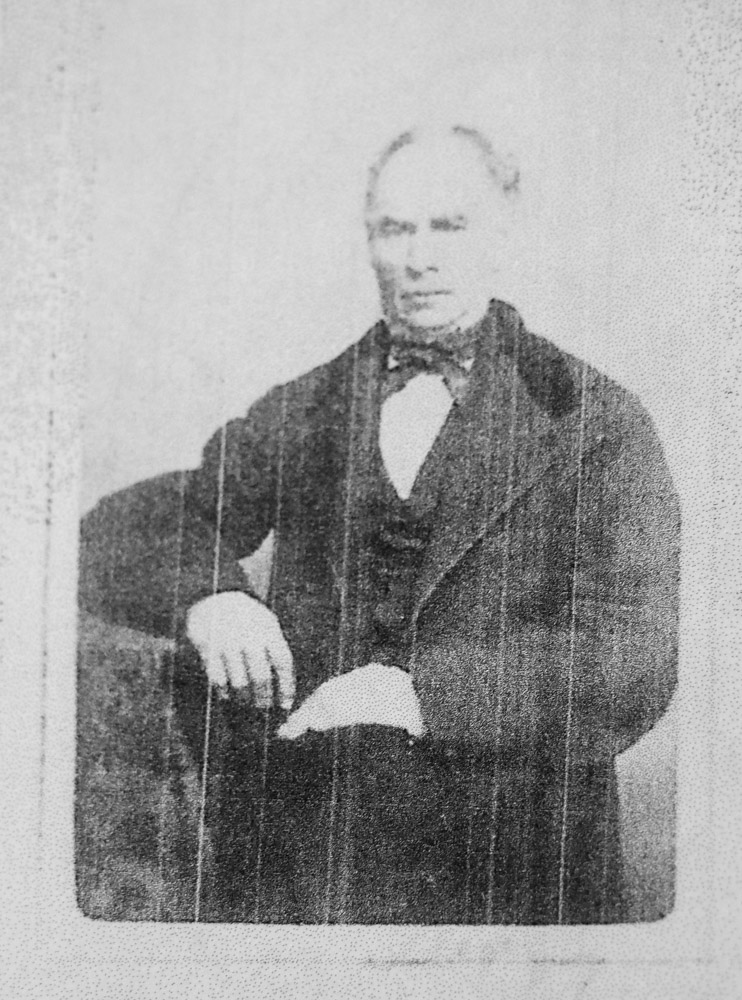
Alson Gilmore  (1798 – 1888)*

 1852

May 30  Sunday  Have been to church as usual  Mr Briggs

of Boston gave us two very excellent sermons

Alson mother & Helen came home with us

at noon.  Augusta has gone home on a 

visit and is going to Foxboro before she returns

Have been reading since meeting and 

called in Olivers and on Mrs Witherell


Evelina’s older brother, Alson Gilmore, turned 54 years old today. He was a farmer – a good one – in the southeastern section of Easton.  He had inherited the property from his father Joshua, probably when the older man passed away in 1836. By that time, older brothers had moved away or passed on, so even as the fourth of five sons, Alson was the heir who took over from his father.

Other than being a productive farmer, Alson was not the most high-profile man in town,  His eldest son, Alson “Augustus” Gilmore, a perennial moderator for town meetings, was more active in civic matters, and his second son, Edwin Williams Gilmore, matured to become the outstanding entrepreneur of a hinge factory. His third son, Francis E. Gilmore, would, in time, take over the family farm as his father had. Alson’s daughters, Rachel, Lavinia, Helen and Hattie, would live theirs lives in Easton, too, two of them marrying.

Alson did play a civic role now and again. For fifteen years, he served as clerk for the Taunton- North Purchase Company, a complicated affiliation based on a seventeenth century acquisition of land that became the towns of Norton, Easton and Mansfield.** He was a selectman for one term in 1849-1850 and also was one of the last treasurers of a toll road that ran between Boston and Taunton, a road that was close to his property. That turnpike, unpopular at best, had only recently closed down.

On occasion, Alson Gilmore ran up against the Ames clan.  His sister may have been been married to one of its most popular and powerful members, but that didn’t prevent Alson from disagreeing with them in a divisive argument over church politics in the 1830s. Alson had been on the side of preserving the familiar Congregational service and Calvinist beliefs, while the Ameses had argued for Unitarianism. With one or two other parishioners, Alson had been threatened with having to bear the cost of paying the minister, Luther Sheldon, while the controversy wore on. In Chaffin’s words, “the situation was very peculiar,”* and ultimately, it was resolved to no one’s complete satisfaction.

With Evelina, Alson shared the responsibility for looking after their elderly mother. It was a duty they both took seriously. He seems to have been a decent man.

Image of Alson Gilmore courtesy of the Easton Historical Society

** William Chaffin, History of Easton, Massachusetts, 1886, pp. 19 – 38

**Ibid., p. 354.

May 29, 1852

Buttonhole

1852

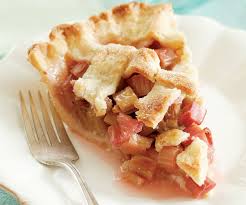
Sat May 29th  Have had the woodhouse cleaned of the old

chips ready for the ice closet  Baked rhubarb and 

custard pies and this afternoon Mrs Patterson has

cleaned the tin.  Mr Scott painted the china closet

over the second time between the shelves and the 

walls of the porch  I have varnished the oil cloths and 

desks tables &c &c  finished Augustas button holes

Baking, sweeping, scrubbing, painting, varnishing, and sewing were each on the domestic agenda today. Last year’s spring cleaning, which had been steady enough, seemed lackluster compared to the fierce pace of this year’s effort. Evelina didn’t necessarily complete each task personally – Jane McHanna, Mrs. Patterson, Mr. Scott and others helped – but she oversaw each piece of it. She was right in there. Today, it looks as if the only time she sat down was when she helped Augusta Pool Gilmore with her buttonholes.

Evelina excelled at making buttonholes and, at one time or another, helped other women, like Sarah Lothrop Ames next door, sew them. She must have taken pride in that particular skill, just as she must have had a real sense of accomplishment at all the tasks that were dealt with today. The to-do list got shorter.

As Evelina helped her young neighbor with needle and thread, the aroma from the baking would have competed with the fumes of the varnish.  Happily, it was fair and warm outside and hopefully, she opened the windows to let fresh air in.


May 28, 1852

images-1

1852  May 28th

Friday  This forenoon cleaned the shed chamber  Mrs

Patterson assisted me and helped about house

down stairs  I baked cake & brown bread

in Mrs Witherells oven and Mrs McHanna

made a custard & some rhubarb pies.

Augusta brought her dress in and I partly

made the button holes  Oakes A went to Boston

yesterday returned to night

Time for rhubarb. The edible plant, with its long red stalks, was coming up in the garden and needed to be harvested and cooked. Household advisor Lydia Maria Child had this to say about it:

“Rhubarb stalks, or the Persian apple, is the earliest in gradient for pies, which the spring offers. The skin should be carefully stripped, and the stalks cut into small bits, and stewed very tender.  These are dear pies, for they take an enormous quantity of sugar.  Seasoned like apple pies Gooseberries, currants, &c., are stewed sweetened and seasoned […] in proportions suited to the sweetness of the fruit; there is no way to judge but by your own taste.  Always remember it is more easy to add seasoning than to diminish it.”*

Jane McHanna made today’s pies and a custard, too. Evelina baked her usual cake and brown bread. Spring cleaning was not forgotten, however, as Evelina and Mrs. Patterson cleaned out the shed. One wonders what they found in there after the long winter.

The younger generation, meanwhile, was stirring. Augusta Pool Gilmore came over from across the street to get Evelina’s help on a dress she was making.  Oakes Angier Ames struck farther afield, going into Boston for the night.  The 23-year-old was there on shovel business, presumably, and, being conscientious, he would have accomplished whatever task he was sent in to do. But he was young, too, and may have enjoyed the freedom of being on his own in the big city.

*Lydia Maria Child, The American Frugal Housewife, 1829, p. 51


May 27, 1852

very_rare_miniature_19th_c_pennsylvania_stoneware_preserves_jar_perfect_cond_1_thumb2_lgw


Stoneware or “earthen” jar 

1852 Thursday May 27th  We have cleaned the buttery

to day and we have had a hard job of it.

I have scalded my preserves have several 

lbs of citron & some quince & peach and

this afternoon have given my chamber a

thorough sweeping and washed the paint where

needed.  Have set out some plants from the

house.  Mr Ames went to Canton

The buttery or pantry area off the cook room got cleaned today, and the cleaning wasn’t easy. The women surely had to contend with hardened spills, grease residue and hidden dust pockets. They also would have had to move every bottle, jar, bowl, plate and pan out of the way in order to properly clean the shelves.

In the midst of this domestic upheaval, the women inspected the store of preserves and found that “several lbs of citron & some quince & peach” hadn’t kept well. They were beginning to ferment. To be saved, they needed to be scalded.

Lydia Maria Child, a multi-talented and rather opinionated author, wrote about “Preserves &c” in her classic household guide, The American Frugal Housewife.*  To begin with, she disapproved of preserves, noting that “[e]conomical people will seldom use” them.  “Let those who love to be invalids drink strong green tea, eat pickles, preserves and rich pastry,” she scolded.

But while preserves (and jam and jelly) were expensive and unhealthy, Mrs. Child knew that housewives would persevere in making and serving them.  Preserving fruit with sugar was a practical way to extend the life of a favorite fruit after the crop had ended and to do it in a way that gratified the common human sweet tooth. Resigned to popular preference, she included instructions for dealing with preserves that were going bad:

“When you put preserves in jars, lay a white paper, thoroughly wet with brandy, flat upon the surface of the preserves, and cover them carefully from the air.  If they begin to mould, scald them by setting them in the oven till boiling hot.  Glass is much better than earthen for preserves; they are not half as apt to ferment.”* Evelina evidently disagreed with Mrs. Child about the value of preserves, but no doubt she followed a proper procedure for bringing the preserves back from the bad side of the pantry.


*Lydia Maria Child, The American Frugal Housewife, 1829, p. 59

May 26, 1852

Bird

1852

Wedns  May 26th  Jane has done part of the ironing  I have

put down the carpet in the front chamber & sitting

room and the bedroom carpet partly down and 

got the rooms in pretty good order  Mr Scott

& Holbrook commenced painting in the other

part of the house yesterday   Mrs Patterson

staid at home to do her washing & ironing

Mr Ames went to Bridgewater West


Spring cleaning continued; Evelina laid carpet today, often one of the last chores on the list. She could almost check the sitting room off the list, and seemed pleased that the house was “in pretty good order.”

Another spring ritual, this one involving bird hunting, may or may not have taken place on this date; by 1852, it may have been outlawed.  But the hunt, which always took place on the last Wednesday in May, was recent enough to have included various Ameses, if we assume they chose to participate.  Town historian William Chaffin describes the ritual in his 1886 History of Easton:

“At different times in the history of the town rewards were offered for killing crows and blackbirds, which were supposed to be very destructive to corn […]

“Scarcely two generations ago [which would place the event somewhere as late as the 1840s] the custom prevailed of young men choosing sides, and each side on a given day starting out and killing all the birds they could. The day chosen was the old ‘Election day’ so called, the last Wednesday in May, once the time for the convening of the State Legislature, and which came to be known as ‘Nigger ‘lection.’  It was one of the greatest holidays of the year for the boys. […] [T]hose taking part in the shooting started out at daybreak and killed as many birds as possible.  They usually met at some appointed place before dinner, to count the birds and see which side had won the victory.  In North Easton, the rendezvous was at Howards’ store […]

“The understanding was that only harmful birds should be killed; but it was easy to include nearly all birds in this category, because, it was argued, bobolinks and swallows destroyed bees, and robins stole cherries, etc. In some places the party beaten paid for the dinner and drinks of all.”*

In the 21st century, it’s difficult to fathom both the wanton waste of this offensively-nicknamed holiday, and the glee that evidently accompanied it. That hunting has an appeal, we don’t question, but that songbirds were the quarry is hard for modern folks to accept. **


William Chaffin, History of Easton, Massachusetts, 1886, pp. 776-777

** This editor freely confesses to being a birder and particularly fond of bobolinks.